
Could symptoms that flare around your pet have more than one explanation? Sneezing, itchy eyes, or congestion after time with an animal can raise a... Continue reading
READ MORE

What if the daily dread of packing a school lunch or dining out with your child could be replaced with absolute clarity and control? For families across the Central Valley, living on high alert for accidental exposure is exhausting. You likely know the knot in your stomach during school birthday parties or sports trips, and sorting through confusing internet advice only adds to the stress. Partnering with a dedicated peanut allergy specialist Fresno families trust can transform that constant uncertainty into structured, everyday confidence.
You already know that living in fear of a severe reaction is no way to spend your family’s days. We believe food should bring people together, not keep your household on edge. In this guide, you will discover how modern diagnostic protocols accurately identify your child’s specific immune response, cut through the confusion of generic test kits, and unlock proactive protection. We’ll explore the path to securing an accurate clinical diagnosis, crafting a personalized anaphylaxis safety plan for local schools, and discovering modern therapies that restore lasting peace of mind.
A true peanut allergy is an immunoglobulin E (IgE) mediated immune response, not a digestive intolerance or food sensitivity. When someone with this condition consumes even trace amounts of peanut protein, their immune system misinterprets those harmless proteins as active biological threats. This triggering causes mast cells and basophils to flood the bloodstream with histamine and inflammatory mediators. A basic understanding of peanut allergy mechanisms explains why symptoms can rapidly cross multiple organ systems, creating widespread physiological distress.
While an upset stomach or localized mouth tingling can signal a reaction, systemic anaphylaxis requires immediate epinephrine intervention. Primary care providers and general pediatric clinics offer essential baseline screenings, but they rarely have the specialized tools required for granular IgE mapping. Working with a dedicated peanut allergy specialist Fresno families trust bridges this gap. Specialized outpatient care provides the clinical depth needed to differentiate between mild localized reactivity and high-risk systemic sensitivity, giving your family clear answers.
Peanut proteins contain specific molecular components that bind tightly to IgE antibodies on immune cells. Within minutes of exposure, this cellular activation can ignite acute symptoms across several body systems:
A past mild reaction never guarantees future safety. Immune responses are dynamic, and an accidental ingestion that caused minor hives last year can provoke severe anaphylaxis during the next exposure.
Living in the Central Valley presents distinct challenges for allergic individuals. Fresno sits inside a geographical basin that traps agricultural dust, particulate matter, and intense pollen counts throughout the year. This heavy environmental burden causes chronic upper airway inflammation, making it difficult to distinguish seasonal allergic rhinitis from early food allergy symptoms.
Co-existing atopic conditions, such as asthma and atopic dermatitis, raise the stakes significantly. Uncontrolled underlying asthma is one of the highest risk factors for severe food-induced respiratory distress during an accidental ingestion. Partnering with a dedicated peanut allergy specialist Fresno patients rely on allows for a synchronized care model that manages both airway reactivity and food triggers. To understand the full scope of focused diagnostics, explore our food allergy clinic Fresno guide for comprehensive evaluations.
Accurate clinical diagnosis begins with a meticulous medical intake, not assumptions. When you visit a peanut allergy specialist Fresno trusts, the initial evaluation maps every variable: exact timing of onset, specific symptom progression, and potential kitchen cross-contact. This structured investigation provides essential context before testing begins, separating true systemic reactivity from coincidental viral illnesses or localized irritations.
From there, modern diagnostic testing transforms clinical clues into definitive answers. Rather than guessing which foods pose danger, specialists employ targeted outpatient tools designed to confirm or exclude IgE sensitization quickly and safely.
Percutaneous skin prick testing remains the frontline tool for immediate answers. By placing a micro-drop of allergen extract onto the forearm and gently scratching the surface, a clinician can observe a localized wheal-and-flare response within fifteen to twenty minutes. However, widespread eczema or daily antihistamine regimens can interfere with surface skin reactions.
In those scenarios, serum blood allergy testing provides an invaluable, non-invasive alternative. Specialized blood draws measure specific IgE levels in the bloodstream without requiring patients to pause vital daily medications. To see how these clinical methods contrast with mail-order alternatives, review our detailed guide to food allergy testing. Unregulated direct-to-consumer panels measuring IgG antibodies often produce widespread false positives, leading families to eliminate healthy foods needlessly.
Botanically speaking, peanuts are subterranean legumes, completely distinct from tree nuts like walnuts, cashews, or almonds. Yet, older broad-panel tests frequently show elevated IgE for multiple nuts due to shared plant proteins, triggering excessive dietary restrictions. Today’s advanced diagnostics isolate specific molecular proteins to resolve this confusion:
Research on the long-term prevention of peanut allergy demonstrates that early, accurate identification protects developing immune systems without restricting safe nutrients. When test results remain ambiguous, an allergist may conduct a medically supervised oral food challenge in an outpatient clinic. This controlled assessment remains the diagnostic gold standard, offering absolute certainty. Just as families benefit from confirming true food sensitivities, individuals who have avoided medications based on unverified childhood reactions can find clarity through drug allergy testing Fresno specialists provide, replacing decades of uncertainty with precise clinical answers. If you are ready to replace daily guesswork with clinical precision, connect with our team at premiumallergy.com to begin your evaluation.
Receiving an accurate diagnosis marks the beginning of an empowering new chapter. Rather than letting uncertainty dictate your schedule, a proactive management plan establishes physical safety while restoring emotional calm. Evidence-based care, as highlighted by clinical authorities in diagnosing and treating peanut allergies, balances daily avoidance protocols with modern therapeutic interventions tailored to your household’s lifestyle.
Because severe food reactions frequently co-occur with lower airway sensitivity, protecting your child also means optimizing respiratory health. Partnering with a dedicated peanut allergy specialist Fresno families trust ensures that food triggers and lung inflammation are treated cohesively. Creating an integrated asthma management plan alongside food precautions prevents respiratory complications from turning minor exposures into acute breathing crises.
For decades, zero-tolerance elimination served as the only defense against allergic reactions. While avoidance remains essential, maintaining absolute vigilance across every cafeteria lunch, birthday treat, and restaurant visit places an enormous psychological burden on growing children. Modern outpatient care now offers alternatives designed to desensitize the immune system over time:
Candidates for desensitization must demonstrate stable baseline health and an ability to adhere to strict daily dosing schedules under direct specialist supervision.
The pharmaceutical landscape offers valuable options for multi-allergic individuals. Modern biologic treatments, such as targeted monoclonal antibodies that bind free IgE, help elevate reaction thresholds across multiple foods simultaneously. These subcutaneous therapies provide an extra safety net for families managing complex, highly sensitive allergic profiles.
Regardless of the chosen path, carrying two unexpired auto-injectable epinephrine devices remains non-negotiable. Epinephrine works within seconds to constrict dilated blood vessels, relax airway spasms, and halt mediator release. Your peanut allergy specialist Fresno clinician trains your family to administer rescue devices quickly at the first sign of systemic involvement. Because our dedicated outpatient clinic focuses on diagnostic care and long-term management rather than acute emergency services, any administration of epinephrine must be followed immediately by local emergency services and hospital evaluation.
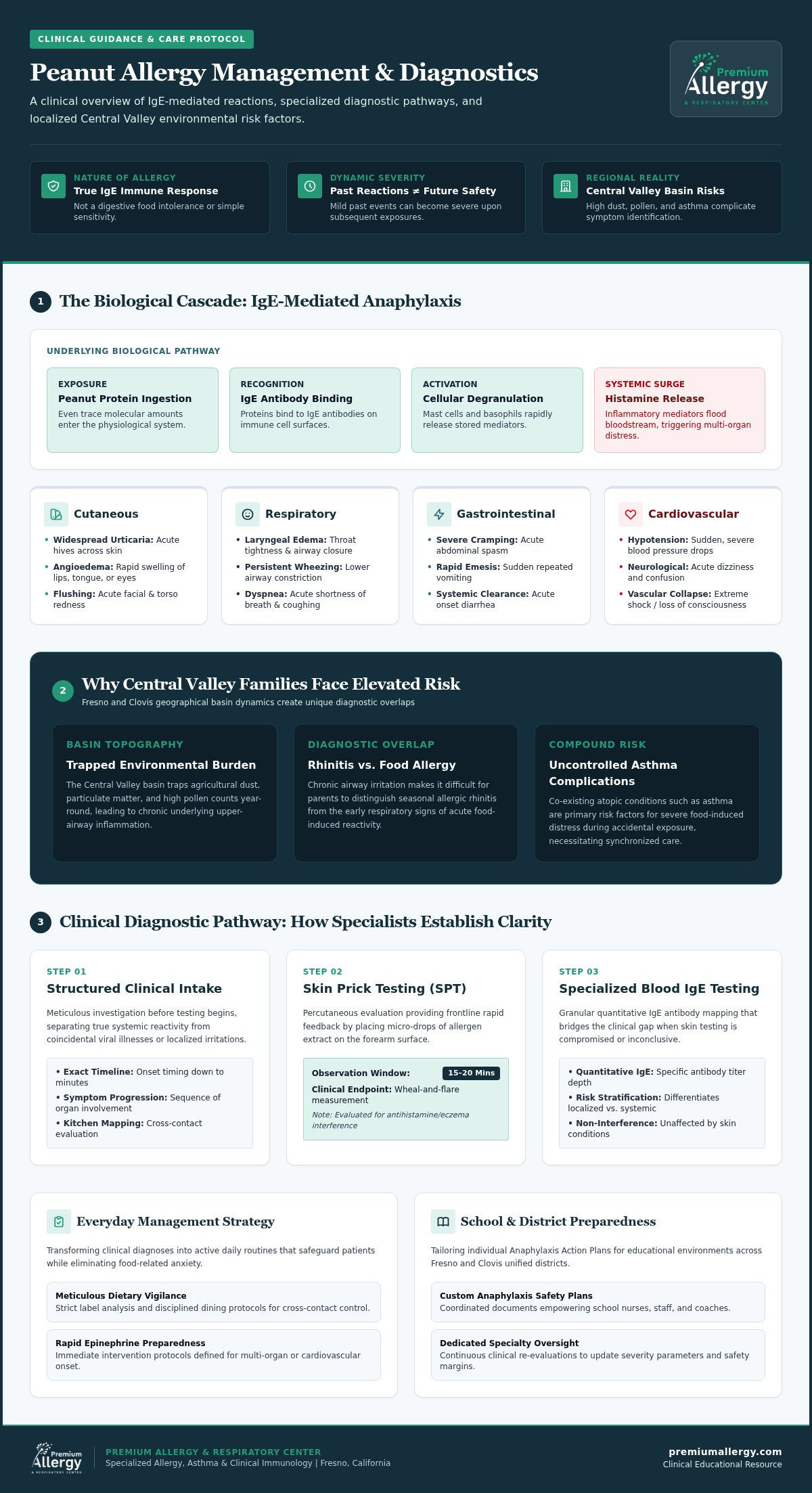
Clinical test results only protect your family when translated into practical, day-to-day habits. Moving through life with food allergies shouldn’t feel like navigating a minefield. With structured guidelines for reading labels, setting up your kitchen, and coordinating with community caregivers, your family can participate in school events, dining out, and Central Valley weekend outings with total confidence.
Safe routines begin at the grocery store. Under current federal labeling rules, packaged foods must clearly state if they contain peanuts. However, voluntary precautionary phrases like “produced in a facility that also processes” require proactive vigilance. In your own home, establishing a peanut-free pantry shelf, using dedicated cutting boards, and teaching family members to wash their hands with warm water and soap after eating outside the home builds a reliable safety shield.
Sending a child with a severe allergy to school can feel daunting without the right administrative safeguards. Working closely with Fresno Unified, Clovis Unified, and local private school administrators ensures your child remains secure throughout the school day:
California’s dining scene continues to lead the nation in diner protections. Under state law, chain restaurants with 20 or more locations must disclose major food allergens directly on their menus. While this statutory transparency helps significantly, speaking directly with kitchen staff remains vital when enjoying independent eateries across Fresno and Clovis.
When dining out, call the restaurant ahead during non-peak hours to ask about shared fryers, prep surfaces, and ingredient sources. Inform your server upon arrival: “My child has a life-threatening peanut allergy. Can you please verify with the chef that this dish uses separate cookware and surfaces?” When traveling across California, pack dedicated safe snacks, keep dual auto-injectors at room temperature, and carry medical alert documentation. Partnering with a dedicated peanut allergy specialist Fresno families trust gives you the tools and documentation to advocate effectively. Take control of your family’s safety by scheduling a consultation with premiumallergy.com today.
Managing a food allergy requires more than clinical testing; it calls for an ongoing relationship with a team that respects your family’s daily reality. Traditional medical settings often feel sterile, rushed, or intimidating, leaving parents with a list of restrictions but very little practical direction. At Premium Allergy & Respiratory Center, we view allergy care as an empowering partnership. As a dedicated peanut allergy specialist Fresno families rely on, our outpatient clinic replaces anxiety with proactive, compassionate guidance tailored to your household.
Our practice focuses exclusively on outpatient allergy and respiratory health. Because we intentionally exclude general primary care and in-patient emergency hospitalizations, our clinical time and diagnostic resources remain centered entirely on precision allergy management. This dedicated environment ensures your family receives focused attention without the long delays typical of large regional medical centers.
Allergic conditions rarely occur in isolation. An immune system sensitized to peanut proteins frequently battles concurrent issues like eczema, environmental sensitivities, or asthma. Treating one while ignoring the others leaves your overall defense vulnerable:
From the moment you walk into our clinic, our team focuses on easing patient anxiety. We know clinical appointments can feel stressful for young children. Our staff takes time to explain every step, ensuring your child feels safe, heard, and supported throughout their visit.
During your initial appointment, our clinical team reviews your dietary history, performs indicated skin prick or blood allergy testing, and discusses immediate findings. You won’t leave with vague suggestions. Instead, you’ll walk out the door with a clear diagnosis, a customized anaphylaxis action plan, and the self-assurance needed to navigate daily life safely. Take the decisive step toward lasting peace of mind and partner with an expert allergy specialist today.
Living with food allergies doesn’t mean your family has to operate in perpetual anxiety. Clear clinical diagnosis separates real physiological danger from unfounded fear. When you have precision testing, robust school accommodations, and an actionable emergency protocol in place, unpredictable daily routines transform into safe, manageable moments.
Premium Allergy & Respiratory Center serves families across Fresno, Clovis, Selma, and North Clovis as a dedicated outpatient specialty practice. Our comprehensive in-clinic diagnostic tools, including specialized blood allergy testing and skin prick evaluations, deliver definitive answers without the confusion of mail-order kits. We partner with you to create personalized action plans that fit Central Valley classrooms, sports fields, and family dinners.
You have the power to step beyond dietary worry and embrace a full, active lifestyle. Schedule an expert peanut allergy evaluation with our Fresno specialists today, and let an experienced peanut allergy specialist Fresno families trust guide your household forward with confidence.
Peanut allergies are typically lifelong, with only about 20% of children eventually outgrowing them. Periodic re-evaluations with a peanut allergy specialist Fresno parents trust can track specific IgE antibody levels over time. If blood test markers drop significantly, your clinician may recommend an in-office oral food challenge to test for natural tolerance safely.
Adult-onset peanut allergies can develop suddenly, even if you consumed peanuts without issue for decades. An adult immune system can spontaneously produce IgE antibodies against specific peanut seed storage proteins. If you experience sudden hives, lip tingling, or gastrointestinal distress after eating nuts, stop consumption immediately and schedule a comprehensive allergy evaluation for adults to determine whether new IgE sensitization has occurred.
Extremely tiny amounts can trigger a severe allergic reaction in highly sensitized individuals. Ingestion of as little as a fraction of a single peanut kernel can activate systemic mast cell degranulation. While casual skin contact typically causes localized hives, actual ingestion carries the greatest risk for severe respiratory or cardiovascular anaphylaxis.
Peanuts are legumes that grow underground, whereas tree nuts like walnuts, almonds, and cashews grow on trees. They contain completely different protein families, meaning an allergy to one does not guarantee an allergy to the other. Precision diagnostics isolate your exact sensitivities so you avoid eliminating healthy tree nuts unnecessarily.
Specialists use gentle percutaneous skin prick testing on a child’s back or forearm to evaluate surface mast cell responses safely. If a child has severe atopic dermatitis or cannot pause daily antihistamines, the clinician uses a simple blood draw instead. In-clinic testing isolates specific IgE antibodies without exposing your child to the risk of an allergic reaction.
School personnel must follow the child’s standardized emergency action plan immediately. If systemic symptoms appear, staff administer auto-injectable epinephrine into the outer mid-thigh, call 911, and contact parents without delay. Prompt epinephrine administration remains the single most effective intervention during an acute school-day reaction.
No, an outpatient allergy clinic does not provide emergency room services or in-patient hospital care. Specialists focus on precision diagnosis, risk prevention, blood testing, and personalized action plans during regular clinic hours. If an individual experiences active anaphylaxis or life-threatening symptoms, dial 911 or proceed immediately to the nearest hospital emergency room.
Could symptoms that flare around your pet have more than one explanation? Sneezing, itchy eyes, or congestion after time with an animal can raise a... Continue reading
READ MORE
Could a swollen, painful sting site mean something different from a dangerous allergic reaction? If you’re unsure what your symptoms meant or worried... Continue reading
READ MORE
What if the pollen, dust mites, or mold you suspect aren’t the whole story behind your symptoms? Environmental allergy testing can help identify... Continue reading
READ MORE
A positive allergy blood test doesn’t automatically mean a substance is causing your symptoms. The test measures specific immunoglobulin E (IgE)... Continue reading
READ MORE