
Could symptoms that flare around your pet have more than one explanation? Sneezing, itchy eyes, or congestion after time with an animal can raise a... Continue reading
READ MORE

What if the mail-in kit that flagged half your pantry as dangerous measured normal digestion instead of a genuine medical threat? If you feel overwhelmed trying to decipher sudden mealtime reactions, you aren’t alone. Genuine peace of mind begins with scientifically validated food allergy testing, not marketing guesswork.
Dining out shouldn’t trigger severe anxiety, and you shouldn’t have to surrender balanced nutrition to restrictive diets built on confusing lab reports. Untangling an uncomfortable digestive intolerance from a true, IgE-mediated immune allergy is difficult when at-home panels blur physiological facts. You deserve clear, definitive answers so you can eat with confidence again.
In this guide, you will discover how clinical food allergy testing works, compare proven medical diagnostics directly against commercial at-home kits, and learn how an allergy specialist safely confirms what your body is experiencing. We examine the exact science behind skin and blood testing so you can sidestep wasted tests and reclaim your daily vitality.
Every time you sit down to eat, your digestive and immune systems work in tandem to process fuel safely. When an adverse reaction occurs, identifying the underlying biological driver is critical. Professional food allergy testing serves as the medical benchmark for distinguishing true immune-mediated hypersensitivities from non-immune digestive complaints. Without precise diagnostics, many people fall into the trap of self-diagnosis, cutting out essential food groups and developing nutritional deficits out of unwarranted fear.
A true food allergy involves a systemic defense response capable of triggering life-threatening anaphylaxis. In contrast, digestive intolerances remain localized within the gut. To understand why clinical testing provides lasting clarity, you must look at how the immune system misidentifies harmless dietary proteins as foreign threats, as detailed in this food allergy overview.
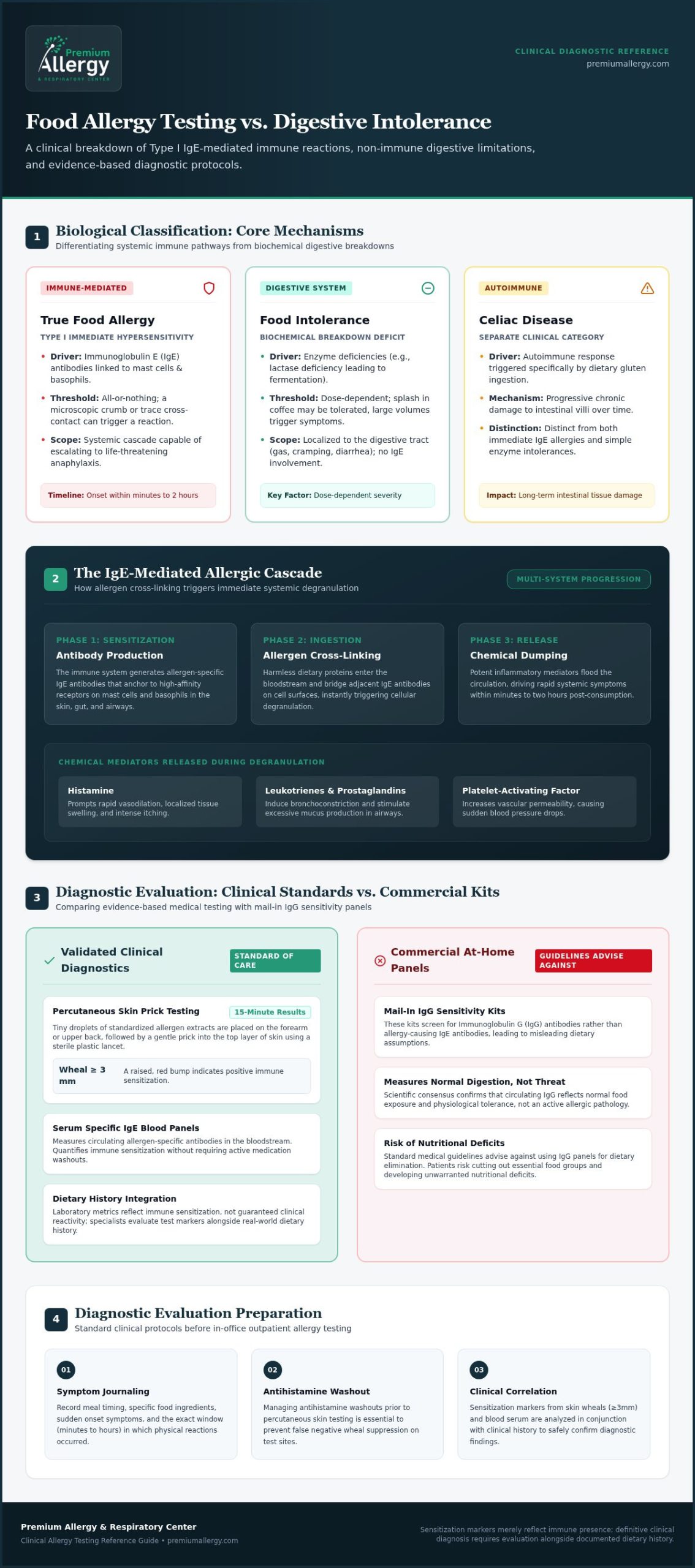
Classic food allergies represent Type I immediate hypersensitivities driven by Immunoglobulin E (IgE) antibodies. When your body develops an allergy to a specific protein, your immune system manufactures allergen-specific IgE. These antibodies circulate and anchor themselves to high-affinity receptors on mast cells and basophils throughout your skin, respiratory tract, and gut.
Upon subsequent ingestion, the food allergen bridges adjacent IgE antibodies on these cell surfaces. This cross-linking sparks immediate cellular degranulation, dumping powerful chemical mediators into your bloodstream:
Symptoms typically explode within minutes to two hours after consumption. Because these mediators travel systemically, a reaction can rapidly escalate from mild lip tingling to airway closure and cardiovascular collapse.
Food intolerances do not involve IgE antibodies or mast cell degranulation. Instead, they stem from biochemical breakdown failures inside the digestive tract. Lactose intolerance, for example, occurs when your small intestine lacks sufficient lactase enzyme to break down milk sugars, resulting in bacterial fermentation, painful gas, and diarrhea.
Intolerances are dose-dependent; you might comfortably drink a splash of milk in your coffee while experiencing distress after drinking an entire glass. True allergies, conversely, operate on an all-or-nothing threshold. Ingestion of a microscopic crumb or cross-contact trace can set off a full-blown systemic reaction. Celiac disease represents an entirely separate category, characterized by an autoimmune response to gluten that damages intestinal villi over time, rather than an immediate IgE-mediated allergy. Comprehensive food allergy testing provides the clinical evidence required to separate these benign digestive limitations from high-stakes immune reactions, restoring confidence to your daily life.
Receiving an accurate diagnosis replaces mealtime apprehension with actionable confidence. Clinical food allergy testing relies on three evidence-based modalities, each offering distinct advantages depending on your medical background, skin condition, and medication regimen. Because laboratory metrics merely reflect immune sensitization rather than guaranteed clinical reactivity, an experienced specialist must evaluate all diagnostic outputs alongside your personal dietary history.
Percutaneous skin testing delivers rapid, visible answers right in the office. A clinician places tiny droplets of standardized allergen extracts along your forearm or upper back, followed by a gentle prick into the top layer of skin with a sterile plastic lancet. After a brief 15-minute wait, the provider measures any raised, red bump (known as a wheal). A wheal measuring 3 millimeters or larger than the negative saline control indicates specific sensitization. To ensure valid results, you must pause oral antihistamines for three to seven days prior, as these medications suppress skin responsiveness.
Serum-specific IgE testing quantifies the exact concentration of circulating antibodies in a patient’s blood. Modern laboratory platforms analyze blood draws against whole allergen extracts as well as specific molecular components. This approach serves as the preferred diagnostic route for individuals managing active skin conditions:
When diagnostic skin and blood panels yield borderline results, the medically supervised Oral Food Challenge (OFC) serves as the definitive gold standard. Under controlled outpatient monitoring, a patient consumes incrementally larger amounts of the suspected food over several hours. This rigorous protocol conclusively rules out suspected allergies, confirms clinical tolerance, or validates whether a child has outgrown a known sensitivity.
Understanding the diagnostic accuracy of clinical food allergy testing protects you from unnecessary avoidance and empowers balanced eating. If you are seeking precise answers regarding unexpected food reactions, partnering with the board-informed team at Premium Allergy & Respiratory Center provides the specialized diagnostic safety you need to move forward with complete peace of mind.
Direct-to-consumer finger-prick kits promise effortless answers from your living room, yet the science behind them tells an entirely different story. These mail-in products measure Immunoglobulin G (IgG) or IgG4 antibodies, marketing them as definitive indicators of hidden food sensitivities. In reality, these commercial kits often deliver confusion instead of the clinical clarity provided by professional food allergy testing. Understanding what these tests actually measure protects you from adopting severely restrictive dietary habits based on physiological misunderstandings.
The core issue with mail-in sensitivity panels lies in the biological role of IgG antibodies. Unlike IgE antibodies, which trigger rapid allergic reactions, IgG antibodies represent a natural, healthy immune response to everyday nutrition. When your digestive tract encounters and absorbs proteins repeatedly, your body produces specific IgG antibodies to establish immunological tolerance.
A high IgG score simply proves that you eat that food often, not that it causes illness. Major medical organizations, including the American Academy of Allergy, Asthma & Immunology (AAAAI) and the European Academy of Allergy and Clinical Immunology (EAACI), maintain formal consensus guidelines strongly advising against using IgG testing to diagnose food allergies or gastrointestinal disorders. To explore how medical researchers differentiate these complex biological pathways, review this evidence-based breakdown on food allergy vs. intolerance and sensitivity.
When consumers receive a multi-page report flagging twenty or thirty everyday foods as reactive, the immediate reaction is panic. Eliminating wide swaths of essential nutrition without medical supervision poses serious health hazards:
You don’t need to navigate mealtime uncertainty alone. Choosing board-informed food allergy testing replaces confusing mail-in spreadsheets with targeted, safe diagnostic science, safeguarding your ongoing health and nutritional freedom.
Recognizing the distinct warning signs of an acute immune reaction is the first step toward taking control of your health. While digestive discomfort often develops gradually over several hours, IgE-mediated reactions manifest rapidly, almost always erupting within minutes up to two hours after consumption. When these acute events occur, seeking outpatient food allergy testing provides the clinical precision needed to identify the exact culprit and safeguard your daily routine.
True food allergies can present across multiple organ systems simultaneously. A mild reaction can evolve quickly, which is why tracking multi-system patterns is vital:
Involvement of two or more organ systems constitutes anaphylaxis, an acute medical emergency requiring prompt administration of epinephrine. Once an acute event is stabilized, outpatient diagnostic testing establishes your baseline safety plan.
Not every mealtime reaction stems from a high-risk primary food allergy. Many Central California residents experience Oral Allergy Syndrome (OAS), also known as Pollen Food Allergy Syndrome. This occurs when your immune system confuses structural proteins in raw fruits, vegetables, or nuts with the environmental airborne pollens that trigger seasonal allergic rhinitis.
Living amidst the agricultural landscape of Fresno and Clovis means constant exposure to heavy seasonal pollen counts. If you are sensitized to local birch, olive, or grass pollens, your immune system may cross-react when you bite into raw apples, stone fruits, melons, or almonds. Typical symptoms remain localized to the mouth, causing an itchy palate, tingling lips, and mild throat irritation that subsides quickly because stomach acid breaks down these heat-sensitive proteins.
Distinguishing harmless, localized pollen cross-reactivity from dangerous, systemic food allergies requires specialized diagnostic expertise. Component-resolved laboratory panels can pinpoint whether your immune system is targeting harmless cross-reactive proteins or resilient, high-risk storage proteins. If you are tired of mealtime apprehension, take charge of your wellness by scheduling comprehensive food allergy testing with our outpatient specialists today.
Stepping into an outpatient medical clinic should bring relief, not stress. An evaluation is not about adding restrictions to your life; it is about restoring food freedom with scientific certainty. Modern clinical food allergy testing pairs objective laboratory science with your unique physical story, creating a clear diagnostic picture that dispels doubt and puts you back in control.
A successful evaluation starts with close collaboration between you and your clinical team. By arriving organized and prepared, you enable your specialist to interpret your immune profile accurately and pinpoint the exact source of your reactions.
Maximizing the diagnostic accuracy of your appointment requires a few simple, proactive steps before you arrive:
Diagnostic skin prick or blood results are never interpreted in a vacuum. Your clinician connects those numbers to your actual lived experience. Once your assessment confirms whether you are managing an IgE allergy, a cross-reactive oral syndrome, or a non-immune digestive intolerance, your provider designs an individualized management plan tailored to your lifestyle.
This roadmap focuses on keeping your diet as rich, diverse, and unrestricted as safely possible. You will receive clear avoidance guidelines, practical dining-out strategies, and hands-on training for self-injectable epinephrine devices so you always feel completely prepared. Partnering with a dedicated food allergy clinic Fresno specialist at Premium Allergy & Respiratory Center transforms mealtime worry into lasting confidence, giving you the tools to live safely and thrive.
You don’t have to spend your life tiptoeing around meals or second-guessing every sudden symptom. Ditching the confusion of retail sensitivity kits for evidence-based clinical food allergy testing gives you the precise answers you need. By pairing targeted diagnostic tools like blood allergy panels with your actual symptom history, an allergy specialist replaces anxious restriction with genuine nutritional freedom.
Clarity changes everything. Knowing exactly whether you are managing an IgE allergy, a regional pollen cross-reactivity, or a digestive intolerance empowers you to dine out and feed your family without fear.
Take charge of your wellness today. The dedicated outpatient team at Premium Allergy & Respiratory Center provides specialized, board-informed diagnostic care for individuals and families across Fresno, Clovis, and Selma. When you are ready to eliminate dietary doubts and embrace confident living, schedule a comprehensive allergy evaluation with our compassionate specialists. Your path to easy, worry-free eating starts now!
Yes, adults can develop new food allergies even to items they have safely eaten for decades. Nearly half of food-allergic adults developed at least one allergy after age eighteen. Shellfish, finned fish, tree nuts, and peanuts are the most common adult-onset triggers. If you notice hives, swelling, or dizziness after meals, schedule an outpatient evaluation to verify the cause promptly.
Both methods offer comparable clinical accuracy when interpreted alongside your symptom history. Percutaneous skin prick tests deliver rapid visible findings within fifteen minutes, while comprehensive blood allergy testing quantifies circulating IgE without skin irritation. Specialized blood panels are particularly helpful for patients managing active eczema or those who cannot pause daily antihistamines, ensuring safe, reliable diagnostic clarity.
Leading allergy societies advise against IgG panels because Immunoglobulin G marks normal dietary exposure, not pathology. When your immune system digests food repeatedly, producing IgG antibodies is a healthy sign of natural tolerance. Commercial mail-in kits misinterpret these normal antibodies as sensitivities, prompting unnecessary, highly restrictive diets that cause nutritional deficits and mealtime anxiety without clinical justification.
It depends entirely on the testing modality selected for your evaluation. Skin prick testing requires pausing oral antihistamines for three to seven days beforehand because these medications block histamine reactivity in the skin. Serum blood tests, however, require no medication pauses whatsoever. Our outpatient clinical team will give you personalized guidance based on your current prescriptions.
A true food allergy involves a systemic immune reaction capable of progressing to full-body anaphylaxis. Oral Allergy Syndrome occurs when airborne environmental pollen antibodies cross-react with similar proteins in raw produce. Across Fresno, Clovis, and Selma, heavy seasonal birch, weed, and grass pollens frequently cause localized mouth itching or lip tingling when eating raw apples, melons, or stone fruits.
A positive test demonstrates immunological sensitization, but clinical history determines whether an actual allergy exists. If you regularly eat the flagged food without experiencing adverse reactions, you do not need to eliminate it. When test results align with past acute symptoms, your specialist designs a personalized management plan featuring safe avoidance strategies and emergency preparedness guidance.
Oral food challenges are exceptionally safe when performed in a controlled outpatient medical clinic under the watchful eye of an allergy specialist. Clinicians administer tiny, measured amounts of the food every fifteen to twenty minutes while closely tracking vital signs and physical comfort. This careful protocol safely confirms whether your child has outgrown an allergy or can safely expand their diet.
Could symptoms that flare around your pet have more than one explanation? Sneezing, itchy eyes, or congestion after time with an animal can raise a... Continue reading
READ MORE
Could a swollen, painful sting site mean something different from a dangerous allergic reaction? If you’re unsure what your symptoms meant or worried... Continue reading
READ MORE
What if the pollen, dust mites, or mold you suspect aren’t the whole story behind your symptoms? Environmental allergy testing can help identify... Continue reading
READ MORE
A positive allergy blood test doesn’t automatically mean a substance is causing your symptoms. The test measures specific immunoglobulin E (IgE)... Continue reading
READ MORE