
What if the most useful clue isn’t a suspected trigger, but the pattern of your child’s symptoms? A stuffy nose that returns each spring, a recurring... Continue reading
READ MORE

What if the pollen, dust mites, or mold you suspect aren’t the whole story behind your symptoms? Environmental allergy testing can help identify substances your immune system reacts to, but a result is most useful when it fits your symptoms and when they occur.
If you’re unsure whether congestion, sneezing, or breathing symptoms relate to a particular exposure, it can be hard to know what to change in your routine. You may also wonder whether skin testing is uncomfortable, how a blood test differs, or how to prepare. A focused evaluation connects your symptoms and exposure history with the testing that may be useful for your situation.
This guide explains how skin and blood tests work, what their results can and can’t establish, and what details to share before an evaluation. You’ll also learn how to prepare and why a positive result doesn’t automatically mean an allergen is causing your symptoms. A clinician’s interpretation can help shape next steps for managing allergic rhinitis and other allergy or respiratory concerns.
Environmental allergy testing evaluates whether your immune system reacts to selected substances found indoors or outdoors. It can help identify possible allergic triggers, but it can’t pinpoint every cause of congestion, sneezing, itchy eyes, or breathing symptoms. A clinician considers results alongside your medical history, symptom patterns, and likely exposures to determine what may be relevant to you.
Testing may use different methods, including skin or blood tests, depending on the evaluation. For an overview of allergy testing methods, you can explore how these approaches assess allergic responses. The test and substances evaluated should be guided by your clinical picture, rather than the assumption that one panel covers every possible trigger.
Potential environmental allergens include outdoor substances such as pollens and indoor substances such as dust mites, mold, and animal allergens. These are examples, not a guaranteed list of what an evaluation will test. Which possibilities are worth assessing depends on your symptoms and the places and situations where they occur.
In Fresno, Clovis, Selma, and North Clovis, describe where symptoms arise in your own routine: at home, at work, at school, or during outdoor activities. Note whether symptoms change in a particular room, building, or setting, and whether they follow contact with animals or time outside. These details help the clinician consider plausible exposures without assuming a local seasonal pattern.
An allergen triggers an immune response in a person who is sensitized to it. An irritant, such as smoke, fragrances, or dry air, can bother the nose, eyes, or airways without causing that specific allergic response. Both can lead to discomfort, and symptoms alone can’t reliably tell you which is responsible.
That distinction matters because an allergy test looks for evidence of an allergic response to the substances assessed. It won’t identify every nonallergic cause of symptoms, such as irritation from a scent or dry indoor air. When evaluating environmental factors like dry air or heating system performance, resources from specialists such as Around the Clock Heating and Air Conditioning can provide helpful insight into indoor airflow and maintenance. A positive result also needs to fit your real-life symptom pattern and exposure history; it doesn’t automatically prove that the substance is causing your symptoms. A careful evaluation puts test findings in context and helps guide next steps.
A clear evaluation starts with your experience, not a test panel alone. The clinician uses your symptoms and exposure history to decide whether testing may help and which approach fits your situation. Here’s how the process typically unfolds:
Bring details about symptom onset, frequency, duration, and settings where you feel better or worse. Mention relevant medical history and current medicines so the clinician can consider them when planning the evaluation. These details help focus environmental allergy testing on plausible exposures and inform whether a skin test, blood test, or another approach may be appropriate.
Skin and blood tests use different methods to assess allergic sensitization. A skin test checks the skin’s response to selected substances, while an allergy blood test measures allergy-related antibodies in a blood sample. Neither method is universally best for every person; your clinician considers your history and clinical needs. For a closer look at how the approaches differ, read this allergy blood test and skin test comparison. Premium Allergy & Respiratory Center provides specialized allergy and respiratory care, including blood allergy testing. Explore allergy and respiratory care.
Test results can offer useful clues, but they don’t tell the whole story on their own. A positive result generally indicates sensitization, meaning the immune system recognizes a tested substance. It doesn’t automatically confirm that exposure to that substance causes your symptoms. Your clinician considers the result alongside your health history, symptom patterns, and real-life exposures.
Test results need clinical context to guide meaningful next steps. Interpretation matters as much as the test itself. For a general overview of how allergy tests are used and understood, see Mayo Clinic’s guide.
Not by itself. A positive finding is more likely to be relevant when exposure matches the timing and setting of compatible symptoms. For example, if someone’s symptoms tend to occur after spending time in a room with a cat, a clinician may consider that history when reviewing a positive result for an animal allergen. The result alone cannot establish the cause.
Testing substances that don’t match your history can make findings harder to interpret. Focused environmental allergy testing helps the clinician assess plausible exposures rather than treating every positive result as an explanation. Share where symptoms happen, when they start, and whether they ease after leaving a particular setting.
A negative result doesn’t automatically explain ongoing symptoms or rule out every possible cause. The test assesses the substances included in that evaluation, while irritants such as smoke or fragrances and other conditions may cause overlapping nasal or respiratory symptoms. Your clinician can review what was tested and consider how the findings fit your experience.
If symptoms persist, bring that up during follow-up, even if the results are negative or don’t match your day-to-day pattern. When nasal symptoms are central, this allergic rhinitis specialist guide offers more information about evaluation and care. You and your clinician can discuss whether the findings support a management plan or whether another explanation should be considered.
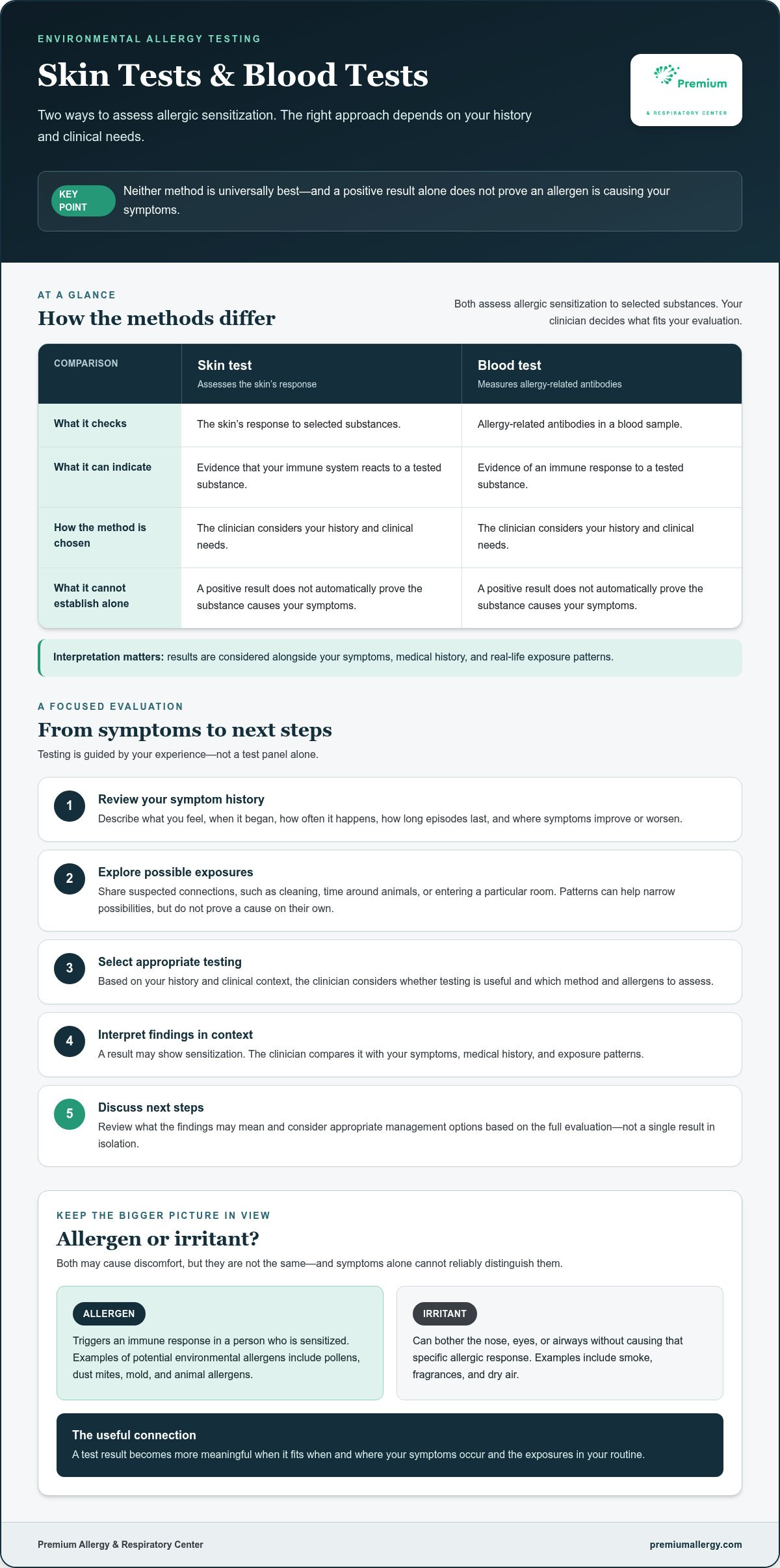
A little preparation can help your clinician connect test findings with what happens in your daily life. Before your appointment, jot down symptom patterns and possible exposures. You don’t need to identify the cause yourself; the goal is to bring details that help shape a focused evaluation.
Keep brief notes about when symptoms start, how long they last, and where they occur. For example, note whether symptoms seem different at home, at work, at school, or outdoors. If you live in Fresno, Clovis, Selma, or North Clovis, describe the settings you spend time in rather than assuming a particular local exposure is responsible.
These notes can make the conversation more useful and help your clinician decide which details matter for environmental allergy testing.
Preparation depends on the test method and your individual care plan. Some medicines can affect certain testing methods, so your clinic may give you specific instructions. Don’t assume general advice applies to your situation.
Never stop a prescribed or over-the-counter medicine on your own. Follow instructions from your care team, and ask them for guidance if you’re unsure what to take before testing. Sharing your full medication list helps the clinician consider it when planning the evaluation and interpreting results.
With your symptom notes, exposure observations, health history, and medication list in hand, you’ll be better prepared for a focused discussion. Explore allergy care for information about evaluation and support for allergy and respiratory concerns.
Once your results are available, review them with your clinician rather than making a plan from the report alone. The follow-up conversation connects test findings with your symptoms, exposure patterns, and relevant diagnoses. This helps clarify which results may matter in daily life and which may not explain what you’ve been experiencing.
Your clinician may consider how well symptoms are controlled, where and when they occur, and whether the findings fit a possible allergic condition. Depending on the full evaluation, management might include tailored guidance to reduce relevant exposures or medical treatment when appropriate. A test result by itself doesn’t determine treatment or guarantee that symptoms will disappear.
Bring questions about what the findings mean for your home, work, school, or outdoor routine. If breathing symptoms are part of your experience, discuss how they fit with your overall evaluation and care plan. This asthma management plan guide may help you prepare for that conversation.
Arrange routine follow-up if symptoms continue, change, or remain unexplained after testing. Keep track of what you notice and share any new patterns with your clinician. A result that doesn’t account for your symptoms is still useful information: it can guide a broader discussion about what else may be contributing and whether the plan needs adjustment. For individuals seeking comprehensive medical consultations, private general practice clinics such as GP Plus provide broad primary care services to help evaluate other potential health causes and manage persistent symptoms.
Routine specialty follow-up is different from urgent care. If you have severe or rapidly worsening symptoms, such as serious difficulty breathing or signs of a severe allergic reaction, seek emergency help immediately through local emergency services. Don’t wait for a scheduled appointment to address urgent symptoms.
Testing is a starting point for informed care, not a verdict on your symptoms. An individualized review of your results and experience can help you and your clinician identify practical next steps. To discuss your symptoms and testing options, schedule an allergy evaluation.
Environmental allergy testing can help identify immune responses to selected substances, but the most useful insight comes from connecting results with your symptoms and exposure history. A positive finding doesn’t automatically mean that allergen is causing your symptoms, and a negative result may not explain every concern. Your clinician can interpret the findings in context and discuss practical next steps.
Premium Allergy & Respiratory Center provides specialized allergy and respiratory diagnostic care, including blood allergy testing and evaluation of allergic rhinitis and asthma. The practice serves patients in Fresno, Clovis, Selma, and North Clovis.
If symptoms are affecting your comfort or breathing, you don’t have to keep guessing about what may be behind them. Schedule an allergy evaluation with Premium Allergy & Respiratory Center to discuss your symptoms and personalized care options.
Environmental allergy testing checks for immune responses to selected substances encountered indoors or outdoors. Depending on your symptoms and exposure history, a clinician may consider categories such as pollen, dust mites, mold, or animal allergens. Not every evaluation includes the same substances. Testing can help investigate allergic triggers, but it doesn’t detect irritants like smoke or fragrances, and results need to be interpreted alongside your symptoms.
Environmental allergy testing commonly uses a skin test or a blood test, selected according to your clinical history and needs. Skin testing checks the skin’s response to selected allergens, while a blood test measures allergy-related antibodies in a sample. The evaluation typically begins with a discussion of symptoms, timing, and possible exposures. Your clinician reviews the findings in context and discusses appropriate next steps.
Testing is generally manageable, though the sensation depends on the method. Skin testing may cause brief scratching or itching at the test site. A blood test involves a needle, which can cause a short pinch or sting when blood is drawn. Tell your clinician if you’re worried about discomfort or have concerns about a particular method. They can explain what to expect for your planned evaluation.
Yes. A positive result can show sensitization, meaning your immune system recognizes a tested substance, even if you don’t notice symptoms around it. A positive result alone doesn’t establish that you have a clinically relevant allergy or need treatment. Your clinician considers whether the finding matches your symptoms and exposure history. For example, a result may be less relevant if you have no symptoms with that exposure.
Write down when symptoms begin, how long they last, and where they improve or worsen, such as at home, work, school, or outdoors in Fresno, Clovis, Selma, or North Clovis. Bring your relevant medical history and a list of current medicines. Preparation can differ by test method, so follow your clinic’s instructions. Don’t stop prescribed or over-the-counter medicines unless your care team advises you to.
A test that doesn’t identify a relevant allergen doesn’t mean your symptoms aren’t real or that every possible cause has been ruled out. Irritants, such as smoke or fragrances, and other conditions can produce overlapping symptoms. Review the findings with your clinician, especially if symptoms persist or change. They can consider what was tested, how your symptoms behave, and whether another explanation or management approach should be discussed.
No. Allergy testing can assess whether your immune system reacts to selected mold allergens, but it cannot confirm that mold is present in your home or locate its source. If you suspect a home moisture or mold problem, that requires an assessment of the building, not an allergy test. Your clinician can help interpret any mold-related allergy results alongside your symptoms and exposure history.
What if the most useful clue isn’t a suspected trigger, but the pattern of your child’s symptoms? A stuffy nose that returns each spring, a recurring... Continue reading
READ MORE
Fresno’s allergy season doesn’t have one reliable start date. Symptoms may appear in spring, then return in summer or fall. That uncertainty is... Continue reading
READ MORE
What if lasting relief doesn’t require choosing between endless cleaning and relying on medication forever? Year-round sneezing, congestion, itchy... Continue reading
READ MORE
What if the symptoms you blame on mold are actually caused by another allergy or a respiratory condition? When congestion, sneezing, coughing, or... Continue reading
READ MORE