
What if your spring allergies aren’t just bad luck, but a sign that your current plan is missing important triggers? In Fresno, oak, mulberry, and... Continue reading
READ MORE

What if lasting relief doesn’t require choosing between endless cleaning and relying on medication forever? Year-round sneezing, congestion, itchy eyes, or restless nights can make dust mite allergy difficult to manage, and it’s not always clear which changes at home will help. A practical dust mite allergy treatment plan combines manageable exposure-reduction steps with care suited to your symptoms.
This guide explains which bedroom and cleaning adjustments to prioritize, including allergen-resistant bedding, regular hot-water washing, humidity control, and HEPA-filter vacuuming. It also distinguishes symptom-relief medicines from longer-term treatment options, so you can understand the purpose and limits of each approach. If symptoms persist, a professional allergy evaluation can help connect them with relevant allergens and inform personalized allergic rhinitis management. Start with a routine you can maintain, then use your symptom pattern to guide decisions about care.
If sneezing, congestion, or itchy eyes keep returning indoors, dust mites may be one possible trigger. A dust mite allergy occurs when the immune system reacts to allergenic proteins associated with these tiny organisms. Exposure can happen through particles containing mite proteins, including material from their waste or bodies. Dust mites themselves don’t bite or cause allergy symptoms by biting.
Dust mite allergy is a reaction to allergenic proteins carried in mite particles, not to bites from the mites themselves. These particles can collect in indoor fabrics and become airborne when bedding or furnishings are disturbed. For background on possible causes and symptoms, see this overview of Dust Mite Allergy.
A symptom pattern can offer clues, but it can’t identify an allergen by itself. Similar symptoms may come from other indoor allergens, seasonal pollen, infections, or non-allergic irritation. Before an evaluation, note when symptoms occur and where you spend time. For example, record whether you wake with symptoms, feel better after leaving home, or notice a flare while making the bed. These details help put symptoms in context, but they don’t confirm the cause.
Possible symptoms overlap with those of other allergies and can vary in type and severity. Watch for recurring episodes of:
Symptoms that recur indoors, including around bedtime or after waking, may be useful to discuss with a clinician. They aren’t proof of dust mite allergy. Note what you experience, when it happens, and whether it disrupts sleep or daily activities. A clinician can consider that history alongside an evaluation and, when appropriate, allergy testing to connect symptoms with relevant allergens.
Dust mites can persist in household fabrics and furnishings, even when you clean regularly. A spotless-looking room doesn’t guarantee that mites or their allergenic particles are absent. Visible dust also doesn’t show whether you have an allergy or establish that dust is causing your symptoms.
Set a more realistic goal: reduce exposure where practical and manage symptoms with an approach suited to you. You don’t need to make your home perfectly dust-free to take useful steps. A consistent, manageable routine is more practical than trying to eliminate every mite. If symptoms persist, consider an evaluation rather than responding with increasingly intensive cleaning alone.
A useful plan separates three goals: lower exposure to mite allergens, ease symptoms, and, for some people, change how the immune system responds to an allergen over time. These approaches can complement one another, but they aren’t interchangeable. Home steps target the environment, symptom-relief medicines address discomfort, and immunotherapy is a longer-term medical option for selected patients.
A dust mite allergy treatment plan may combine practical exposure reduction with clinician-guided care tailored to your symptoms and health history. The right mix depends on whether dust mite allergy has been established, which symptoms affect you most, other health conditions, and how you’ve responded to previous care. An evaluation can help connect your symptoms with relevant allergens and guide individualized allergic rhinitis management.
Allergen-resistant mattress and pillow covers, regular hot-water laundering of bedding, humidity control, and HEPA-filter vacuuming may help reduce exposure. These steps won’t remove every mite or allergen, so treat them as part of a broader approach. Antihistamines and nasal corticosteroids are medication categories used to manage allergy symptoms, but their suitability and directions vary.
Don’t start, stop, or combine medicines based on a general article. Review options and instructions with a clinician or pharmacist—independent healthcare providers such as Merali Pharmacy & Clinic can offer guidance on appropriate symptom-relief medications—particularly if you take other medicines or have other health conditions. If symptoms persist despite your current steps, share that with your care team rather than increasing doses or adding treatments on your own. The National Institute of Allergy and Infectious Diseases’ dust mite allergy information offers additional background on diagnosis and treatment.
For some appropriately evaluated patients, allergen immunotherapy may be considered as a longer-term option. Unlike medicines intended to relieve symptoms, immunotherapy aims to modify the immune response to a specific allergen. It may be given as allergy shots or, for certain allergens, as treatment placed under the tongue. These formats have different schedules and safety considerations, so they aren’t interchangeable do-it-yourself alternatives.
Whether immunotherapy is appropriate depends on confirmed allergy, symptoms, medical history, and the specific treatment’s current indications and precautions. A clinician can review age limits, contraindications, potential reactions, and how treatment would fit with other care. Don’t begin immunotherapy or change an existing treatment plan without professional guidance.
Think of these as coordinated tools, not competing solutions: home measures can lower exposure, symptom medicines can offer relief, and immunotherapy may be considered for longer-term management when appropriate. If recurring nasal symptoms remain difficult to manage, an allergic rhinitis evaluation can help clarify the next steps in your care.
Each approach has a different role. Comparing its purpose, limitations, and need for medical guidance can help you see how options fit together rather than treating them as interchangeable. No option guarantees complete mite removal or immediate, lasting relief.
Home measures aim to reduce exposure in your surroundings. Symptom medicines target discomfort, but their effects don’t confirm that dust mites are the cause. Immunotherapy is different: it targets a specific allergen and requires professional assessment to determine whether it’s appropriate.
| Approach | Purpose and likely role | Limits | Clinician guidance |
|---|---|---|---|
| Home controls | Reduce exposure to mite allergens in the home as one part of management. | Can’t remove every mite or allergen, and results aren’t guaranteed. | General measures can be discussed as part of an overall plan. |
| Symptom medicines | Help manage allergy symptoms, depending on the medicine and the individual. | Relieve symptoms rather than identify or confirm their cause. | Discuss suitability and directions, especially if symptoms continue or you have other health conditions. |
| Immunotherapy | Offers an allergen-directed option for some appropriately evaluated patients. | Isn’t the same as immediate symptom relief and isn’t suitable for everyone. | Requires professional assessment and guidance about options and safety. |
Your symptoms, diagnosis, health history, and other care needs all affect which options may suit you. A plan might begin with practical exposure reduction and symptom management, while an evaluation helps determine whether the suspected allergen is relevant. For some patients, a clinician may discuss immunotherapy after reviewing the diagnosis and individual circumstances.
Use a comparison to clarify questions, not to select treatment on your own. If symptoms ease with a medicine, that may offer relief, but it doesn’t establish what triggered them. Likewise, home changes can be worthwhile without proving that dust mites caused the symptoms. A personalized dust mite allergy treatment plan accounts for these limits and combines options only when they make sense for the individual.
If symptoms remain difficult to manage, revisit the plan with a clinician. They may reassess whether the diagnosis fits, whether another allergen or condition could be contributing, and whether the current approach needs adjustment. There’s no guaranteed cure or fixed timeline for improvement. The aim is a considered strategy that supports symptom control without assuming the same approach will work for everyone.
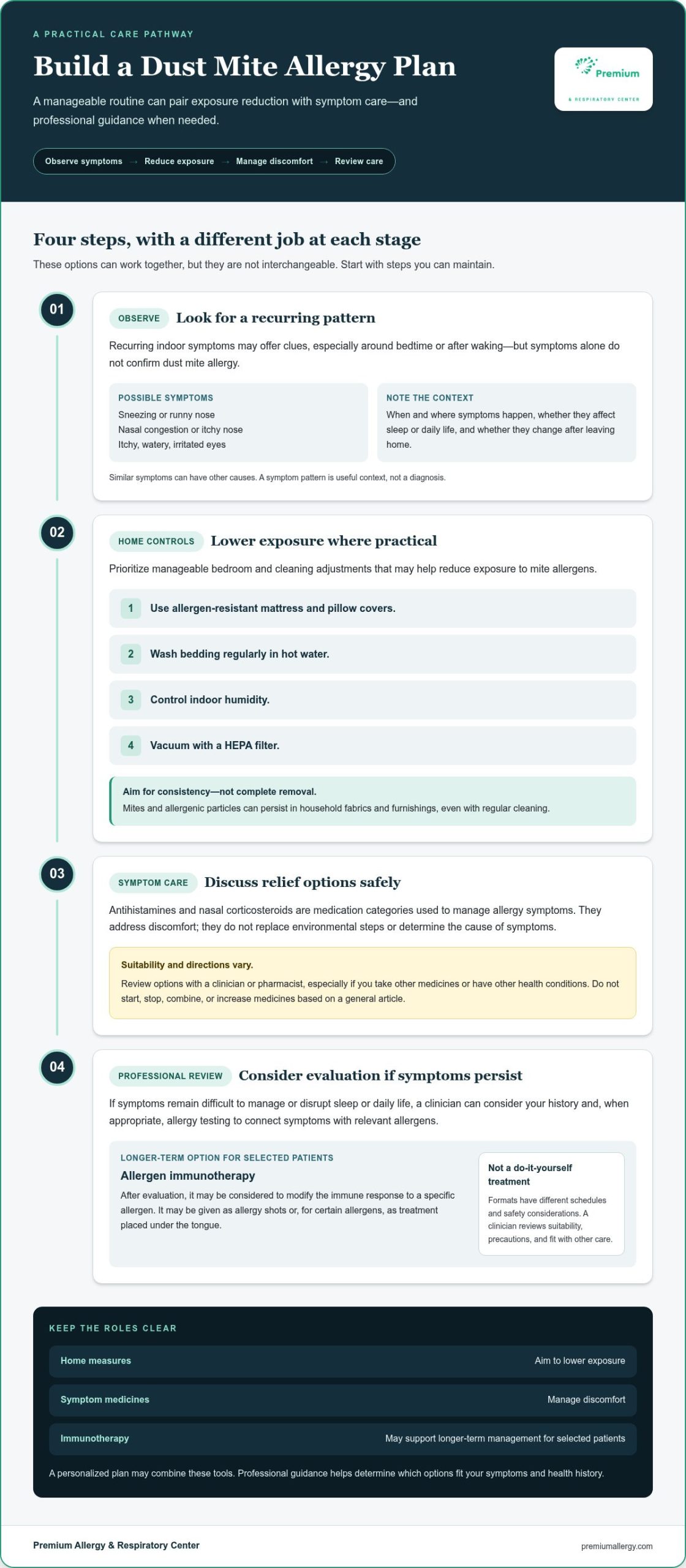
A home routine should be practical, not perfect. These steps may help reduce exposure to dust mite allergens, but they can’t guarantee complete removal or replace care tailored to your symptoms. Start with the bedroom, where you spend hours in close contact with bedding, then add other changes only if they’re manageable. One steady adjustment is more useful than turning every day into a deep-cleaning project.
Choose one bedding step to begin. Follow fabric care instructions and, when the materials allow, wash sheets and other washable bedding regularly in hot water at 130°F or higher. If that temperature isn’t suitable for an item, follow its care label rather than risk damaging it. A repeatable laundry routine matters more than trying to clean everything at once.
Follow product and fabric care directions for encasements and bedding. These measures are intended to reduce exposure, not make a room mite-free.
Choose a regular time for bedroom cleaning and use methods that limit dust disturbance where feasible. Damp-dusting hard surfaces can help avoid stirring dust into the air, while a HEPA-filter vacuum may be an option for floors and rugs. Focus on a few repeatable tasks instead of adding chores every time symptoms flare.
Keep a brief record to see whether changes seem useful. Note symptoms, sleep quality, and which tasks you completed. A simple entry might say, “washed bedding, congestion on waking, sleep interrupted.” Look for patterns over time rather than drawing conclusions from one good or difficult night. Symptoms can have more than one cause, and a log isn’t a diagnosis.
If nasal symptoms persist or worsen, reviewing the pattern with a clinician may be more useful than continually expanding your cleaning list. Allergic rhinitis specialist guidance can help you understand how ongoing symptoms may be evaluated and managed. A personalized dust mite allergy treatment plan can consider both the home steps you’ve tried and whether another trigger may be contributing.
Take it one change at a time. If you’d like support connecting recurring symptoms with possible allergens, explore personalized allergic rhinitis care.
Recurring congestion, sneezing, or itchy eyes deserve attention when they interfere with sleep, make daily activities harder, or remain difficult to manage with the steps you’ve tried. You don’t need to be certain dust mites are responsible before seeking guidance. Symptoms can have several possible causes, and an evaluation can help connect your experience with relevant allergens rather than relying on guesswork.
Premium Allergy & Respiratory Center provides specialty allergy evaluation and allergic rhinitis management for patients in Fresno, Clovis, Selma, and North Clovis. A clinician can consider your symptom history and, when appropriate, use allergy testing as part of a diagnostic evaluation. Testing helps inform the overall picture; results are considered alongside your history and clinical assessment.
A few notes can make it easier to explain what’s happening and what you’ve already tried. Bring a symptom timeline that includes where and when symptoms occur, whether they affect sleep, and any possible links to particular rooms, activities, or seasons. Patterns can be helpful, but they don’t prove a specific trigger on their own.
Testing isn’t a one-size-fits-all step. The clinician selects an approach based on your history and assessment, then considers what the findings mean for your symptoms. A comprehensive diagnostic evaluation may include blood allergy testing when appropriate. Share relevant health information and ask how any proposed test could help clarify the next step in your care.
A helpful evaluation connects three pieces: the symptoms you experience, possible triggers supported by your history and testing when appropriate, and management suited to your needs. If nasal symptoms continue, an individualized allergic rhinitis plan can help guide the discussion beyond repeated cleaning or trial-and-error changes. The goal is a clearer path forward, not a promise of instant or complete relief.
If you also experience breathing symptoms such as wheezing or chest tightness, mention them during your evaluation. They may call for a broader discussion of respiratory health, including this asthma management plan guide.
Consider dust mite allergy treatment a personalized care discussion, not a commitment to medication indefinitely. A specialty evaluation can help you understand the options and decide on appropriate next steps. Explore allergy care in Fresno.
Relief doesn’t have to mean making your home spotless or choosing a treatment before you understand what may be causing your symptoms. A useful next step gives you clearer information and feels manageable in daily life. If symptoms keep interrupting rest or routines, seek guidance that takes your experience and concerns seriously.
The right dust mite allergy treatment plan isn’t one-size-fits-all, and seeking personalized advice doesn’t commit you to relying on medication indefinitely. It can help you understand what may be contributing to your symptoms and consider care that aligns with your needs and preferences. Start with a conversation, ask questions, and move forward at a pace that feels right.
For support exploring your options, take the next step toward personalized allergy care.
There’s no guaranteed cure, but symptoms can often be managed, and allergen immunotherapy may reduce the immune system’s response for some people. Whether it’s appropriate depends on confirming the relevant allergy and reviewing your health history with a clinician. A tailored plan can help you explore realistic ways to improve daily comfort without promising that symptoms will disappear completely.
The best dust mite allergy treatment depends on your confirmed triggers, symptom pattern, and health needs. A clinician may help you combine practical exposure reduction with suitable symptom medicines and discuss immunotherapy if it’s appropriate. Someone whose symptoms interrupt sleep may need a different emphasis than someone with occasional mild symptoms. If an approach isn’t helping, reassessment can help determine whether the diagnosis or plan needs adjustment.
Focus on the items closest to where you sleep. Wash sheets and washable bedding regularly according to their care labels, consider allergen-resistant pillow and mattress encasements, and reduce extra fabric items you rarely clean. Avoid shaking bedding, which can stir particles into the air. Choose a routine you can maintain, then note whether your sleep or morning symptoms change. The goal is lower exposure, not a mite-free room.
A portable air purifier with a HEPA filter may capture some airborne particles, but it can’t remove allergens settled in bedding, carpets, or upholstery. Treat it as a possible supplement to bedroom cleaning and bedding measures, not a standalone solution. If you use one, follow the manufacturer’s guidance on room size, placement, and filter changes. Persistent symptoms still merit discussion with a clinician, even if you’re using an air purifier.
Yes. Dust mites can live indoors throughout the year, so an allergy to them may cause recurring symptoms beyond a particular pollen season. Symptoms may fluctuate with time spent in different rooms or changes in indoor conditions. Year-round congestion or itchy eyes don’t prove dust mites are responsible, though. If symptoms persist across seasons, discuss the pattern with a clinician so other possible causes can also be considered.
Consider an allergy evaluation if symptoms repeatedly disrupt sleep, interfere with work or school, or remain troublesome despite reasonable steps at home. An evaluation can also help when you’re unsure what’s triggering symptoms or want guidance before changing medicines. Premium Allergy & Respiratory Center provides specialty allergy evaluation and allergic rhinitis management for patients in Fresno, Clovis, Selma, and North Clovis.
Immunotherapy may be an option for some people after an appropriate evaluation confirms the relevant allergy. Depending on the patient and treatment, it may involve injections or a prescribed treatment taken under the tongue. It’s intended to modify the immune response over time, not provide instant symptom relief, and isn’t suitable for everyone. A clinician can explain potential benefits, risks, and whether it fits your diagnosis and health history. To discuss recurring allergy symptoms and evaluation options, contact Premium Allergy & Respiratory Center in Fresno.
What if your spring allergies aren’t just bad luck, but a sign that your current plan is missing important triggers? In Fresno, oak, mulberry, and... Continue reading
READ MORE
What if the most useful clue isn’t a suspected trigger, but the pattern of your child’s symptoms? A stuffy nose that returns each spring, a recurring... Continue reading
READ MORE
Fresno’s allergy season doesn’t have one reliable start date. Symptoms may appear in spring, then return in summer or fall. That uncertainty is... Continue reading
READ MORE
What if lasting relief doesn’t require choosing between endless cleaning and relying on medication forever? Year-round sneezing, congestion, itchy... Continue reading
READ MORE