
What if the most useful clue isn’t a suspected trigger, but the pattern of your child’s symptoms? A stuffy nose that returns each spring, a recurring... Continue reading
READ MORE

Fresno’s allergy season doesn’t have one reliable start date. Symptoms may appear in spring, then return in summer or fall. That uncertainty is understandable: local pollen changes through the year, and weather can shift when allergens appear and how widely they spread.
In a typical pattern, tree pollen is more prominent in spring, grass pollen in early summer, and weed pollen later in the year. But the calendar is only a guide. A wet winter, warm early spring, or dry, windy day can change what’s in the air. Mold and indoor allergens may contribute at other times, too. A pollen forecast can help you plan, but recurring symptoms aren’t always easy to explain by season alone.
This 2026 guide covers when common triggers may flare around Fresno, what can shift their timing, and how to use local forecasts and everyday habits to plan. You’ll also learn when recurring or disruptive symptoms are a reason to seek an allergy specialist’s evaluation.
In Fresno, allergy season is a changing period of outdoor allergen exposure, not a date you can circle and rely on every year. Pollen from trees, grasses, and weeds can trigger symptoms in people sensitive to those allergens. Pollen release varies, so your symptoms may not begin on the same day a regional forecast reports elevated pollen.
Seasonal pollen allergies involve symptoms linked to airborne pollen during particular parts of the year. Year-round indoor allergen exposure can come from triggers such as dust mites or mold, which may be present across seasons. This distinction can help you describe a pattern, but it can’t identify your personal trigger by itself. A general overview of Allergic Rhinitis (Hay Fever) explains how pollen can contribute to seasonal symptoms.
Outdoor pollen is commonly grouped into three broad categories: tree, grass, and weed pollen. Fresno-area examples include valley oak and mulberry trees, Bermuda and Johnson grasses, and weeds such as ragweed. These examples describe what may be in the local environment, but they don’t establish which pollen affects any one person.
Exposure can differ across neighborhoods and nearby areas because plants, land use, and weather conditions aren’t identical everywhere. Pollen may also travel beyond the plant that produced it. One person’s symptoms and another person’s experience can differ even when they live in the same part of the region. A broad seasonal pattern is a useful starting point, not a personal diagnosis or a complete map of exposure.
Plants respond to conditions as they grow and release pollen. Temperature and rainfall can influence plant development, while wind can carry pollen through the air and across local areas. A warm stretch, wet period, or windy day may change when pollen becomes noticeable or how much exposure you encounter. The effect depends on the plants involved and conditions at the time.
That’s why no single date reliably marks the start or end of allergy season in Fresno. Seasonal forecasts can help you anticipate changing outdoor conditions, but they describe broader patterns rather than predict how your body will respond. A forecast showing pollen doesn’t mean you’ll have symptoms. Symptoms on a low-pollen day don’t prove pollen is the cause, either. Indoor allergens and other exposures can overlap with outdoor pollen, so your day-to-day experience matters.
Use the calendar as a guide, then pay attention to what you notice. The next step is to consider the year’s broad local pattern while leaving room for seasonal shifts and individual differences.
Fresno’s outdoor pollen pattern shifts through the year, but the transitions don’t follow clean calendar boundaries. The overview below is a planning guide, not a promise that pollen or symptoms will start or stop in a particular month. Local conditions and individual responses can differ, even when broad regional patterns are similar.
Think of each period as a likely window of exposure, not a fixed appointment with symptoms. Trees, grasses, and weeds release pollen at different times, and their periods can overlap. One category may be increasing while another fades, creating a gradual transition rather than a clear seasonal switch. Forecast conditions can also change from day to day.
These windows summarize regional tendencies, not precise Fresno measurements for every month. For example, Fresno pollen reports on October 7 and 9, 2026, described weed or ragweed pollen as high while tree and grass pollen were low. That dated snapshot shows how conditions can vary within a season. It doesn’t predict what you’ll experience on another day or in another year.
For a practical day-to-day picture, look for a current pollen forecast that shows its reporting date and separates tree, grass, and weed levels. Treat it as one planning tool, not a personal symptom test. Forecasts can reflect recent conditions, weather, and vegetation information, so an estimate may not match conditions at your exact location or how you feel.
Fresno, Clovis, Selma, and North Clovis share a regional setting, but local plants, nearby land use, and weather exposure can differ. A regional forecast gives helpful context without establishing neighborhood-level conditions. Compare it with your symptom notes and outdoor activities. A recurring pattern can be more useful than one isolated forecast reading.
Use this allergy season calendar to anticipate possible shifts, then adjust your plans as current information changes. If recurring nasal or eye symptoms disrupt your routine, a personalized discussion about allergic rhinitis evaluation and treatment can help you consider what to do next.
A seasonal calendar can help you anticipate outdoor pollen, but it can’t explain every flare. Pollen periods may overlap, weather can change exposure from day to day, and indoor triggers may be present even when outdoor pollen is low. Symptoms can also have causes unrelated to allergies, so a flare outside a familiar window doesn’t confirm what’s behind it.
Symptom timing can suggest a pattern, but it can’t confirm which allergen, if any, is causing your symptoms. Treat the calendar as context, not proof. Noticing when and where symptoms occur gives you useful information to discuss with a clinician.
Outdoor pollen is tied to plant cycles, while indoor exposures may continue across seasons. Dust mites can be present in indoor environments year-round, and mold may be more noticeable in damp conditions or particular spaces. These exposures can overlap with pollen, making it difficult to distinguish one possible trigger from another based on timing alone.
Pay attention to settings as well as seasons. Symptoms that seem connected to time indoors, a particular room, or damp conditions are worth noting, but they don’t identify a cause by themselves. Focused resources on mold allergy and a dust mite treatment checklist can offer more detail on these indoor triggers.
A simple symptom record can make an unclear pattern easier to describe. Note when symptoms start, where you are, what you’re doing, and whether they recur in similar circumstances. For example, record whether symptoms appeared outdoors, at home, or after a particular activity. Include environmental changes you noticed, but don’t assume one exposure explains the symptoms.
These notes aren’t a diagnosis. They can help you and a clinician consider whether symptoms appear linked to a recurring exposure or need a broader evaluation.
If symptoms keep returning, disrupt sleep or daily activities, or remain difficult to explain, discuss the pattern with an allergy specialist. An evaluation can take your symptom history and possible exposures into account. The specialist can then use clinical judgment to determine whether testing is appropriate. Not everyone with seasonal symptoms needs testing, and a calendar alone can’t establish a specific allergy.
Bring your notes and questions to the discussion. An allergic rhinitis specialist guide can provide additional context about specialty care, but it doesn’t replace an individualized assessment.
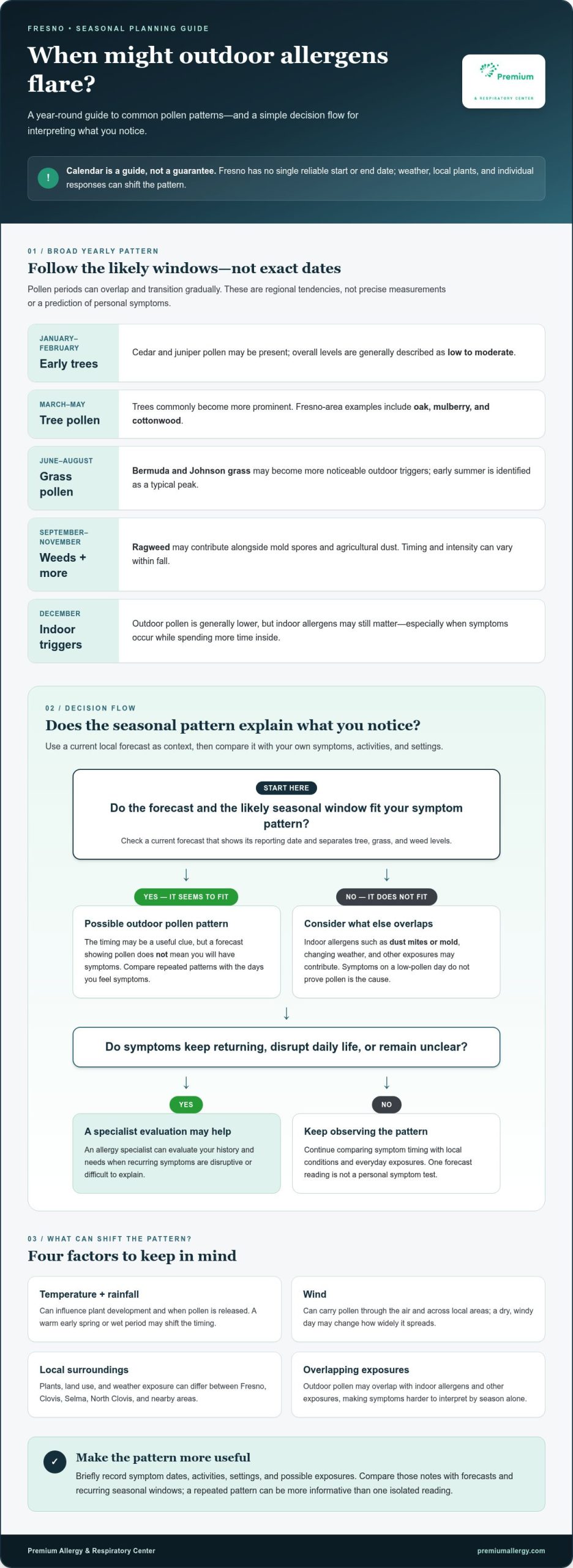
A simple routine can help you respond to changing conditions without reorganizing every day around a forecast. Start with current local pollen information, compare it with what you notice, and make practical adjustments that fit your schedule. Forecasts are useful context, not a guarantee of how you’ll feel.
Before a possible flare, check a dated local pollen forecast, note your symptoms and exposures, then adjust outdoor plans or routines where practical.
Look for a current forecast that shows its date and distinguishes pollen categories, rather than relying on an undated general summary. Compare it with your own symptoms. One high reading may be worth noting, but it won’t tell you by itself whether pollen caused a flare or how you’ll respond.
Review the pattern over time. If you have an outdoor work shift, school activity, or planned exercise, use the forecast as one factor in deciding when or where to do it. On days when pollen appears elevated, you might move an outdoor task to another time if your schedule allows, keep windows closed, or change clothes after spending time outside. These steps can reduce some exposure, but they can’t guarantee that symptoms will be prevented.
Keep the routine flexible. Work and school commitments may not move, and conditions can change during the day. A forecast can help you prepare, while your own experience guides which adjustments are useful for you.
A brief log can help you see whether symptoms recur in a certain season or setting. Record the date, when symptoms began, how long they lasted, where you were, what you were doing, and any possible exposures you noticed. Include whether symptoms appeared during outdoor activities, at home, or in another repeated setting. A short note is enough; you don’t need to track every detail of the day.
After collecting notes over time, look for recurring patterns instead of drawing conclusions from one difficult day. A record can support a focused conversation with a clinician, but it can’t diagnose an allergy or identify a trigger on its own.
If recurring symptoms affect your routine, a personalized allergic rhinitis evaluation can help you discuss your history and whether further assessment is appropriate.
A seasonal pattern can be useful, but you don’t have to work out every trigger on your own. Discuss symptoms with an allergy specialist if they keep returning, interfere with sleep or daily activities, or remain difficult to explain after you’ve tracked possible exposures. Not every seasonal flare requires a visit, but recurring disruption is a reasonable reason to seek individualized guidance.
Allergy and respiratory specialty care is provided in an outpatient setting. It supports evaluation and management, not emergency care. If symptoms feel severe or urgent, seek appropriate emergency care rather than relying on a routine specialty evaluation.
An evaluation starts with your experience: what symptoms you notice, when they occur, where you are, and how they affect your routine. Your clinician can consider that history alongside possible exposures and use clinical judgment to discuss whether further evaluation or testing is appropriate. The right next step depends on the individual, so a calendar or online article can’t determine which test or treatment you need.
For recurring nasal or other symptoms that may fit allergic rhinitis, personalized care can help you discuss the pattern and management options. Allergic rhinitis diagnosis and treatment are part of allergy-focused care, but no specific result can be promised. Bringing a symptom log or notes about your seasonal pattern can make the conversation more focused.
Residents of Fresno, Clovis, Selma, and North Clovis can seek specialty care when symptoms are persistent, disruptive, or unclear. Start by noting what you’ve experienced and gathering your questions, then use that information to guide a conversation with an allergy specialist. The aim isn’t to label every uncomfortable day, but to understand recurring concerns and decide together whether an evaluation makes sense.
It’s also reasonable to keep observing symptoms if they’re occasional and manageable. If allergy season repeatedly interrupts work, school, sleep, or time outdoors, an individualized assessment can offer a clearer path forward than relying on timing alone.
Explore allergy and respiratory specialty care at Premium Allergy & Respiratory Center. Start by writing down your main concern and when you tend to notice it.
You don’t need to wait for another difficult stretch to decide what support might be useful. Choose one small step now: write down the symptoms you most want to understand, note how they affect your routine, or prepare questions for a clinical conversation. Knowing what you’d like help with can make that conversation more focused and manageable.
Allergy season may shift from year to year, but recurring symptoms deserve attention when they affect the way you live. Personalized outpatient care can help you discuss allergic rhinitis or asthma concerns and consider next steps based on your needs, without assuming that every flare has the same cause.
Ready to discuss recurring allergy or respiratory symptoms? Explore personalized allergy and respiratory care at Premium Allergy & Respiratory Center.
No. The broad pattern may be familiar, but the timing and intensity of pollen exposure can change from year to year. A date that coincided with symptoms last spring isn’t a dependable signal for this spring. Use past experience as a planning clue, then compare it with current conditions as the season approaches. If you’re arranging outdoor events, keep plans flexible rather than relying on one annual start date.
Yes. A low pollen reading doesn’t rule out symptoms. You may be sensitive to an allergen that isn’t included in the reading, or your symptoms may relate to an indoor exposure or another cause. A forecast also describes conditions across a reporting area, not every place you visit. If symptoms appear indoors or persist through low-pollen periods, note the setting and discuss the pattern with a clinician.
You can look for clues, but symptoms alone can’t confirm pollen as the cause. For example, sneezing or itchy, watery eyes that repeatedly occur after time outdoors may suggest a pattern worth recording. Note whether symptoms appear in similar places or activities and whether they return during similar parts of the year. A clinician can consider those details alongside your health history. Don’t treat a symptom match as a diagnosis.
Symptoms that continue after a suspected pollen period may reflect ongoing indoor exposure, another overlapping trigger, or a cause unrelated to allergy. Consider what has changed: do symptoms occur mainly at home, in a particular room, or during a specific activity? If the pattern persists or affects sleep and daily routines, bring those observations to a clinician rather than assuming pollen is responsible.
No. A forecast estimates outdoor pollen conditions, but it doesn’t measure your personal response or establish a diagnosis. Even if symptoms coincide with a high reading, that timing is only one clue. Keep the forecast date and pollen category alongside your observations, such as where you were and what symptoms occurred. An allergy specialist can assess whether further evaluation is appropriate based on your history.
They can. In people with asthma, exposure to pollen or another allergen may coincide with changes in breathing symptoms, though a calendar can’t establish the cause. Watch for a pattern such as cough, wheezing, chest tightness, or breathlessness during a period when your usual symptoms change. Follow the asthma plan provided by your clinician, and seek urgent medical help for severe or rapidly worsening breathing difficulty.
Consider an appointment if symptoms recur, disrupt sleep or usual activities, or remain unclear despite observing possible patterns. It may also help to discuss symptoms that seem to coincide with changes in asthma. Bring a short record of when symptoms occur, where you were, and how they affected your routine. For people in Fresno, Clovis, Selma, or North Clovis, an allergy specialist can help determine whether an individualized evaluation is appropriate.
What if the most useful clue isn’t a suspected trigger, but the pattern of your child’s symptoms? A stuffy nose that returns each spring, a recurring... Continue reading
READ MORE
Fresno’s allergy season doesn’t have one reliable start date. Symptoms may appear in spring, then return in summer or fall. That uncertainty is... Continue reading
READ MORE
What if lasting relief doesn’t require choosing between endless cleaning and relying on medication forever? Year-round sneezing, congestion, itchy... Continue reading
READ MORE
What if the symptoms you blame on mold are actually caused by another allergy or a respiratory condition? When congestion, sneezing, coughing, or... Continue reading
READ MORE