
What if the most useful clue isn’t a suspected trigger, but the pattern of your child’s symptoms? A stuffy nose that returns each spring, a recurring... Continue reading
READ MORE

What if the symptoms you blame on mold are actually caused by another allergy or a respiratory condition? When congestion, sneezing, coughing, or wheezing keeps returning, it’s understandable to look for a clear trigger. A search for “mold allergy treatment Fresno” can be a first step, but seeing or smelling mold doesn’t confirm that you’re allergic to it.
The useful next step is to connect your symptoms with a careful evaluation, then choose a plan that fits what’s causing them. This guide explains how allergy specialists assess suspected mold allergy, how testing can help distinguish it from other allergic or respiratory causes, and how reducing exposure, symptom relief, and personalized allergy or asthma management may each play a role. You’ll also learn when persistent symptoms may warrant specialized allergy care in Fresno, Clovis, Selma, or North Clovis.
Symptoms that appear around a damp or moldy space can raise a reasonable question, but they don’t confirm a mold allergy. Mold exposure may irritate the eyes, nose, throat, or lungs even when a person isn’t allergic. Similar symptoms can have other causes, so the setting is a clue to investigate, not a diagnosis.
If you’re looking into mold allergy treatment Fresno, start by noting which symptoms occur, when they appear, and whether they improve after you leave a particular space. You don’t need a local mold-count claim to take those observations seriously. A specialty evaluation can help put them in context.
An allergic response to mold may involve familiar nose and eye symptoms, such as sneezing, nasal congestion, and itchy or watery eyes. Some people also have a cough or other respiratory symptoms. The pattern and intensity vary, so not everyone experiences the same combination.
Irritation can overlap with allergy. A musty room, for example, might leave someone with a scratchy throat or irritated eyes, but that reaction alone can’t establish the cause. Symptoms may also continue after leaving a space, so a single episode doesn’t settle the question. Notice recurring patterns, but don’t use them to diagnose yourself.
Wheezing or shortness of breath deserves particular attention. These symptoms may be associated with asthma or another respiratory issue, and shouldn’t automatically be attributed to mold allergy. If breathing symptoms recur, a clinician can assess them and consider appropriate next steps.
Pollen, dust mites, and other allergens can cause symptoms that resemble suspected mold allergy, and more than one trigger may be involved. A symptom diary can make the pattern easier to discuss: note where you were, what you were doing, which symptoms appeared, and whether they eased when you left. Treat these details as useful observations, not proof.
Timing and location may offer clues. Symptoms that repeatedly appear in one building could prompt a closer look at that environment, while symptoms in several settings may suggest a broader or different pattern. Neither pattern confirms a specific allergen, and changes in symptoms can have several explanations. For seasonal context, see this guide to allergy season in Fresno and when common triggers may flare.
A clinician can consider your history alongside an assessment and appropriate testing, rather than treating a suspected exposure as a confirmed allergy. For more context on persistent nasal symptoms and individualized care, explore this guide to an allergic rhinitis specialist. If symptoms keep returning or include wheezing, a focused evaluation can help clarify whether allergic rhinitis, asthma, or another cause needs attention.
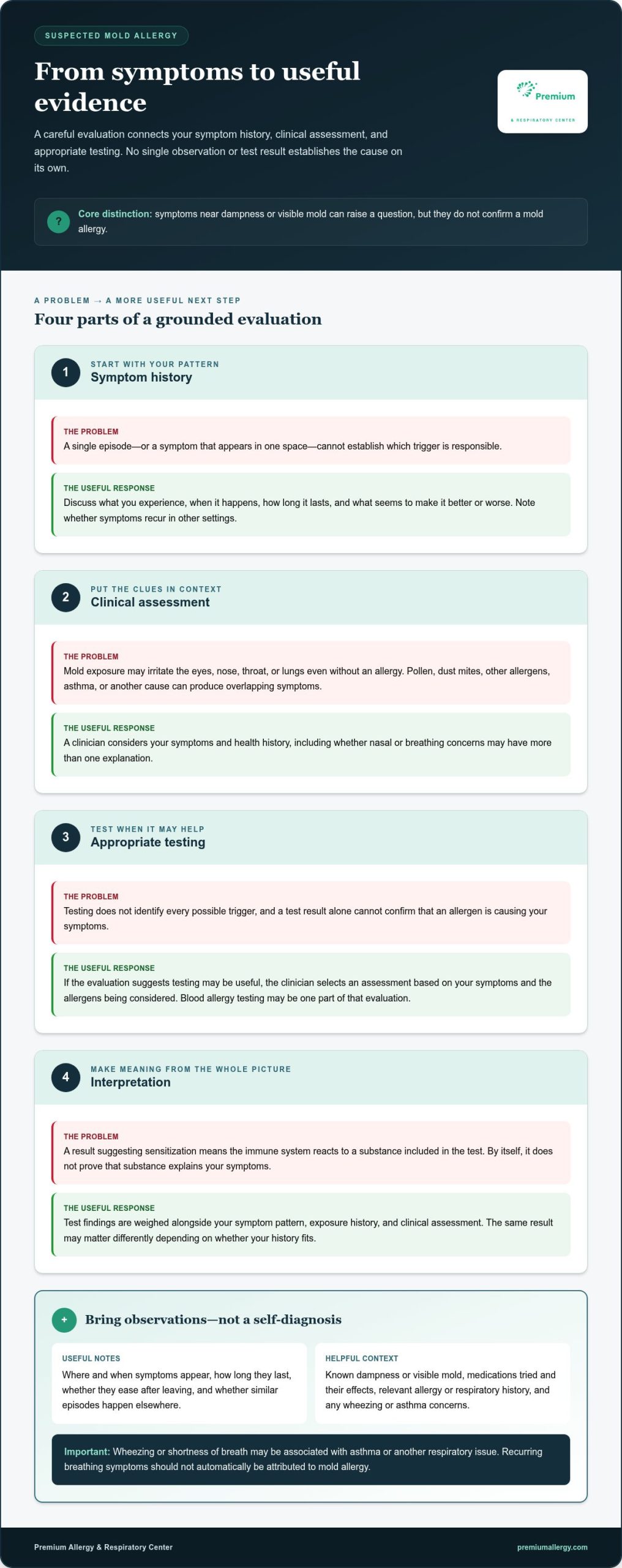
There isn’t one observation or test result that can, by itself, establish that mold is causing your symptoms. A useful evaluation connects your health history with clinical findings and, when appropriate, allergy testing. This step-by-step approach can help distinguish suspected mold allergy from other allergic or respiratory causes and give your care plan a more reliable starting point.
An allergist may work through the evaluation in this order:
Before your appointment, note when symptoms appear, where you were, how long they lasted, and whether similar episodes happen in other settings. Include any known dampness or visible mold at home or work, but treat it as context rather than proof of allergy. If exposure occurs in a workplace setting, comprehensive occupational health for small business strategies can help employers identify indoor air concerns and protect staff wellbeing. Bring a list of medications and relevant allergy or respiratory-health history, including prior wheezing or asthma concerns.
Allergy testing can help identify sensitization to selected allergens, meaning the immune system reacts to a substance included in the test. Blood allergy testing may be one part of an evaluation, but it doesn’t independently confirm that an allergen is causing your symptoms. A clinician interprets results in light of your symptom pattern and exposure history. Testing doesn’t identify every possible trigger or guarantee relief.
Testing decisions are individual. The clinician determines whether testing is appropriate and which approach fits the question being assessed. A result that suggests sensitization may matter differently for someone with matching symptoms than for someone whose history doesn’t fit. Likewise, a result that doesn’t point to mold doesn’t automatically explain persistent symptoms. Your history and assessment guide what the findings mean and which next steps make sense.
For a visit, concise notes are often more useful than trying to identify the cause yourself. Record changes in location, timing, and symptoms, and mention treatments you’ve tried and how they affected you. If breathing symptoms are part of the picture, include when they occur and whether they limit activity. These details help a specialist consider allergic rhinitis, asthma, or other explanations as part of a personalized evaluation.
For persistent concerns, mold allergy treatment Fresno can begin with a focused allergy evaluation rather than assumptions based on a single exposure or test. Fresno allergy care can help connect your symptom history, appropriate testing, and a tailored plan.
Care is most useful when it matches the cause of symptoms and your health needs. A plan may combine clinician-guided symptom relief, steps to reduce relevant triggers, and follow-up for recurring problems. These approaches serve different purposes; no single option is right for everyone. Treatment for suspected mold allergy depends on an appropriate clinical evaluation.
Medication choices can include categories such as antihistamines or nasal corticosteroids for allergy symptoms. The right option depends on your symptoms, medical history, other medicines, and clinician guidance. Don’t assume a treatment is appropriate just because symptoms seem allergy-related, and avoid changing or combining medicines without guidance from a qualified clinician.
Symptom-focused care aims to ease particular concerns, such as nasal or eye symptoms, while reducing exposure addresses potential triggers in your surroundings. Neither approach proves what caused symptoms, and relief from a medicine doesn’t confirm a mold allergy. If symptoms persist, change, or interfere with daily routines, reassessment can help determine whether the working explanation or care plan needs to change.
| Approach | Its role | When clinical guidance matters |
|---|---|---|
| Clinician-guided symptom relief | Targets specific symptoms with an appropriate care or medication plan. | Before selecting or changing medication, especially if symptoms persist or your health history may affect the choice. |
| Trigger reduction | Limits contact with suspected environmental triggers where practical. | When the source is unclear, symptoms continue, or exposure concerns involve extensive visible mold. |
| Ongoing management | Reviews recurring symptoms and adjusts care as needs evolve. | When symptoms return, affect everyday activities, or include respiratory concerns. |
Recurring symptoms can call for more than short-term relief, particularly if they disrupt sleep, work, or normal routines. Follow-up lets a clinician review how symptoms change, whether the initial assessment still fits, and what management is appropriate. Keep track of patterns and your response to care so those details can inform the next discussion.
Breathing symptoms deserve careful consideration. Wheezing, chest tightness, or shortness of breath may warrant assessment for asthma or other causes rather than being treated as nasal allergy alone. Personalized asthma management can help organize ongoing care when asthma is part of the clinical picture. A practical asthma management plan can clarify how to approach symptoms and follow-up with your clinician.
Long-term options should follow the evaluation, not assumptions about the trigger. Mold-specific immunotherapy shouldn’t be presumed appropriate; a clinician can explain which management approaches fit the individual’s findings. For mold allergy treatment Fresno, the goal is to connect symptom relief, exposure considerations, and respiratory care in a plan that can be revisited as your needs change.
Addressing dampness and visible mold can make a home healthier, but environmental changes serve a different purpose from allergy diagnosis or medical care. They may reduce exposure to irritants or potential triggers, yet they can’t confirm that mold is causing symptoms or replace an individualized treatment plan. Start with practical moisture control, and seek help for problems that are extensive or keep returning.
Look for moisture sources and act on what you can safely manage. A small leak, condensation, or a damp surface that isn’t drying may point to an issue that needs attention. Useful habits include:
Cleaning visible growth without addressing the moisture behind it may not resolve a recurring problem. If dampness returns after a repair or an area is too extensive to handle safely, focus on getting appropriate help rather than escalating a do-it-yourself cleanup.
If symptoms ease after a room is dried or you spend less time there, that’s useful information to share with a clinician. It still doesn’t identify a specific allergen: changes in exposure, routine, or other conditions may affect how you feel. Keep a simple record of the change you made and any symptom pattern that followed, but don’t use improvement alone to diagnose yourself.
Home measures may help address the environment while a clinician evaluates persistent symptoms. If symptoms continue, return, disrupt everyday activities, or include wheezing or shortness of breath, arrange a clinical assessment. Breathing concerns can have causes beyond mold allergy, so they shouldn’t be managed solely by changing the home environment. The clinician can consider whether allergy or asthma assessment is appropriate and tailor next steps to your health history.
Think of moisture control and medical care as complementary approaches. A dry, well-maintained space can address an environmental concern; an evaluation can help explain ongoing symptoms and guide appropriate care. Neither step automatically settles the other question. If you’re considering mold allergy treatment Fresno, keep notes on your home observations and symptoms to help make a specialty visit more focused.
For persistent allergy or respiratory symptoms, learn about a specialty allergy evaluation and the individualized care it can provide.
Recurring symptoms can leave you unsure whether to focus on the home environment, seek medication, or look for a different explanation. A specialty evaluation helps bring those questions together. At Premium Allergy & Respiratory Center, outpatient allergy and respiratory care in Fresno includes allergy evaluations, blood allergy testing, allergic rhinitis treatment, and asthma management. The goal is to use your symptoms and clinical findings to guide appropriate next steps, not to assume every concern has the same cause or solution.
Your visit can begin with a conversation about symptoms, health history, and relevant exposures. The clinician may consider whether your concerns fit allergic rhinitis, asthma, or another cause, then decide whether diagnostic testing is appropriate. Blood allergy testing can be part of an evaluation when it fits the clinical question, but neither a test nor a specific diagnosis is assumed in advance.
Come prepared to describe which symptoms affect you most and how they influence sleep, work, or other routines. Notes about when symptoms occur, medications you use, and any respiratory history can help make the discussion more focused. The clinician considers this information together, then tailors management to your needs. One person may need a different approach from another, even when their symptoms seem similar.
For mold allergy treatment Fresno, a specialty visit can help clarify whether the evidence supports an allergic explanation and what care may be appropriate. If recurring symptoms are disrupting your routine, learn about specialty allergy care in Fresno and take a practical step toward understanding your options.
Consider an evaluation if symptoms keep returning, interfere with sleep or daily activities, or remain difficult to manage. Assessment may be especially helpful when nasal symptoms overlap with cough, wheezing, or other breathing concerns. Sharing how and when symptoms occur can help the clinician decide whether allergy or asthma management should be part of your personalized plan.
Specialty outpatient care is for planned evaluation and ongoing management, not emergencies. Severe breathing difficulty requires emergency care. Don’t wait for a routine allergy visit if breathing becomes severely difficult.
You don’t need to arrive with the cause already figured out. Bring your questions and observations; a careful assessment can help replace guesswork with a plan shaped around your health and the findings of your evaluation.
You don’t have to pinpoint the trigger before seeking help. If symptoms keep returning, a thoughtful evaluation can help you move beyond guesswork and decide what to address next. Bring your observations and questions, and focus the conversation on what matters in your daily life.
Exploring mold allergy treatment Fresno can be a practical starting point, whether you’re trying to understand recurring symptoms or find a more manageable way forward. The right plan begins with your individual health needs and can be adjusted as those needs become clearer.
Explore personalized allergy and respiratory care in Fresno and take a confident step toward answers and greater comfort.
Yes, mold can trigger asthma symptoms in some people with asthma, including coughing, wheezing, chest tightness, or shortness of breath. These symptoms can also have other causes, so their presence doesn’t establish that mold is responsible. Note whether breathing changes happen during particular activities or in particular settings, and share that information with a clinician. Severe breathing difficulty needs emergency care rather than a routine allergy appointment.
Mold exposure isn’t limited to one season. Outdoor mold levels can vary with weather and other environmental conditions, while indoor dampness can create exposure at different times of year. There’s no need to assume a Fresno-specific seasonal pattern without current local data. If symptoms seem to follow a calendar pattern, record when they occur and discuss it with a clinician, since pollen and other allergens may overlap. For a broader look at Fresno allergy season timing and triggers, consult the seasonal guide.
A blood allergy test can detect sensitization to the specific allergens included in the assessment, but a positive result alone doesn’t prove that mold causes your symptoms. A clinician considers the finding alongside your health history and symptom pattern. For example, a result may be less meaningful if your symptoms don’t fit the suspected exposure. Testing can support an evaluation, but it can’t guarantee a diagnosis or identify every possible trigger.
Ongoing symptoms after cleaning don’t necessarily mean the cleanup failed or that mold is the cause. Moisture may remain, exposure may come from another area, or a different trigger could be involved. Avoid disturbing extensive growth, and seek qualified remediation guidance for substantial or recurring problems. If symptoms persist, keep track of changes in the home and your health, then discuss both with an allergy clinician.
There’s no reliable way to predict whether an individual’s mold-related symptoms will disappear without care. Symptoms may fluctuate as exposures and other conditions change, while an underlying sensitivity may continue. If symptoms settle, that doesn’t necessarily prove the allergy has resolved; if they return, note what changed around that time. A clinician can help assess persistent or recurring symptoms and discuss suitable management rather than relying on guesswork.
Consider an evaluation if recurring symptoms disrupt sleep, school, work, or other daily activities, or if you’re unsure whether allergies or asthma may be involved. Premium Allergy & Respiratory Center provides specialty allergy and respiratory care for people in Fresno, Clovis, Selma, and North Clovis. An evaluation can help clarify next steps. Seek emergency care for severe breathing difficulty, not an outpatient allergy visit.
What if the most useful clue isn’t a suspected trigger, but the pattern of your child’s symptoms? A stuffy nose that returns each spring, a recurring... Continue reading
READ MORE
Fresno’s allergy season doesn’t have one reliable start date. Symptoms may appear in spring, then return in summer or fall. That uncertainty is... Continue reading
READ MORE
What if lasting relief doesn’t require choosing between endless cleaning and relying on medication forever? Year-round sneezing, congestion, itchy... Continue reading
READ MORE
What if the symptoms you blame on mold are actually caused by another allergy or a respiratory condition? When congestion, sneezing, coughing, or... Continue reading
READ MORE