
What if your spring allergies aren’t just bad luck, but a sign that your current plan is missing important triggers? In Fresno, oak, mulberry, and... Continue reading
READ MORE

What if your spring allergies aren’t just bad luck, but a sign that your current plan is missing important triggers? In Fresno, oak, mulberry, and cottonwood pollen can overlap with grass pollen, while summer and fall bring different seasonal triggers. If sneezing, congestion, or itchy eyes keep disrupting your days, it’s understandable to feel frustrated when over-the-counter remedies aren’t enough. A practical pollen allergy management Fresno plan starts with understanding what you may be reacting to and when exposure is most likely.
This checklist covers ways to reduce pollen exposure, make sense of Fresno’s seasonal patterns, and recognize when specialist care may help. You’ll also learn how blood allergy testing can help identify relevant triggers and how to discuss treatment options for ongoing allergic rhinitis. From everyday prevention to a clinical evaluation, you can move from simply enduring allergy season toward managing it with greater confidence.
Fresno’s allergy picture is shaped by more than one plant or one season. The San Joaquin Valley’s bowl-like geography can trap pollutants and airborne irritants, while agricultural dust and changing air quality add to the respiratory burden. Symptoms can feel intense even when a pollen report looks modest. City allergy rankings also can’t identify your personal triggers, which depend on your exposure and sensitivity.
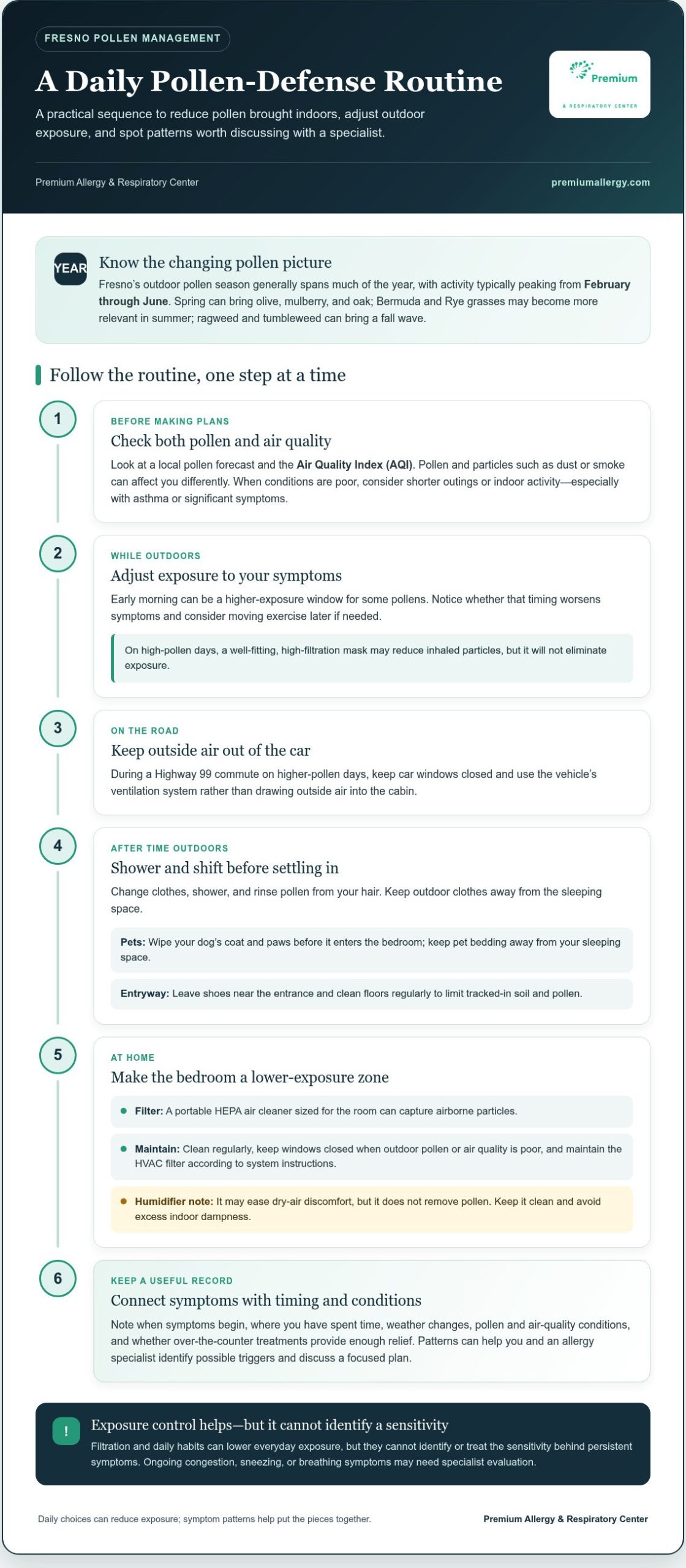
Fresno’s outdoor pollen season generally spans much of the year, with activity typically peaking from February through June. Olive, mulberry, and oak trees can all contribute to spring symptoms, but the triggers that matter to you depend on exposure around your home, workplace, and regular routes. Pollen is one type of airborne plant material that can provoke allergic symptoms in sensitive people. Understanding Pollen and Allergies offers foundational context on how it affects health.
It helps to distinguish between managing symptoms and treating the underlying sensitivity. Reducing exposure and easing sneezing, congestion, or itchy eyes can help manage symptoms. Identifying the allergen behind a reaction can help an allergy specialist discuss targeted care. A thoughtful pollen allergy management Fresno plan considers both, rather than relying on guesswork every time symptoms flare.
Olive and mulberry trees can be prominent neighborhood triggers, while oak adds to the spring mix. Bloom timing and exposure vary, so track when symptoms begin and where you’ve spent time. Almond bloom season also overlaps with spring outdoor activity, and agricultural dust may add irritation around working fields and roadways. Pollen can travel beyond the nearest tree, so consider your activities and surroundings as well as what grows near home.
As spring gives way to summer, grasses such as Bermuda and Rye may become more relevant. In fall, ragweed and tumbleweed can bring a different wave of symptoms. A routine that helped in spring may not be enough later in the year, so record symptom timing instead of assuming every flare has the same cause.
Fresno’s air conditions matter, too. Stagnant air and inversion layers can keep pollutants and particles closer to the ground, potentially worsening respiratory discomfort alongside pollen exposure. Agricultural dust and wildfire smoke can also irritate airways, even when they aren’t the allergen behind your symptoms. Check both pollen and air quality conditions, then note whether symptoms track with one, the other, or both. These observations give you and your specialist a clearer starting point for identifying triggers and building a focused plan.
Effective pollen allergy management Fresno residents can use starts with small, repeatable choices, not one expensive device or a single medication. Before heading out, check a local pollen forecast and the Air Quality Index (AQI). Pollen and particles such as dust or smoke can affect you differently, so use both readings to decide whether to adjust outdoor plans. When conditions are poor, consider shorter outings or indoor activity, especially if you have asthma or significant symptoms.
Early morning can be a higher-exposure window for some pollens. Notice whether that timing worsens your symptoms, and consider planning exercise later if needed. On high-pollen days, a well-fitting, high-filtration mask may reduce inhaled particles, though it won’t eliminate exposure. During a Highway 99 commute, keep car windows closed and use the vehicle’s ventilation system rather than drawing outside air into the cabin.
After time outdoors, follow a “Shower and Shift” routine: change clothes, shower, and rinse pollen from your hair before settling in for the evening. If your dog has been outside, wipe its coat and paws before it enters the bedroom. Keep outdoor clothes and pet bedding away from your sleeping space so pollen is less likely to follow you indoors.
Make your bedroom a lower-exposure zone. A portable HEPA air cleaner sized for the room can capture airborne particles, while regular cleaning helps remove settled dust and pollen. Keep windows closed when outdoor pollen or air quality is poor, and maintain your HVAC filter according to the system’s instructions. Filtration can support a broader plan, but it can’t identify or treat the sensitivity behind persistent symptoms.
Use this checklist to make your routine easier to maintain:
A no-shoes policy can limit soil and pollen tracked indoors. Leave footwear at the entrance and clean floors regularly rather than relying on air filtration alone. A humidifier may ease discomfort from dry air, but it doesn’t remove pollen. Too much moisture can encourage mold and dust mites, so use a humidifier only if the air feels dry, keep it clean, and avoid excess indoor dampness.
These steps can lower everyday exposure, but ongoing congestion, sneezing, or breathing symptoms may need more than home adjustments. An allergy specialist can help connect symptom patterns with likely triggers and discuss personalized allergic rhinitis treatment. Learn more about specialist allergy care.
When symptoms keep returning despite sensible exposure-reduction habits, a structured clinical evaluation can replace trial and error with a clearer plan. Bring your symptom notes, medication history, and observations about weather or outdoor exposure to your appointment. The goal is to understand what may be driving your symptoms, assess whether your current approach is helping, and decide on appropriate next steps.
Guessing between local tree pollen and household triggers such as mold can lead to mismatched avoidance efforts. Blood testing can provide evidence about which allergens your immune system recognizes. A specialist can compare the results with your symptom timeline and environment. Precision testing can help guide a personalized management plan that connects likely triggers with practical exposure strategies and appropriate treatment options.
Different medicines address different symptoms. Oral antihistamines can help with itching, sneezing, and a runny nose, while intranasal corticosteroids target nasal inflammation and may help with congestion when used as directed. For moderate to severe seasonal symptoms, current guidelines support considering a combination nasal antihistamine and corticosteroid. The right choice depends on your health history and symptom pattern, so ask your specialist which option fits you rather than relying on a one-size-fits-all regimen.
Timing matters, too. If your symptoms recur around Fresno’s spring peak, ask whether beginning a prescribed or recommended nasal treatment about two weeks beforehand makes sense for you. Nasal sprays may require consistent use, so follow the product directions and your clinician’s advice rather than waiting for symptoms to become severe.
Persistent symptoms can wear you down and may overlap with respiratory inflammation. Mention daytime fatigue, disrupted sleep, or breathing concerns during your evaluation. For pollen allergy management Fresno residents can sustain, combine your symptom record with specialist-guided testing and treatment, then review what is and isn’t working. This turns “allergy fatigue” into useful information for refining your care.
Home routines and nonprescription medicines can help, but they may not be enough if allergy symptoms keep disrupting sleep, work, school, or exercise. Persistent congestion, recurring sinus pressure, or symptoms that return despite using medication as directed are reasons to consider an allergy evaluation. If you have breathing symptoms, bring them up: allergic rhinitis and asthma can overlap, and care may need to address both.
For some people, immunotherapy may be a treatment to discuss with an allergy specialist. Unlike medicines that mainly control symptoms, immunotherapy exposes the immune system to carefully selected allergens over time, with the aim of reducing sensitivity. A specialist considers your history and test results to determine whether this approach is appropriate. Shots and under-the-tongue treatments are forms of immunotherapy, but the suitable option and schedule depend on the individual and the allergen.
Allergy shots use gradually adjusted doses of a diagnosed allergen under a specialist’s direction. Treatment may involve a build-up phase, ongoing appointments, and monitoring as your response develops. Improvement can be gradual, and results vary. Ask your specialist what milestones to watch for and how the plan will be reviewed over time.
For Central Valley residents whose symptoms return season after season, a longer-term strategy may be worth discussing, especially when exposure avoidance and symptom-relief medicines aren’t enough. Immunotherapy is not a guaranteed cure or a reason to stop prescribed medication on your own. Its potential benefits, commitment, and risks should be weighed with an allergy specialist. Research also suggests some forms of immunotherapy may reduce asthma risk in certain patients, but individual outcomes differ.
Allergic conditions can change over time. Rhinitis and asthma may occur together, but one does not inevitably progress into the other. Persistent nasal symptoms alongside coughing, wheezing, or chest tightness deserve a thorough discussion with a specialist. Chronic sinus pressure can have multiple causes, too, so identifying the pattern matters more than assuming pollen is responsible for every flare.
A personalized plan can coordinate allergic rhinitis treatment with asthma management when both are relevant. For people in Fresno, Clovis, Selma, and North Clovis, local specialty care can make it easier to discuss regional exposures and review how symptoms change across seasons. The aim is to move beyond repeating short-term fixes and develop a plan based on your triggers, health history, and response to treatment.
Think of long-term value in terms of daily life, not a promised financial return. A tailored approach may help you make more informed decisions about exposure control and medication, while reducing the cycle of guessing at each flare. Track symptoms and treatment effects so your clinician can refine the plan instead of relying on memory alone.
Recurring allergies that limit your routine are a reason to discuss testing and personalized treatment options with an allergy specialist.
Living with recurring allergies can make every season feel like a fresh round of guesswork. Premium Allergy & Respiratory Center provides specialized allergy and respiratory care in the Fresno and Clovis community. The center helps patients move from reacting to symptoms toward a clearer, personalized plan. For residents in Fresno, Clovis, Selma, and North Clovis, pollen allergy management Fresno can begin with understanding symptoms and identifying treatment options that fit individual needs.
A one-size-fits-all approach may not address the differences in people’s triggers, symptoms, and responses to medication. Recurring allergic rhinitis often calls for a closer look at patterns over time. Specialty care can connect your health history, diagnostic findings, and treatment response rather than treating each flare as an isolated event.
Premium Allergy & Respiratory Center provides specialized care for allergic rhinitis and asthma, with personalized plans shaped around your needs. The center also provides atopic dermatitis care and blood allergy testing to help assess possible triggers. Share which symptoms affect your daily life, what you’ve already tried, and what you hope to do more comfortably.
Care can progress from evaluation to a discussion of appropriate next steps. If test results and your clinical history support it, an allergy specialist can discuss options such as immunotherapy. Testing doesn’t automatically mean you’ll need shots or another specific therapy. Instead, it gives you and your specialist a more informed basis for deciding how to manage allergic rhinitis over time.
You don’t need a perfect symptom log or a diagnosis in hand to begin a specialty evaluation. A few useful details can make the conversation more productive:
An evaluation can help clarify whether allergic rhinitis, asthma, or another allergy-related concern needs attention. If a longer-term strategy is appropriate, your specialist can explain the plan and what ongoing care may involve. The aim is practical: help you spend less energy struggling through symptoms and more time doing what matters to you.
Learn more about specialized allergy care at Premium Allergy & Respiratory Center.
You don’t have to let recurring allergies dictate what you can enjoy in the months ahead. Turn what you’ve noticed about your symptoms into a focused conversation with a specialist. That’s the foundation of a more confident approach to pollen allergy management Fresno residents can build on over time.
At Premium Allergy & Respiratory Center, patients in Fresno, Clovis, Selma, and North Clovis can access comprehensive blood allergy testing and personalized care. Testing and specialist guidance can help clarify options for allergic rhinitis and other allergy-related concerns. Your care should reflect your needs, not a generic template.
Take the step from enduring symptoms to exploring what could help you feel more in control. Schedule your specialized allergy evaluation at Premium Allergy & Respiratory Center.
Fresno’s outdoor allergy season is often most challenging in spring, with tree and grass pollen overlapping from roughly February through June. March to May is typically a particularly active stretch, but the exact timing varies with weather and the plants releasing pollen. Grass can remain a concern into summer, while weeds may trigger symptoms in fall. If your symptoms return at a similar time each year, note the dates to help identify your pattern.
Pollen allergies generally don’t cause a fever, so a raised temperature may point to an infection or another cause rather than allergy alone. Allergies more often bring itchy or watery eyes, repeated sneezing, and clear nasal drainage, particularly when symptoms recur with outdoor exposure. Colds can include sore throat, aches, or a fever, though symptoms overlap. If you have a persistent or high fever, worsening symptoms, or breathing difficulty, seek medical advice.
Oak, mulberry, cottonwood, and olive are among the tree pollens to consider in the Fresno area, especially during spring. The most relevant trigger for you depends on your exposure and whether your immune system reacts to that pollen. A tree growing near your home isn’t automatically the cause of symptoms. If symptoms reliably flare during tree-bloom season, an allergy specialist can interpret your history and testing to help distinguish likely triggers.
A humidifier may ease discomfort if indoor air is dry, but it doesn’t remove pollen or treat the allergy itself. Too much moisture can encourage mold and dust mites, which may create other problems for sensitive people. If you use a humidifier, clean it as directed and avoid making a room damp. Persistent window condensation or musty odors are reasons to reassess indoor moisture rather than increase humidity.
Consider discussing immunotherapy with an allergy specialist if symptoms persist despite a carefully followed treatment plan, interfere with sleep or daily activities, or return season after season. Allergy shots aren’t the right choice for everyone; the decision depends on your symptoms, medical history, and evidence of relevant allergen sensitivity. A specialist can explain the commitment, potential benefits, and risks, then help you decide whether shots belong in your individualized care plan.
Neither test is automatically more accurate for every person. Blood allergy testing measures allergen-specific antibodies, while skin prick testing checks for a skin response to selected allergens. Your symptoms and exposure history are important for interpreting either result, since a positive test alone doesn’t confirm that an allergen causes your symptoms. A specialist can recommend an appropriate method based on your situation and explain what the findings do and don’t mean.
Mold spore levels can vary with weather, moisture, and location, so it isn’t accurate to assume Fresno always has high mold counts alongside pollen. Outdoor mold may increase in damp conditions, while indoor sources can include persistent leaks or poorly ventilated areas. If symptoms continue when pollen levels are low, mention that pattern to an allergy specialist. Testing and a review of your environment can help determine whether mold or another trigger deserves attention.
Premium Allergy & Respiratory Center provides specialized allergy care and blood allergy testing for patients in Fresno and Clovis, including people in Selma and North Clovis. If seasonal symptoms are affecting your routine, an evaluation can connect your symptom history with possible triggers and treatment options. Bring a list of symptoms, medicines tried, and questions to your appointment.
What if your spring allergies aren’t just bad luck, but a sign that your current plan is missing important triggers? In Fresno, oak, mulberry, and... Continue reading
READ MORE
What if the most useful clue isn’t a suspected trigger, but the pattern of your child’s symptoms? A stuffy nose that returns each spring, a recurring... Continue reading
READ MORE
Fresno’s allergy season doesn’t have one reliable start date. Symptoms may appear in spring, then return in summer or fall. That uncertainty is... Continue reading
READ MORE
What if lasting relief doesn’t require choosing between endless cleaning and relying on medication forever? Year-round sneezing, congestion, itchy... Continue reading
READ MORE