
A high clinic rating is only a starting point when you’re seeking food allergy care in Selma. To assess Selma food allergy clinic ratings, compare... Continue reading
READ MORE

Could a cough that keeps returning be more than the tail end of a virus? If you’re wondering whether allergies, asthma, or another cause is involved, you’re not alone. A chronic cough specialist Fresno patients see for allergy and respiratory concerns can assess whether allergy or asthma may fit the pattern. When coughing disrupts sleep, conversations, or everyday plans, a focused evaluation can help clarify your next step.
Persistent coughs can have several causes. When the cough happens, what seems to trigger it, and which symptoms accompany it can help guide an evaluation. For example, a cough that worsens with certain exposures or comes with wheezing may be relevant to an allergy or asthma assessment, but those clues don’t establish a cause. You don’t have to guess your way through it.
In this guide, you’ll learn common reasons a cough lingers, when specialist evaluation may help, and which warning signs call for urgent attention. You’ll also find practical details to record before an appointment. For people in Fresno, Clovis, Selma, and North Clovis with symptoms that raise questions about allergies or asthma, an outpatient allergy and respiratory evaluation is a local next step.
A cough that keeps interrupting sleep, work, or conversations can wear you down. It may have started with a cold and lingered after other symptoms eased, or it may keep returning without an obvious reason. Either way, a thoughtful evaluation is more useful than trying to identify the cause from a single symptom.
In adults, a chronic cough is one that lasts longer than eight weeks, a threshold used in clinical guidance from the American College of Chest Physicians (CHEST). That timeframe is a signal to consider evaluation, not a diagnosis or proof of a particular cause. The general overview of cough explains how coughing can serve as a protective reflex, while a persistent pattern may need closer attention.
A cough can linger for a while after a respiratory infection as the airways recover. Pay attention to its course: gradual improvement differs from symptoms that persist without easing, return repeatedly, or begin affecting daily routines. A chronic cough specialist Fresno residents see for allergy or asthma concerns can assess whether those areas fit the symptom pattern.
For adults, the eight-week mark is a practical point to consider further evaluation. You don’t need to wait that long if the cough is worsening or disrupting your life. Duration is only one clue. Age, medical history, other symptoms, and how the illness has changed all help shape a clinician’s assessment. Children have a different chronic-cough threshold, so the adult definition shouldn’t be applied to them.
Consider arranging an evaluation if the cough persists, repeatedly returns, or makes it difficult to sleep, work, exercise, or speak comfortably. Be ready to share when it began and whether it is improving, unchanged, or worsening.
Severe breathing difficulty needs urgent help. Call 911 or go to emergency care if you’re struggling to breathe or believe you’re facing another emergency. Don’t postpone urgent care to track symptoms or wait for a specialty appointment.
Premium Allergy & Respiratory Center provides outpatient allergy and respiratory specialty care, including asthma management and allergy evaluations. It is not an emergency service. If symptoms are not an emergency but an ongoing cough raises questions about allergies or asthma, an outpatient evaluation can help assess those concerns.
A persistent cough doesn’t point to just one explanation. Allergies, asthma, reflux, and airway irritation after an infection are among the possibilities clinicians may consider. Sometimes more than one factor contributes. When the cough occurs can help guide questions, but timing alone can’t settle the cause.
Cough symptoms alone cannot establish a diagnosis. A cough around certain exposures or alongside nasal symptoms may make allergy worth discussing. Coughing at night or with activity can be useful context when considering asthma. Neither pattern confirms a condition, and symptoms can overlap. Track what happens before and during a coughing spell so you can describe the full pattern to a clinician.
Allergy-related nasal irritation and drainage may come with congestion, sneezing, an itchy nose or throat, or a sensation of mucus at the back of the throat. You might notice symptoms around particular seasonal or environmental exposures in the Fresno area, but patterns vary and don’t identify a specific trigger on their own. An allergic rhinitis specialist guide offers more context on evaluating nasal allergy concerns.
Yes. Asthma can be associated with cough even when you don’t notice wheezing. Cough that varies with time, activity, or exposure is useful to mention, but those details alone can’t confirm asthma or determine treatment. A clinician considers them alongside your broader health history and other symptoms. The asthma management plan guide explains how ongoing asthma care can support a more informed discussion.
Other possibilities matter, too. Upper-airway cough syndrome, often associated with postnasal drainage, asthma, nonasthmatic eosinophilic bronchitis, and gastroesophageal reflux disease (GERD) are among the common causes of chronic cough in adults, according to the American College of Chest Physicians. A cough after a respiratory infection may also persist while irritated airways recover. These causes can feel similar, so a symptom clue should prompt a conversation, not self-diagnosis.
If allergy or asthma patterns seem relevant, an outpatient evaluation with a chronic cough specialist Fresno patients can see for allergy and respiratory concerns can assess those possibilities. Premium Allergy & Respiratory Center provides allergy evaluations and ongoing asthma management in Fresno. The evaluation considers your symptoms without assuming the cause in advance.
A useful evaluation is a guided clinical conversation, not a checklist that automatically points to one cause. The clinician considers how your cough has changed, what else you’re experiencing, and relevant health history before deciding which questions or assessments may help. Your observations matter. Details such as whether coughing wakes you or comes with nasal symptoms can guide the discussion.
There isn’t one test that fits every persistent cough. Depending on your history and possible explanations, a clinician may recommend a focused examination or further testing. For example, spirometry may be considered when asthma is among the possibilities, while other tests depend on the overall clinical picture. The goal is to investigate thoughtfully rather than assume an allergy, asthma, or another cause.
Be ready to describe when the cough began, how often it occurs, whether it wakes you at night, and whether it’s improving, worsening, or changing. The clinician may ask about recent infections, known health conditions, medications, and possible environmental or workplace exposures. Nasal congestion, throat irritation, wheezing, or shortness of breath can lead to more specific questions, but no single symptom confirms a diagnosis.
A chronic cough specialist Fresno patients see for allergy and respiratory concerns can focus on those areas while considering your broader history. Jot down specific examples before your appointment. “I cough more after outdoor activity” is more useful than a general impression if it reflects your experience. Include what makes symptoms better or worse, but don’t change prescribed medication or deliberately expose yourself to a suspected trigger to test a theory.
Nasal symptoms such as congestion, sneezing, or throat drainage may make an allergic rhinitis evaluation relevant. Cough alongside breathing symptoms may also prompt discussion of asthma and its management. Allergy and asthma expertise can help assess whether those patterns deserve attention, but the evaluation determines how they fit your circumstances. The cough itself doesn’t establish either condition.
The process can be understood in four steps:
At Premium Allergy & Respiratory Center, outpatient allergy and respiratory evaluations and ongoing asthma management support assessment when symptoms suggest those areas. Bring a clear account of your cough to make the conversation more focused and useful.
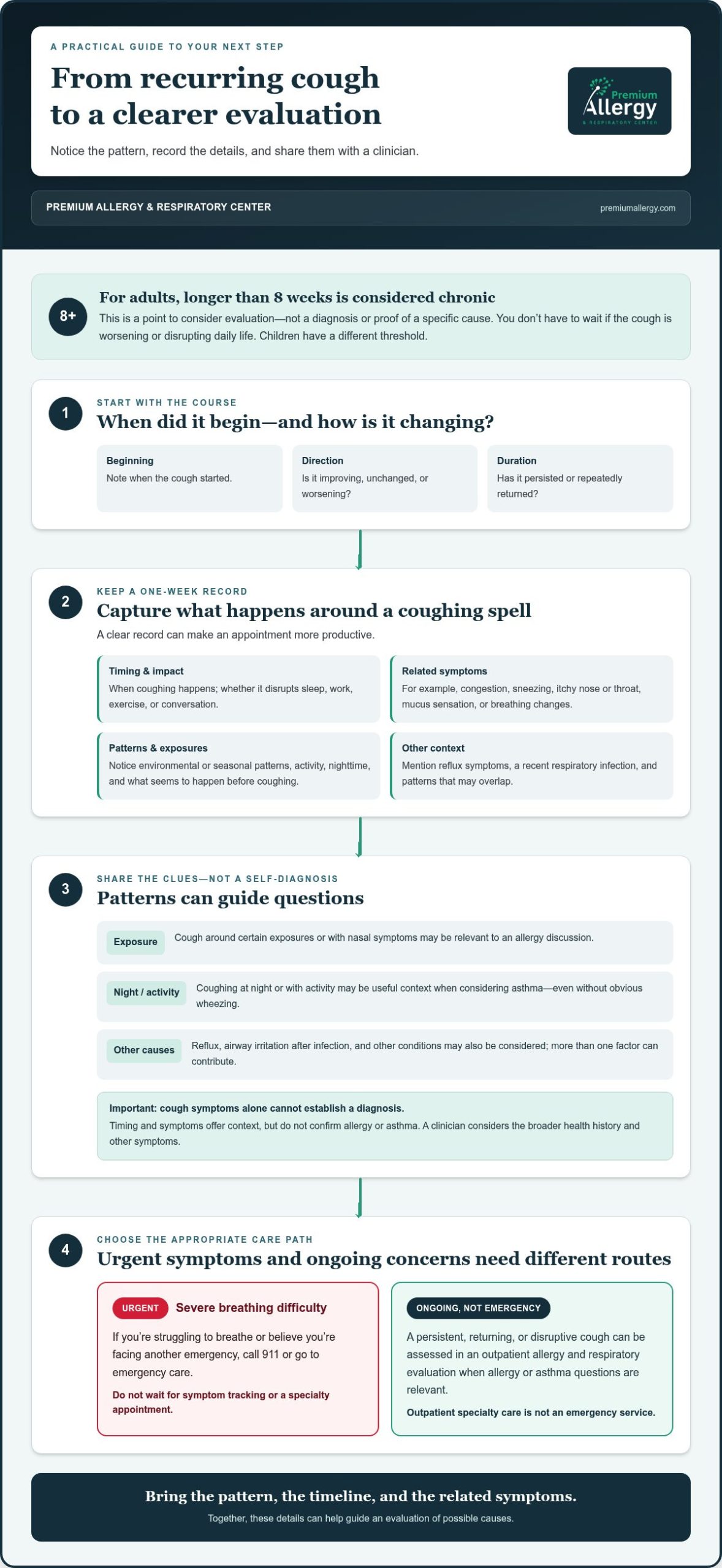
A few brief notes can make it easier to describe a cough that comes and goes or changes from day to day. If you can, keep a simple log for one week before your visit. This isn’t a test, and you don’t need perfect records. Even a few observations can help you explain what you’ve noticed. Don’t wait to seek urgent care if symptoms become an emergency or you have severe breathing difficulty.
Write down when coughing starts, how often it happens, whether it wakes you, and whether the pattern is changing. Note any nasal or breathing symptoms alongside it, such as congestion, throat irritation, or breathlessness. Record observations without trying to decide what they mean. A log helps describe patterns, but it can’t identify a cause by itself.
Look for possible connections, not proof. For example, note whether coughing seems to occur around meals, during or after activity, in a particular season, or more often indoors or outdoors. If no pattern stands out, record that too. Avoid deliberately recreating a suspected exposure to see if it triggers symptoms.
Bring the names of your current medications, including over-the-counter products, and note relevant diagnoses, past evaluations, or test results you already have. A short timeline can help: when the cough began, whether it followed an infection, and any major changes since then. Include relevant health history and possible exposures, even if you’re unsure they matter. Your clinician can help distinguish useful context from coincidence.
If nasal symptoms are part of the picture, the Fresno allergy testing guide offers related information about allergy evaluation. Use your notes to start a conversation, not to self-diagnose or change medication on your own. A chronic cough specialist Fresno patients visit for allergy and respiratory concerns can consider your symptom history alongside relevant medical context.
For a focused discussion of allergy or asthma concerns, explore an outpatient allergy and respiratory evaluation at Premium Allergy & Respiratory Center.
A cough that keeps interrupting your day can be frustrating, especially when you’re unsure whether allergies, asthma, or something else may be involved. Specialty care offers a focused place to discuss allergy and respiratory concerns. Premium Allergy & Respiratory Center is a Fresno-based outpatient specialty practice. Its clinicians consider your history and symptoms rather than assuming a persistent cough has one particular cause.
Premium Allergy & Respiratory Center serves Fresno, Clovis, Selma, and North Clovis with outpatient allergy and respiratory specialty care. Its focus includes allergy evaluations and ongoing asthma management. These services can be relevant if a cough occurs alongside nasal allergy symptoms or breathing concerns, but those patterns don’t establish a diagnosis. The practice provides specialty care, not general primary care or emergency services.
That distinction can help you choose a sensible next step. If you’re experiencing an emergency, seek emergency help rather than waiting for an outpatient appointment. For ongoing symptoms that raise questions about allergies or asthma, a specialty evaluation gives you a chance to review those concerns with a clinician. Bring your symptom notes and medical details to make the conversation more specific.
An evaluation starts with your individual context. Your clinician can discuss when the cough occurs, what other symptoms accompany it, and relevant health history. Allergy expertise may be useful when nasal symptoms or suspected allergy exposures are part of the picture. Asthma management expertise can help assess cough and breathing concerns together. The clinician tailors the evaluation to your history and symptoms.
If your cough is affecting sleep, conversations, work, or everyday comfort, you don’t have to work out the cause yourself before seeking help. A chronic cough specialist Fresno patients seek for allergy- and asthma-related concerns can assess whether those areas fit your symptoms through an outpatient specialty evaluation. This is a way to explore possible causes, not an assumption that every persistent cough is related to allergies or asthma.
When you’re ready, request an outpatient allergy and respiratory evaluation at Premium Allergy & Respiratory Center. Bring your questions and symptom record to discuss what steps may be appropriate for your situation.
You don’t need to arrive with a diagnosis or be certain what’s causing your cough. Start with a focused conversation about what you’ve noticed and which concerns you want help exploring. If allergy or asthma may be part of the picture, a chronic cough specialist Fresno patients turn to for allergy and respiratory expertise can assess whether those areas fit your symptoms. An evaluation considers your history and helps you discuss an appropriate path forward.
When you’re ready, schedule an allergy and respiratory evaluation with Premium Allergy & Respiratory Center. Bring your questions and share what has been affecting your everyday life.
In adults, a cough lasting more than eight weeks is commonly described as chronic. That cutoff helps frame an evaluation, but it doesn’t identify the cause or determine by itself what care is needed. A child’s age, health history, other symptoms, and how the cough is changing also matter. Consider seeking clinical advice if it persists, returns after easing, or begins limiting sleep, school, work, or usual activities.
Yes, allergies may contribute to a cough, sometimes through nasal drainage or upper-airway irritation. You might notice coughing alongside sneezing, congestion, or an itchy throat, but those clues can also occur for other reasons. A clinician can ask about your allergy history, symptom patterns, and nasal complaints as part of a broader assessment. Don’t treat a suspected allergy as confirmed based on cough symptoms alone.
Yes. Asthma can sometimes involve coughing even if you don’t notice wheezing. Cough by itself, though, doesn’t establish asthma, and other causes may create similar or overlapping patterns. A specialist can review when the cough occurs, breathing changes, medical history, and prior episodes to consider whether asthma warrants further evaluation. The assessment is individualized; symptoms alone don’t determine which tests or care may be appropriate.
A chronic cough specialist Fresno appointment typically starts with questions about when the cough began, how it varies, and what else you’ve noticed. Expect discussion of your medical history, medications, possible exposures, and prior evaluations. Bring medication names or a current list, along with any records you have. If you’re unsure about a detail, say so rather than guessing. Further evaluation depends on the clinical picture, and a diagnosis isn’t guaranteed in one visit.
Coughing itself isn’t contagious; it’s a symptom. Whether the underlying cause can spread depends on what’s causing the cough. Some respiratory infections can pass between people, while allergies and asthma aren’t infectious conditions. If your cough began with a recent illness or you think an infection may be involved, seek appropriate medical guidance and take sensible steps to limit exposure to others. Duration alone can’t show whether a cough is infectious.
Seek emergency care or call 911 for severe difficulty breathing or other symptoms that feel like an emergency. Don’t wait for a routine appointment in that situation. If there are no emergency symptoms but your cough persists, worsens, or interferes with daily life, arrange an appropriate clinical evaluation. Premium Allergy & Respiratory Center provides outpatient allergy and respiratory specialty care; it isn’t an emergency service.
A high clinic rating is only a starting point when you’re seeking food allergy care in Selma. To assess Selma food allergy clinic ratings, compare... Continue reading
READ MORE
Could a cough that keeps returning be more than the tail end of a virus? If you’re wondering whether allergies, asthma, or another cause is involved,... Continue reading
READ MORE
Could another allergy evaluation clarify why your symptoms persist, rather than simply repeat the same tests? If you’re searching “second opinion for... Continue reading
READ MORE
What if recurring wheezing, coughing, or chest tightness could help point the way to a clearer asthma plan? If you’re searching for an asthma... Continue reading
READ MORE