Shortness of breath can be serious when it starts suddenly or severely, worsens over time, or comes with chest pain or dizziness. Leg swelling or a... Continue reading
READ MORE

A high clinic rating is only a starting point when you’re seeking food allergy care in Selma. To assess Selma food allergy clinic ratings, compare patient feedback with the clinic’s allergy focus, staff roles, and testing services. Food allergy testing may be appropriate for children and adults who develop symptoms after eating particular foods.
When food may be triggering symptoms, it’s natural to want clear answers. Understanding what an evaluation involves can help you decide what to look for in a clinic, beyond its ratings.
This guide explains allergy and immunology care, specialist options, staff credentials, and food allergy testing clinics in Selma. You’ll also learn how common testing approaches work and what to consider when deciding on a next step, so you can approach care with greater confidence.
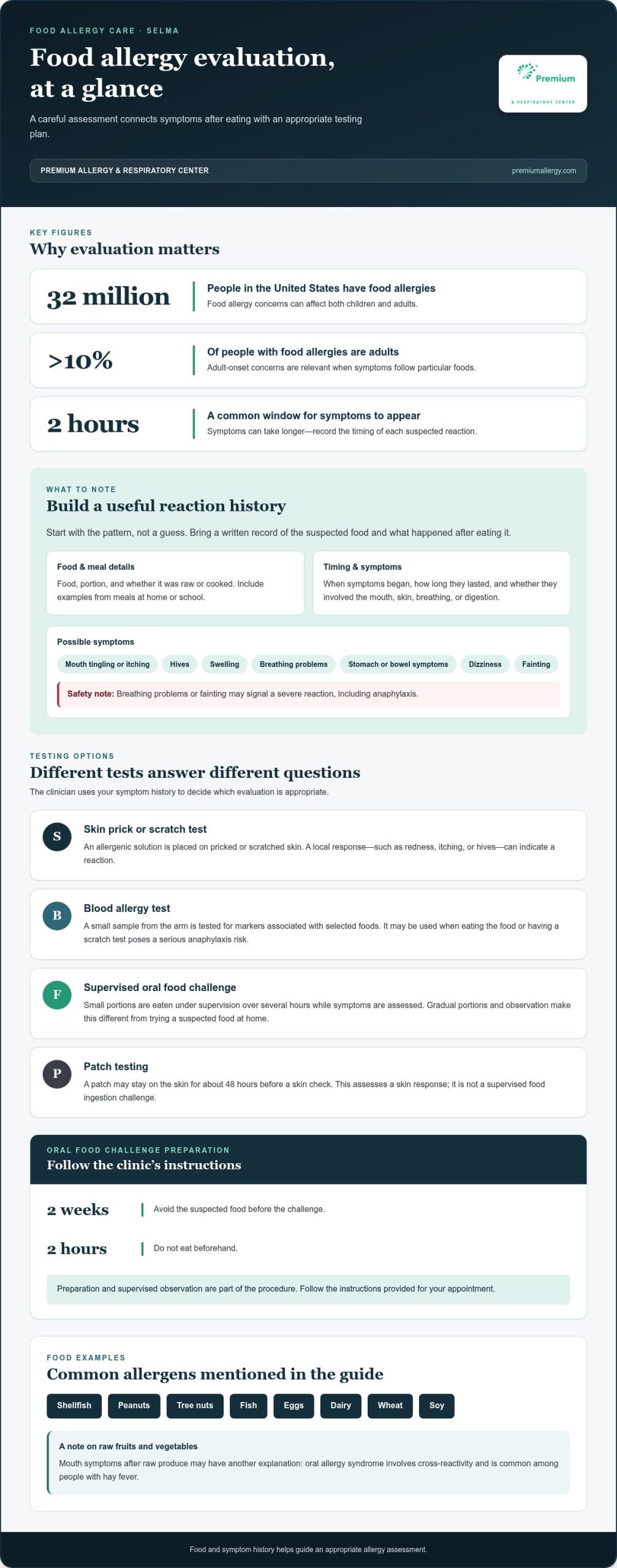
Allergy and immunology care connects a suspected food reaction with a careful assessment. Food allergy testing is recommended for children and adults who develop symptoms after eating particular foods. In the United States, about 32 million people have food allergies, and more than 10% of them are adults. That makes adult-onset concerns relevant, too.
Start with the pattern, not a guess. Record the food, portion, timing, and symptoms after each suspected reaction. Symptoms often appear within two hours, but can take longer. Possible symptoms include tingling or itching in the mouth, hives, swelling, breathing problems, stomach or bowel symptoms, dizziness, and fainting. Breathing problems or fainting may signal a severe reaction, including anaphylaxis.
Food examples can help organize the history. Common allergens include shellfish, peanuts, tree nuts, fish, eggs, dairy, wheat, and soy. A reaction to raw fruit or vegetables may have another explanation: oral allergy syndrome involves cross-reactivity and is common among people with hay fever. For example, someone with hay fever may notice mouth symptoms after eating certain fruits, vegetables, or nuts.
At an appointment, the clinician uses your symptom history to decide which evaluation is appropriate. A skin prick or scratch test places an allergenic solution on pricked or scratched skin. Redness, itching, or hives at the site can indicate a reaction. A blood allergy test uses a small arm sample to look for markers associated with specific foods. Blood testing may be used when eating the food or having a scratch test poses a serious anaphylaxis risk.
A supervised oral food challenge can help clarify a suspected allergy, but preparation matters. Before a challenge, avoid the suspected food for two weeks and do not eat for two hours beforehand. Follow the instructions for your appointment. Gradual portions and observation distinguish this procedure from trying a suspected food at home.
Patch testing follows a different timetable. A patch may stay on the skin for about 48 hours before the patient returns for a skin check. That process assesses a skin response; it is not the same as a supervised food ingestion challenge. Knowing the difference helps you understand why an immunology evaluation may use different tests for different concerns.
Bring a written food-and-symptom record to your appointment, including examples from meals at home or school. Note whether the food was raw or cooked and whether symptoms involved your mouth, skin, breathing, or digestion. These details help connect a possible trigger with an appropriate assessment and keep the discussion focused on your reaction history.
UCLA Health says oral immunotherapy is not a cure for food allergy, but it can help reduce the risk of a life-threatening reaction in the future. The clinic says its team uses the least invasive allergy testing possible to identify the cause of food allergies. In scratch or prick testing, an allergenic solution is placed on scratched or pricked skin. Redness, itching, or hives at the site may indicate a reaction.
Clinic ratings can describe appointment experiences, but they don’t explain each team member’s role. For food allergy care, distinguish the clinician who evaluates symptoms from staff who support testing, education, and follow-up. Clear staff profiles help show who guides diagnosis and how the clinic organizes care.
Start with the named clinician’s specialty and stated focus. Allergy and immunology care addresses allergic conditions, while food allergy evaluation considers the suspected trigger, symptoms, and testing plan. A profile explaining these responsibilities gives more context than a rating alone. Look for practical details, such as assessing a peanut reaction or explaining what a test can show.
Credentials should appear alongside each person’s name and professional role. A physician, nurse, and testing staff member may contribute in different ways. The clinician interprets medical history and findings; other staff may explain preparation or coordinate appointments. Clear role descriptions show who handles each step, rather than implying every team member makes diagnoses.
Use patient feedback to assess communication and coordination. Reviews may mention whether staff listened carefully, explained next steps, or made testing easier to understand. These details can help you compare Selma food allergy clinic ratings with the clinic’s stated approach. A single comment, however, reflects one person’s experience, not every appointment or team member.
Staff education matters when a reaction could be severe. For example, a child with a suspected peanut allergy may need a careful evaluation that considers the history and appropriate testing. Peanut allergen powder can be prescribed for children with peanut allergy who are ages 4 to 17. That treatment fact doesn’t establish a clinic’s qualifications; it shows why staff should explain the purpose and limits of any care plan.
Use a practical review process. First, match the clinician’s stated specialty to your food allergy concern. Next, see whether staff descriptions explain testing and patient education. Then read several reviews for recurring comments about communication, not just star ratings. Finally, compare those details with the clinic’s service information. This gives you a fuller picture than an isolated score.
For a clinic that provides food allergy evaluations, clear communication can make each step easier to understand. Food allergy testing is relevant when you need an evaluation of suspected food-related symptoms, with the testing approach guided by the concern being assessed.
Next, check whether the clinic provides enough detail to understand how its staff’s backgrounds relate to food allergy care. The Food Allergy Institute says Dr. Tracy Clark began focusing her career on food allergy treatment at the institute in 2018. That information describes when she began this focus; it does not, by itself, explain her current responsibilities or the steps involved in an evaluation. Look for a profile that also clarifies her role in assessing symptoms, discussing tests, and planning follow-up. A stated focus can help you identify relevant experience, while a clear description of duties helps show how that experience fits into your care.
Care team members can have different backgrounds, so consider what each profile actually says rather than treating every experience as a clinical credential. Before joining the Food Allergy Institute, Shin Nagane spent nine years in the plant-based food industry. That background is distinct from a stated medical role, and the profile should clarify any patient-care responsibilities. When reviewing staff information, distinguish professional experience from the authority to evaluate symptoms or interpret findings. If roles aren’t clear, ask who will lead the assessment, explain the results, and handle follow-up. This helps you assess whether the clinic’s information answers practical questions without assuming that a particular background establishes qualifications.
Food allergy clinics differ in their evaluations, appointment processes, and explanations of results. In Selma, compare a clinic’s food allergy focus with the symptoms behind your search. A rating can describe patient experience, but it doesn’t show which testing approach fits a particular concern. Look for specific details in reviews, such as clear explanations or organized follow-up, rather than relying on star scores alone.
Do food allergy clinics serving Selma accept new patients, and what are their wait times? Intake and scheduling processes vary by clinic and appointment type, so acceptance and wait times differ. Any listed estimate may not reflect every appointment option.
Which insurance plans do local food allergy clinics accept? Accepted plans vary, and coverage can depend on network status, policy benefits, and referral requirements. Compare your plan’s terms with the clinic’s accepted coverage before arranging testing.
Before scheduling, organize details that can help the clinic understand your concern. Write down the suspected food, what happened after eating it, and whether symptoms involved your skin, breathing, digestion, or mouth. Include examples from different occasions, such as a reaction after a meal at home or a snack at school. This gives the doctor a useful starting point.
Food allergy testing may involve a skin test, blood test, or supervised food challenge. Your history and safety considerations help shape the evaluation. Blood testing may be used when eating the suspected food or having a scratch test poses a serious anaphylaxis risk. A supervised challenge involves small portions over several hours, with symptoms assessed throughout. Each approach serves a different purpose, so the clinical question matters.
Ask what each appointment is intended to accomplish. An initial visit may focus on your history and an appropriate evaluation; another may discuss findings and next steps. Suspected peanut allergy and mouth symptoms after raw fruit, for example, raise different questions. Oral allergy syndrome involves cross-reactivity and is common among people with hay fever. Specific examples help focus the discussion.
Consider clinic communication alongside ratings. Helpful reviews may describe whether staff explained testing, answered questions, and made follow-up steps clear. Look for themes that recur across several comments. One review about a confusing appointment reflects an individual experience, while repeated comments about clear explanations may offer a broader impression. Neither establishes a diagnosis or determines which test is appropriate.
A thoughtful comparison turns online ratings into a practical appointment plan. Bring your food-and-symptom notes and identify the question you want answered. Then discuss how the clinic’s evaluation relates to your concern. If symptoms include breathing problems, dizziness, or fainting, treat the concern as potentially severe and seek appropriate medical attention.
For Selma residents, look for an allergist whose clinical focus includes food allergy evaluation. A directory title alone doesn’t show the scope of care. Read the clinician’s profile for details about food allergy, allergy and immunology, and testing. Compare those details with your concern, such as a suspected peanut reaction or symptoms after eating eggs.
Online ratings can help you understand communication and appointment experiences, but they don’t establish a specialist’s expertise. Look for specific review details: Did the patient describe an allergy evaluation? Were testing steps explained clearly? Was follow-up discussed? Repeated comments about these points are more useful than a star score without context.
Use a consistent process to compare nearby search results. First, consider whether the address is practical for your trip from Selma. Next, review the clinician’s professional profile and note whether it mentions food allergies. Then read the clinic’s testing information. Finally, compare patient feedback about explanations, scheduling, and care coordination.
A specialist’s approach should connect your history with the clinical question. Mouth itching after raw produce, for example, can raise a different concern from hives after eating packaged food. Oral allergy syndrome involves cross-reactivity and is common among people with hay fever. Sharing the exact food, preparation, timing, and symptoms helps the clinician assess the pattern.
Testing also varies according to the concern and safety considerations. Skin and blood tests assess different responses, while a supervised oral food challenge observes symptoms after small portions. A food challenge takes place under supervision over several hours. It is not a home experiment. Ask what the proposed test is intended to clarify and how the findings will inform the next step.
Prepare a concise appointment summary before choosing among nearby allergists. Include the suspected food, reaction, timing, and whether similar symptoms happened again. Add relevant hay fever or other allergy history. If the patient is a child, include examples from meals at home or school. This gives the specialist concrete details to consider.
Ratings can narrow your options, but the best fit depends on whether the clinic’s stated focus matches your concern. A nearby listing that describes food allergy evaluation and explains its process may be more relevant than a higher-rated listing focused on unrelated care. Consider location, specialty information, testing details, and review themes together.
Explore food allergy care options to take the next step toward a focused evaluation of suspected food-related symptoms.
Premium Allergy & Respiratory Center provides food allergy testing for people seeking evaluation of suspected food-related symptoms. Its allergy care also includes allergic rhinitis treatment, asthma management, and penicillin allergy testing. If you’re concerned about a possible food reaction, testing can help guide a focused discussion about next steps in care.
Bring a clear account of the suspected food, symptoms, and timing to make your appointment discussion more specific. If seasonal nasal symptoms occur alongside a food concern, allergic rhinitis treatment addresses that related allergy-care need. The right service depends on what you’re seeking help with.
To learn more about food allergy testing or other allergy care, visit premiumallergy.com.
Use Selma food allergy clinic ratings as a starting point, then focus on what you want your next appointment to clarify. You might want to understand whether a particular food needs further evaluation or how allergy symptoms relate to daily routines. A clear purpose can focus the conversation and help you decide what information to bring.
Premium Allergy & Respiratory Center provides Food Allergy Testing for suspected food-related concerns, as well as Allergic Rhinitis Treatment and Asthma Management. These services support a focused approach when food allergy questions arise alongside nasal or breathing symptoms. Choose a next step that aligns with the concern you want addressed.
Contact Premium Allergy & Respiratory Center to discuss your allergy care. You can move forward with clarity, one informed step at a time.
Ratings and review counts are specific to each clinic listing and platform, so there isn’t one combined score for care around Selma, California. Compare the displayed rating with the number of reviews and the dates of recent comments. When assessing Selma food allergy clinic ratings, look for feedback about allergy-related appointments, communication, and follow-up, rather than treating a score alone as evidence of clinical expertise.
Premium Allergy & Respiratory Center provides Food Allergy Testing and Blood Allergy Testing, as well as care for food allergy. Its specialty services also include Penicillin Allergy Testing and Insect Sting Allergy Treatment. These options address different concerns, so identify whether you need an evaluation of a suspected food reaction or care for another allergy. The clinic also provides Allergic Rhinitis Treatment and Asthma Management.
Compare reviews by looking for recurring, specific descriptions rather than ranking clinics by stars alone. Note whether comments mention clear explanations, organized appointment steps, or helpful follow-up. Separate feedback about front-desk coordination from comments about clinical discussions. A Selma-area patient’s experience can help you assess communication, but a review cannot determine whether a specific test or diagnosis is appropriate for you.
Prioritize the clinic’s allergy focus, relevant food allergy evaluation, practical travel, and clear explanations of next steps. For households in Selma, Fresno, Clovis, or North Clovis, location can affect how manageable appointments feel. Consider whether the clinic’s services match your concern, such as a suspected food allergy, asthma, or allergic rhinitis. Bring a concise symptom history to keep the first discussion focused.
Premium Allergy & Respiratory Center.
Shortness of breath can be serious when it starts suddenly or severely, worsens over time, or comes with chest pain or dizziness. Leg swelling or a... Continue reading
READ MORE
A high clinic rating is only a starting point when you’re seeking food allergy care in Selma. To assess Selma food allergy clinic ratings, compare... Continue reading
READ MORE
Could a cough that keeps returning be more than the tail end of a virus? If you’re wondering whether allergies, asthma, or another cause is involved,... Continue reading
READ MORE
Could another allergy evaluation clarify why your symptoms persist, rather than simply repeat the same tests? If you’re searching “second opinion for... Continue reading
READ MORE