
A penicillin allergy label doesn’t prove you’re still allergic: about 90% of people who report one aren’t allergic to penicillin. A true... Continue reading
READ MORE

Shortness of breath can be serious when it starts suddenly or severely, worsens over time, or comes with chest pain or dizziness. Leg swelling or a persistent cough are also reasons to seek medical attention. A breathing problem specialist in Selma can assess ongoing symptoms and help identify whether a lung or airway condition may be involved.
It’s understandable to wonder whether breathlessness will pass or needs professional attention. How your breathing changes, how quickly symptoms develop, and what else you notice can help guide your next step.
In this guide, you’ll learn which conditions lung specialists treat, how asthma, COPD, and chronic cough may differ, and what to know about care near Selma. You’ll also find practical guidance on recognizing urgent symptoms and understanding how insurance coverage and patient reviews can inform your search.
A pulmonary specialist, often called a pulmonologist, focuses on lung function and diseases of the lungs and airways. Care may address asthma, chronic obstructive pulmonary disease (COPD), pneumonia, persistent cough, and sleep-related breathing disorders. About 30,000 people in the United States have cystic fibrosis, an inherited disease that can affect the lungs. A specialist assesses symptoms, medical history, and test results to guide diagnosis and treatment.
Some breathing concerns start outside the lungs. Allergic rhinitis can cause nasal congestion, while allergens may also trigger asthma symptoms in some people. Sleep apnea may involve both pulmonologists and sleep specialists; the right area of care depends on whether symptoms center on breathing, sleep, or both. Pneumonia can be caused by bacteria, viruses, or fungi, so identifying the likely cause matters when planning care.
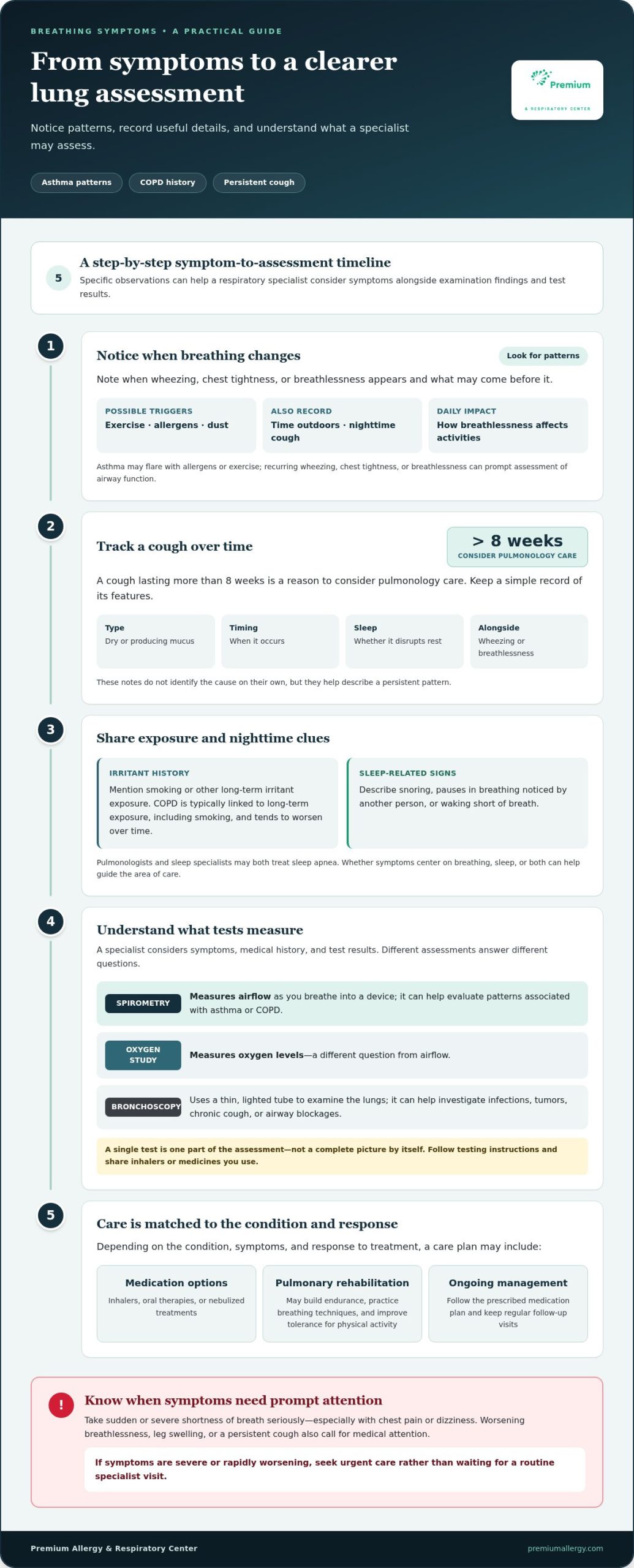
Take sudden or severe shortness of breath seriously, especially with chest pain or dizziness. Worsening breathlessness, leg swelling, or a persistent cough also call for medical attention. If symptoms are severe or rapidly worsening, seek urgent care rather than waiting for a routine specialist visit. A breathing problem specialist in Selma can assess continuing symptoms, but emergency symptoms need prompt attention.
Spirometry is a lung function test that measures airflow as you breathe into a device. The test can help evaluate patterns associated with conditions such as asthma or COPD. Follow the testing instructions carefully, and share any inhalers or medicines you use so the clinician can interpret results in context. A single test is one part of assessment, not a complete picture by itself.
Lung function and oxygen studies answer different questions. Spirometry assesses airflow, while an oxygen study measures oxygen levels. Your symptoms, examination, and test findings help determine which assessment is useful. For example, breathlessness during activity may prompt questions about when it starts and how quickly it settles. Those details help clarify how breathing affects daily life.
Do Selma breathing specialists accept new patients? New-patient acceptance depends on each practice’s current capacity and referral process. How soon can I get an appointment with a lung specialist near Selma? Timing depends on appointment availability, referral needs, and symptom urgency, as local scheduling standards at facilities like Premium Allergy & Respiratory Center vary based on individual clinical requirements.
Asthma and COPD can both make breathing difficult, but their patterns differ. Asthma often begins earlier in life and may flare with allergens or exercise. COPD is typically linked to long-term irritant exposure, including smoking, and tends to worsen over time. These patterns help a specialist assess symptoms and plan appropriate diagnosis and treatment.
Notice when symptoms appear and what seems to trigger them. For example, record whether wheezing follows exercise, dust exposure, or time outdoors. Also note nighttime coughing, chest tightness, and how breathlessness affects everyday activities. This symptom record gives a respiratory specialist practical details to consider alongside examination findings and lung function studies.
A chronic cough deserves attention when it lasts beyond 8 weeks. Write down whether it is dry or produces mucus, whether it disrupts sleep, and whether it occurs with wheezing or breathlessness. These observations don’t identify the cause by themselves, but they help distinguish a persistent pattern from a brief cough during an illness.
Care plans for respiratory conditions may include inhalers, oral therapies, or nebulized treatments. The choice depends on the condition, symptoms, and response to treatment. Pulmonary rehabilitation may also be recommended to build endurance, practice breathing techniques, and improve tolerance for physical activity. Following the prescribed medication plan and keeping regular follow-up visits supports ongoing management.
Daily habits can support lung health alongside clinical care. Avoid tobacco smoke and secondhand smoke, reduce exposure to dust, chemicals, and poor air quality, and use protective masks in hazardous environments. Appropriate physical activity can help strengthen breathing muscles and endurance. Vaccination against pneumonia, flu, and COVID-19 is also included among the listed lung-health measures.
Breathing symptoms that appear during rest or interrupt sleep may prompt consideration of sleep studies. Pulmonologists and sleep specialists may both treat sleep apnea, so describing nighttime symptoms helps clarify the concern. For asthma-related symptoms, asthma management can support a structured approach to triggers, medication routines, and follow-up.
If you’re in Selma, California, consider whether in-person appointments in Fresno or Clovis are practical for you. Travel time, your route, and the need for follow-up visits can all factor into that decision. Premium Allergy & Respiratory Center offers in-person appointments at its Fresno clinic as well as virtual consultations, providing options for people in Selma and nearby communities.
Selma-area pulmonary listings include Dr. Dalpinder Sandhu, Dr. Vijay P. Balasubramanian, Dr. Kuldeep S. Gill, and Dr. Pankaj Mehta. Each is listed with more than 21 years of experience. Experience alone doesn’t establish whether a doctor’s focus matches your needs, so compare listed specialties with the reason for your visit. A concern involving oxygen levels, for example, may require a different evaluation than routine asthma follow-up.
A US News Doctors listing shows 128 doctors for the pulmonary heart disease specialty near Selma, California. That figure describes the listing’s specialty category, not necessarily the number of pulmonologists accepting appointments. Use it as a starting point, then narrow results by pulmonary care, location, and the condition you need assessed. Look for clear office addresses and appointment details in each listing.
Do I need a referral to see a breathing problem specialist near Selma? Referral rules vary by insurance plan and practice. Review your plan’s specialist-access rules and the clinic’s appointment process before booking, especially if your coverage requires a referral.
What does a pulmonologist visit cost without insurance near Selma? There isn’t one set cost for every visit. The total can depend on the consultation, tests performed, and whether additional evaluation is needed. Ask for an estimate that separates the visit from possible testing, such as spirometry or imaging, so you can understand what the estimate includes.
Before choosing an office, write down your main symptoms and questions. Include when breathlessness occurs, whether it limits walking or sleep, and any asthma treatment you already use. This gives the clinician useful context for evaluating your concerns and discussing next steps. If symptoms become sudden or severe, seek urgent medical attention instead of waiting for a routine appointment.
Insurance acceptance and coverage are related, but they aren’t the same question. A pulmonologist may participate in a plan’s network, while a particular test or service has separate coverage terms. Your plan documents explain network rules, covered benefits, referral requirements, and cost-sharing responsibilities. Review those details before scheduling a routine visit for asthma, sleep apnea, or another pulmonary disease.
Start with the exact insurance plan name on your member card. Search the insurer’s directory for pulmonologists near Selma, California, and match the listed office to the practice’s location. Then review your plan’s specialist benefits. A directory entry alone doesn’t explain whether spirometry, imaging, or follow-up visits have separate requirements.
Keep a short record of your benefits findings. Note the plan name, the specialist’s network status, referral steps, and any test requirements. If your plan uses separate medical groups or networks, compare the office listing with the group named on your card. This helps distinguish a practice’s general insurance participation from your plan’s specific terms.
Ask your insurer focused questions about the service you expect to receive. For example, ask whether a specialist consultation and testing are handled under the same benefit. If a clinician later recommends another service, ask how it is classified. The service description, diagnosis, network status, and plan terms can all affect coverage.
For chronic obstructive pulmonary disease, asthma, or sleep apnea, care may involve more than one appointment. Ongoing visits can review symptoms, medication use, and changes in exercise tolerance or quality of life. Check how your plan describes follow-up care and whether it applies different terms to office visits and diagnostic services. This gives you a clearer picture of the overall care process.
Insurance questions are separate from urgent medical needs. Sudden or severe breathing problems, especially with chest pain or dizziness, require prompt medical attention. Don’t delay urgent care while sorting through routine coverage details. For nonurgent planning, keep your insurance card and benefit information ready when arranging a specialist visit.
Before the appointment, gather your member card, referral information if your plan requires it, and any prior test results. A brief list of questions can help you understand which services relate to diagnosis and treatment. Clear records make it easier to discuss coverage and plan next steps for managing your symptoms.
Reviews can help you understand how a clinic communicates and organizes visits. Look for specific details, such as clear explanations, respectful listening, or confusing follow-up instructions. Those examples offer more insight than a rating alone. Use reviews as one part of your evaluation, alongside the specialist’s focus and your care needs.
Look for comments about the first appointment. A useful review might describe whether the doctor asked about breathlessness, medication use, and daily activity. For chronic obstructive pulmonary disease, those details can help frame discussions about symptoms and care goals. A review cannot establish a diagnosis, but it may show how clearly a practice explains its evaluation process.
Pay attention to how patients describe education and follow-up. For example, did the clinician explain what spirometry measures or how to prepare for a lung function test? Did the patient understand what to do after the visit? Clear communication matters when you’re managing a condition that requires ongoing monitoring, medication adjustments, or repeat testing.
Reviews may also mention specific conditions, including pulmonary fibrosis, asthma, or sleep apnea. Treat those accounts as individual experiences, not proof that your care will be identical. A patient with fibrosis may need a different evaluation than someone seeking help for asthma symptoms. Compare the review’s clinical context with your own reason for seeking care.
Use reviews to prepare focused questions for your appointment. You might ask how findings will be explained, what symptoms to track, or how follow-up is arranged. Bring a current medication list and note examples of breathlessness, such as symptoms during exercise or while climbing stairs. These details can make the conversation more specific.
Patient feedback can inform your choice, but clinical fit remains central. Consider whether the doctor treats the lung condition you need assessed and whether the office explains next steps clearly. If allergies contribute to nasal congestion alongside breathing concerns, explore allergy care options as part of addressing those symptoms.
Premium Allergy & Respiratory Center provides specialized care for allergic rhinitis and asthma-related concerns. If allergy symptoms or asthma affect your breathing, an evaluation can help clarify what support may fit your needs. The center also offers food allergy testing and penicillin allergy testing for specific allergic concerns.
Consider allergic rhinitis treatment for persistent allergy-related symptoms, or asthma management when asthma needs ongoing attention. For food or penicillin allergy concerns, testing can support a more informed discussion about next steps. These services address allergy and asthma-related needs, while sudden or severe breathing symptoms require urgent medical attention.
To discuss allergy or asthma care, contact Premium Allergy & Respiratory Center.
Make your next conversation more useful by noting when your breathing changes, what seems to trigger symptoms, and how they affect your daily routine. A short record can help you explain what you’re experiencing and focus on the questions that matter most. Finding a breathing problem specialist in Selma is one step toward understanding your concerns and deciding what care fits.
When allergies or asthma may be part of the picture, Premium Allergy & Respiratory Center offers Allergic Rhinitis Treatment, Asthma Management, and Food Allergy Testing. These services address specific allergy and asthma needs, helping you take a focused next step rather than sorting through symptoms alone.
If you’re ready to discuss allergy or asthma care, contact Premium Allergy & Respiratory Center. You can start with your main concern and the changes you’ve noticed. Taking that first step can help bring more clarity to your path forward.
Seek prompt medical attention if breathlessness is sudden, severe, or worsening. Chest pain, dizziness, leg swelling, or a persistent cough alongside shortness of breath are also concerning signs. Note when symptoms began and whether they occur at rest or during activity. If breathing becomes severely difficult, prioritize urgent medical assessment rather than waiting for a routine appointment or relying on online reviews.
Consider specialist evaluation when breathing symptoms persist, recur, or interfere with everyday activities. A cough lasting more than 8 weeks is one reason to consider pulmonology care. Repeated wheezing, chest tightness, or respiratory infections can also make a specialist assessment useful. Before your visit, write down when symptoms occur, what you were doing, and any medication you use; those details help make the discussion more specific.
A pulmonologist specializes in lung function and diseases of the lungs and airways. For breathing concerns linked to allergies or asthma, an allergist may also be relevant. A breathing problem specialist Selma can assess persistent symptoms and help determine appropriate next steps. The right specialty depends on the concern, such as recurring wheezing, allergy-related congestion, or breathing disruptions during sleep.
For Selma, California, pulmonary listings include Dr. Dalpinder Sandhu, Dr. Vijay P. Balasubramanian, Dr. Kuldeep S. Gill, and Dr. Pankaj Mehta. These physicians practice in the Selma area. Use each doctor’s name with the California location when reviewing local listings. Compare the listed focus with your concern, such as persistent cough or asthma symptoms, and consider the office location when planning visits.
When searching for a breathing problem specialist near Selma, California, include the state in your search terms to keep results relevant. Review the doctor’s specialty and office address, then consider whether the location is convenient for follow-up appointments. If you have a specific concern, such as ongoing cough or asthma symptoms, use it to assess whether the listed focus aligns with the care you’re seeking.
For Selma, California, distinguish outpatient specialty appointments from hospital or emergency care. Premium Allergy & Respiratory Center focuses on outpatient allergy and respiratory specialty care, including asthma management and allergic rhinitis treatment. That may fit ongoing allergy or asthma concerns, but it isn’t emergency room care or inpatient hospitalization. Sudden or severe breathing symptoms need urgent medical attention rather than a routine specialty appointment.
Accepted plans depend on the specific specialist, office, and insurance plan. Compare the insurer’s directory entry with the exact plan name on your member card, not just the insurance company’s name. Also review referral rules and benefits for specialist visits and tests, such as spirometry. Those details determine how your plan handles the services involved; a general listing alone doesn’t establish your individual coverage.
Compare reviews for concrete comments about listening, explanations, appointment organization, and follow-up. For example, a patient’s description of how a clinician explained results may be more useful than a brief rating. Look for repeated themes across reviews, while remembering that individual experiences differ. Reviews can help you assess communication, but they can’t confirm a diagnosis or predict what your own evaluation and treatment will involve.
A penicillin allergy label doesn’t prove you’re still allergic: about 90% of people who report one aren’t allergic to penicillin. A true... Continue reading
READ MORE
Shortness of breath can be serious when it starts suddenly or severely, worsens over time, or comes with chest pain or dizziness. Leg swelling or a... Continue reading
READ MORE
A high clinic rating is only a starting point when you’re seeking food allergy care in Selma. To assess Selma food allergy clinic ratings, compare... Continue reading
READ MORE
Could a cough that keeps returning be more than the tail end of a virus? If you’re wondering whether allergies, asthma, or another cause is involved,... Continue reading
READ MORE