
An allergist can evaluate sinus symptoms when allergies may be contributing. The Centers for Medicare & Medicaid Services says allergy testing... Continue reading
READ MORE

A penicillin allergy label doesn’t prove you’re still allergic: about 90% of people who report one aren’t allergic to penicillin. A true immediate-type reaction may begin within minutes to hours after the first dose and can include hives. A penicillin allergy test in Fresno can help clarify whether the label reflects a current allergy.
It’s understandable to feel cautious about a medicine linked to a past reaction, especially when the details are unclear or the reaction happened long ago. Penicillin allergy testing in Fresno can help clarify whether the allergy label still applies, rather than relying on the label alone.
This guide explains which symptoms may point to an immediate allergy, how skin testing works, and why a supervised oral challenge may follow a negative skin test. It also covers why some reaction histories call for a different approach, so you can understand the process and what to discuss with an allergy specialist.
Penicillin allergy testing combines a review of your reaction history with skin testing when appropriate. The sequence depends on the symptoms, timing, and severity of the original reaction.
Skin testing usually begins with a prick test, using a lancet that barely enters the skin and causes mild, momentary discomfort. If needed, testing proceeds with a two-step introduction of dilute penicillin reagents into the skin. The clinician compares the response with saline negative and histamine-containing positive controls. Testing is commonly performed on the forearm or back. When correctly performed, it has greater than 95% specificity for identifying IgE-mediated adverse reactions.
A positive intradermal test may cause local itching, redness, or swelling, which usually resolves in about an hour. Systemic reactions, such as hives, are very rare during penicillin skin testing. A negative result indicates a very high chance that the allergy is no longer present, but an oral challenge may be used to confirm tolerance. People with a history of severe delayed hypersensitivity reactions should not undergo skin testing or a direct oral challenge.
Eligibility starts with the reaction details: the symptoms, when they began, and how they changed. A specialist also considers whether the reaction was immediate or delayed and whether it involved severe delayed hypersensitivity. Patients with severe delayed reactions should avoid the drug that caused them and be referred to a drug allergy specialist. At the clinic, children must be older than 12 months for antibiotic allergy testing.
Before booking a penicillin allergy test in Fresno, gather the antibiotic’s name and a clear account of the reaction. Note any treatment received and whether symptoms began after a dose or later in the course. Allergy and antihistamine medications must be stopped seven days before testing because they can affect skin-test responses. Follow the testing team’s medication instructions as you prepare.
To arrange testing in Fresno, request an allergy evaluation and share the suspected antibiotic and reaction history when booking. This information helps determine whether skin testing is appropriate and what preparation is needed. Ask about the appointment process and bring a current medication list, including antihistamines. These details help the medical team plan an evaluation around the reaction being investigated.
Insurance coverage depends on the terms of your individual health plan. Benefits may distinguish specialist evaluation from diagnostic testing and may include network status, referral rules, and how the service is billed. Review your plan details before the appointment to understand applicable coverage and any patient responsibility. Coverage questions are separate from clinical eligibility, which depends on your reaction history and testing safety.
The evaluation starts with your own reaction history, not a relative’s diagnosis. Because skin testing and an oral challenge have possible side effects, clinicians consider the reaction pattern before selecting either step.
A parent’s or sibling’s penicillin allergy does not describe your own response to the medicine. If your only allergy history is a family member’s penicillin allergy, you may not need testing to have the label removed. The key question is whether you personally took penicillin and experienced symptoms.
For the history review, identify the antibiotic and describe what happened after each dose. Include the first symptom, when it began, how long it lasted, and whether treatment was needed. A note saying “rash” is less informative than describing where it appeared and when. These details help distinguish a possible allergy from an event that followed treatment but had another explanation.
For a child, record the medication name and when any rash appeared. A delayed penicillin-related rash usually develops several days after starting the antibiotic. By contrast, an immediate-type reaction may begin within minutes to hours after the first dose. This timeline helps guide the next evaluation step, rather than relying on the word “allergy” alone.
Also list other medicines taken during the same illness and any symptoms that accompanied the rash. For example, note whether hives appeared or whether the record describes only a rash several days into treatment. Share prior medical notes or medication records when available. A clear timeline helps patients and clinicians discuss the specific drug allergy concern and distinguish family history from personal reaction history.
Penicillin skin testing can cause local itching, redness, or swelling after an intradermal test; these effects usually resolve in about an hour. Systemic reactions, such as hives during skin testing, are very rare. A skin-prick test uses a lancet that barely penetrates the skin’s surface and usually causes no more than mild, momentary discomfort.
An oral challenge gives a controlled dose of amoxicillin under close medical supervision. The purpose is to observe whether symptoms develop after exposure, so a reaction remains possible. Direct challenges follow a standard protocol in a safe setting, under observation, with rescue medications available. People with severe delayed hypersensitivity reactions should not undergo skin testing or a direct oral challenge.
For children who receive an oral penicillin dose after a prior hive or rash reaction, observation lasts 1–2 hours during the clinic visit. Before evaluation, organize the medicine name, symptom timeline, and treatment details. Those facts help make the discussion focused on your actual reaction, rather than assumptions based on a relative’s allergy label.
An oral challenge assesses whether a patient can tolerate a penicillin medicine by giving a controlled dose under close medical supervision. Clinicians consider the reaction history and risk assessment before choosing this step.
A direct oral amoxicillin challenge gives the patient a controlled dose while medical staff observe for symptoms. It is generally suitable for patients assessed as low risk using validated risk stratification tools. Before deciding whether this approach fits, the clinician considers the reported reaction, including its timing and symptoms.
An immediate-type allergic reaction may begin within minutes to hours after the first antibiotic dose. Hives or other symptoms during that period can be relevant to the assessment. A challenge is not simply taking a dose at home. It follows a standard protocol in a safe setting, under observation, with rescue medications available.
People with a history of severe delayed hypersensitivity reactions should not undergo a direct oral challenge or skin testing. They should avoid the drug that caused the reaction and be referred to a drug allergy specialist. The distinction matters: an immediate reaction pattern and a severe delayed reaction call for different evaluation pathways.
An oral penicillin challenge uses a controlled dose of penicillin or amoxicillin to assess tolerance. A negative penicillin skin test may be followed by an oral dose to confirm that the antibiotic can be used. In most cases, a negative skin test should be followed by a direct oral challenge, rather than treated as the final step by itself.
Observation is central to the procedure. The medical team watches for symptoms after the dose and follows the testing protocol, with rescue medications available. This supervised process helps identify an immediate response while the patient is monitored. The purpose is to evaluate the suspected allergy, not to treat an infection.
Before the challenge, share the original antibiotic name and reaction details. Explain whether symptoms began soon after a dose or appeared later, and describe what happened. A clear timeline helps connect the decision to proceed with the reported reaction. If your history includes a severe delayed hypersensitivity reaction, a direct challenge is not appropriate.
After testing, the result informs the discussion about the allergy label and future antibiotic treatment. Tolerating a dose can provide evidence that the reported allergy is no longer present. The supervising team interprets the result alongside the patient’s history and the test protocol. Keep the testing record available for future medical visits so other clinicians can see what was assessed and which medicine was given.
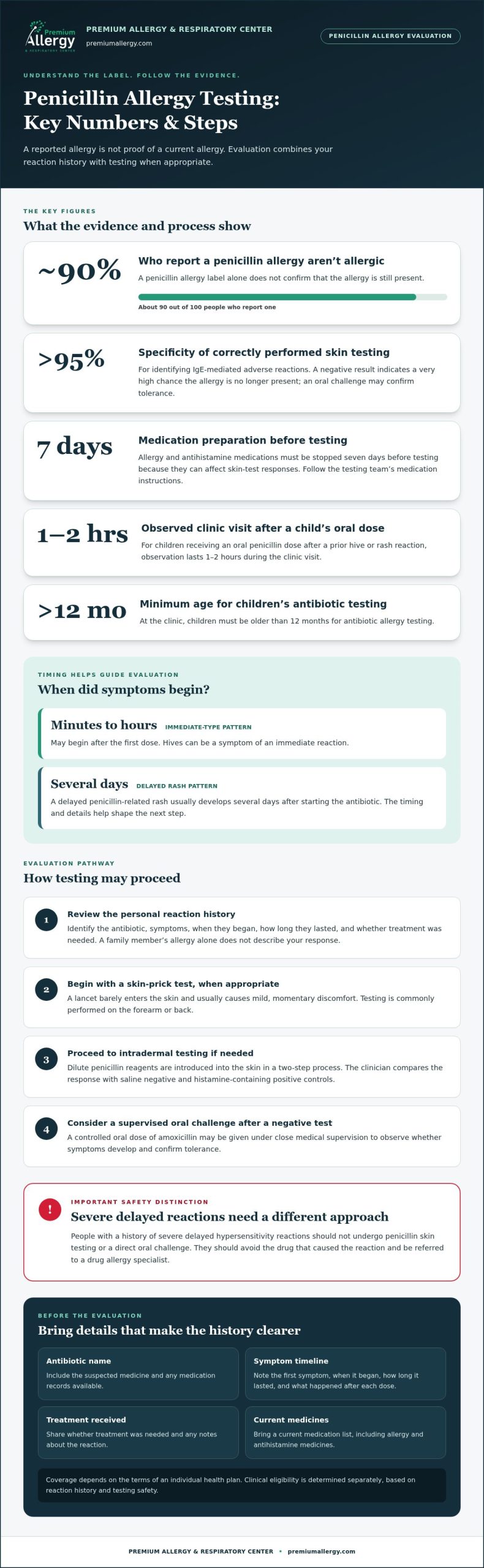
A penicillin allergy label records a concern, but it doesn’t establish a current allergy. About 10% of people reporting penicillin allergy are truly allergic; about 90% are not and can safely take penicillin medicines. Evaluation helps separate a remembered reaction or unverified label from a reaction confirmed through testing.
The label may come from an event that happened years earlier, when details were unclear or symptoms had another explanation. Some people also lose their penicillin allergy over time. Penicillin-specific IgE antibodies may decrease, allowing some people with past immediate reactions to tolerate related antibiotics later. A previous label therefore doesn’t describe your response today by itself.
Confirmation relies on the person’s history and appropriate testing, not the label alone. A specialist reviews the drug, symptoms, timing, and any treatment received. For example, hives that began soon after a dose provide different information from a vague childhood note describing a rash. These details guide whether skin testing, an oral challenge, or another approach is appropriate.
To make the review useful, collect details before the appointment. Write down the antibiotic name, why it was prescribed, the symptoms, and when they appeared. Include whether the medicine was stopped and whether medical treatment followed. If the original record only says “penicillin allergy,” say so. Don’t fill gaps with guesses; separate what you remember from what the record states.
Bring a current medication list and note other medical conditions, including asthma. These details give the evaluator a fuller picture of your health and medications. If testing supports tolerance, ask how the result will be documented and shared with clinicians who prescribe future treatment. Keeping that record accessible can help prevent an old, unverified label from shaping later antibiotic decisions.
For children, include the date or approximate age when the reaction occurred and the antibiotic involved. A delayed rash several days after starting treatment differs from symptoms that begin within minutes to hours. If the child never took penicillin and the only concern is a family member’s allergy, that history alone may not require testing before removing the label. Accurate records help distinguish family history from the child’s own experience.
A negative penicillin skin test indicates a very high chance that the allergy is no longer present. In most cases, a direct oral challenge follows to check whether penicillin or amoxicillin can be taken.
The two steps answer different questions. A skin test assesses the skin’s response to penicillin reagents. An oral challenge then evaluates the response to a controlled dose by mouth. In most cases, a negative skin result alone is not the final step. Together, the assessments give the medical team evidence from skin testing and medication exposure.
During a challenge, the patient receives an oral dose of penicillin or amoxicillin under observation. The procedure follows a standard protocol in a setting with rescue medications available. Staff watch for symptoms after the dose, including signs of an immediate reaction. The challenge is a medical evaluation, not a home trial or treatment for an active infection.
Timing matters when interpreting the response. An immediate-type penicillin reaction may start within minutes to hours after the first dose. The team compares any symptoms during observation with the patient’s original reaction history. For example, developing hives after the challenge differs from remaining symptom-free during the observation period. Both the response and the testing context inform the result.
A negative skin test followed by a tolerated oral dose can help clarify the allergy record. Ask how the outcome will be documented, including which medicine was tested and whether symptoms occurred. Keep that information available for future medical visits, especially when a clinician considers an antibiotic. A precise record helps distinguish a tested result from an older, unverified allergy label.
This pathway is not appropriate for every history. People with severe delayed hypersensitivity reactions should not undergo skin testing or a direct oral challenge. They should avoid the drug that caused the reaction and be referred to a drug allergy specialist. The reaction type matters before proceeding, even when the question is whether a negative skin test needs confirmation.
Before an evaluation, prepare the antibiotic name, the original symptoms, and their timing. Include whether the reaction began soon after a dose or appeared later. These details help the specialist interpret the skin test and decide whether an oral challenge fits the history. If you’re ready to discuss penicillin allergy testing, share those details during your appointment request.
Premium Allergy & Respiratory Center offers penicillin allergy evaluations for people seeking clarity about a reported reaction or an old allergy label. After learning how skin testing and oral challenges work, you can discuss an evaluation based on your medication and reaction history.
Bring details such as the antibiotic name, symptoms, and when they began. This information helps guide a focused discussion about next steps. If your concerns also include nasal allergy symptoms, Premium Allergy offers allergic rhinitis treatment; for asthma concerns, it provides asthma management.
Contact Premium Allergy & Respiratory Center to discuss penicillin allergy testing and your reaction history.
A penicillin allergy test in Fresno can be a practical step toward more informed conversations about future medication. Keep your reaction history and evaluation results together, then share them when a clinician discusses antibiotic treatment. A clear record can help keep decisions connected to your own experience, rather than an old label or incomplete recollection.
For a focused discussion about penicillin allergy testing, connect with Premium Allergy & Respiratory Center. The practice also offers allergic rhinitis treatment, asthma management, and food allergy testing for related allergy and respiratory concerns. Choose the service that matches the question you want addressed, and bring details that may help explain your symptoms or past care.
Contact Premium Allergy & Respiratory Center to discuss your next step. Taking action can help you move forward with greater clarity and confidence.
A true immediate-type reaction can cause hives within minutes to hours after a dose. Timing and pattern matter: a rash that appears several days into treatment differs from symptoms that start soon after taking the medicine. Note what you experienced, when it began, and whether symptoms changed. Sharing these details helps an allergy specialist assess your personal reaction history.
A severe drug-allergy reaction can be life-threatening, including when it involves anaphylaxis. Take sudden or severe symptoms after medicine seriously. Seek emergency help for a suspected severe reaction rather than waiting for a scheduled allergy appointment. Later, record the medication name and what happened so the details are available for your medical record and any future allergy evaluation.
Premium Allergy & Respiratory Center offers penicillin allergy evaluations in Fresno, serving people in Fresno, Clovis, Selma, and North Clovis. Before your appointment, write down the antibiotic involved and the symptoms you experienced. Bring any medication records that describe the event so the evaluation can focus on your history and appropriate next steps.
Premium Allergy & Respiratory Center provides penicillin allergy evaluations in Fresno. Skin testing and an oral challenge are different methods, and the choice depends on your reaction history and safety considerations. When arranging a visit, explain which medicine prompted the allergy label and what symptoms occurred. This information helps frame the evaluation without assuming every patient needs the same testing sequence.
A referral is usually not needed for self-pay Penicillin G Allergy testing. For clinic-based evaluation, referral requirements may depend on your insurance plan. Review your plan’s specialist-care rules before scheduling, and bring any relevant medication records. If your plan requires a referral, ask your referring clinician to include the suspected drug allergy and the reason for evaluation.
Contact Premium Allergy & Respiratory Center for pricing on a penicillin allergy evaluation. The evaluation steps may vary, including whether skin testing or an oral challenge is appropriate. Ask what the quoted amount includes, such as whether consultation and testing are billed together. This can help you understand the charges for your care without relying on prices for unrelated tests.
Coverage depends on the terms of your individual insurance plan. Review benefits for specialist visits, diagnostic testing, referral requirements, and patient responsibility before scheduling. Allergy evaluations may be processed differently from routine medical visits, so ask your insurer how your policy handles this service. Keep the insurer’s response with your appointment details for reference.
A penicillin allergy test in Fresno starts with a review of your reaction and medication history, followed by the evaluation method selected for your case. Skin testing may be followed by an observed oral dose to assess tolerance. Children given an oral penicillin dose after a prior hive or rash reaction are observed for 1–2 hours during the clinic visit. Total appointment time depends on the steps involved.
An allergist can evaluate sinus symptoms when allergies may be contributing. The Centers for Medicare & Medicaid Services says allergy testing... Continue reading
READ MORE
A penicillin allergy label doesn’t prove you’re still allergic: about 90% of people who report one aren’t allergic to penicillin. A true... Continue reading
READ MORE
Shortness of breath can be serious when it starts suddenly or severely, worsens over time, or comes with chest pain or dizziness. Leg swelling or a... Continue reading
READ MORE
A high clinic rating is only a starting point when you’re seeking food allergy care in Selma. To assess Selma food allergy clinic ratings, compare... Continue reading
READ MORE