
What if the most useful clue isn’t a suspected trigger, but the pattern of your child’s symptoms? A stuffy nose that returns each spring, a recurring... Continue reading
READ MORE

A positive allergy blood test doesn’t automatically mean a substance is causing your symptoms. The test measures specific immunoglobulin E (IgE) antibodies, but the result is only one part of an allergy evaluation. Your symptoms, exposure history, and medical history help give it meaning.
If you’re unsure whether blood testing or a skin prick test makes more sense, you’re not alone. Both can help identify sensitization to allergens, but they work differently, and neither result should be interpreted in isolation. The amount of IgE detected also doesn’t reliably predict how severe a reaction might be.
This article explains what specific IgE testing measures, how blood tests compare with skin testing, and why a positive result isn’t always the same as a confirmed allergy. It also covers how an allergy specialist considers results alongside symptoms and health history. At Premium Allergy & Respiratory Center, comprehensive blood allergy testing is part of individualized allergy evaluation for patients in Fresno, Clovis, Selma, and North Clovis.
An allergy blood test is a laboratory test that measures specific immunoglobulin E (IgE) antibodies in a blood sample. These antibodies are associated with the immune system’s response to particular allergens, which may trigger allergy symptoms. The results can help a clinician investigate a suspected allergy, but they can’t explain symptoms on their own.
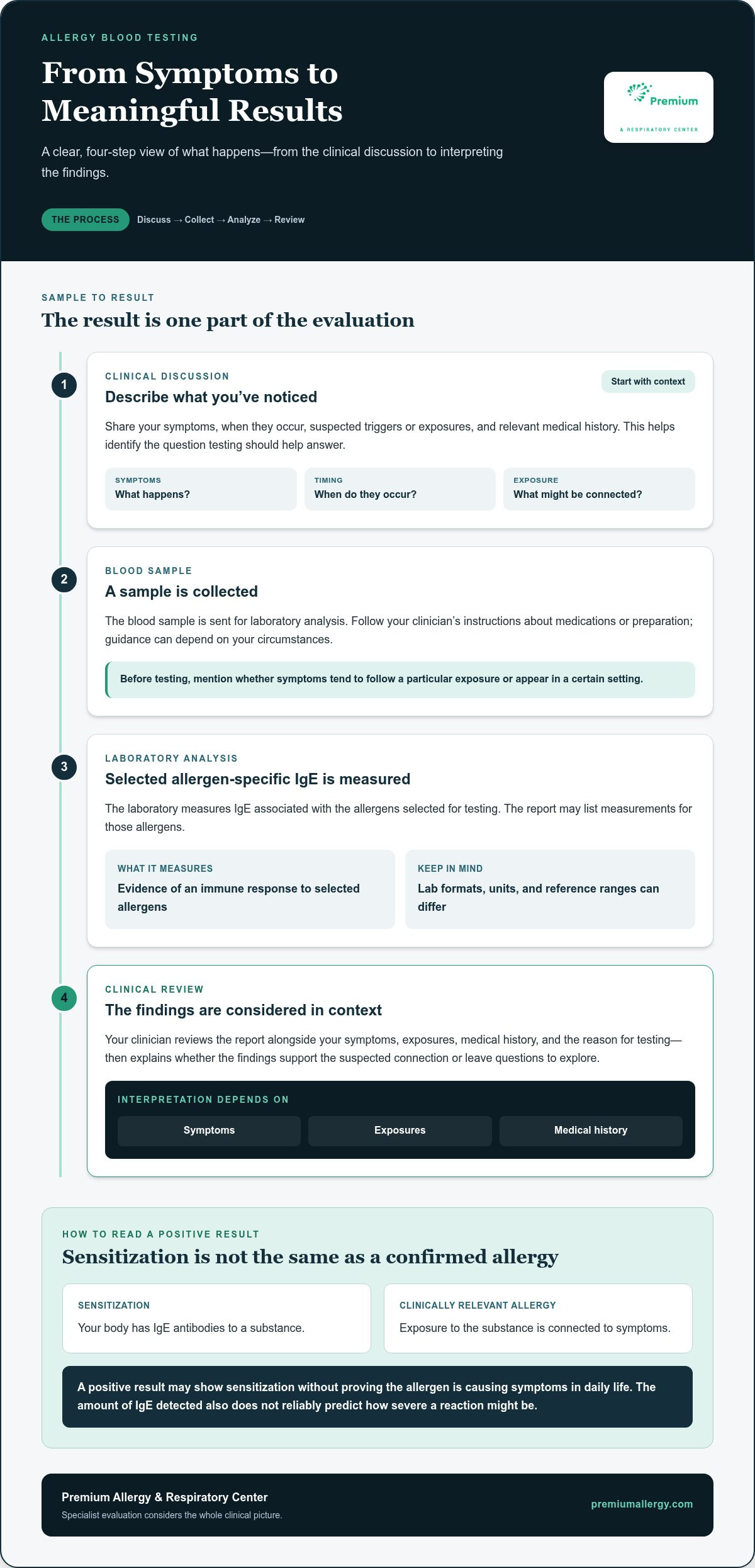
Key distinction: Sensitization means your body has IgE antibodies to a substance. A clinically relevant allergy means exposure to that substance is connected to symptoms. A positive result may show sensitization without proving the allergen is causing a reaction in your daily life.
IgE is one type of antibody involved in some allergic responses. Specific IgE testing looks for antibodies associated with selected allergens, rather than simply determining whether you “have allergies.” It measures an immune response, not the full clinical picture. For example, someone may have IgE to a type of pollen without experiencing symptoms when exposed to it. The finding needs to be considered alongside symptoms and exposure.
Allergy testing includes different approaches, each with its own process and role. This overview of allergy testing methods describes blood tests and skin tests among the options. A specialist can connect the method and findings to the question being investigated.
A clinician may consider an allergy blood test when your symptoms and medical history suggest a possible connection to a particular allergen. For example, recurring symptoms around a suspected exposure may prompt a focused discussion about testing. Your history helps determine which allergens to assess and what the result could clarify.
Testing is most useful when it addresses a specific clinical question. Broad testing without relevant symptoms can identify sensitization that may not matter to your health, creating confusion rather than clarity. Before an evaluation, note what symptoms you experience, when they occur, and which exposures seem connected. That context helps a specialist decide whether testing is appropriate and interpret the result carefully.
An allergy blood test is a process, not a result in isolation. It begins with a clinical discussion to identify the question testing should help answer. A blood sample is then collected and analyzed by a laboratory for allergen-specific IgE. Once the report is available, the clinician reviews it alongside your symptoms, exposures, and medical history.
Before testing, describe what you’ve noticed. For instance, explain whether symptoms tend to follow a particular exposure or appear in a certain setting. This context helps the clinician decide which question to investigate. A sample is collected and sent for analysis. Follow your clinician’s instructions about medications or preparation, since guidance can depend on your circumstances.
For a patient-friendly explanation of what the test measures and why a clinician might select it, read the U.S. National Library of Medicine’s Allergy Blood Test overview.
A report may list measurements of IgE associated with the allergens tested. The format, units, and reference ranges can differ between laboratories, so don’t interpret a number without the report’s context. A higher measurement alone doesn’t establish how severe a reaction would be or prove that exposure is causing your symptoms.
A laboratory result is evidence to interpret, not a diagnosis by itself. Your clinician considers the result alongside your history and symptoms, then explains whether it supports the suspected connection or leaves questions to explore. If the report is unclear, ask how each finding relates to the symptoms that led to testing.
At Premium Allergy & Respiratory Center, comprehensive blood allergy testing is part of specialist evaluation. Learn more about specialist allergy care in Fresno and nearby communities.
Blood testing and skin prick testing can both help evaluate possible IgE-related allergies, but they look for evidence in different ways. A skin prick test checks for a response at the skin, while an allergy blood test measures allergen-specific IgE in a blood sample. Neither is automatically the better choice for everyone. Your symptoms, medical history, suspected allergen, and practical circumstances help guide the decision.
| Consideration | Blood test | Skin prick test |
|---|---|---|
| What’s assessed | Allergen-specific IgE in a blood sample | A localized skin response to selected allergens |
| General process | A sample is collected and analyzed by a laboratory | Small amounts of selected allergens are placed on the skin, which is gently pricked |
| Result timing | Results may take several days | Results are generally read in about 15-20 minutes |
| Practical factors | May be considered when some skin conditions or medications affect skin testing | Antihistamines can affect results, and the skin needs to be suitable for testing |
The American Academy of Allergy, Asthma & Immunology explains how clinicians use different allergy testing methods to investigate suspected allergies. The appropriate approach depends on the clinical question, not simply on which test seems more convenient.
During skin prick testing, a clinician places small drops of selected allergen extracts on the skin, often on the forearm or back, then gently pricks the surface. The clinician checks the sites for a localized response. Blood testing follows a different route: a sample is collected and sent to a laboratory for analysis. Your clinician determines which method fits the evaluation and interprets the findings in context.
Practical factors can matter. Certain skin conditions may make skin testing difficult to interpret, and antihistamines can interfere with skin-test responses. A clinician may consider blood testing in those circumstances, including when changing medication isn’t appropriate. Your medical history and the suspected allergen still guide the choice. No single factor makes one test right for everyone.
For a suspected food allergy, testing is considered alongside the details of the person’s reaction and history. Read this food allergy testing guide to learn more about how food-related evaluation can support a clearer clinical picture.
A result is most useful when it helps answer a specific question about your symptoms. A positive allergy blood test can show detectable IgE to an allergen, but that finding alone doesn’t prove the allergen is causing your symptoms. A negative result may make a particular suspected allergy less likely, but it doesn’t explain every possible cause of symptoms or rule out conditions the test wasn’t designed to assess. For chronic nasal or sinus symptoms where testing remains inconclusive, consulting an ear, nose, and throat specialist such as Dr. Aaron Fletcher, MD can help identify potential structural or non-allergic causes.
Not necessarily. Sensitization means your immune system has detectable IgE associated with a substance. A clinically relevant allergy involves symptoms connected to exposure. Your clinician considers whether the result fits your experience, including when symptoms begin, what you were exposed to, and whether the pattern recurs. Your examination and medical history may provide helpful context, too.
For example, a positive result to a substance may not be meaningful if you’re regularly exposed to it without symptoms. If the result doesn’t point to the suspected trigger, your clinician may discuss other explanations or whether further evaluation could help. Avoid drawing conclusions from a single number. Results need to be interpreted in context.
Bring a clear account of your symptoms and any patterns you’ve noticed. These questions can help guide the conversation:
Medication reactions can follow a distinct evaluation pathway, so a blood test result shouldn’t be used on its own to confirm or dismiss a suspected drug allergy. For example, penicillin allergy testing in Fresno addresses that specific concern through its own clinical evaluation.
Specialist review can help make a confusing report more useful. Premium Allergy & Respiratory Center provides comprehensive blood allergy testing and specialist evaluation. Learn more by connecting with Premium Allergy & Respiratory Center.
Choosing a test is only part of understanding possible allergies. An allergy specialist can consider your symptoms, medical history, and suspected exposures to determine whether testing may help answer your specific question. They can also explain what results do and don’t show, so a laboratory report becomes part of a thoughtful evaluation rather than a conclusion on its own.
Details that may seem small can help shape an evaluation. A specialist may ask when symptoms began, how often they occur, what was happening beforehand, and whether you notice a pattern around particular exposures. Those details help guide test selection and put findings in context. At Premium Allergy & Respiratory Center, comprehensive blood allergy testing is part of specialty allergy and respiratory care, with results considered alongside each patient’s clinical picture.
This individualized approach can help when symptoms persist or a test result doesn’t seem to match what you experience. A specialist can discuss what the findings suggest and whether other explanations or further evaluation deserve consideration. Testing can inform that conversation, but it doesn’t guarantee a diagnosis or a particular treatment outcome.
Before an appointment, jot down what you notice. A brief record can make it easier to describe patterns and ask focused questions:
Bring any relevant test results and medication information, too. You can discuss whether an allergy blood test or another evaluation may fit your concerns, and how findings would be interpreted alongside your history. If you are looking for private diagnostic testing and health assessments in the United Kingdom, UK Medicare Screening provides accessible clinical services to support your medical evaluations.
Premium Allergy & Respiratory Center provides blood allergy testing and specialist evaluation for people in Fresno, Clovis, Selma, and North Clovis. To explore a personalized approach to allergy and respiratory concerns, explore allergy and respiratory care.
An allergy blood test measures specific IgE antibodies, while a skin prick test checks for a response at the skin. Both can inform an evaluation, but neither result should be read on its own. A positive finding may indicate sensitization, not necessarily an allergy causing your symptoms. Your history, exposures, and symptom patterns help a specialist interpret what the results mean for you.
If symptoms affect your everyday comfort, a personalized evaluation can help clarify which testing approach may fit your concerns. Premium Allergy & Respiratory Center provides comprehensive blood allergy testing and specialty allergy and respiratory care in Fresno and nearby communities, including Clovis, Selma, and North Clovis.
Explore personalized allergy care and take a thoughtful next step toward understanding your symptoms. With the right context and specialist guidance, you can move forward with greater confidence.
An allergy blood test measures specific IgE antibodies associated with selected allergens in a blood sample. It can provide useful evidence during an allergy evaluation, but the result alone can’t establish that an allergen causes your symptoms. A clinician considers your medical history, exposure patterns, and symptoms to interpret the finding and explain what it may mean for you.
No, not necessarily. A positive result may indicate sensitization, which means your immune system recognizes an allergen, but exposure may not cause symptoms. Your reaction history and the timing of symptoms matter. Review the result with an allergy specialist before making changes to your diet, medication, or environment, so decisions are guided by your complete clinical picture.
Neither test is automatically better for everyone. Blood testing measures allergen-specific IgE in a sample, while skin prick testing checks for a response at the skin. The suspected allergy, your symptoms, medical history, and other clinical factors help guide test selection. A specialist can explain which approach may help address your concerns and how the results fit your overall evaluation.
Yes. Blood testing can measure specific IgE associated with selected foods, but a positive finding by itself doesn’t confirm a food allergy. Symptoms, timing, and your medical history are important parts of the evaluation. Testing is most useful when guided by a relevant concern, rather than used as broad screening. A specialist can explain the result and whether further evaluation may be appropriate.
Result timing can vary based on the laboratory, the tests ordered, and how the report is sent to the clinic. Your care team can explain when to expect results and how they’ll be reviewed. That discussion matters: a clinician can connect the findings to your symptoms and exposure history, then talk through reasonable next steps rather than leaving you to interpret the report alone.
Don’t stop a prescribed medication unless your clinician specifically instructs you to. Preparation guidance depends on your evaluation and the testing method being considered. Share a list of your current medications with your care team and ask for instructions before the appointment or blood draw. This helps your clinician account for relevant details when planning your evaluation and interpreting the results.
No. An allergy blood test result shouldn’t be treated as a reliable prediction of how severe a future reaction might be. The result needs to be considered alongside your history of reactions, symptoms, and exposures. If you’ve experienced concerning symptoms, discuss them with a qualified clinician so your evaluation and safety guidance can reflect your individual experience.
What if the most useful clue isn’t a suspected trigger, but the pattern of your child’s symptoms? A stuffy nose that returns each spring, a recurring... Continue reading
READ MORE
Fresno’s allergy season doesn’t have one reliable start date. Symptoms may appear in spring, then return in summer or fall. That uncertainty is... Continue reading
READ MORE
What if lasting relief doesn’t require choosing between endless cleaning and relying on medication forever? Year-round sneezing, congestion, itchy... Continue reading
READ MORE
What if the symptoms you blame on mold are actually caused by another allergy or a respiratory condition? When congestion, sneezing, coughing, or... Continue reading
READ MORE