
Could symptoms that flare around your pet have more than one explanation? Sneezing, itchy eyes, or congestion after time with an animal can raise a... Continue reading
READ MORE

What if your relationship with food didn’t have to be defined by constant anxiety? If you’ve spent meals scrutinizing ingredient labels or second-guessing whether a mild skin flare-up is an allergic reaction, you aren’t alone. For families living in the Central Valley, finding an experienced food allergy clinic Fresno residents can trust is the first essential step toward replacing guesswork with clinical clarity.
You already know how exhausting it feels to balance daily routines with the fear of accidental exposure. Sending a child to school, eating out at restaurants, or managing confusing symptoms that overlap with local environmental triggers can make ordinary days feel overwhelming. You deserve a better path forward; one grounded in definitive answers rather than cautious avoidance.
In this guide, you will discover how specialized diagnostic testing and personalized management plans at Fresno’s leading food allergy clinic can help you reclaim a life of safety and confidence. We’ll walk through advanced testing protocols, effective emergency action plans, and the modern clinical strategies that empower you to take charge of your health.
Primary care practices excel at broad health maintenance, but true allergic conditions demand board-certified precision. While general clinics often bundle basic skin panels with everyday checkups, identifying complex immune triggers requires specialized immunology expertise. Selecting a dedicated food allergy clinic Fresno residents rely on ensures your care is led by specialists who focus entirely on the immune system, rather than general practitioners managing a wide array of non-allergic concerns.
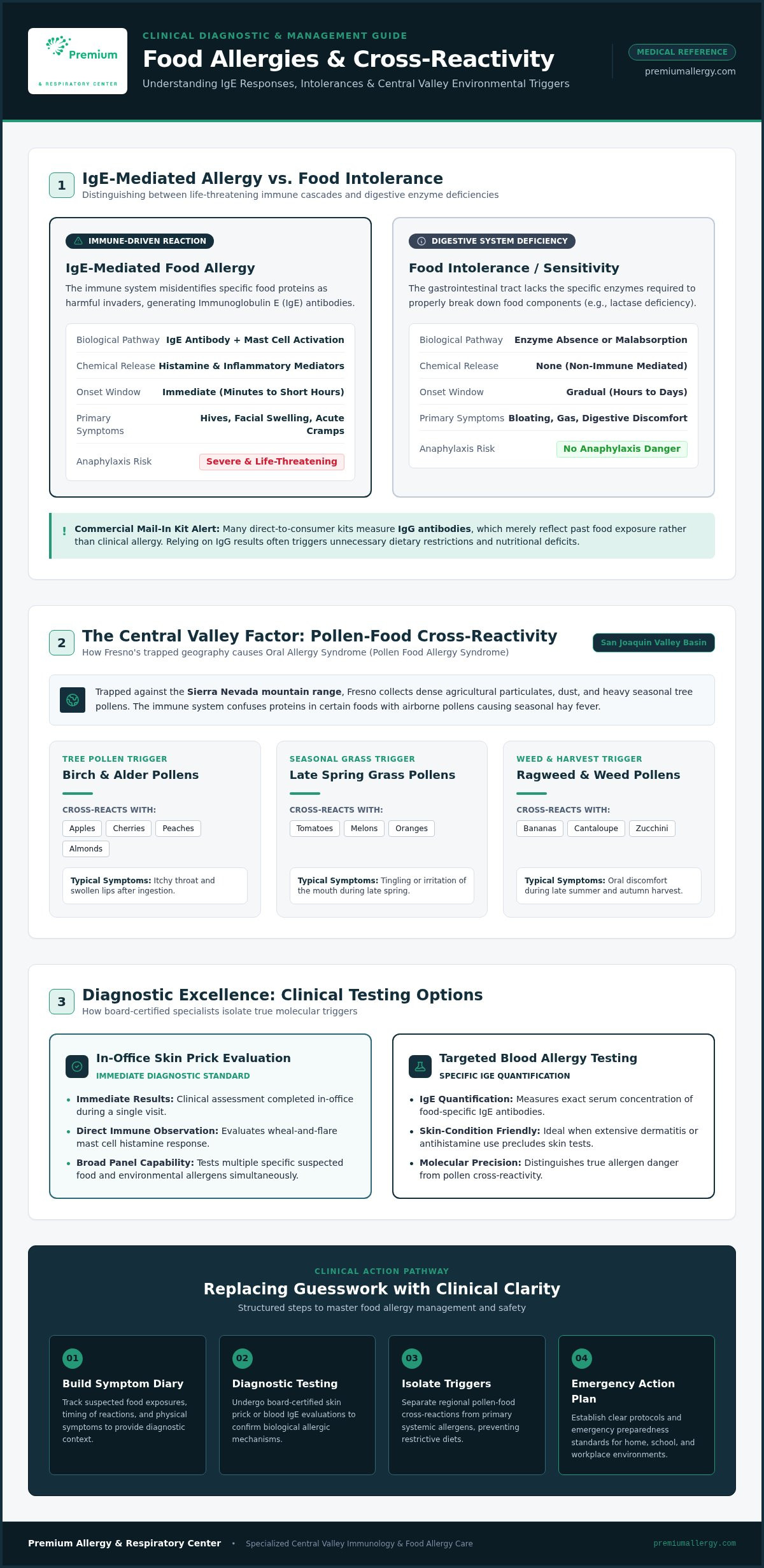
Relying on self-diagnosis or direct-to-consumer sensitivity kits introduces significant risk. Many commercial mail-in tests measure IgG antibodies, which simply indicate past exposure to foods rather than a clinical allergy. Misinterpreting these results often leads to unnecessarily restrictive diets and nutrient deficiencies. For an accurate clinical picture, review this overview of food allergies to see how true IgE-mediated reactions differ from simple food intolerances. Before relying on any at-home panel, it’s worth understanding how food allergy testing clinical methods compare to at-home kits in accuracy so you can make an informed decision about your diagnostic path. A dedicated specialty clinic provides controlled diagnostic testing, distinguishing genuine dangers from benign sensitivities while establishing an immediate standard of emergency preparedness.
Fresno’s geography creates a distinct microclimate. Trapped against the Sierra Nevada mountain range, the San Joaquin Valley collects dense agricultural particulates, dust, and heavy seasonal tree pollens. For local residents, this intense environment frequently triggers Oral Allergy Syndrome (OAS), also known as Pollen Food Allergy Syndrome.
Your immune system can mistake proteins in common foods for the airborne pollens that cause your seasonal hay fever. In our agricultural basin, this cross-reactivity appears often:
Without targeted diagnostic evaluations, you might assume you have developed a sudden, life-threatening stone fruit allergy when you are actually reacting to local birch or orchard pollens. An allergy specialist isolates the precise molecular trigger, preventing needless dietary restriction.
Living with unexplained allergic reactions creates chronic psychological strain. Constant hypervigilance around grocery labels, school cafeterias, and social gatherings drains your vitality. Merely telling yourself to avoid mystery foods is not a sustainable long-term strategy; it only fosters daily anxiety.
Visiting a modern outpatient food allergy clinic in Fresno builds a reliable safety net around your everyday life. Through advanced diagnostic evaluations, an allergist gives you clear, unambiguous boundaries regarding what is safe to eat. Instead of fearing every meal, you step forward with confidence, clear action steps, and renewed peace of mind.
A food allergy is an immune system overreaction to specific proteins that the body mistakenly treats as harmful invaders. When this happens, the immune system releases Immunoglobulin E (IgE) antibodies. These antibodies prompt mast cells to release histamine and other chemicals into surrounding tissues, creating a cascade of acute physical reactions. These responses range from localized hives, facial swelling, and sharp digestive cramping to severe, systemic anaphylaxis that compromises breathing.
Because an IgE-mediated response can escalate within minutes, distinguishing true allergies from non-life-threatening sensitivities is essential for your long-term safety. Understanding these distinct immunological pathways helps you take decisive control of your health.
People often conflate allergies with intolerances, but their biological mechanisms are entirely different. An intolerance originates in the digestive system, usually because your body lacks a specific enzyme required to break down food components. Lactose intolerance serves as a clear example: missing the lactase enzyme produces uncomfortable bloating and gas, but it will never trigger anaphylaxis.
Allergies, by contrast, involve the immune defense network. Because an intolerance does not produce IgE antibodies, conventional allergy testing cannot evaluate it. Clinical protocols detailed in the MedlinePlus guide to food allergy testing focus specifically on verifying these immune-mediated biomarkers, ensuring you receive an accurate diagnosis rather than unnecessary dietary panic.
While an individual can develop an allergy to virtually any dietary protein, nine major foods account for over 90% of serious allergic reactions in the United States. Under federal standards, sesame stands alongside established allergens:
Many adults assume food allergies are exclusively pediatric conditions. Yet adult-onset allergies occur frequently, causing unexpected reactions to foods you have safely enjoyed for decades. Shellfish and tree nuts represent the most common triggers for sudden adult reactions, often arriving without warning.
If you also manage itchy eyes or seasonal congestion alongside these reactions, consulting an allergic rhinitis specialist can help untangle environmental sensitivities from real food dangers. Partnering with a dedicated food allergy clinic Fresno patients trust, such as Premium Allergy, ensures you receive targeted evaluations that replace guesswork with empowering clarity.
Precision is everything when mapping immune triggers. Rather than treating lab numbers as standalone facts, an experienced allergy specialist contextualizes every data point against your real-world reactions. Modern clinical food allergy testing methods include both in-office scratch evaluations and specific IgE blood panels, each playing a distinct diagnostic role. Component-resolved diagnostics take this accuracy further by breaking whole foods down into individual proteins, helping your doctor determine whether a peanut sensitization carries a high risk of systemic anaphylaxis or simply reflects harmless cross-reactivity.
Skin prick testing remains the clinical gold standard for rapid confirmation. The procedure uses a tiny plastic applicator to introduce micro-droplets of allergen extracts just beneath the surface of your forearm or upper back. It feels like a mild scratch rather than a painful injection.
Results appear in just 15 to 20 minutes. If your immune system recognizes a protein, localized histamine creates a small, itchy wheal resembling a mosquito bite. To ensure test validity, your care team tracks positive and negative controls side by side. You must pause all oral antihistamines for 5 to 7 days before your appointment, as these medications block histamine receptors and can produce false-negative readings.
Serum specific-IgE testing measures the concentration of food-targeted antibodies circulating in your bloodstream. While skin testing delivers immediate feedback, blood testing offers key advantages in specific scenarios:
If you are weighing your diagnostic options, a detailed comparison of food allergy testing methods, including clinical skin and blood panels versus at-home kits, can help you understand which approach delivers the most reliable results for your situation. Managing respiratory health is equally vital during this diagnostic journey. In Fresno County, where adult asthma rates reach up to 26.2%, an unmanaged airway significantly increases the danger of severe food-induced reactions. Pairing targeted food evaluations with a structured asthma management plan protects your lungs and calms systemic inflammation. At a dedicated food allergy clinic Fresno residents count on, specialists integrate these findings to craft a unified, reassuring path forward.
Arriving thoroughly prepared transforms your initial consultation from an exploratory chat into a decisive clinical roadmap. Rather than entering your appointment unsure of what to expect, taking a few focused steps ensures your specialist captures the exact diagnostic data needed to protect your household. When visiting a dedicated food allergy clinic Fresno patients trust, your active participation lays the groundwork for accurate testing.
Start by assembling your personal health records. Bring a comprehensive list of all prescription medications, over-the-counter remedies, vitamins, and herbal supplements you take regularly. Additionally, contact your insurance provider beforehand to verify benefits for outpatient specialty evaluations and diagnostic coding. Preparing children also removes unnecessary fear; frame the visit simply as an exciting detective mission to discover which foods help their body feel strong, explaining that the skin test feels like a gentle, quick stamp rather than a shot.
Your personal story provides crucial diagnostic context that no single laboratory test can reproduce on its own. Keeping a 14-day symptom diary detailing meal ingredients, the exact onset time of any physical response, and how long symptoms lasted helps your physician pinpoint hidden patterns.
During the consultation, your specialist will conduct a physical examination, checking the skin barrier for signs of active atopic dermatitis and evaluating the nasal passages. Integrating this clinical history with a targeted physical assessment enables your physician to select the most appropriate testing method, avoiding redundant panels and tailoring every step directly to your symptoms.
Timing your daily medications correctly prevents false test results. Most antihistamines must be paused 5 to 7 days before skin testing to ensure accurate immune responses.
Ready to gain clear answers about your diet? Schedule a consultation at Premium Allergy to partner with an experienced specialist and take charge of your everyday wellness.
Accurate testing is only the opening chapter of long-term health. Transforming clinical results into day-to-day safety requires a comprehensive, adaptable action plan tailored to your household. At our outpatient food allergy clinic Fresno families rely on, management focuses on empowering you with actionable tools rather than leaving you to navigate food restrictions alone.
Every customized management protocol includes a written Emergency Action Plan detailing specific response steps for home, school, and workplace settings. Hands-on epinephrine training ensures you, your child, and their caregivers feel completely comfortable operating emergency devices under pressure. Because immune sensitivities evolve over time, ongoing specialty evaluations monitor antibody levels, assess whether childhood sensitivities are resolving, and optimize related atopic conditions like asthma and atopic dermatitis for unified physical defense.
Safely participating in daily social life is entirely achievable with the right habits. Regaining culinary freedom starts with structured, practical adjustments:
Implementing these clear habits removes fear from mealtime, replacing constant apprehension with practical vigilance.
Specialized outpatient immunology should feel compassionate, streamlined, and modern. Under the medical direction of board-certified allergist Dr. Angela Sabry, our center focuses entirely on targeted outpatient evaluations that get straight to the root of complex allergic responses.
By blending modern diagnostic methodology with attentive, human-centered care, we help you replace uncertainty with lasting clinical clarity. Take control of your daily health with confidence. Schedule your food allergy evaluation today to create your personalized safety plan.
Living under the shadow of mealtime uncertainty shouldn’t be your everyday reality. By separating true IgE-mediated risks from environmental cross-reactions, specialized food allergy diagnostic panels give you the factual clarity you need to live and eat without fear. You no longer have to navigate school routines, social gatherings, or sudden symptoms through cautious guesswork.
When you partner with a dedicated food allergy clinic Fresno families trust, you gain far more than lab results. You receive an individualized safety net designed by empathetic clinical experts in respiratory and allergic health. Providing dedicated care for Fresno, Clovis, and Selma residents, our team is committed to helping you replace daily anxiety with informed vitality. Take the definitive first step toward protecting your household: Take Control of Your Food Allergies—Schedule Your Specialist Consultation at Premium Allergy Today.
Skin prick testing delivers results in just 15 to 20 minutes, while the total consultation typically lasts about an hour. This window allows the clinical team to review medical histories, apply the allergen panel, and interpret skin wheal reactions immediately. If serum blood allergy testing is required instead, blood draws take only a few minutes, with comprehensive laboratory results returning within several days to guide your care plan.
Yes, adults can suddenly develop IgE-mediated food allergies to items they have eaten safely for decades. Adult-onset allergies frequently involve triggers like shellfish, finned fish, tree nuts, or peanuts. Changes in immune function, environmental cross-reactivities, or gut microbiome shifts can trigger this sudden loss of tolerance. A specialized evaluation helps confirm whether new symptoms stem from a true allergy or an overlapping digestive issue.
Yes, specialized food allergy testing is safe, well-tolerated, and highly accurate for infants and toddlers. Early diagnosis is critical for infants showing signs of atopic dermatitis or severe digestive distress after eating. At our food allergy clinic Fresno parents trust, our specialists adapt testing techniques specifically for young patients, using gentle skin application devices or pediatric blood draws to ensure maximum comfort while establishing clear dietary guidelines early in life.
A true food allergy triggers an immediate immune system response involving IgE antibodies, whereas a food sensitivity or intolerance involves only the digestive tract. Food allergies carry severe risks, including systemic anaphylaxis, hives, and respiratory distress. Food intolerances, such as lactose deficiency, cause gastrointestinal discomfort like bloating or cramps without provoking the immune system. Intolerances are uncomfortable, but they are never life-threatening and do not show up on allergy tests.
Whether you need a formal referral depends entirely on the requirements of your specific health insurance policy. Many Preferred Provider Organization (PPO) plans allow direct scheduling with our outpatient specialty team without a prior recommendation from a primary care doctor. However, Health Maintenance Organization (HMO) plans typically require an initial authorization from your primary care provider. Our staff readily assists families across Fresno, Clovis, and Selma in verifying specialty coverage benefits before scheduling.
If your child shows severe symptoms like difficulty breathing, throat tightness, or widespread hives, administer an epinephrine auto-injector immediately and call 911. For milder reactions, stop feeding the suspected food right away and monitor them closely. Document the specific ingredients, photograph visible skin reactions, and note the timeline of symptoms. Once acute symptoms are medically resolved, schedule a specialty evaluation at a food allergy clinic Fresno families depend on to confirm the trigger through precision diagnostics.
Yes, modern allergy medicine now offers proactive therapeutic solutions beyond strict dietary avoidance. Innovative therapies include FDA-approved biologic injections like omalizumab, which significantly reduce the risk of severe reactions caused by accidental exposures. Supervised clinical desensitization and updated emergency management protocols provide an active defense. While these advancements don’t cure food allergies, they provide vital protection and peace of mind when dining out or attending school.
Allergists generally recommend re-evaluating childhood food allergies every 12 to 24 months to track whether a child is outgrowing a trigger. Children frequently develop natural tolerance to milk, egg, wheat, and soy over time, whereas allergies to peanuts, tree nuts, and shellfish tend to persist. Regular follow-up evaluations using quantitative blood panels or skin prick assessments measure changing antibody levels, indicating precisely when it is clinically safe to reconsider expanding a patient’s diet.
Could symptoms that flare around your pet have more than one explanation? Sneezing, itchy eyes, or congestion after time with an animal can raise a... Continue reading
READ MORE
Could a swollen, painful sting site mean something different from a dangerous allergic reaction? If you’re unsure what your symptoms meant or worried... Continue reading
READ MORE
What if the pollen, dust mites, or mold you suspect aren’t the whole story behind your symptoms? Environmental allergy testing can help identify... Continue reading
READ MORE
A positive allergy blood test doesn’t automatically mean a substance is causing your symptoms. The test measures specific immunoglobulin E (IgE)... Continue reading
READ MORE