
Fresno’s allergy season doesn’t have one reliable start date. Symptoms may appear in spring, then return in summer or fall. That uncertainty is... Continue reading
READ MORE

Could a swollen, painful sting site mean something different from a dangerous allergic reaction? If you’re unsure what your symptoms meant or worried about another sting, an insect sting allergy doctor can review what happened and guide your next steps. Symptoms beyond the sting area, such as widespread hives, facial or tongue swelling, difficulty breathing, or dizziness, warrant prompt medical attention.
It’s understandable to feel anxious about what comes next. A large local reaction can look alarming, but it isn’t usually the same as a systemic allergic reaction. A specialist can review your symptoms, consider whether testing is appropriate, and explain how the results fit your history, so you’re not left guessing.
This article explains when to seek specialist evaluation, what diagnosis and treatment may involve, and what details and questions to bring to an appointment. Premium Allergy & Respiratory Center provides outpatient insect sting allergy evaluation and treatment for patients in Fresno, Clovis, Selma, and North Clovis, with care focused on an individualized plan and practical guidance.
An unexpected reaction can make a walk, a backyard meal, or time outdoors feel uncertain. Pain, redness, itching, and swelling around the sting are common local responses and don’t automatically mean you have a systemic allergy. The important details are where symptoms appeared, how they changed, and whether they affected other parts of your body. This overview of insect sting allergy explains the distinction between local and systemic reactions, but only a clinician can assess your individual history and symptoms.
Systemic symptoms can involve areas beyond the sting site. They may include widespread hives, swelling away from the sting, facial or tongue swelling, breathing problems, dizziness, faintness, or a rapid pulse. These symptoms don’t let you diagnose yourself, but they can signal the need for prompt medical attention.
Breathing difficulty, throat or tongue swelling, faintness, or suspected anaphylaxis requires emergency care. Call 911. If you have a prescribed epinephrine auto-injector and an emergency action plan, follow those instructions while emergency help is on the way. Outpatient specialist care is for evaluation and planning, not a substitute for emergency treatment during a severe reaction.
A local reaction stays centered around the sting and may include pain, redness, itching, and swelling. A systemic reaction affects areas beyond the sting site or involves more than one body system, such as skin symptoms alongside breathing trouble or dizziness. The size of the swelling alone doesn’t confirm an allergy or reliably predict how a future sting will affect you. Tell a clinician how the symptoms unfolded, including where they appeared and whether they spread.
Arrange specialist evaluation after a suspected systemic reaction, even if the symptoms have eased. Repeated reactions that concern you, or uncertainty about your risk and what to do if stung again, are also reasons to seek an assessment. An insect sting allergy doctor can review your history and discuss appropriate evaluation and next steps. If severe symptoms are happening now, call 911 first. Schedule outpatient follow-up after urgent needs are addressed.
Diagnosis is a step-by-step process, not a conclusion based on one symptom or test result. An insect sting allergy doctor starts by reviewing what happened and considering your overall health and reaction pattern. If appropriate, the specialist may recommend allergy testing to assess whether sensitivity to insect venom is present. The findings are interpreted alongside your history to guide an individualized plan.
An allergy test result is meaningful only when interpreted in the context of your reaction history and clinical assessment. A positive result alone doesn’t explain how your body responded to a sting or determine what care is right for you. The timing, symptoms, and circumstances all help shape the clinical picture. The American Academy of Allergy, Asthma & Immunology also describes evaluation as part of understanding and managing stinging insect allergy.
Details you remember, even if they seem small, can make the evaluation more useful. Before your appointment, write down:
If you’re unsure what stung you or can’t recall the exact timing, share what you do know. An approximate sequence is more useful than guessing. Your account can help the specialist identify relevant details and decide what to explore next.
After reviewing your history and completing a clinical assessment, an allergist may recommend testing if it could help determine whether venom sensitivity is present. Testing is one part of the evaluation, not a stand-alone diagnosis. It isn’t automatically needed or appropriate for every person or reaction.
The specialist can explain how the findings fit your symptoms and whether further evaluation or a tailored treatment and safety plan makes sense. Connecting your history, assessment, and test interpretation helps turn results into practical next steps. Premium Allergy & Respiratory Center provides specialized insect sting allergy evaluation and treatment through outpatient allergy care for patients in Fresno, Clovis, Selma, and North Clovis.
There isn’t one standard plan for every sting reaction. A specialist considers your symptoms, medical history, and evaluation findings before discussing what care may fit your situation. The plan may address three separate needs: responding to an active reaction, reducing the chance of future stings, and considering specialist-directed treatment when appropriate.
Each serves a different purpose. Emergency care is for severe symptoms happening now. Prevention planning helps you understand ways to lower exposure and prepare for a possible sting. Ongoing allergy treatment is a separate conversation based on your individual assessment. An insect sting allergy doctor can explain how these needs relate to your history rather than assume that the same test or treatment applies to everyone.
After reviewing your reaction history and evaluation findings, an allergist may discuss venom immunotherapy if it appears clinically appropriate. This treatment uses carefully administered insect venom with the aim of reducing the risk of a serious reaction to future stings for appropriately selected patients. It isn’t automatically recommended for everyone who has had a sting reaction. Ask your allergist about potential benefits, risks, and what treatment would involve for you. The American Academy of Allergy, Asthma & Immunology also provides an overview of this treatment and stinging insect allergy management.
A written, personalized plan can make next steps clearer if another sting occurs. It may explain which symptoms call for emergency care, what actions to take, and how to use any prescribed emergency medication according to your clinician’s instructions. Review the plan with people who may be with you outdoors so they know how to respond.
A safety plan supports preparation, but it doesn’t replace emergency care during a severe reaction. Routine outpatient follow-up is where you can revisit your diagnosis, discuss treatment questions, and update your plan as needed. Premium Allergy & Respiratory Center provides outpatient insect sting allergy evaluation and treatment in the Fresno area. Learn more about insect sting allergy care as you consider your next step.
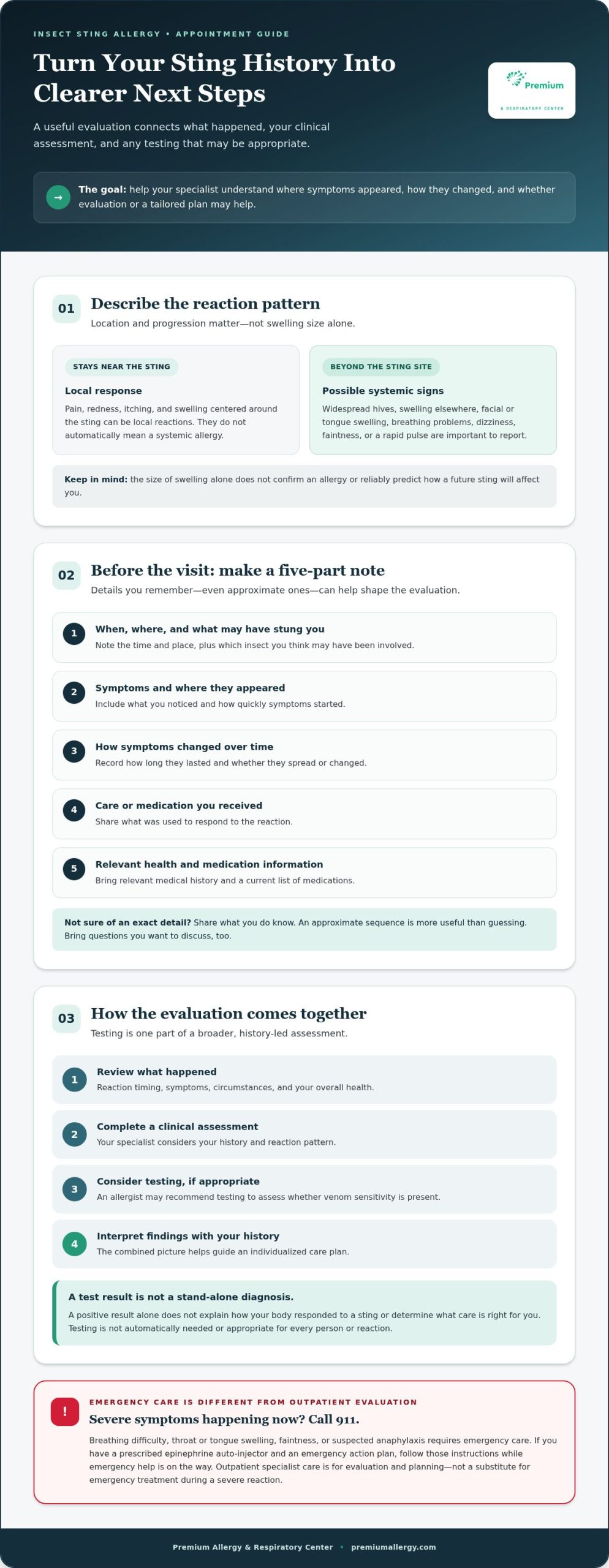
A little preparation can turn a worrying sting story into a clearer conversation about diagnosis and next steps. Before meeting an insect sting allergy doctor, jot down what you remember, even if some details are uncertain. You don’t need to identify the insect or have every answer. Your notes can help the specialist understand the sequence of events and decide what information may guide your evaluation.
Bring a timeline of the reaction and any relevant medical information you have. Include:
If you took photos of the reaction or insect, bring them if useful. Don’t worry if your account is incomplete. An approximate timeline and honest description are more helpful than trying to fill gaps from memory.
Use the appointment to understand how the pieces fit together. Consider asking:
These questions can help you leave with more than a test result. The specialist visit is an opportunity to discuss what the findings mean for your circumstances, what to do if another sting occurs, and which next steps are appropriate. Write down the answers or bring someone who can help take notes if that would make the conversation easier.
Premium Allergy & Respiratory Center provides outpatient evaluation and treatment for insect sting allergies for patients in Fresno, Clovis, Selma, and North Clovis. Explore insect sting allergy care and prepare for an informed conversation with a local allergy specialist. For information on evaluating other possible allergy triggers, see this guide to mold allergy treatment in Fresno.
A concerning sting reaction can leave you wondering what happened and how to feel safer outdoors. The next steps are more manageable when you move from recognizing the reaction to getting a specialist evaluation, understanding the findings, and discussing a plan suited to your circumstances. You don’t need to decide on a diagnosis or treatment by yourself.
Premium Allergy & Respiratory Center provides outpatient specialty evaluation and treatment for insect sting allergies in Fresno, Clovis, Selma, and North Clovis. A visit can connect your reaction history with appropriate evaluation and help clarify what the findings may mean for you. The clinic provides planned outpatient allergy care, not emergency treatment.
An insect sting allergy doctor can consider the details of your reaction and evaluation findings when discussing diagnosis and possible next steps. Ask what the findings suggest, whether further assessment may be useful, and what prevention or safety guidance applies to your situation. Treatment options are discussed according to individual clinical considerations, not assumed from one symptom or test result.
Clear explanations matter. Share what concerns you, ask for unfamiliar terms to be explained, and raise questions about the benefits and risks of any option discussed. The goal is a practical conversation that helps you understand the reasoning behind your plan, while recognizing that care decisions and outcomes vary from person to person.
If you’ve had a concerning reaction, outpatient specialist evaluation can help you make sense of it and discuss a path forward. Bring the notes and questions you’ve gathered, then work with the specialist to understand the assessment and recommendations. Premium Allergy & Respiratory Center serves patients in Fresno, Clovis, Selma, and North Clovis with outpatient insect sting allergy care.
For current severe symptoms or suspected anaphylaxis, don’t wait for an appointment. Call 911 for emergency care. Once immediate safety needs are addressed, specialist follow-up can help you understand the reaction and plan for the future.
Explore insect sting allergy care at Premium Allergy & Respiratory Center and take a confident next step toward an individualized evaluation.
A sting reaction can be difficult to interpret on your own. A specialist can review your symptoms and medical history, consider whether diagnostic screening is appropriate, and explain how the findings may guide an individualized care plan. Preparing a timeline and questions for your visit can help you feel more confident about the conversation.
Premium Allergy & Respiratory Center provides specialized diagnostic screening and insect sting allergy treatment through outpatient allergy specialty care for patients in Fresno, Clovis, Selma, and North Clovis. An insect sting allergy doctor can help you better understand your reaction and discuss practical next steps. For severe symptoms happening now or suspected anaphylaxis, call 911 rather than waiting for an appointment.
Explore insect sting allergy care and take a confident step toward understanding your options. Personalized evaluation can help you move forward with greater clarity.
Seek emergency care right away for difficulty breathing, throat or tongue swelling, faintness, or suspected anaphylaxis. Call 911 and follow your clinician’s emergency instructions, including using prescribed medication as directed. After a concerning reaction has passed, arrange an outpatient evaluation with an allergist, especially if symptoms extended beyond the sting site. A specialist can review what happened and help clarify whether further assessment and a future-sting safety plan are appropriate.
An allergist begins by reviewing your reaction history and assessing your symptoms and relevant medical background. Based on that evaluation, the specialist may recommend testing to help determine whether venom sensitivity is present. Results aren’t interpreted in isolation: the timing, location, and pattern of your symptoms matter too. An insect sting allergy doctor can explain how the history and findings fit together and what they may mean for your next steps.
Large swelling around the sting can be a local reaction and doesn’t, by itself, establish a systemic insect sting allergy. Local symptoms remain centered near the sting, while systemic reactions affect other body areas or systems, such as widespread hives or breathing symptoms. The size of swelling alone also can’t reliably determine future reaction severity. If you’re unsure what your symptoms indicate, an allergist can assess the complete reaction history.
The specialist will ask what happened, including when symptoms began, where they appeared, and how they changed. They’ll review relevant medical history and assess whether additional evaluation, including testing, may help clarify the cause. You can also discuss prevention, emergency instructions, and possible treatment options suited to your circumstances. Bring your questions and ask for explanations of any findings or recommendations you don’t understand.
Venom immunotherapy may be discussed when an allergist considers it clinically appropriate after reviewing your reaction history and evaluation findings. It uses measured insect venom with the goal of reducing the risk of serious reactions to future stings for appropriately selected patients. It isn’t automatically right for everyone. Your allergist can explain potential benefits, risks, and treatment details in light of your individual situation.
Yes. Premium Allergy & Respiratory Center provides outpatient evaluation and treatment for insect sting allergies in Fresno and nearby communities, including Clovis, Selma, and North Clovis. A specialist can review your reaction history, provide specialized screening when appropriate, and discuss individualized next steps. The clinic provides outpatient specialty care, not emergency services. For severe symptoms happening now or suspected anaphylaxis, call 911 rather than waiting for an appointment.
Bring a timeline of the sting and symptoms, including where the sting occurred, when symptoms appeared, how long they lasted, and any treatment you used. Note what the insect may have looked like, if known. Bring relevant medical records, information about past reactions, and a current medication list when available. It’s also helpful to write down questions, such as what the evaluation may clarify and which safety steps fit your situation.
Fresno’s allergy season doesn’t have one reliable start date. Symptoms may appear in spring, then return in summer or fall. That uncertainty is... Continue reading
READ MORE
What if lasting relief doesn’t require choosing between endless cleaning and relying on medication forever? Year-round sneezing, congestion, itchy... Continue reading
READ MORE
What if the symptoms you blame on mold are actually caused by another allergy or a respiratory condition? When congestion, sneezing, coughing, or... Continue reading
READ MORE
Could a sting that starts with a sore, swollen spot become an emergency? The difference often comes down to whether symptoms stay near the sting or... Continue reading
READ MORE