
Could a sting that starts with a sore, swollen spot become an emergency? The difference often comes down to whether symptoms stay near the sting or... Continue reading
READ MORE

Could a sting that starts with a sore, swollen spot become an emergency? The difference often comes down to whether symptoms stay near the sting or affect the rest of your body. It’s understandable to feel unsure when pain or swelling changes, especially if you’ve had an allergic reaction before. Knowing the right bee sting reaction treatment can help you respond calmly and recognize when to get emergency help.
This guide explains how to distinguish a mild local reaction from warning signs such as trouble breathing, throat or tongue swelling, dizziness, or widespread hives. You’ll find first-aid steps for a mild reaction, what to do if symptoms are severe, and why improvement may not mean the emergency is over. After a suspected systemic reaction, an allergy specialist can evaluate your history and discuss prevention options, including insect sting allergy treatment. The right next step depends on your symptoms, so start by checking where they occur and whether they’re getting worse.
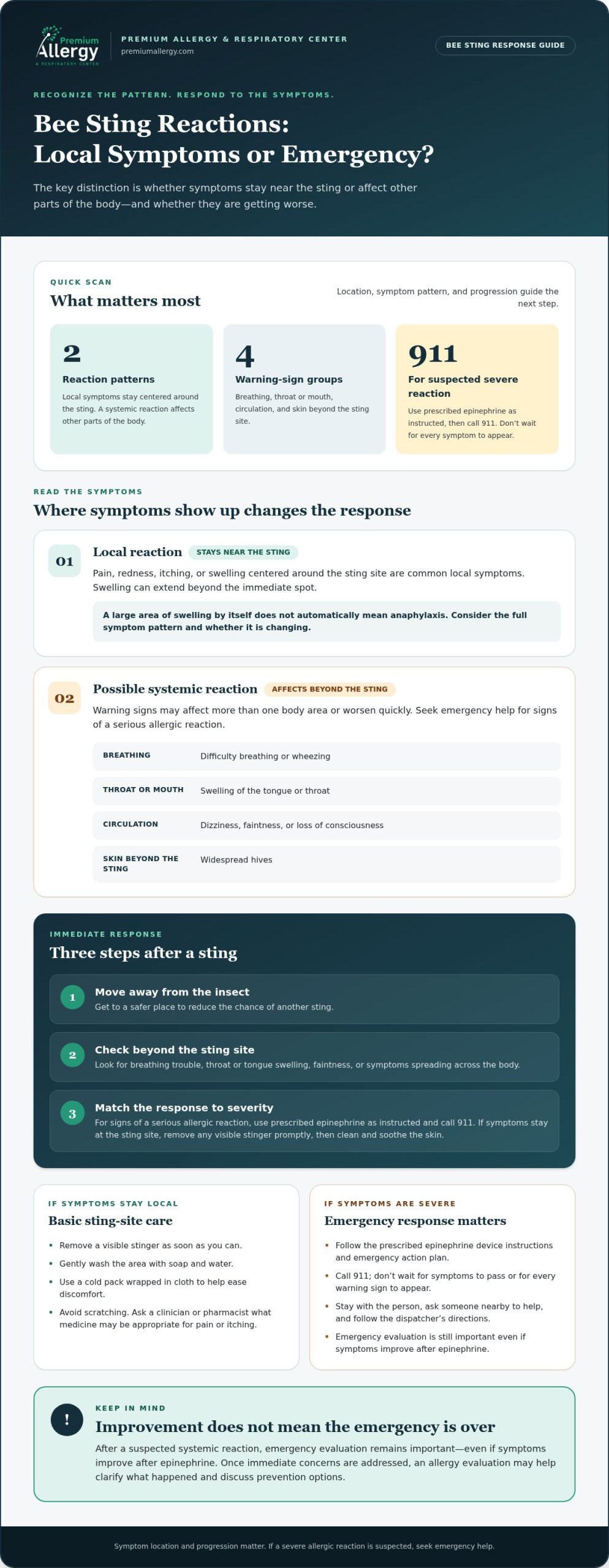
A bee sting can cause anything from a painful spot to symptoms that need emergency care. If you’re unsure what you’re seeing, notice where symptoms are happening and whether they’re changing. Pain, redness, itching, and swelling centered around the sting site are common local symptoms. Trouble breathing, feeling faint, or symptoms spreading beyond the sting area call for a different response.
A local reaction stays centered around the sting; a suspected systemic allergic reaction affects other parts of the body and may require emergency help. This distinction can guide your next step, but it can’t diagnose an individual reaction. A Bee sting can cause a range of symptoms, so pay attention to changes rather than focusing only on the mark itself.
A local reaction usually involves discomfort and visible changes near the sting. The area may hurt, itch, redden, or swell, and symptoms can change after the initial sting. Keep track of whether they remain near the site or appear elsewhere. A reaction’s appearance alone can’t establish whether you have an allergy, and there isn’t one recovery timeline that fits everyone.
Warning signs can include difficulty breathing, swelling of the throat or tongue, faintness or dizziness, or widespread hives. Symptoms may affect more than one body area or worsen quickly. Don’t wait for every possible symptom to appear before seeking emergency help.
A larger patch of swelling around the sting can be uncomfortable, but its size alone doesn’t establish anaphylaxis. Consider the whole picture: whether symptoms remain local, whether other body systems are affected, and whether the reaction is worsening. If you suspect a severe allergic reaction, call 911. Recognizing warning signs early helps you choose a safer response; don’t delay emergency care while trying to determine the exact cause.
Act in order, but prioritize emergency help if symptoms are severe or rapidly worsening. This sequence can help you respond without losing time:
Breathing difficulty, swelling of the throat or tongue, faintness, or rapidly spreading symptoms require emergency attention. If the person has prescribed epinephrine, follow the device instructions and their emergency action plan, then call 911. Don’t wait to see whether symptoms pass or for every warning sign to appear. Stay with the person, ask someone nearby to help, and follow the dispatcher’s directions while emergency responders are on the way.
Even if symptoms improve after epinephrine, emergency evaluation is still important. Improvement doesn’t mean the emergency is over. For additional guidance on emergency response and epinephrine, see Mayo Clinic Bee Sting Treatment.
If symptoms remain limited to the sting site, remove a visible stinger as soon as you can, then gently wash the area with soap and water. A cold pack wrapped in cloth can help ease discomfort. Avoid scratching, which may irritate the skin further. If you’re considering medicine for pain or itching, ask a clinician or pharmacist what’s appropriate for you.
Keep checking for changes. Symptoms that spread beyond the sting area, worsen quickly, or feel unexpected should change your response. Seek urgent medical help if you’re concerned about a serious reaction. The right bee sting reaction treatment depends on the symptoms, so don’t treat a sudden change as part of an ordinary local reaction.
Once immediate concerns are addressed, follow-up with an allergy specialist may help after a suspected systemic reaction. Premium Allergy & Respiratory Center provides outpatient insect sting allergy evaluation and treatment for patients in Fresno, Clovis, Selma, and North Clovis. This specialist care supports follow-up and prevention planning, not emergency response.
Swelling can look dramatic, but its size doesn’t tell the whole story. Focus on where symptoms occur, what else you feel, and whether the reaction is progressing. A large area of swelling alone does not automatically mean anaphylaxis. Symptom pattern and progression matter more than swelling size alone.
A large local reaction means swelling extends beyond the immediate sting site but remains concentrated in that nearby area. The affected limb or surrounding skin may look very swollen, yet appearance alone can’t confirm a venom allergy or predict how you’ll react to a future sting. If discomfort is severe, swelling is progressing unusually, or you’re unsure whether symptoms are local, get medical advice.
Yes. A modest-looking sting site doesn’t rule out a serious reaction elsewhere in the body. Breathing problems, throat or tongue swelling, faintness, or other rapidly developing symptoms need urgent attention, even if the skin around the sting looks ordinary. Don’t wait for widespread hives before acting. If you suspect anaphylaxis, call 911 and follow the person’s prescribed emergency plan.
Emergency symptoms need attention now; allergy diagnosis and prevention planning come later. After immediate danger has been addressed, a specialist can assess a suspected systemic reaction and discuss whether insect sting allergy evaluation or treatment may be appropriate. This distinction helps you respond to symptoms without treating a large local welt as the only measure of risk.
After emergency care for a suspected systemic reaction, follow-up with an allergy specialist can help clarify what happened and how to prepare for future stings. The evaluation considers the event alongside your medical history, rather than relying on one symptom or test result in isolation. It can also help determine whether further testing, an emergency plan, or specialist-directed treatment should be considered.
Your specialist may ask what insect was involved, how soon symptoms began, which symptoms occurred, how they changed, and what care you received. Details about previous stings or reactions, relevant health conditions, and medications can also inform the assessment. If possible, bring discharge paperwork or notes from someone who witnessed the reaction.
Testing decisions depend on the event history and the specialist’s assessment. A test result is one piece of the clinical picture, not a stand-alone prediction of how you’ll react or a complete treatment plan. Your clinician can explain what the findings mean for you and whether additional evaluation is appropriate.
For selected patients, venom immunotherapy may be considered as part of long-term care. It’s a specialist-managed treatment that uses the relevant insect venom allergen in gradually adjusted doses. Eligibility, schedule, potential risks, and expected benefits vary, so your allergy specialist will discuss whether it fits your history and needs. It doesn’t replace emergency care for a severe reaction.
Follow-up can help turn an alarming event into a clearer plan. Premium Allergy & Respiratory Center provides outpatient insect sting allergy evaluation and treatment for patients in Fresno, Clovis, Selma, and North Clovis. For an overview of assessment and follow-up, read the insect sting allergy diagnosis and treatment guide.
If you’ve had a suspected systemic reaction, schedule an insect sting allergy evaluation to discuss your experience and possible next steps. This outpatient specialist care supports follow-up and prevention planning; it isn’t a substitute for emergency services during a severe reaction. A personalized bee sting reaction treatment plan starts with understanding your reaction and individual risk.
You can reduce some common sting risks, though no precautions can eliminate them. A few habits can help you take care during outdoor meals and activities:
If you’ve had a serious reaction, prevention also means being ready to respond. Follow the written emergency plan developed with your clinician, including instructions for prescribed epinephrine. Keep the plan accessible and make sure people who spend time with you know where it is and what to do.
Small choices can help you stay aware without avoiding every outdoor activity. Cover snacks and drinks between sips, wear footwear, and look around before settling near flowers, bins, or a nest. If you spot a nest, keep your distance rather than trying to remove or block it yourself. These steps can lower exposure, but they can’t guarantee you won’t be stung.
Arrange an allergy evaluation after a suspected systemic reaction or if your history of sting reactions concerns you. A specialist can review what happened, consider whether testing is appropriate, and discuss an individualized plan for future risk. Follow-up is not emergency care: if a severe reaction is happening now, call 911 first.
Premium Allergy & Respiratory Center provides outpatient insect sting allergy evaluation and treatment for patients in Fresno, Clovis, Selma, and North Clovis. A bee sting reaction treatment plan can extend beyond immediate first aid to include informed prevention and specialist guidance. Call 911 for an emergency. For non-emergency evaluation, explore allergy care with Premium Allergy.
The most useful guide is the pattern of symptoms: reactions limited to the sting area differ from symptoms affecting breathing, circulation, or other parts of the body. For a suspected severe allergic reaction, call 911 and follow the person’s emergency plan. Emergency evaluation remains important even if symptoms improve.
Effective bee sting reaction treatment starts with responding to symptoms in the moment. If you’ve experienced a suspected systemic reaction, follow-up with an allergy specialist can help clarify your risk and explore prevention options, including insect sting allergy evaluation and treatment.
Premium Allergy & Respiratory Center provides outpatient allergy specialty care for patients in Fresno, Clovis, Selma, and North Clovis. For non-emergency specialist evaluation, explore insect sting allergy care with Premium Allergy. With the right information and support, you can take your next steps with greater confidence.
Move away from the insect, then check for symptoms beyond the sting site. If there’s a visible stinger and symptoms are limited locally, remove it promptly, gently wash the area, and use a cold pack wrapped in cloth for comfort. Keep monitoring for changes. If breathing difficulty, throat or tongue swelling, faintness, or other severe symptoms develop, use prescribed epinephrine as instructed and call 911.
A reaction may be an emergency if symptoms affect breathing or circulation, or spread beyond the sting area. Watch for difficulty breathing, swelling of the throat or tongue, faintness, or widespread hives, especially if symptoms are worsening quickly. Don’t wait for every sign to appear. Use prescribed epinephrine according to the person’s instructions and call 911 if a severe allergic reaction is suspected. Emergency evaluation remains important even if symptoms improve.
No. Pain, redness, itching, and swelling can occur as a local response to a sting, and swelling may extend beyond the exact spot while remaining concentrated nearby. A large welt by itself doesn’t establish anaphylaxis or confirm a venom allergy. Pay attention to the full symptom pattern and whether symptoms are progressing. If you’re unsure, symptoms are unusual, or discomfort is severe, seek medical advice.
No. An antihistamine isn’t a substitute for epinephrine or emergency care in a suspected severe allergic reaction. If the person has prescribed epinephrine, use it as directed and call 911 for symptoms such as difficulty breathing, throat or tongue swelling, or faintness. Don’t delay emergency action to try an antihistamine. A clinician can advise whether medicine for itching or other mild symptoms is appropriate after immediate safety concerns are addressed.
Arrange an allergy evaluation after a suspected systemic reaction, once emergency care has addressed immediate symptoms. A specialist can review the sting event, how symptoms developed, your medical history, and whether testing or prevention planning may be appropriate. You may also seek evaluation if a previous sting reaction concerns you. Premium Allergy & Respiratory Center provides outpatient insect sting allergy care for patients in Fresno, Clovis, Selma, and North Clovis.
An evaluation usually begins with a detailed conversation about the sting, the timing and severity of symptoms, previous reactions, and relevant medical history. The allergy specialist uses that information to decide whether testing is appropriate and how to interpret the results. A test result alone doesn’t determine your individual risk or treatment plan. The clinician considers it alongside your experience to guide next steps and prevention recommendations.
For selected patients, a specialist may recommend venom immunotherapy, a treatment using the relevant insect venom allergen. It can help reduce the risk of future systemic reactions, but it isn’t a guarantee and doesn’t replace an emergency plan. The specialist will discuss whether it’s suitable, along with its schedule, risks, and expected benefits. Your care plan may also address prescribed epinephrine and steps to take if another sting occurs.
Could a sting that starts with a sore, swollen spot become an emergency? The difference often comes down to whether symptoms stay near the sting or... Continue reading
READ MORE
Could symptoms that flare around your pet have more than one explanation? Sneezing, itchy eyes, or congestion after time with an animal can raise a... Continue reading
READ MORE
Could a swollen, painful sting site mean something different from a dangerous allergic reaction? If you’re unsure what your symptoms meant or worried... Continue reading
READ MORE
What if the pollen, dust mites, or mold you suspect aren’t the whole story behind your symptoms? Environmental allergy testing can help identify... Continue reading
READ MORE