
Could a sting that starts with a sore, swollen spot become an emergency? The difference often comes down to whether symptoms stay near the sting or... Continue reading
READ MORE

What if new congestion, fatigue, or a reaction to a familiar food isn’t just bad luck? Adult-onset allergies can emerge even after years without symptoms, and an allergy evaluation for adults can help identify what’s changed. The 2024 CDC National Health Interview Survey found that 31.7% of U.S. adults have at least one diagnosed allergy.
If you’re worn down by chronic congestion, uneasy about sudden food or medication reactions, or tired of treatments that only mask symptoms, your frustration makes sense. You deserve more than guesswork. A specialist can consider your symptom history alongside appropriate testing to help clarify whether allergies are involved and which triggers may be responsible.
This guide explains why allergies can appear in adulthood, what to expect during a professional evaluation, and how skin or blood testing may help pinpoint potential triggers. You’ll also learn how results can inform a personalized plan for managing allergic rhinitis, food or penicillin allergies, asthma, and related concerns. For adults in Fresno and the Central Valley, a focused evaluation can be the first step toward clearer answers and greater confidence in managing symptoms.
Allergies don’t always begin in childhood. You may tolerate a food, pet, or season for years, then notice congestion, itching, or other reactions as an adult. That shift doesn’t mean your symptoms are imagined. Allergies involve an immune response to a substance that the body identifies as a threat; Understanding Allergies can help clarify the basic mechanisms, while a specialist can assess whether your own symptoms fit an allergic pattern.
Adult-onset reactions can reflect new or increased exposure, changes in the body’s immune response, or a combination of factors. Moving to Fresno, for example, may expose you to a different mix of regional pollen and other environmental triggers. New pets, dust, mold, or substances encountered at work can also change your exposure. Hormonal transitions and stress may influence immune activity or symptom severity, but they don’t prove an allergy is present or explain every new reaction.
Major life changes can alter routines, surroundings, and the exposures you encounter. Stress and hormonal shifts may affect how symptoms feel, though their role in causing a new allergy is complex and varies by person. The “hygiene hypothesis” proposes that early-life microbial exposures may influence immune development; it doesn’t mean cleanliness causes adult allergies. A new location can bring unfamiliar allergens, and repeated exposure may contribute to sensitization. A clinician can help determine whether that sensitization is actually causing symptoms.
Pay attention to patterns, not just isolated symptoms. Consider discussing an allergy evaluation for adults with a specialist if you notice:
Childhood allergies may persist, fade, or change over time. A sensitivity that first appears in your 30s or 40s is different in timing, but age alone can’t identify the trigger. Record symptoms, exposures, and timing to give an allergy specialist useful clues. A focused evaluation can help separate a true allergy from look-alike conditions and guide appropriate next steps.
A reliable diagnosis starts with more than a test result. During an allergy evaluation for adults, a specialist connects your symptoms with their timing, frequency, possible exposures, medical history, and medications. Bring details such as when symptoms occur, what you were doing or eating beforehand, and whether they improve when you’re away from a particular setting. This context helps guide testing and reduces the risk of treating an isolated result as a diagnosis.
Skin prick testing and blood testing look for evidence of allergic sensitization, but neither test should be interpreted on its own. A positive result doesn’t automatically mean that allergen is causing your symptoms. The clinician compares findings with your history to distinguish a relevant allergy from a result that may not match your real-life reactions. Broad over-the-counter panels can be confusing for the same reason: without clinical context, a positive finding may lead to unnecessary avoidance or worry.
Skin prick testing introduces small amounts of selected allergens at the skin’s surface. A visible local response can provide a prompt clue about sensitivity to a suspected environmental or food trigger. Mayo Clinic explains what to expect from allergy skin tests. Your clinician will decide whether this approach fits your symptoms, skin condition, and medication use.
A blood test measures allergen-specific antibodies in a sample. It may be a better option when a skin condition makes skin testing difficult or certain medications could interfere with the test. For more on this approach, see blood allergy testing methods. Neither method is universally more accurate; the right choice depends on the suspected trigger and your clinical picture.
Component-resolved diagnostics examine responses to specific proteins within an allergen, rather than treating the source as one undivided substance. This added detail may help specialists refine interpretation in selected cases, but it doesn’t replace symptom history or prove that exposure will cause a reaction.
Some concerns call for focused evaluation. A history of reaction to penicillin, for example, can be reviewed through specialized penicillin allergy evaluation, which may help clarify whether the allergy label remains appropriate. Share what medication was involved, what happened, and when. Insect sting reactions also warrant careful discussion, especially if you spend time outdoors in the Central Valley. Testing choices depend on the reaction history and specialist assessment.
Before planned surgery, ask your care team how a reported penicillin allergy could affect medication choices and whether evaluation is appropriate. Premium Allergy & Respiratory Center provides specialized adult evaluations, including penicillin and insect sting allergy care. If you’re considering an assessment, review the clinic’s allergy evaluation information and discuss which testing approach fits your history.
Adult symptoms can come from more than one source. A seasonal pattern may suggest airborne pollen, while reactions tied to meals, medication, work, or a particular room point toward different possibilities. An allergy evaluation for adults helps connect those clues rather than assuming every sneeze, rash, or stomach upset has the same cause.
Tree and grass pollens, mold, and dust mites can contribute to respiratory symptoms. In Fresno and Clovis, regional pollen exposure may include pollens from trees and agricultural sources, with what affects you depending on the season and your surroundings. Indoors, dust mites and mold may be relevant clues if congestion or sneezing persists at home. Note where and when symptoms flare. A local allergic rhinitis specialist can help assess whether the pattern fits an allergy and guide appropriate care.
Food allergies can begin in adulthood. Shellfish and tree nuts are among the foods adults may newly react to, while oral itching after certain raw fruits can sometimes be associated with pollen sensitivity. That symptom alone doesn’t confirm an allergy, and food reactions can have other causes. Record the food, preparation, timing, and symptoms, then discuss the pattern with a specialist. A Fresno food allergy clinic can help assess suspected triggers with appropriate testing and clinical context.
Other triggers deserve careful attention too:
Testing should follow a careful history, not replace one. The ACAAI guide to allergy testing and diagnosis explains how skin and blood tests fit into an evaluation. With a clearer picture of your triggers, a specialist can help shape next steps, including allergic rhinitis or asthma management when appropriate.
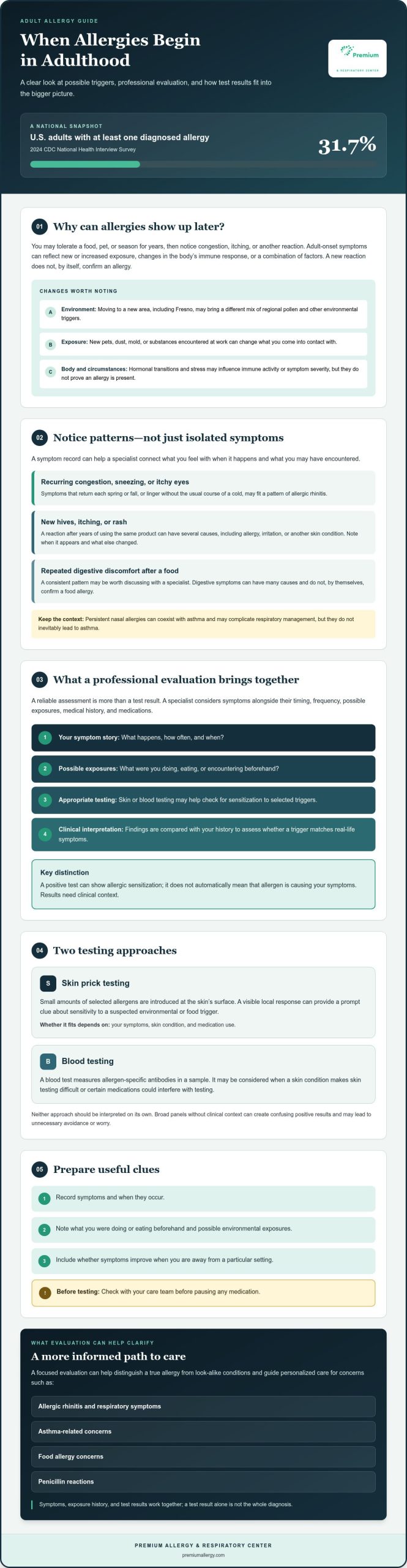
A little preparation can make an allergy evaluation for adults more informative. Your notes help the specialist connect symptoms with possible exposures, while a current medication list helps them choose and interpret tests. You don’t need to arrive with a diagnosis. Bring the clues you’ve noticed and your questions. Partnering with a private GP or clinic such as Kingsford Medical Services can also help you review concurrent prescriptions and general health concerns before undertaking specialized allergy diagnostics.
For several days or longer, record when symptoms start, where you are, what you’ve eaten, and what you were doing. Note whether you were outdoors, at work, around a pet, or in a particular room. Include how severe the reaction felt, how long it lasted, and what seemed to ease or worsen it. Repeated patterns can help your specialist focus on relevant triggers instead of testing indiscriminately.
Before your visit, ask the clinic whether any medication changes are needed. Antihistamines can interfere with some skin tests, but the right instructions depend on the medication and your circumstances. Don’t stop a prescribed medicine on your own. If pausing it isn’t suitable, tell the care team so they can discuss appropriate options, which may include blood testing.
On appointment day, choose comfortable clothing that allows access to your arms or back if skin testing is planned. Bring:
Be specific about what you hope to change. If asthma symptoms are part of your concern, ask how diagnosis may inform ongoing care and review this asthma management plan guide. You can also ask whether immunotherapy is relevant to your situation, what it involves, and how progress is assessed. The specialist can explain whether it fits your diagnosis and care options.
There isn’t one timeline for every evaluation. Your clinician will explain what a test result means in light of your history, whether additional assessment is needed, and what next steps make sense. Some answers may be available after testing; other situations call for follow-up before a personalized management plan is finalized. For specialized allergy care, explore adult allergy evaluation options with Premium Allergy & Respiratory Center.
Allergy symptoms don’t happen in a vacuum. In Fresno and across the Central Valley, local environmental exposures may be part of the picture, alongside indoor allergens, foods, medications, or insect stings. Premium Allergy & Respiratory Center provides specialized adult evaluations in Fresno, Clovis, and Selma, with attention to regional respiratory triggers and complex allergy concerns.
A clear evaluation can help replace trial-and-error with a more informed next step. Your symptom history guides whether skin or blood testing may be appropriate and how results relate to your everyday experiences. The goal isn’t simply to identify a positive test. It’s to understand what may be driving your symptoms and use that information to shape relevant care.
Premium Allergy & Respiratory Center’s services include blood and skin testing, food allergy testing, and specialized evaluations for penicillin and insect sting allergies. These focused assessments can help address concerns that may affect daily choices, outdoor activities, or discussions about medication. Testing is interpreted in the context of your history, since a result alone doesn’t establish that an allergen is causing symptoms.
Care also extends beyond the initial diagnostic question. For example, evaluation findings may inform allergic rhinitis treatment or asthma management. The clinic also provides care for atopic dermatitis. Your needs and results help guide which options are relevant; no single plan fits every adult.
Living with persistent congestion, breathing symptoms, or uncertainty about a past reaction can wear you down. A specialist evaluation offers a structured way to investigate those concerns and discuss how they affect your quality of life. For Fresno-area residents, local knowledge can help put environmental exposures into context, while personalized planning connects diagnostic findings with longer-term rhinitis or asthma care when appropriate.
Ready to take a more informed next step? Contact Premium Allergy & Respiratory Center through its official channels to ask about scheduling an adult evaluation in Fresno or Clovis and what information to bring. Share your main symptoms, suspected triggers, and any previous allergy test results so the clinic can help you prepare. You don’t have to keep guessing at the cause of every reaction. A focused evaluation can help you move toward clearer answers and a plan suited to your needs.
New symptoms don’t have to leave you guessing. A professional allergy evaluation for adults can connect your symptom patterns with appropriate testing, helping clarify which triggers may matter and what care options fit your needs. Preparation, a careful review of your history, and expert interpretation all help turn test results into useful next steps.
Premium Allergy & Respiratory Center serves adults in Fresno, Clovis, and Selma and has done so for over a decade. The clinic provides specialized evaluations for penicillin and insect sting sensitivities, along with a modern, empowering approach to respiratory care. If persistent symptoms are affecting your routine, a focused assessment may help you move from managing uncertainty toward a personalized plan for allergic rhinitis or asthma.
Schedule your expert allergy evaluation at our Fresno clinic today. Clearer answers can be a practical first step toward feeling more confident and supported.
Yes, allergies can develop during adulthood, even if you previously tolerated a food, pet, or seasonal exposure. New symptoms may also have causes other than allergy, so timing and exposure history matter. In Fresno, Clovis, Selma, and North Clovis, changing exposure to local pollen or other environmental triggers may be relevant. A specialist can assess your symptoms and determine whether testing is appropriate.
The appointment length varies depending on your symptoms, medical history, and which tests are appropriate. A visit may include a detailed discussion and skin testing, while some concerns may call for blood testing or follow-up to interpret results. Ask the clinic about the expected time for your appointment when scheduling. Bringing a medication list and symptom notes can help you make good use of the visit.
Most people describe skin prick testing as mildly uncomfortable rather than painful. The clinician places small amounts of selected allergens on the skin and makes a light prick; you may feel a brief scratch or develop temporary itching at a test site. Tell the specialist if you’re anxious, have a skin condition, or have had a strong reaction to testing before. They can explain what to expect and whether another testing approach is more suitable.
Don’t stop or change medication without instructions from your allergy care team. Some antihistamines can affect skin test results, but whether and when to pause a medicine depends on the specific drug and your health needs. Share a complete list of prescriptions, over-the-counter medicines, and supplements before testing. If pausing a medication isn’t appropriate, the specialist can discuss whether another option, such as blood allergy testing, may fit your evaluation.
Coverage varies by insurance plan, the evaluation and tests recommended, and your policy’s requirements. Before your appointment, contact your insurer to ask about specialist visits, allergy testing, referrals, and any prior authorization requirements. You can also ask the clinic what insurance information to provide and whether it can explain billing procedures. Confirming these details in advance can help you understand potential out-of-pocket responsibility without assuming every plan covers the same services.
A food allergy involves an immune response and can cause symptoms ranging from itching or hives to serious reactions. “Food sensitivity” is a broad, sometimes imprecise term and may refer to non-allergic reactions, such as difficulty digesting a food. Symptoms alone can’t reliably distinguish them. A specialist considers what you ate, how quickly symptoms appeared, and what happened before recommending appropriate assessment or food allergy testing.
Timing depends on the tests used and the clinic’s process. Skin testing may provide visible responses during the appointment, while blood testing requires laboratory analysis and the results may take longer. Your specialist needs to interpret findings alongside your symptoms and exposure history; a positive test alone doesn’t confirm that a trigger causes your reactions. Ask when to expect results and how the clinic will discuss recommended next steps.
An allergy evaluation may help determine whether allergic rhinitis contributes to persistent congestion or sinus symptoms, but it can’t establish that every recurring sinus infection is allergy-related. A specialist reviews your symptom pattern and may recommend testing when appropriate. For adults in Fresno, Clovis, Selma, and North Clovis, Premium Allergy & Respiratory Center provides allergic rhinitis treatment and asthma management. Your evaluation can help clarify which concerns need allergy-focused care.
Could a sting that starts with a sore, swollen spot become an emergency? The difference often comes down to whether symptoms stay near the sting or... Continue reading
READ MORE
Could symptoms that flare around your pet have more than one explanation? Sneezing, itchy eyes, or congestion after time with an animal can raise a... Continue reading
READ MORE
Could a swollen, painful sting site mean something different from a dangerous allergic reaction? If you’re unsure what your symptoms meant or worried... Continue reading
READ MORE
What if the pollen, dust mites, or mold you suspect aren’t the whole story behind your symptoms? Environmental allergy testing can help identify... Continue reading
READ MORE