
Could symptoms that flare around your pet have more than one explanation? Sneezing, itchy eyes, or congestion after time with an animal can raise a... Continue reading
READ MORE

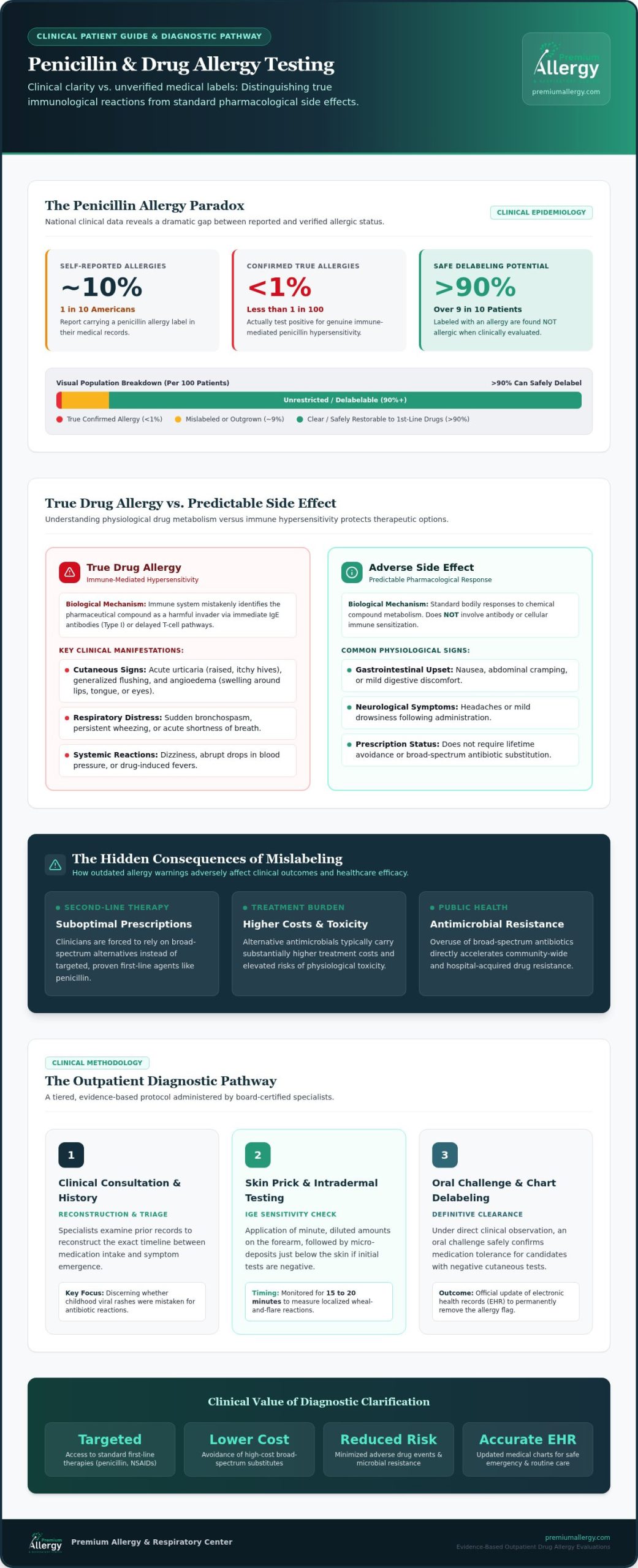
About 10% of Americans report having a penicillin allergy, yet testing confirms that less than 1% actually have a true allergy. If you’ve spent decades dodging common antibiotics because of an unverified childhood reaction, you know the stress of wondering whether a routine prescription is safe. Through targeted drug allergy testing Fresno specialists provide, you can replace that chronic uncertainty with absolute clinical clarity and peace of mind.
It’s frustrating to settle for expensive second-line medications simply because no one ever checked whether your past reaction was a mild side effect or a genuine immune response. In this comprehensive guide, you’ll discover how specialized outpatient evaluations safely pinpoint medication sensitivities, helping you delabel outdated allergies and protect your long-term health. We’ll walk you through the diagnostic pathway step by step, from skin evaluations to controlled oral challenges, so you can confidently reclaim access to the most effective, affordable treatments.
Every time you fill a prescription, your medical chart guides your doctor’s choices. If that record carries an outdated or incorrect allergy warning, it creates unnecessary obstacles. A true drug allergy is an immune-mediated hypersensitivity reaction where your immune system mistakenly identifies a pharmaceutical compound as a harmful invader. In contrast, adverse side effects are predictable pharmacological consequences of a medication, such as an upset stomach after an antibiotic or drowsiness after an antihistamine.
National clinical data shows that over 90% of individuals labeled with a penicillin allergy are not actually allergic when properly evaluated. Carrying an unverified warning forces clinicians to rely on broad-spectrum, second-line antibiotics. These alternatives often carry higher treatment costs, increased toxicity risks, and contribute to broader antimicrobial resistance. Pursuing professional drug allergy testing Fresno specialists offer provides the diagnostic precision needed to clear your medical history safely.
True drug allergies generally fall into distinct immunological categories, each producing recognizable clinical signs. Immediate Type I IgE-mediated reactions emerge quickly, often within minutes to an hour after taking a dose. Delayed reactions, driven by T-cell responses, develop over several days. Key physical manifestations include:
Nausea, headaches, and mild digestive discomfort can feel alarming, but they rarely involve your immune system. These pharmacological reactions represent standard bodily responses to how a chemical compound is metabolized. Experiencing an upset stomach from an antibiotic does not mean you must permanently avoid that medication class.
When normal intolerances get mislabeled as severe allergies, your therapeutic options shrink during critical outpatient visits or medical procedures. Precise drug allergy testing Fresno clinics conduct cuts through the guesswork. By distinguishing benign physiological side effects from dangerous immunological reactions, board-certified allergists help you regain safe, direct access to the most effective first-line medications available.
Specialized drug allergy testing Fresno clinics conduct follows a methodical, evidence-based pathway designed around your physical safety and comfort. Because standalone blood panels or simple questionnaires rarely tell the complete story, board-certified allergists rely on a tiered clinical evaluation. This systematic approach combines historical analysis, controlled skin testing, and observed challenge protocols to give you clear answers.
Your evaluation begins with an in-depth clinical consultation. Your specialist reviews past medical records from Central Valley healthcare facilities to reconstruct the exact timeline between taking a dose and developing symptoms. Crucially, they evaluate whether childhood viral illnesses might have caused the rash that originally earned you an allergy label years ago.
Cutaneous testing evaluates your immune system’s immediate IgE reactivity in a closely monitored setting. Specialists apply minute, highly diluted quantities of the therapeutic agent onto the forearm surface. If the initial prick test is negative, tiny intradermal deposits are placed just beneath the skin layer to ensure diagnostic sensitivity. Staff observe your skin for 15 to 20 minutes to measure any localized wheal-and-flare response. If severe skin conditions prevent cutaneous evaluations, clinicians can coordinate targeted blood allergy testing instead.
Standardized diagnostic methods, especially for antibiotics, form the foundation of accurate drug sensitivity checks. Following established protocols such as penicillin allergy testing allows providers to safely identify patients who no longer produce medication-specific antibodies.
When skin evaluations return negative, the gold standard for definitive confirmation is the physician-supervised oral drug challenge. Under direct clinical observation, you take incremental doses of the medication, beginning with a tiny fraction of a normal therapeutic amount. Healthcare teams monitor your vital signs, lung sounds, and skin condition between each graduated step:
Successfully completing this protocol gives you definitive proof of tolerance. It allows clinicians to officially remove outdated warnings from your medical record. If you are ready to gain full clarity regarding past medication reactions, partnering with the specialists at Premium Allergy & Respiratory Center provides a safe, physician-guided pathway toward removing unnecessary prescription barriers.
Certain medication classes trigger an outsized share of reported adverse reactions. Chief among these are beta-lactam antibiotics, especially penicillin, and nonsteroidal anti-inflammatory drugs (NSAIDs) such as ibuprofen and naproxen. While about 7% of U.S. adults report sensitivity to NSAIDs, penicillin remains the primary reason patients carry restrictive medical alerts. Navigating these triggers with the help of comprehensive drug allergy testing Fresno clinics offer opens the door to safer, more flexible prescribing options.
Outdated clinical assumptions once led physicians to avoid all beta-lactam related therapies, including modern cephalosporins, whenever a patient had an alert for penicillin. Today, scientific research demonstrates that cross-reactivity rates between penicillins and advanced cephalosporin generations are remarkably low, often under 2%. Removing outdated alerts supports broader antibiotic stewardship across the Central Valley, protecting individual health and reducing community resistance to reserve antimicrobial drugs.
Most individuals outgrow genuine IgE-mediated sensitivities over time. Studies indicate that approximately 80% of patients lose their clinical sensitivity after ten years. If you received your label during childhood, your immune system has almost certainly changed.
Modern outpatient delabeling restores immediate access to standard first-line therapies. Instead of enduring expensive broad-spectrum alternatives with higher side-effect profiles, you can safely use narrow-spectrum, cost-effective drugs when infections occur. Board-certified allergy teams conduct specialized penicillin evaluations using validated reagents and observed challenge methods, giving you total confidence in your treatment options.
Reactions to common pain relievers follow distinct biological pathways. Unlike classic IgE allergies, adverse responses to aspirin, naproxen, or ibuprofen frequently stem from direct COX-1 enzyme inhibition. This physiological mechanism shifts leukotriene production, causing acute symptoms in susceptible individuals. Common clinical presentations include:
Undergoing thorough drug allergy testing Fresno specialists administer clarifies whether your body experiences a generalized COX-1 intolerance or a isolated medication sensitivity. Your specialist then outlines safe alternatives, such as selective COX-2 inhibitors or acetaminophen, giving you dependable options for everyday pain management.
Proper preparation ensures your diagnostic visit runs smoothly, safely, and delivers conclusive answers. Unlike general urgent care walk-ins, specialized allergy clinics require intentional pre-test adjustments so your body can respond naturally during testing. Taking a few proactive steps beforehand guarantees that every minute in the clinical suite yields reliable results.
Your journey begins by organizing your health history. Gathering past pharmacy records, dates of previous reactions, and clinical notes from your local doctors helps your specialist pinpoint the suspected trigger quickly. When scheduling drug allergy testing Fresno providers offer, timing your visit several weeks ahead of planned surgical procedures gives your surgical team ample time to adapt your care plan.
Certain over-the-counter and prescription medications can mask cutaneous histamine reactions, leading to false negatives during skin prick or intradermal procedures. To maintain absolute clinical precision, follow these medication preparation guidelines:
Central Valley patients no longer need to travel to distant university medical centers for specialized diagnostic care. Local outpatient practices coordinate seamlessly with regional health systems across Fresno, Clovis, North Clovis, and Selma. This localized network ensures your allergy records transfer directly back to your primary care physician or attending surgeon without frustrating delays.
Appointments typically take between two to three hours to allow sufficient observation between testing tiers. Wearing comfortable, short-sleeved clothing makes arm evaluations simple and stress-free. By scheduling your evaluation in a dedicated outpatient setting, you benefit from focused, calm care without the frantic environment of hospital wings.
If you’re ready to clear outdated medical restrictions before your next prescription or procedure, schedule an evaluation with Premium Allergy & Respiratory Center to restore safety and confidence to your healthcare routine.
Completing your evaluation marks the beginning of a far simpler relationship with healthcare. Leaving the clinic with conclusive answers lifts a heavy burden of uncertainty, but transforming that clarity into lifelong safety requires deliberate follow-through. Whether your results officially delabel an outdated allergy or confirm a genuine hypersensitivity, taking proactive ownership of your health records ensures your care teams always prescribe with confidence.
When you complete specialized drug allergy testing Fresno clinicians provide, you receive actionable documentation that changes how medical providers treat you. You no longer have to settle for guesswork or worry about receiving the wrong medication during unexpected outpatient visits.
Accurate medical records protect you across every healthcare encounter. Once your testing concludes, your allergy specialist generates a comprehensive diagnostic summary to share across your medical network. Key documentation steps include:
Medication sensitivities rarely exist in isolation. Many individuals managing antibiotic or pain reliever concerns also navigate environmental triggers, chronic sinus issues, or sensitive skin. In fact, approximately 31.7% of American adults manage at least one diagnosed allergic condition, making integrated care essential. For those experiencing new or worsening symptoms alongside medication concerns, a thorough allergy evaluation for adults can help identify whether additional environmental or food triggers are contributing to your overall immune burden.
At Premium Allergy & Respiratory Center, post-evaluation care extends naturally into comprehensive outpatient wellness. Your diagnostic results connect seamlessly with tailored treatment programs for asthma management, allergic rhinitis treatment, and atopic dermatitis care. By addressing your immune health as a unified system, your clinical team builds a personalized defense strategy that keeps you thriving through Central Valley seasonal shifts.
Investing a single afternoon in conclusive drug allergy testing Fresno specialists offer eliminates lifelong medication restrictions. You leave equipped with definitive medical proof, direct access to preferred first-line prescriptions, and the peace of mind that comes from knowing exactly how your body responds.
Living under the shadow of an unconfirmed medication allergy unnecessarily restricts your healthcare choices and adds stress to routine doctor visits. By pursuing specialized drug allergy testing Fresno clinicians provide, you can replace outdated assumptions with definitive clinical certainty. Safely removing an inaccurate label restores immediate access to standard first-line therapies while protecting you from the elevated costs and complications of broad-spectrum alternatives.
You don’t have to navigate medication decisions with uncertainty. At Premium Allergy & Respiratory Center, experienced specialists offer rigorous, physician-supervised evaluations tailored to your unique medical history. Serving individuals and families across Fresno, Clovis, and Selma, our dedicated outpatient team coordinates penicillin allergy testing with comprehensive care for co-occurring asthma and allergic conditions. Schedule your specialized allergy evaluation with Premium Allergy & Respiratory Center and take the first step toward lasting treatment confidence.
Yes, most people naturally outgrow penicillin allergies over time. Research shows that roughly 80% of individuals lose their clinical sensitivity within ten years of an initial reaction. Many childhood rashes attributed to antibiotics were actually caused by concurrent viral infections. Undergoing specialized penicillin allergy testing provides definitive proof, allowing you to safely delabel the allergy and regain access to frontline treatments.
A drug side effect is a common, non-immune reaction to how a pharmaceutical compound interacts with your body, such as nausea or mild stomach upset. A true drug allergy involves an immune-mediated response where your body produces antibodies or immune cells against the drug, triggering hives, swelling, or respiratory distress. Knowing the difference prevents you from unnecessarily avoiding valuable first-line therapies throughout your life.
Yes, testing is exceptionally safe when administered in a specialized outpatient medical setting. Clinicians follow structured, gradual protocols that begin with minute dilutions during skin prick testing before progressing to carefully monitored oral doses. Dedicated allergy teams monitor your vital signs continuously and maintain medical equipment on-site to handle mild reactions immediately. Outpatient clinics across Fresno and Clovis offer controlled environments tailored specifically for diagnostic safety.
A thorough evaluation typically takes between two and three hours to complete safely. This visit includes a detailed medical history consultation, cutaneous skin prick and intradermal testing, and observation windows between graduated steps. If your protocol includes a supervised oral challenge, staff monitor you for at least an hour following your final dose to verify that you show zero adverse reactions before heading home.
You only need to stop medications that interfere with skin test results, primarily oral antihistamines, which should be paused for three to seven days. You must continue taking vital daily maintenance therapies, such as asthma inhalers, blood pressure drugs, and diabetic medications. Always consult your clinic beforehand; when scheduling drug allergy testing Fresno providers will supply a clear list of what to pause and what to keep taking.
If your evaluation confirms a true sensitivity, your specialist provides a personalized management plan designed to keep you safe. Your medical records across regional healthcare networks in Fresno, Selma, and Clovis are updated to highlight the verified allergen. You also receive an official medical alert card outlining your reaction history alongside an approved list of safe pharmaceutical alternatives your physicians can prescribe during future illnesses.
No, blood allergy testing alone cannot definitively confirm or rule out an antibiotic allergy. While blood tests measure circulating IgE antibodies for select drugs, they lack the high clinical sensitivity of cutaneous evaluations. For conclusive results, specialists coordinate lab testing with skin tests and supervised oral challenges. This multi-step approach delivers the highest level of diagnostic accuracy for drug allergy testing Fresno patients rely on.
Could symptoms that flare around your pet have more than one explanation? Sneezing, itchy eyes, or congestion after time with an animal can raise a... Continue reading
READ MORE
Could a swollen, painful sting site mean something different from a dangerous allergic reaction? If you’re unsure what your symptoms meant or worried... Continue reading
READ MORE
What if the pollen, dust mites, or mold you suspect aren’t the whole story behind your symptoms? Environmental allergy testing can help identify... Continue reading
READ MORE
A positive allergy blood test doesn’t automatically mean a substance is causing your symptoms. The test measures specific immunoglobulin E (IgE)... Continue reading
READ MORE