
Could symptoms that flare around your pet have more than one explanation? Sneezing, itchy eyes, or congestion after time with an animal can raise a... Continue reading
READ MORE

What if the best atopic dermatitis medical treatment isn’t the strongest option, but the one that fits your symptoms, skin, and daily routine? Persistent itching and inflamed skin can make everyday comfort feel out of reach. With prescription and nonprescription options to consider, it can be hard to know where to start. Concerns about risks from repeated or long-term use are understandable, too.
Treatment plans may include moisturizers, topical medicines, or other prescription approaches, depending on your needs and a clinician’s assessment. This guide explains how common treatment categories differ, what role they may play, and what questions can help you weigh potential benefits and risks. A clinician can help determine which options are appropriate for you.
You’ll also find practical ways to prepare for a treatment discussion and why changing or stopping a medicine without guidance may complicate your care. For people in Fresno, Clovis, Selma, and North Clovis, Premium Allergy & Respiratory Center provides atopic dermatitis care through its specialty practice. An individualized evaluation can help you discuss a plan suited to your situation.
Atopic dermatitis is a chronic inflammatory skin condition that can cause recurring dryness, itching, and irritation, rather than one short-lived rash. Symptoms may improve and flare again over time, so care often focuses on managing symptoms and supporting healthier skin. The overview of atopic dermatitis describes common features and treatment approaches.
Atopic dermatitis medical treatment aims to calm inflammation and itch, support the skin barrier that helps retain moisture, and reduce the frequency or impact of flares. The right approach depends on the individual. Age, affected areas, symptom severity, medical history, and what has or hasn’t helped before can all shape a care plan. There isn’t one plan that works for everyone.
Skin may become dry, itchy, red, or otherwise inflamed. Symptoms can vary in appearance and location, and recurring discomfort may interfere with sleep, concentration, clothing choices, or everyday activities. Scratching can add irritation, so discuss persistent symptoms rather than focusing only on how your skin looks during an appointment.
Explain how symptoms affect your routine, when they tend to worsen, and which areas are involved. This context helps a clinician consider your experience alongside your medical history.
An eczema flare doesn’t automatically mean a food is causing it. Atopic dermatitis and food allergy are distinct conditions, though a person may have both. A clinician can consider whether allergy evaluation is appropriate by reviewing your symptom pattern and medical history, rather than assuming a connection based on a flare alone.
Avoid starting a restrictive diet or pursuing broad allergy testing without individualized medical guidance. Unnecessary food avoidance can make eating more complicated and may not address skin symptoms. Instead, note any suspected food-related pattern, what happened, and when, then discuss whether further evaluation makes sense.
Before an appointment, consider which symptoms are most disruptive, which areas need attention, and what improvement would matter in your daily life. These details can help guide a personalized discussion about next steps.
Atopic dermatitis care may combine everyday skin-barrier support with medicines that target inflammation. The right mix depends on symptom severity and spread, affected areas, age, medical history, and how your skin has responded to previous care. A clinician can help match treatment to your situation. These categories are options to discuss, not a self-treatment checklist.
The American Academy of Dermatology describes a range of approaches in its dermatologist-created treatment plan. A plan may be adjusted as symptoms change, treatment response becomes clearer, or your needs shift.
Moisturizers and a gentle, consistent skin-care routine help support the skin barrier. They’re an important part of care, but may not be enough on their own when inflammation needs medical treatment. Clinicians may consider topical anti-inflammatory medicines, including corticosteroids or nonsteroidal options. Selection can depend on the affected area, symptom severity, age, and individual health factors.
For any prescription, ask where and how to apply it, how long to use it, and whether follow-up or monitoring is needed. Don’t extend, stop, or change a prescribed treatment without discussing it with your clinician.
If symptoms remain inadequately controlled, a clinician may reassess the diagnosis, how the current plan is being used, and whether another approach is appropriate. For selected cases, options may include phototherapy or systemic medicines, such as biologic therapies or other medicines that act throughout the body. These require individualized assessment, including discussion of potential benefits, risks, and monitoring.
Treatment isn’t a one-way ladder. A broader or more intensive option isn’t automatically better for every person. A clinician considers disease severity, the impact on sleep and daily activities, affected areas, age, medical history, prior response, and your preferences. The goal is to find a suitable balance, then review whether the plan is helping and whether adjustments may be appropriate.
Bring specific questions to your appointment: Which symptoms should this treatment address? What should I expect, and when should we review progress? Are there precautions or monitoring steps I should understand? Clear answers can help you feel more confident and avoid changing treatment on your own. If you’re exploring specialist support, Premium Allergy & Respiratory Center’s atopic dermatitis care is a local option to ask about. Confirm specific treatment options with the practice.
No single option is best for everyone. The right atopic dermatitis medical treatment depends on how symptoms affect you, where they appear, and what is appropriate for your health and daily routine. Each approach has a different role and level of clinician oversight. The atopic dermatitis treatment options described by Mayo Clinic also illustrate why care may involve different types of treatment.
| Treatment category | Typical role | Clinician oversight | Discussion points |
|---|---|---|---|
| Supportive skin care | Helps maintain the skin barrier as part of an ongoing routine. | Ask for guidance if you’re unsure which products or habits suit your skin. | Which products should I use, and how can I keep the routine manageable? |
| Topical therapies | Medicines applied to the skin may target inflammation in affected areas. | A clinician helps select the medicine and explains application and use. | Where should I apply it, for how long, and what changes should I report? |
| Clinician-directed options, such as phototherapy or systemic medicines | May be considered for selected cases when symptoms need a different approach. | Requires assessment and follow-up tailored to the treatment and person. | What benefits, risks, and monitoring apply to this option for me? |
A clinician considers more than how a flare looks on one day. Symptom severity, how often flares occur, affected body areas, age, medical history, and response to past treatments all help shape the discussion. Your preferences and practical routines matter, too: a plan needs to be understandable and realistic to follow. These factors guide individualized care; they aren’t a scoring system for choosing prescription treatment on your own.
It’s reasonable to have concerns about side effects, especially if you’ve used treatment repeatedly or expect to use it over time. Risks and benefits vary by medicine and individual circumstances, so ask about the specific option being considered rather than relying on generalized fears. Useful questions include:
Clear answers can help you weigh options with your clinician and make informed decisions without changing your plan on your own.
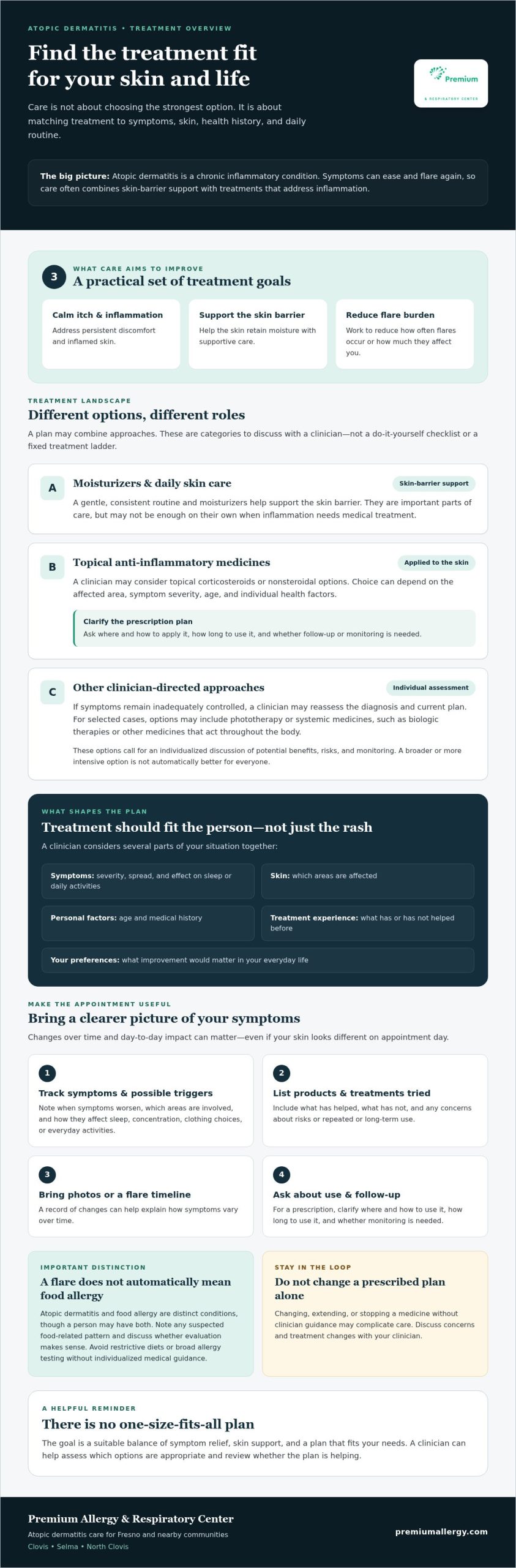
A little preparation can make an appointment more focused. A brief record of your symptoms can help a clinician understand how they change over time and discuss care that fits your needs. Before your visit, build a simple picture of your skin and routine:
Photos can help show a flare that has changed or eased by appointment day. If you take them, note the date and symptoms you noticed. A simple timeline can connect skin changes with itching, sleep disruption, routines, or suspected triggers. This context can support a more productive discussion about atopic dermatitis medical treatment without assuming one event caused a flare.
Bring your notes, a list of current and previous medicines, skin-care products, known allergies, and relevant medical history. Write down questions, too. For example: What are our treatment goals? How should I apply a prescribed medicine, and for how long? When should we follow up, and what safety concerns should I report? Clear instructions can help you follow the plan and avoid changing or combining treatments without guidance.
Contact a clinician if symptoms persist, worsen, or substantially interfere with daily life. Seek prompt medical assessment for signs that could suggest infection, such as increasing pain, warmth, spreading redness, or drainage, or for rapidly worsening symptoms. If symptoms are severe or escalate quickly, seek emergency care. Premium Allergy & Respiratory Center provides atopic dermatitis care as part of its specialty practice, but emergency care should be sought through emergency services, not an outpatient clinic.
For people in Fresno, Clovis, Selma, or North Clovis, Premium Allergy & Respiratory Center provides atopic dermatitis care as part of its specialty practice. You can ask the practice what information to bring to an appointment.
Learning about treatment options is a useful start. A specialist evaluation can help connect that information to your symptoms, history, and goals. Premium Allergy & Respiratory Center offers atopic dermatitis care through its outpatient allergy and respiratory specialty practice, serving Fresno, Clovis, Selma, and North Clovis.
An allergy and respiratory specialty clinic may help you discuss how recurring skin symptoms fit into your broader health history and what care options may be appropriate. That doesn’t mean everyone with atopic dermatitis needs allergy testing or a particular prescription. An evaluation considers your circumstances and informs individualized recommendations. People managing persistent itching from multiple skin conditions may also find it helpful to review chronic hives treatment options in Fresno, since hives and atopic dermatitis can sometimes be confused or occur together.
Be ready to describe when symptoms began, how they change, which areas are affected, and how itching or flares affect your routine. The clinician may discuss your medical and allergy history, products and treatments you’ve tried, and what you hope to improve. Your notes, photos, and questions can make the conversation more useful.
Evaluation findings guide recommendations, and next steps can differ from one person to another. You can ask which options the practice currently evaluates, prescribes, or coordinates, and whether a recommendation is appropriate for your age, health history, and symptoms. A useful discussion should account for your concerns and preferences, rather than assuming one plan suits everyone.
If you’re considering atopic dermatitis medical treatment near Fresno, ask about the clinic’s current appointment process and what information to bring. You may also want to confirm that the practice serves your community and ask which types of atopic dermatitis care are currently available. These details can help you decide whether the clinic fits your needs.
Premium Allergy & Respiratory Center is a local option for people in Fresno, Clovis, Selma, and North Clovis who are exploring atopic dermatitis care. Contact the practice to ask about atopic dermatitis care and whether a specialty evaluation may be a helpful next step. Individual recommendations and treatment availability depend on your situation and the clinic’s current services.
Choosing atopic dermatitis medical treatment is a conversation, not a one-size-fits-all decision. Your symptoms, health history, priorities, and response to previous care can help shape what to discuss with a clinician. Bringing clear notes and questions can make the conversation more focused and help you understand your options.
Premium Allergy & Respiratory Center offers atopic dermatitis care through its specialty practice serving Fresno, Clovis, Selma, and North Clovis. To explore whether a specialist evaluation may fit your needs, contact Premium Allergy & Respiratory Center about atopic dermatitis care. Ask the practice about current appointment details and which care options it evaluates or coordinates.
You don’t have to sort through every choice alone. Contact the practice to discuss whether a specialty evaluation is a suitable next step for you.
There isn’t one most effective treatment for everyone. The right atopic dermatitis medical treatment depends on factors such as symptom severity, affected areas, age, medical history, and response to previous care. A clinician may discuss skin-barrier support, topical medicines, or other options for selected cases. Before changing your care plan, ask what each option is intended to improve, how to use it, and how progress will be reviewed.
Atopic dermatitis is a chronic condition that’s generally managed over time rather than treated with a guaranteed permanent cure. Symptoms can ease and flare again, so care may focus on calming inflammation and itch, supporting the skin barrier, and limiting the impact of flares. Your needs may change, too. A clinician can help review whether your plan remains appropriate as symptoms, health circumstances, or treatment responses evolve.
Topical corticosteroids can be part of eczema care when a clinician recommends them, but safe use depends on the specific medicine and how it’s used. The body area, amount, frequency, and duration can affect the balance of benefits and risks. Ask where to apply the cream, how long to use it, and what side effects to watch for. Don’t increase, extend, or stop prescribed use without medical guidance.
Consider seeing a clinician if symptoms persist, worsen, recur, disturb sleep, or interfere with daily activities. A specialist evaluation may help you understand your history, review previous care, and discuss options suited to your needs—for instance, individuals in Southern California can visit Couture Dermatology & Laser Beverly Hills to consult with medical skin specialists. Seek prompt medical assessment for possible infection or rapidly worsening symptoms. For severe or rapidly escalating symptoms, seek emergency care rather than waiting for a routine appointment.
A food allergy and atopic dermatitis can occur in the same person, but a flare doesn’t automatically mean a food caused it. A clinician can consider whether allergy evaluation is appropriate based on your symptoms and medical history. Keep notes about suspected food-related reactions, including timing and what happened. Avoid restrictive diets or broad testing without individualized medical guidance, since assumptions may not identify what’s driving your skin symptoms.
If topical treatment isn’t helping, contact your clinician before changing or stopping it. They may review the diagnosis, application instructions, treatment history, and factors that could be affecting symptoms. Depending on your circumstances, they can discuss whether another approach is appropriate, including clinician-directed options beyond topical care for selected cases. Ask about expected benefits, potential risks, follow-up, and any monitoring needed for a recommended treatment.
Yes. Premium Allergy & Respiratory Center offers atopic dermatitis care through its outpatient allergy and respiratory specialty practice, serving Fresno, Clovis, Selma, and North Clovis. A specialist evaluation can inform an individualized discussion about your symptoms and care needs, but specific medications or procedures aren’t confirmed. If you’re looking for an eczema treatment specialist in Fresno, contact the practice to ask about current appointment details and which atopic dermatitis services are available for you.
Could symptoms that flare around your pet have more than one explanation? Sneezing, itchy eyes, or congestion after time with an animal can raise a... Continue reading
READ MORE
Could a swollen, painful sting site mean something different from a dangerous allergic reaction? If you’re unsure what your symptoms meant or worried... Continue reading
READ MORE
What if the pollen, dust mites, or mold you suspect aren’t the whole story behind your symptoms? Environmental allergy testing can help identify... Continue reading
READ MORE
A positive allergy blood test doesn’t automatically mean a substance is causing your symptoms. The test measures specific immunoglobulin E (IgE)... Continue reading
READ MORE