
Could a sting that starts with a sore, swollen spot become an emergency? The difference often comes down to whether symptoms stay near the sting or... Continue reading
READ MORE

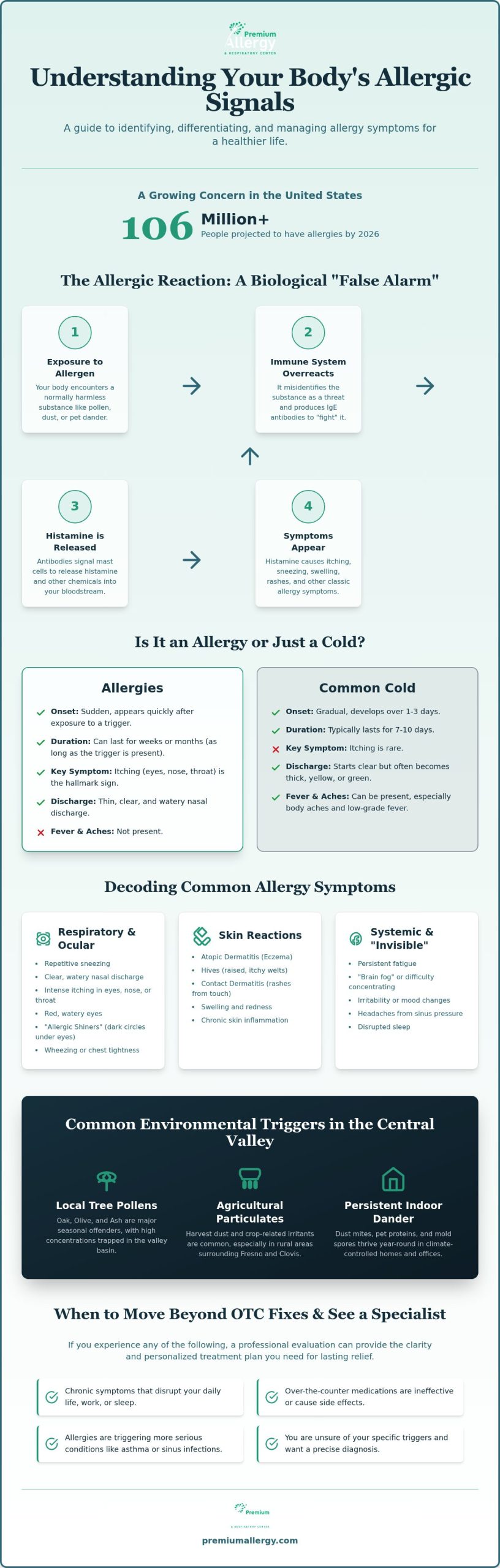
By 2026, over 106 million people across the United States are grappling with the persistent weight of allergic reactions. If you’ve spent your mornings wondering if that chronic sneezing is a lingering cold or a deeper issue, you’re part of a growing number of people seeking clarity. Understanding your specific allergies symptoms is the critical first step toward reclaiming your quality of life. It’s time to stop guessing and start listening to the precise diagnostic language your immune system is using to communicate with you.
We understand that chronic congestion and embarrassing skin rashes do more than just cause physical discomfort; they drain your energy and create unnecessary anxiety. You deserve a life defined by vitality, not by the constant search for relief. In this guide, you’ll learn to decode your body’s signals and differentiate between common seasonal illnesses and true allergic triggers. We’ll explore the most effective management plans and help you map out a path to lasting respiratory health. Together, we’ll transform your health journey from a state of concern into an empowering pursuit of well-being.
An allergy is essentially a biological “false alarm.” Your immune system, which usually fights off dangerous viruses and bacteria, misidentifies a harmless substance like pollen or pet dander as a major threat. When this happens, your body produces Immunoglobulin E (IgE) antibodies specific to that substance. These antibodies signal mast cells to release histamine, the chemical directly responsible for the itching, swelling, and redness we recognize as allergies symptoms. Understanding Allergies means recognizing that your body isn’t broken; it’s simply reacting to a perceived invader with misplaced intensity.
In the Fresno and Clovis areas, our unique geography can intensify these reactions. The Central Valley often acts as a basin, trapping particulates and pollens that might otherwise disperse. This leads to a high “Allergic Load,” which is the cumulative impact of multiple triggers hitting your system simultaneously. You might handle a small amount of dust indoors, but when the outdoor pollen counts spike, your immune system reaches a breaking point and flares up. Taking charge of your health starts with identifying exactly where that threshold lies.
You don’t always react the first time you encounter a trigger. This initial “sensitization” phase is when your immune system builds its defense map and prepares for future encounters. Once you’re primed, a subsequent exposure leads to the “early phase” reaction, causing immediate sneezing or watery eyes within minutes. The “late phase” occurs several hours later, often manifesting as deep-seated nasal congestion or skin inflammation. Think of your immune system as an overprotective guardian that needs careful recalibration to distinguish friend from foe. Identifying your specific allergies symptoms during these different phases helps us target the root cause rather than just masking the discomfort.
Living in the Central Valley presents a specific set of challenges for your respiratory health. Our region is home to a dense concentration of tree pollens, grasses, and agricultural dust that can overwhelm even a healthy system. Indoor irritants like dust mites and pet dander provide a baseline of stress for your immune system throughout the year. In communities like Selma and North Clovis, fluctuating air quality can further irritate your airways, making you more sensitive to your primary triggers. Effective management begins with recognizing these regional culprits:
Precision in diagnosis is the logical next step when over-the-counter medications fail to provide the clarity you need. By moving beyond guesswork, you can replace the language of struggle with a clear, actionable plan for vitality.
Your body speaks in a specific diagnostic language. Understanding Allergy Symptoms allows you to move beyond temporary fixes toward lasting respiratory relief. While sneezing is obvious, chronic inflammation often triggers “invisible” symptoms like persistent fatigue and brain fog. These aren’t just signs of a busy life; they’re indicators that your immune system is working overtime. By categorizing these signals, you can build a clearer profile of your health and take the first steps toward an effective management plan.
Allergic rhinitis often presents as a clear, watery nasal discharge and repetitive sneezing. This is distinct from the thick, colored mucus seen with viral infections. Children often develop the “allergic salute,” a habitual upward rub of the nose that creates a visible crease over time. Your eyes might also signal distress through intense itching, redness, or “allergic shiners,” which are dark circles caused by nasal congestion and restricted blood flow. It’s vital to recognize that these upper airway issues are frequently interconnected. Untreated nasal allergies can trigger more serious asthma symptoms like wheezing or chest tightness, showing how a single trigger can affect your entire respiratory system. If these symptoms are disrupting your daily life, consulting an allergic rhinitis specialist can help you move from managing discomfort to achieving lasting relief.
Allergic reactions aren’t always limited to your breathing. Skin symptoms, such as atopic dermatitis (eczema), hives, or contact dermatitis, often serve as the most visible indicators of a systemic sensitivity. If you notice a tingling mouth, lip swelling, or gastrointestinal distress after eating, these could be signs of a food allergy. These reactions suggest your body is struggling to process certain proteins. Identifying the root cause through specialized blood allergy testing is the most efficient way to restore your vitality and stop the cycle of discomfort.
While most allergies symptoms are manageable, some escalate into life-threatening anaphylaxis. This systemic reaction requires immediate action and cannot wait for an outpatient appointment. Watch for these “Red Flag” signals:
If you experience these, use an epinephrine auto-injector and seek emergency room services immediately. Our focus at Premium Allergy is on providing the long-term management and preventive care needed to help you avoid these crises before they begin. We believe that with the right diagnostic tools, you can live with confidence instead of anxiety.
Distinguishing between a stubborn viral infection and persistent allergies symptoms is a common challenge for residents in the Central Valley. Because both conditions often involve congestion and sneezing, it’s easy to reach for the wrong remedy. However, treating a viral cold with antihistamines or an allergy with antibiotics leads to poor results and prolonged discomfort. Understanding the specific signals your body sends is the first step toward reclaiming your energy and finding the right path to relief.
In Fresno, the lines between “Cold and Flu Season” and “Allergy Season” often blur. Early tree pollens can begin circulating as early as January, just as winter viruses are peaking. While a cold is a temporary battle with a pathogen, an allergy is a chronic response to your environment. One of the most reliable indicators is the presence of itchiness. Itchiness in the nose, eyes, or throat is the definitive hallmark of an allergy, a symptom rarely found in viral infections. By paying attention to these subtle cues, you can move from a state of confusion to a state of confident action.
To help you decode your body’s signals, consider these primary differences in how your body reacts. A typical cold usually runs its course in 7 to 10 days. In contrast, Allergy symptoms and causes are tied directly to exposure; if the trigger remains in the air, your discomfort will persist for weeks or even months. If your symptoms seem to linger year-round without a clear seasonal pattern, it’s worth learning more about perennial allergic rhinitis and the common myths that prevent people from getting the right diagnosis. You should also check for a fever. Despite the misleading name “hay fever,” allergies never cause a rise in body temperature. Finally, observe your mucus consistency. Allergic reactions typically produce clear, watery discharge, whereas a viral infection often results in thick, yellow, or green mucus as your immune system fights off the virus.
Untreated allergies don’t just cause temporary annoyance; they can lead to more complex respiratory conditions. When your nasal passages remain inflamed for extended periods, they become a breeding ground for bacteria. This is often the transition point where simple seasonal reactions evolve into chronic sinusitis. If you feel deep pressure in your cheeks or forehead that doesn’t resolve with standard over-the-counter care, it’s time to investigate the root cause. You can learn more about this progression in our guide: Is it a Cold or Chronic Sinusitis?. Recognizing these complications early allows you to seek the specialized care needed to restore your long-term vitality and prevent recurring infections.
Choosing to see a specialist is the definitive shift from simply surviving your day to actively thriving in your environment. While general primary care often focuses on immediate relief, an empowering specialist looks deeper to identify the root cause of your immune system’s overreaction. If you’ve spent significant time and money on various antihistamines without seeing a clear improvement, you’re likely caught in a cycle of guesswork. In Fresno and the surrounding Central Valley, the environmental factors are complex; generic solutions often fall short of providing the lasting respiratory relief you deserve.
Professional intervention becomes essential when your quality of life is compromised. If chronic sneezing interrupts your sleep or you feel anxious about potential food reactions, it’s time for a clinical diagnosis. Specialist care is also critical for high-risk sensitivities, such as suspected penicillin or insect sting allergies. These situations require the precision of specialized testing to ensure your safety and peace of mind. By moving beyond symptom suppression, you can finally replace the language of struggle with a clear, actionable plan for health.
Many individuals rely on decongestant nasal sprays for weeks, unaware of the risk of rhinitis medicamentosa. This condition, commonly known as rebound congestion, occurs when your nasal passages become dependent on the medication. It causes allergies symptoms to return even more aggressively once the spray wears off, creating a frustrating loop of dependency. Standard antihistamines might quiet the immediate sneezing, but they don’t address the underlying immune sensitivity. Stopping this cycle of temporary fixes is the first step toward a permanent management plan that restores your vitality. Working with a dedicated allergic rhinitis specialist in Fresno gives you access to precision-mapped treatment plans that go far beyond what any over-the-counter remedy can offer.
A specialist’s ability to provide a precise diagnosis depends on the data you provide. By keeping a simple diary of your experiences, you can help pinpoint exactly which environmental factors are triggering your reactions. We recommend a simple framework for tracking your health:
This information allows your provider to move beyond broad assumptions and toward a targeted, scientific approach. If you’re ready to stop the guesswork and start your journey toward seamless health, schedule a professional allergy evaluation today to discover your path to lasting relief.
While some experts suggest that simply avoiding triggers is the best way to manage your health, we know that in the Central Valley, complete avoidance is often impossible. You deserve a more proactive strategy than just staying indoors. Premium Allergy & Respiratory Center stands as the premier destination for specialized care, offering a sophisticated approach that moves beyond temporary fixes. Our goal is to replace your daily struggle with a sense of empowerment and vitality. By utilizing modern diagnostic tools, we help you understand exactly how your body reacts, allowing us to create a path toward lasting respiratory relief.
Our Fresno and Clovis locations are designed to be welcoming spaces where your time and emotional well-being are valued as much as your physical health. We don’t just treat allergies symptoms; we treat the individual. Whether you’re dealing with seasonal hay fever or complex food sensitivities, our team acts as a modern ally in your pursuit of a better quality of life. We believe that with the right guidance, relief isn’t just a distant goal, it’s an immediate possibility.
The journey to health begins with an accurate map. We offer skin prick testing for both environmental and food triggers, a process that is remarkably fast and provides results in about 20 minutes. For patients managing severe skin conditions like atopic dermatitis, where skin testing might be uncomfortable, we provide comprehensive blood allergy panels. These tests offer the same level of precision without irritating sensitive skin. Additionally, we specialize in penicillin allergy testing. This is a vital service for medical history accuracy, as many people who believe they have a drug allergy actually don’t. Knowing your true status can significantly simplify your future healthcare needs.
Once we identify your triggers, we develop a management plan tailored to your specific Central Valley lifestyle. For many, this includes personalized immunotherapy, commonly known as allergy shots. This treatment doesn’t just mask allergies symptoms; it works to retrain your immune system over time, leading to long-term desensitization. It’s a scientific method of recalibrating your body’s “false alarm” system. We want you to move past the point of just surviving the pollen season. Our focus is on helping you thrive with clear breathing, healthy skin, and restored energy. It’s time to take charge of your health and experience the seamlessness of a life without constant congestion. Schedule your comprehensive allergy evaluation today.
You don’t have to navigate the heavy weight of chronic congestion and fatigue on your own. By learning to decode your body’s unique diagnostic language, you’ve already taken the first step toward lasting respiratory relief. We’ve explored how identifying specific allergies symptoms allows you to move past temporary over-the-counter fixes and toward a life defined by energy and clarity. Whether you’re distinguishing a stubborn cold or utilizing precision blood and skin testing, the path to wellness is simpler and more accessible than it seems.
Our board-certified specialists in Fresno and Clovis are dedicated to providing personalized plans for asthma and chronic skin conditions. We offer specialized penicillin and insect sting testing to ensure your medical history is accurate and your future is secure. It’s time to replace the cycle of struggle with the confidence of modern, scientific care. Breathe easier and regain your vitality; schedule your specialist evaluation at Premium Allergy & Respiratory Center today. We look forward to being your ally in this journey toward a healthier, more vibrant you!
Distinguishing between the two depends on itchiness and duration. A cold typically resolves within 10 days and may include a fever or colored mucus. In contrast, allergies symptoms persist as long as you’re exposed to the trigger, such as Fresno’s oak or olive pollen. You’ll often experience clear nasal discharge and itchy eyes, which are rare with viral infections. Recognizing these subtle differences is the first step toward effective management and reclaiming your daily comfort.
Yes, it’s quite common to develop new sensitivities later in life. Residents moving to the Central Valley often find that the concentrated agricultural dust and unique tree pollens trigger a response after a few years of exposure. Your immune system can become sensitized at any age, especially in a high-pollen environment like Clovis. This shift represents a new opportunity to recalibrate your health through professional diagnostic testing and a personalized care plan.
In our region, the most frequent reactions involve the upper respiratory system and the skin. You might notice repetitive sneezing, deep nasal congestion, and watery eyes during the peak pollen months in Fresno. Many patients also struggle with atopic dermatitis or hives when environmental irritants are high. Because the Central Valley traps particulates, these allergies symptoms can be more intense than in other areas, requiring a targeted, specialized approach for relief.
Absolutely. Chronic inflammation forces your immune system to work overtime, which often leads to significant “allergy fatigue” and brain fog. Additionally, nasal congestion frequently interrupts deep sleep cycles, leaving you feeling drained the next morning. By addressing the root cause of your sensitivities in Selma or North Clovis, you can stop merely surviving your days and start reclaiming the energy and vitality you deserve for a better quality of life.
You should consult a specialist when over-the-counter medications fail to provide clear, lasting relief. While a regular doctor can manage basic symptoms, a specialist focuses on root-cause identification through specialized penicillin or insect sting testing. If your quality of life is compromised by chronic sneezing or anxiety about food reactions, an empowering specialist in Fresno provides the precision needed to create a permanent, personalized management plan that works for your unique needs.
Yes, allergic reactions can definitely irritate your airways and cause a persistent cough. This often happens due to post-nasal drip, where mucus from the sinuses drains into the throat. While wheezing is a hallmark of asthma, it can also occur during a severe allergic flare-up as your bronchial tubes become inflamed. Identifying whether these signals are isolated or part of a broader asthma management plan is essential for your long-term respiratory health and safety.
The timeline for relief depends on the type of reaction and your continued exposure. Immediate “early phase” reactions, like sneezing or itching, can start within minutes and may subside shortly after you leave the area. However, “late phase” inflammation, such as deep congestion or skin rashes, can last for several days. In high-pollen areas like Clovis, symptoms often feel constant because the triggers remain in your environment throughout the entire growing season.
Precision is the cornerstone of effective treatment, and we utilize two primary methods. Skin prick testing is widely considered the most efficient for immediate results on environmental and food triggers. For patients with severe skin conditions like atopic dermatitis, a comprehensive blood allergy panel offers a highly accurate alternative. Both methods move you beyond guesswork, providing the scientific data needed to develop a solution-oriented plan for your specific lifestyle and long-term health goals.
Could a sting that starts with a sore, swollen spot become an emergency? The difference often comes down to whether symptoms stay near the sting or... Continue reading
READ MORE
Could symptoms that flare around your pet have more than one explanation? Sneezing, itchy eyes, or congestion after time with an animal can raise a... Continue reading
READ MORE
Could a swollen, painful sting site mean something different from a dangerous allergic reaction? If you’re unsure what your symptoms meant or worried... Continue reading
READ MORE
What if the pollen, dust mites, or mold you suspect aren’t the whole story behind your symptoms? Environmental allergy testing can help identify... Continue reading
READ MORE