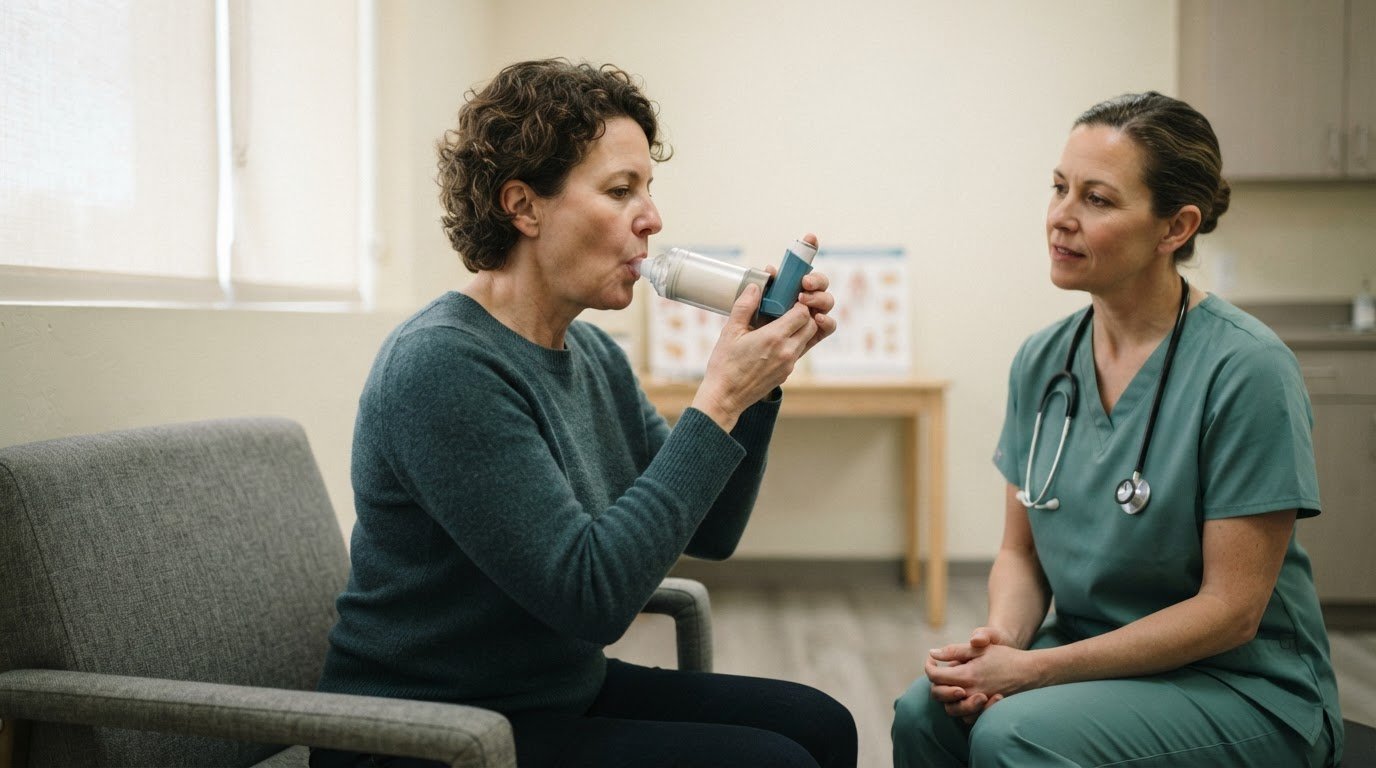
If an asthma reliever isn’t easing very hard breathing, treat the situation as an emergency, not a wait-and-see moment. Knowing what to do during a... Continue reading
READ MORE
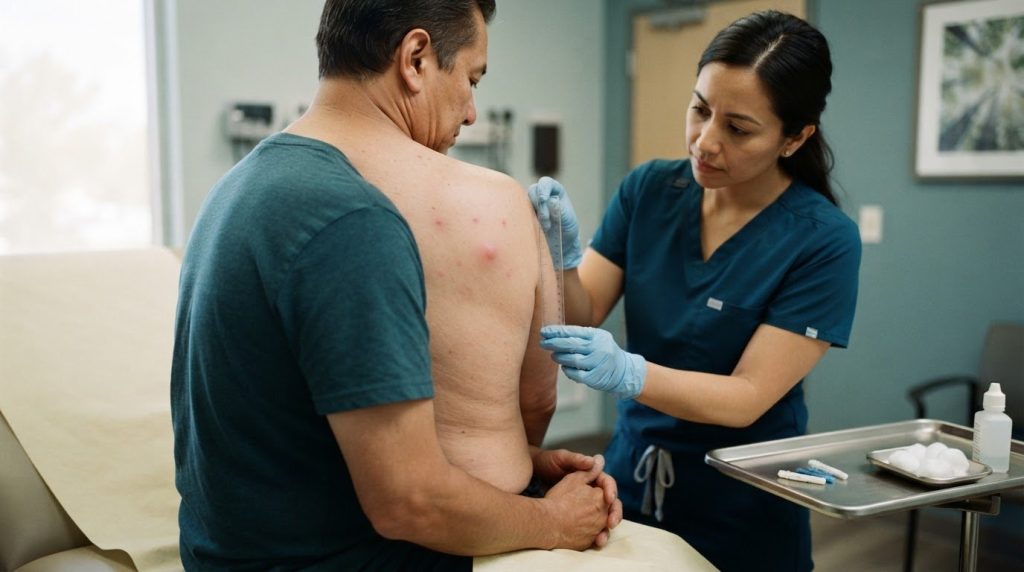
An itchy, raised bump can be an expected response after an allergy skin test. With a skin prick test, reactions usually appear within 15 to 20 minutes, and the bumps often fade within 30 minutes, though redness or irritation may last for several hours. Severe reactions, including anaphylaxis, are possible, so testing is performed with trained staff and emergency equipment available.
It’s understandable to feel uneasy when your skin reacts or you’re waiting to learn what the results mean. Knowing what to expect after an allergy skin test can help you distinguish common, short-lived irritation from a reaction that needs prompt attention.
This guide explains how clinicians interpret results alongside your symptoms and medical history, what itching or soreness may feel like, and why testing precautions matter. You’ll also learn why a positive result alone doesn’t confirm an allergy, so you can approach the next conversation about your care with greater clarity.
A skin test result is one part of an allergy assessment, not a diagnosis by itself. Your symptoms, medical history, and possible triggers help explain whether a reaction matters in daily life.
Medicines and skin conditions can affect how your skin responds to allergens during testing. Antihistamines may suppress the response, so tell the clinician what you take and follow their instructions about any changes before testing. Omalizumab may affect results for several weeks and, in some cases, up to six months. Atopic dermatitis can also make skin testing harder to interpret. These details matter because a reduced skin response may not reflect your usual sensitivity. Don’t stop prescribed medication without medical direction, and continue asthma medication if you need it while preparing for an allergy test.
A positive result means you may be allergic to the tested substance; a negative result means you may not be. Neither result alone confirms or rules out an allergy. For example, a positive test to a food you eat without symptoms may indicate sensitization rather than a clinical food allergy. Food allergy skin tests have a high chance of false-positive results. Antihistamines that suppress the skin response can also complicate interpretation and may contribute to a false-negative result. The clinician weighs the test pattern against your symptoms and exposure history.
Be specific about your symptoms and when they occur. For example, sneezing around pets gives a positive pet-allergen result different context than having no symptoms during exposure. Include asthma symptoms and other health conditions in your history, as they help the clinician assess how a suspected trigger affects you.
After testing, the clinician reviews the results with you. If medication or atopic dermatitis may affect skin testing, a specific IgE blood test may be considered as another option. That result also needs to be interpreted alongside your symptoms and history, so the next step reflects the full clinical picture.
Skin prick testing places a small amount of allergen extract on your skin, then gently pricks the surface. The immune system’s response is checked after about 15 minutes. Mild itching, soreness, redness, or raised bumps can appear at the test sites. These reactions often resemble mosquito bites and usually settle within one to two hours, although redness or bumps may linger for several hours.
For comfort, avoid scratching the test sites, which can further irritate your skin. Mild cortisone cream may ease itching from raised bumps. If irritation continues for more than a few days, especially in a child, contact the clinic for guidance. Tell the care team about symptoms that spread beyond the test sites or feel different from the expected local response.
Not every allergy testing method produces an immediate reading. A patch test checks for delayed skin reactions, often linked to chemicals or products. Patches are typically left in place for 48 hours, and the test site must stay dry and protected. A clinician examines the skin after removing them, then may arrange another reading because some reactions appear later. This process can help identify triggers that cause symptoms over the following days.
Preparation matters. Antihistamines can suppress the skin’s immune response, so ask the allergist when to stop taking them; recommendations commonly range from three to seven days before testing. Don’t change prescribed medicines without medical instructions. If a skin condition affects the test sites or medication makes skin tests unsuitable, the clinician may recommend a blood test instead. Intradermal testing, which places a small amount of allergen under the skin, may be considered for some environmental allergies when prick test results are inconclusive. It isn’t recommended for food allergens.
If food-related symptoms are the concern, food allergy testing can help guide the next steps in understanding possible triggers.
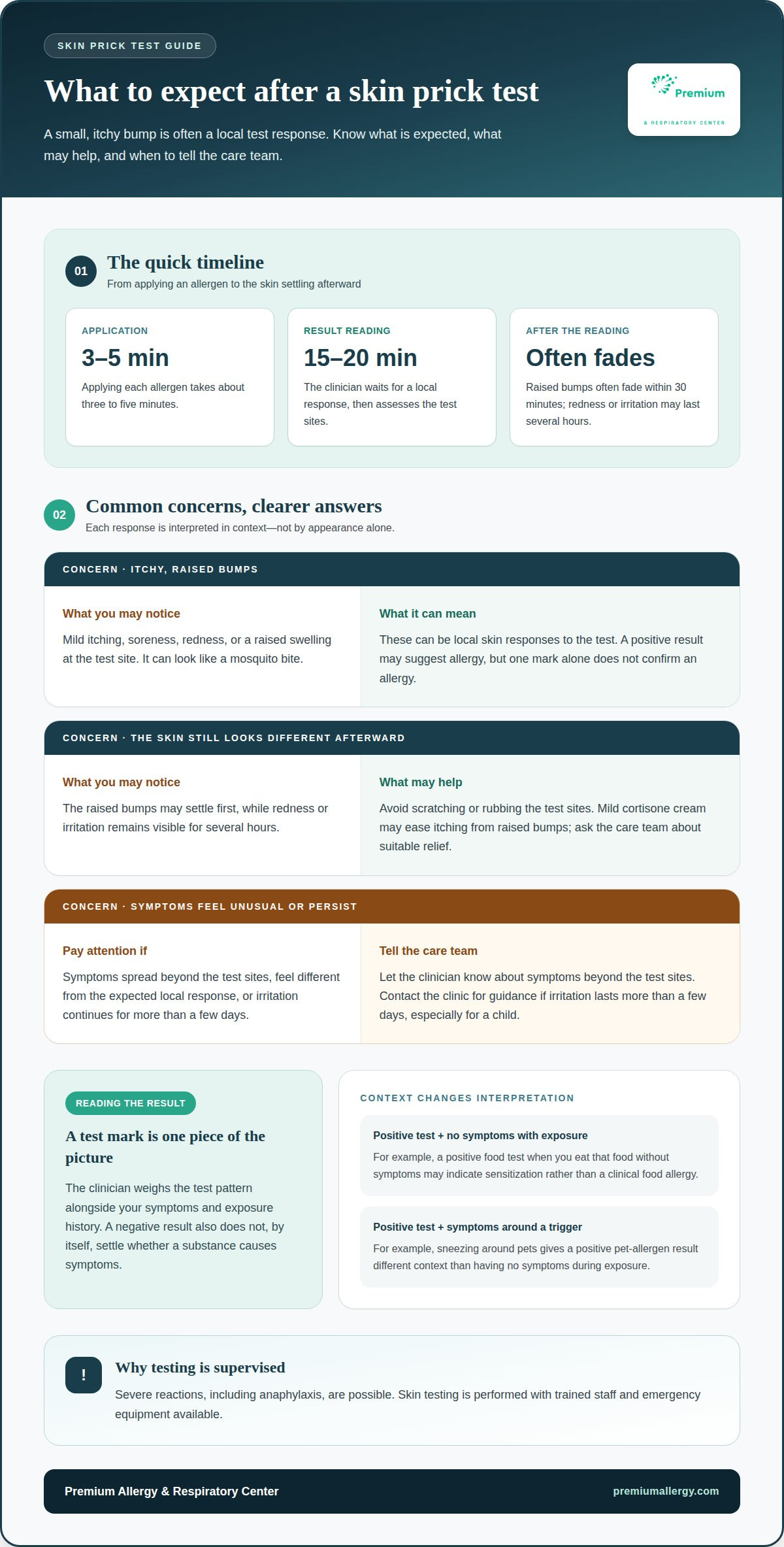
During skin prick testing, a clinician places a small amount of allergen extract on your skin, then gently pricks the surface with a two-pronged tool. Applying each substance takes about three to five minutes per allergen. The clinic then waits about 15 to 20 minutes to assess the response. This short wait allows a local skin reaction to develop before results are read.
A positive skin prick response may appear as a small, raised swelling at the test site, often with redness or itching. It can resemble a mosquito bite. A negative result means the tested area didn’t show a reaction, but it doesn’t settle whether the substance causes symptoms. The clinician interprets each site in context, rather than treating one mark as a complete diagnosis.
After the reading, bumps often fade within 30 minutes. Redness or irritation can remain for several hours, so the skin may still look different after you leave the clinic. Avoid scratching the tested areas, since rubbing can make local irritation worse. If itching is uncomfortable, ask about suitable relief rather than applying a product that could further irritate the skin.
Most skin prick test results are available at the clinic after testing. If a prick test is negative but your symptoms still suggest an environmental trigger, the clinician may consider an intradermal test. This places a small amount of allergen beneath the skin and is more sensitive than a prick test, but it can cause a stronger reaction. Intradermal testing is generally used for environmental allergens, not food allergens. The choice depends on the suspected trigger and the first test’s findings.
Before skin testing, tell the clinician about medicines that may affect the result. Antihistamines can suppress skin responses, so follow the clinician’s directions about whether to stop taking them. Don’t change prescribed medication on your own. This preparation helps the team interpret the reaction and choose the next step if the result is negative or unclear.
A skin prick test can cause a severe allergic reaction, including anaphylaxis. That possibility is why allergy tests take place in a clinic with trained staff, emergency equipment, and medicines available. The team can observe your response during testing and act if symptoms extend beyond the test sites. Local itching alone is different from a reaction that affects your overall wellbeing.
For skin prick testing, a local reaction typically develops within 15 to 20 minutes. Small bumps often fade within 30 minutes, while redness or bumps may remain for several hours. These timings describe skin changes, not a timetable for severe reactions. Don’t assume every reaction follows the same course; tell the clinic staff promptly if symptoms feel more serious than local irritation.
The testing method also matters. Skin prick testing is the first-choice skin test because it has the lowest risk of a severe reaction among the skin test methods described. An intradermal test places allergen beneath the skin and can trigger a stronger response. It may be used after a prick test shows no reaction, mainly for environmental allergens such as pollen, rather than food allergens.
Stay with the clinic’s testing process until staff have completed their assessment. Before testing begins, tell them about allergy symptoms, relevant medicines, and any previous severe reaction. Antihistamines can interfere with skin-test results, so follow the clinician’s medication instructions rather than changing treatment on your own. If you notice symptoms beyond the expected test-site response, alert staff immediately. They’re there to assess reactions and provide care during testing.
If food is a suspected trigger, discuss food allergy testing as part of your next clinical conversation.
Premium Allergy & Respiratory Center helps connect allergy test findings with your symptoms and medical history. If a result feels unclear or symptoms continue despite a negative test, an allergy evaluation can help clarify possible triggers and appropriate next steps.
Care may include food allergy testing or penicillin allergy testing when those concerns fit your history. For ongoing nasal allergy symptoms or asthma, the center also provides allergic rhinitis treatment and asthma management. The aim is to understand how test results relate to your health, rather than relying on a skin response alone.
If you’d like support interpreting allergy concerns and discussing next steps, contact Premium Allergy & Respiratory Center.
Understanding what to expect after an allergy skin test can make the next decision feel more manageable. The most useful next step is a clear conversation about how your symptoms, daily exposures, and test findings fit together. Bring your questions, such as whether a suspected trigger explains recurring discomfort or what further evaluation could clarify.
Premium Allergy & Respiratory Center connects allergy evaluation with care for allergic rhinitis, asthma, and food allergy concerns. The right direction depends on your history and reason for testing, so your next steps can focus on what’s affecting your health rather than a test result in isolation.
For guidance on your allergy concerns, connect with Premium Allergy & Respiratory Center. A thoughtful discussion can help you move forward with greater clarity and confidence.
Most reactions are limited to the tested skin, but a severe allergic reaction, including anaphylaxis, is possible. The method affects the risk: an intradermal test can trigger a stronger response than a skin prick test. Share relevant medical history and medicines before testing begins. This helps the clinician choose an appropriate test and interpret your response in context.
Allergy skin testing is generally safe, and clinics perform it with trained staff and emergency equipment available. That setting matters because a serious reaction, although possible, needs prompt assessment. Before the procedure, tell the team about previous severe allergic reactions and medicines that could affect testing. The clinician can consider those factors when choosing and conducting the test.
After the allergen is applied and the skin is pricked, you wait while the clinician checks the test sites. Knowing what to expect after an allergy skin test can make this reading easier to understand. A response usually develops within 15 to 20 minutes. The clinician records which sites react and reviews the pattern with you. Avoid scratching raised spots or redness while the reading is underway.
Raised bumps from a skin prick test often fade within 30 minutes, while redness or bumps may last several hours. Mild itching or soreness usually settles within one to two hours. Understanding what to expect after an allergy skin test includes knowing that patch-test reactions can appear later and require follow-up readings. If discomfort continues for more than a few days, particularly for a child, contact the clinician.
A wheal is the raised area at a test site. Its size is considered alongside the test controls, symptoms, and exposure history. A larger bump alone doesn’t establish an allergy. For example, a positive result matters differently if the suspected food or pollen consistently causes symptoms than if exposure causes none. The clinician interprets the full pattern, not one measurement in isolation.
For an itchy, raised test site, avoid scratching; mild cortisone cream may ease discomfort. Follow any care instructions given at the clinic, especially after patch testing, which requires keeping patches dry and protected until removal. If symptoms persist beyond a few days or worsen, contact the clinician for advice rather than adding treatments without guidance.
If an asthma reliever isn’t easing very hard breathing, treat the situation as an emergency, not a wait-and-see moment. Knowing what to do during a... Continue reading
READ MORE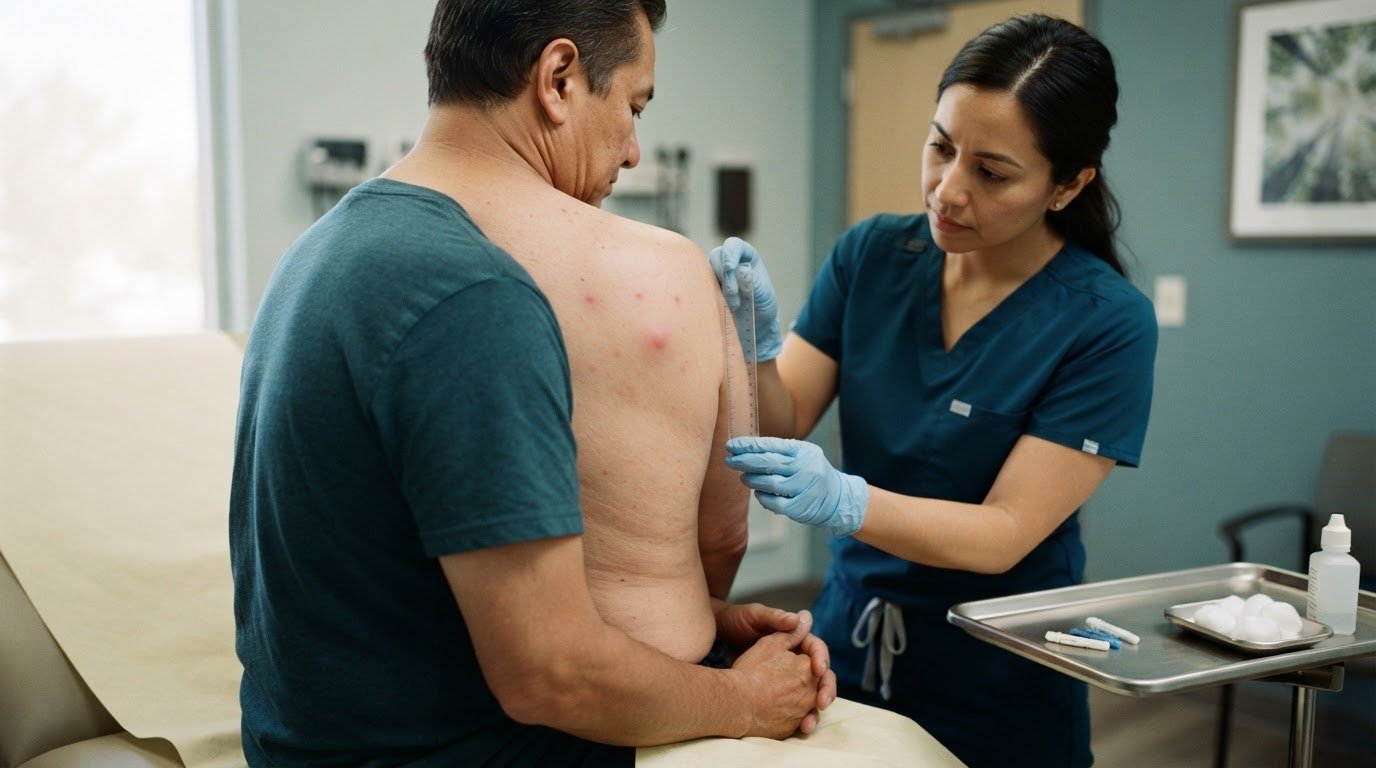
An itchy, raised bump can be an expected response after an allergy skin test. With a skin prick test, reactions usually appear within 15 to 20... Continue reading
READ MORE
A reaction’s timing can be a useful clue, but it can’t confirm an ibuprofen allergy on its own. In study findings, the median time to onset was 60... Continue reading
READ MORE
A penicillin allergy label isn’t always lifelong. A medication allergy evaluation in Clovis starts with a review of the medicine, when the reaction... Continue reading
READ MORE