
A reaction’s timing can be a useful clue, but it can’t confirm an ibuprofen allergy on its own. In study findings, the median time to onset was 60... Continue reading
READ MORE

A penicillin allergy label isn’t always lifelong. A medication allergy evaluation in Clovis starts with a review of the medicine, when the reaction happened, and the symptoms you experienced. When appropriate, testing may include skin testing or a supervised medication challenge to clarify whether the allergy label still applies.
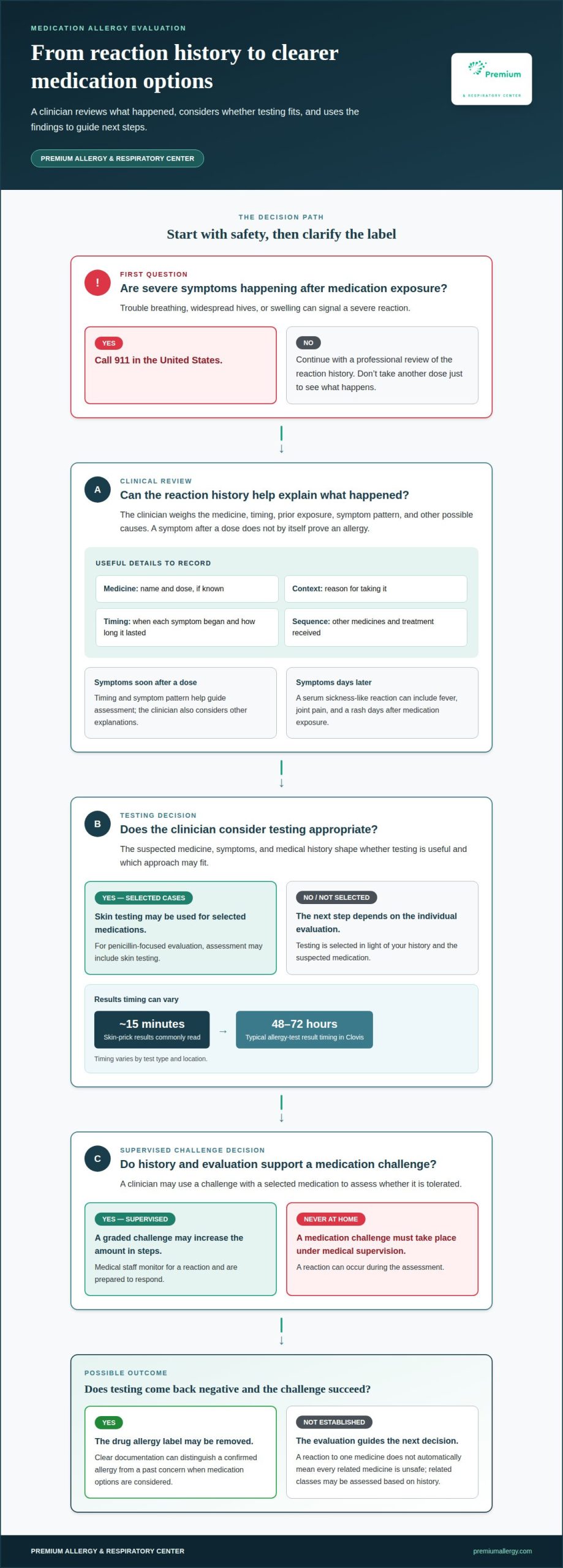
It’s understandable to feel cautious after a reaction, especially if you experienced a rash, swelling, or breathing changes. The details matter: not every symptom after taking a medication points to an allergy, but trouble breathing, widespread hives, or swelling after exposure calls for emergency help. Call 911 if these symptoms occur.
This guide explains how clinicians assess suspected medication allergies, which symptoms may signal a serious reaction, and what penicillin allergy testing can involve. You’ll also learn how your reaction history helps shape an evaluation and supports a clearer conversation about medication options.
A true drug allergy is an immune-mediated response to a medication. The immune system reacts to the medicine as a threat, causing symptoms that can range from mild to severe. But symptoms that appear after a dose don’t prove the medicine caused an allergy. A clinician considers the timing, the medication, prior exposure, and other possible explanations before making a diagnosis. This review helps guide testing and decisions about avoiding a medicine.
Medication reactions can have causes other than allergy. Symptoms may reflect a nonallergic effect of the medicine, another illness, or a separate exposure. For example, a rash after starting medication deserves attention, but its timing and pattern matter. The clinician asks which medicine you took, when symptoms began, whether you had taken it before, and what happened with each exposure. These details help distinguish a suspected allergy from other causes and shape the evaluation.
Some delayed reactions have a recognizable pattern. Serum sickness-like reactions can include fever, joint pain, and a rash days after medication exposure. This differs from symptoms that appear soon after a dose, so your history should include when each symptom started and how it changed. Sharing the sequence helps the clinician assess the reaction instead of relying on the word “allergy” alone. A detailed history can also guide which testing, if any, is appropriate.
Symptoms can involve the skin or other parts of the body. Hives, swelling, and trouble breathing after exposure may indicate a severe reaction. Call 911 in the United States for trouble breathing, widespread hives, or swelling after exposure. For other symptoms, record which medication preceded them and how soon they appeared. That information gives the doctor a clearer starting point for assessment.
Related medicines also matter. A drug allergy evaluation may consider cross-reactivity among medication classes, including cephalosporins and carbapenems. A reaction to one medication doesn’t automatically mean you’re allergic to every related medicine. The clinician uses your history and the suspected drug class to decide whether related medications need assessment. This can support more informed testing and medication decisions, rather than broad avoidance based on an unclear label.
A true drug allergy involves an immune response, and some reactions can become severe. Evaluation combines your history with selected testing to assess risk and clarify medication options.
A true drug allergy is an immune-mediated reaction to a medication. The evaluation considers the drug, prior exposure, symptom pattern, and timing to distinguish allergy from other causes. Skin testing may be used for selected medications, alongside a review of your medical history. Referral needs depend on your insurance plan and the clinic’s intake process. In Clovis, look for an allergist who evaluates medication reactions and penicillin allergies.
A drug provocation challenge involves giving a selected medication under medical supervision to assess whether you tolerate it. A clinician may use a graded challenge, increasing the amount in steps while watching for allergic reactions. A challenge can help confirm tolerance when your history and other evaluation support proceeding. Because a reaction can occur, it must take place in a setting prepared to monitor and respond, not at home.
An old drug allergy label can affect future treatment, even when the original event was unclear. An evaluation reviews your history and uses appropriate testing or a supervised challenge to clarify whether the label still applies. After negative testing and a successful challenge, a drug allergy label may be removed. Clear documentation helps distinguish a confirmed allergy from a past concern when medication choices are considered.
Testing and challenges can cause allergic symptoms, including a reaction to the medication being assessed. The clinician weighs your history and the planned test before proceeding; a challenge is supervised. Skin-prick results are commonly read within about 15 minutes. Allergy test results in Clovis typically take 48-72 hours, though timing varies by test type and location. For evaluation focused on penicillin, penicillin allergy testing can help guide the next step.
Medication-related symptoms can affect the skin or breathing, and their pattern helps guide assessment. Hives, itching, rash, swelling, or breathing changes after a dose deserve prompt medical attention. A symptom alone doesn’t confirm an allergy: the clinician considers the medication, when the symptom began, and what happened after later doses. For example, a rash after starting a medicine needs context before it leads to a lasting allergy diagnosis.
Reactions can appear on different timelines. A serum sickness-like reaction may involve fever, joint pain, and a rash days after medication exposure. Symptoms that begin soon after a dose follow a different timeline. Tell the clinician when each symptom appeared, how long it lasted, and whether it returned with another exposure. These details are more useful than a general note saying “medicine caused a reaction.”
A clear record can support a more focused evaluation. Include the medication name, dose if known, reason for taking it, when symptoms began, and any treatment received. Mention other medicines taken around the same time so the clinician can review the full sequence. Don’t take another dose just to see what happens. This record helps a professional assess the event and decide whether allergy testing is appropriate.
Testing depends on the suspected medication and the reported symptoms. For selected drugs, evaluation may involve skin testing or a supervised graded challenge. Blood tests can measure IgE responses to specific food allergens, but that is a different question from whether a medication caused symptoms. In Clovis, testing results typically take 48-72 hours, although timing varies by test type and location. A useful assessment connects the test result to your history, rather than treating a result as a diagnosis by itself.
A penicillin allergy assessment begins with your history of exposure and reaction. The clinician asks which penicillin you took, why it was prescribed, and what symptoms followed. The timing and details, such as rash, hives, or swelling, help shape the next step. A past label alone doesn’t establish that your immune system still reacts to penicillin.
That distinction matters because the majority of reported penicillin allergies are not true IgE-mediated reactions. Nearly 90% of people who think they’re allergic to penicillin aren’t actually allergic. An accurate evaluation can clarify whether the label reflects an immune response or another event. It can also help inform future medication decisions, rather than relying only on a vague or incomplete memory.
Penicillin skin testing is described as the gold standard for evaluating penicillin allergy. Testing isn’t performed during an active allergic reaction. The clinician first reviews your prior exposure, symptoms, and health history to determine whether testing is appropriate. Skin test findings are considered alongside your history, not as a substitute for understanding what happened. For selected patients, the assessment may then include a supervised medication challenge.
A challenge involves taking the medication under medical supervision so the team can assess whether you tolerate it. It isn’t a home trial or a way to provoke symptoms without support. The clinician’s evaluation helps determine whether this step suits your history and test findings. If testing is negative and a challenge is successful, the allergy label may be removed. Clear documentation can replace uncertainty in your future care.
If you have a penicillin allergy label, arrange penicillin allergy testing to explore whether an assessment may clarify it.
Premium Allergy & Respiratory Center provides specialized allergy care, including penicillin allergy testing. If a medication reaction or an old penicillin allergy label is affecting treatment decisions, an evaluation can help clarify your history and guide next steps. The assessment considers your reported reaction and whether penicillin testing may help determine if the allergy label remains accurate.
Bring the medication name and details about the reaction, including when symptoms appeared and what happened. This history makes the discussion more specific and useful. If your concern involves penicillin, testing can help assess the allergy label rather than relying on an uncertain memory.
A medication allergy evaluation in Clovis can help make a past reaction a clearer part of your medical history. If an allergy label is influencing treatment decisions, discuss what happened and what you hope to clarify with an allergy specialist. A focused conversation can help you understand which assessment steps may suit your situation and what the findings could mean for future care.
Before an appointment, gather any details you remember about the medication and reaction, such as the symptoms and when they appeared. If your memory is incomplete, say so. An honest account gives the clinician a practical starting point without requiring you to draw conclusions on your own.
Premium Allergy & Respiratory Center provides specialized allergy care, including penicillin allergy testing. Its care also includes allergic rhinitis treatment, asthma management, and food allergy testing. If you’re ready to discuss your concerns, contact Premium Allergy & Respiratory Center. Taking that step can help you approach your next medication discussion with greater clarity.
Allergists choose testing based on the suspected allergen and your history. For food allergies, skin testing or a blood test can assess specific allergens and the immune system’s IgE response. For selected medications, evaluation may include skin testing or a supervised challenge. The method should match the question: a food allergy test, for example, doesn’t establish whether a medication caused a reaction.
Consider an allergy evaluation if a suspected medication reaction is recorded as an allergy or the label complicates future treatment discussions. It may also help if you’re unsure which medicine caused symptoms after taking several medications. Bring your concerns to an allergist, especially if the original record lacks details. A clearer account can help distinguish a suspected allergy from an event that needs another explanation.
A careful evaluation can make medication records more useful for future care. An unclear label may affect which medicines clinicians consider, even when the original reaction is poorly documented. Clarifying the event helps you communicate what happened, what remains uncertain, and whether further assessment is appropriate. For example, noting that symptoms followed a particular medicine is more informative than recording only “drug allergy.”
Medication allergy evaluation in Clovis may involve reviewing your reaction history, skin testing for selected drugs, and supervised challenges when appropriate. Penicillin allergy assessment is a specific testing pathway; methods aren’t interchangeable across every medication. The suspected drug, symptoms, and timing shape the approach. Ask what question a proposed test is intended to answer, such as whether a specific allergy label is accurate.
Allergists begin by reviewing the reported penicillin exposure and reaction, then consider whether skin testing is appropriate. For selected patients, a supervised medication challenge may follow as part of the assessment. The clinician considers the original symptoms and their timing when interpreting results. Penicillin allergy testing isn’t performed during an active allergic reaction, so the evaluation is planned around your current condition.
Before your appointment, write down the medication name, why you took it, when symptoms began, and how they changed. Include other medicines taken around the same time and any treatment you received. Bring an old allergy record or prescription information if you have it. Don’t take medication at home as a test: a drug challenge is a supervised clinical assessment.
A reaction’s timing can be a useful clue, but it can’t confirm an ibuprofen allergy on its own. In study findings, the median time to onset was 60... Continue reading
READ MORE
A penicillin allergy label isn’t always lifelong. A medication allergy evaluation in Clovis starts with a review of the medicine, when the reaction... Continue reading
READ MORE
After using an EpiPen, don’t drive yourself to the hospital. If you’re wondering what to do after using an EpiPen, call emergency services and get... Continue reading
READ MORE
A latex reaction can become apparent after repeated exposure, and reactions may worsen with continued exposure. Latex allergy testing in Selma... Continue reading
READ MORE