
An itchy, raised bump can be an expected response after an allergy skin test. With a skin prick test, reactions usually appear within 15 to 20... Continue reading
READ MORE

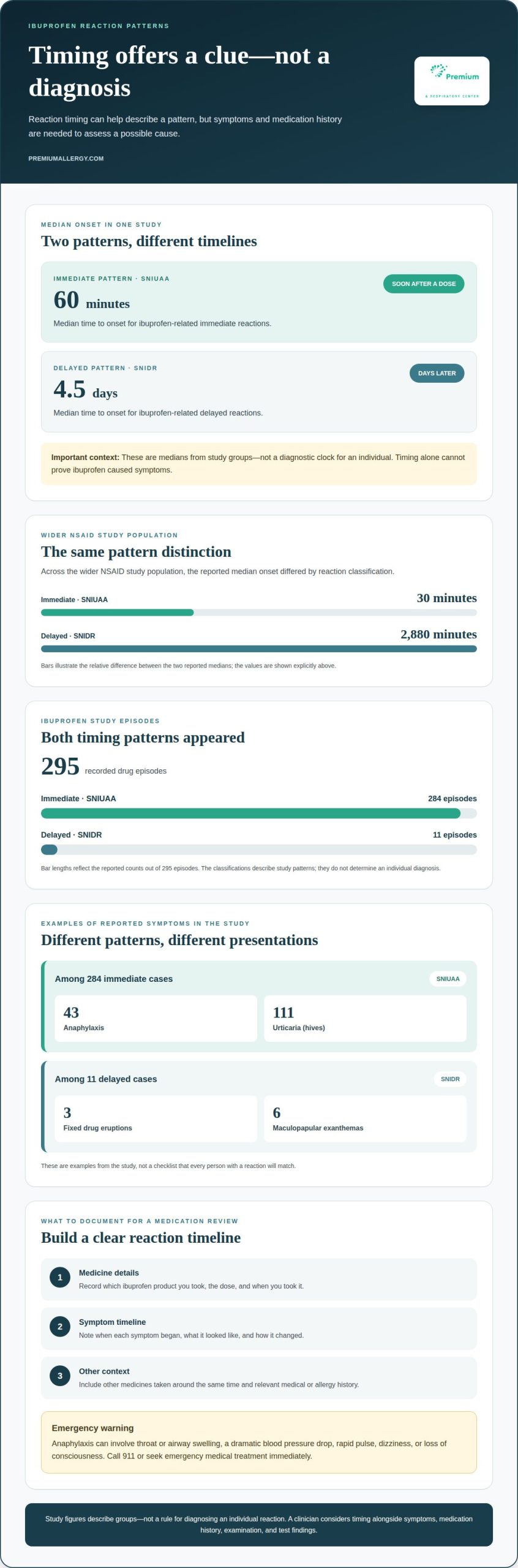
A reaction’s timing can be a useful clue, but it can’t confirm an ibuprofen allergy on its own. In study findings, the median time to onset was 60 minutes for immediate reactions and 4.5 days for delayed reactions. For ibuprofen allergy diagnosis in Clovis, symptoms and a careful review of medications help put that timing into context.
If symptoms appear soon after taking a pain reliever or develop days later, it’s understandable to wonder whether the medicine is responsible. Reactions can vary, so noting when symptoms began is helpful, but timing alone cannot identify the cause.
Learn which symptoms may occur, when they can start, and how an allergist may use your medication history and other details to assess a possible reaction. This guide explains the process and what information to bring to an ibuprofen allergy diagnosis in Clovis.
Ibuprofen reactions can begin soon after a dose or emerge days later. In one study, the median onset was 60 minutes for SNIUAA, an immediate reaction classification. For SNIDR, a delayed reaction classification, the median was 4.5 days. These figures describe study groups, not a clock that can diagnose an individual reaction.
Across the wider NSAID study population, median onset was 30 minutes for SNIUAA and 2,880 minutes for SNIDR. The distinction matters: a reaction within an hour may fit an immediate pattern, while symptoms appearing several days later may fit a delayed pattern. Timing alone can’t prove ibuprofen caused the symptoms.
In the study, ibuprofen was implicated in 295 recorded drug episodes. Of those, 284 were classified as SNIUAA and 11 as SNIDR. The counts show that both early and delayed patterns appeared, although the groups differed greatly in size. These classifications help describe reaction timing, but an individual’s symptoms and medication history still matter.
For a useful medication review, note the ibuprofen dose and time, when each symptom began, and how symptoms changed. For example, record whether hives appeared within an hour or a rash developed days later. Include other medicines taken around the same time, since the timeline can help assess possible triggers.
What pain relievers are safe alternatives for people allergic to ibuprofen? No alternative can be considered safe for everyone based on timing alone. A clinician should consider the reaction pattern, medication history, and other health factors before recommending another pain reliever. Don’t test a substitute on your own.
Treatment for a suspected drug allergy reaction may include stopping the suspected drug, antihistamines, corticosteroids, or an epinephrine injection for anaphylaxis. These are possible components of treatment; the timing of symptoms, whether soon after a dose or days later, does not change the fact that the reaction pattern alone cannot establish what caused it. Keep the dose, onset, and symptom changes in the medication history shared for review. Treatment may include the listed options, while an epinephrine injection is specified for anaphylaxis.
Ibuprofen-related drug allergy symptoms can affect the skin, breathing, and other parts of the body. Common signs include hives, itching, skin rashes, swelling, fever, shortness of breath, wheezing, and watery, itchy eyes. A rash may look different from hives, so describe its appearance and where it started.
Reactions in one study included several patterns. Among 284 ibuprofen-related immediate reactions, 43 were anaphylaxis and 111 were urticaria, or hives. Among 11 delayed cases, 3 involved fixed drug eruptions and 6 involved maculopapular exanthemas, a type of widespread rash. These study findings illustrate possible presentations, not a checklist every person will match.
Severe drug allergy symptoms typically begin within an hour of taking the medicine, while some rashes can appear days or weeks after starting it. A later rash still deserves attention. Record when symptoms began and how they changed, then share those details during a medication review.
What should I do if I have a severe reaction to ibuprofen? If you have anaphylaxis symptoms, call 911 or seek emergency medical treatment immediately. Anaphylaxis can involve throat or airway swelling, a dramatic blood pressure drop, rapid pulse, dizziness, or loss of consciousness.
If a reaction is suspected but isn’t an emergency, stop taking the suspected medicine and contact your physician. Don’t take another dose to see whether symptoms return. A clear record of symptoms, timing, and other medicines can help a clinician assess what happened and plan next steps.
Drug allergies occur when the immune system identifies a prescription, herbal, or over-the-counter drug as harmful and produces IgE antibodies against it. Complications can include serum sickness, anemia, drug rash with eosinophilia and systemic symptoms (DRESS), and kidney inflammation (nephritis).
Risk factors include other existing allergies, a family history of drug allergies, high exposure to a drug, and illnesses such as HIV or Epstein-Barr virus infection. To help prevent exposure, tell your health care providers about drug allergies, make sure they’re listed in your medical records, and wear a medical alert bracelet or necklace.
Diagnosis begins with a medication and symptom review. The allergist asks which product you took, when you took it, and what happened afterward. Bring details about the dose, symptom onset, and any other medicines taken around the same time. This information can help connect the reaction pattern with a possible medication trigger.
A physical examination and focused questions add context. The allergist assesses current or recent symptoms and may ask about your family history of allergies to specific drugs. For example, a history of hives after a medicine differs from a report of a delayed rash. That distinction helps guide decisions about useful tests.
Testing can include skin or blood tests. Some drug allergy tests involve exposing the skin to a small amount of a suspected drug, and a reaction may appear at the test site. A raised bump or hive at the test site may indicate a reaction. A blood test may measure the immune system’s response to various drugs. The allergist interprets either result alongside your history and symptoms.
No single test result replaces a full assessment. The medication timeline, symptom pattern, examination, and test findings each contribute information. For instance, a skin response is considered alongside the reported reaction, while a blood result is interpreted in the context of the suspected drug. This combined review helps distinguish a possible allergy from other explanations for symptoms.
A supervised drug provocation test may also be part of an evaluation in selected cases. It involves giving the suspected medicine under clinical supervision and observing for a reaction. Because this approach can trigger symptoms, the allergist considers your history and potential risks before using it. A separate discussion of supervised challenges explains the protocol and safety concerns.
For a more useful review, organize the medication name, dose, timing, symptoms, and any other medicines taken. Include family history of drug allergies when known. These details help the allergist choose and interpret the next diagnostic steps.
A supervised drug provocation challenge may help determine whether ibuprofen triggers a reaction. A clinician gives measured doses and observes for symptoms. Because the test deliberately exposes you to the suspected medicine, it can cause a reaction, including a serious one. It’s not a home test.
One reported two-day ibuprofen protocol used doses of 5, 20, and 50 mg on day one, followed by 75, 75, 150, and 300 mg on day two. Doses were given at 90-minute intervals. This is a described protocol, not an instruction to follow or a recommendation for every patient.
The challenge’s purpose is to connect exposure with symptoms under clinical supervision. Before deciding whether a challenge is appropriate, the clinician considers your previous reaction, its timing, and the symptoms involved. Results are interpreted alongside your medication history and other assessment findings, not in isolation.
The main risk is that the suspected drug can reproduce the reaction. A drug allergy may cause anaphylaxis, which can involve airway or throat swelling, a dramatic drop in blood pressure, rapid pulse, dizziness, or loss of consciousness. These signs require emergency medical treatment. The risk of a severe response is why an ibuprofen challenge must be supervised by medical professionals.
Before the evaluation, give the clinician a clear account of the medicine and reaction. Include the ibuprofen product, dose, timing, symptoms, and any other medicines taken around the same time. These details help inform testing decisions and how results fit your history. Don’t try to confirm an allergy by taking ibuprofen again yourself.
If you’re also evaluating other suspected allergies, explore blood allergy testing as a separate assessment option.
Premium Allergy provides specialized care for allergic and respiratory conditions, helping you take informed next steps when symptoms raise concerns. A suspected medication reaction deserves careful evaluation based on its timing, symptoms, and medication history. The diagnostic details in this guide can help you explain what happened during a medical review.
Premium Allergy offers care for related allergy needs, including allergic rhinitis treatment, asthma management, food allergy testing, and penicillin allergy testing. If you’re also managing one of these conditions, personalized treatment plans can address that part of your health alongside your questions about possible reactions.
For severe symptoms such as throat swelling, breathing difficulty, or fainting, seek emergency medical treatment immediately. For non-emergency questions about allergy care, contact Premium Allergy & Respiratory Center.
A suspected medication reaction can shape future treatment decisions, so include it in your ongoing health conversations. Ask how it should be documented and what information other clinicians need before recommending medication. A clear, consistent record can help avoid confusion as your care evolves.
For an ibuprofen allergy diagnosis in Clovis, discuss your concerns with an allergy specialist at Premium Allergy. The Fresno clinic offers in-person appointments and virtual consultations, as well as allergic rhinitis treatment, asthma management, and food allergy testing. These services support other allergy and respiratory needs as you work toward a plan suited to your health.
Bring your questions forward at a pace that feels manageable. Contact Premium Allergy & Respiratory Center to discuss your allergy care needs and take a confident next step.
An allergist assesses your reaction history and selects tests based on the details. For an ibuprofen allergy diagnosis in Clovis, bring the medicine packaging or a clear product name, including combination products. Note whether you had taken the same product before without symptoms, and list other medicines you used around the reaction. This can help clarify which ingredient needs assessment.
Hives, swelling, wheezing, or shortness of breath can raise concern for an allergic reaction, but symptoms alone can’t establish the cause. An allergy involves an immune response; an unwanted effect after taking medicine doesn’t automatically mean an allergy. Note whether symptoms involved the skin or breathing, and share the full pattern with a clinician. Seek emergency care for signs of anaphylaxis.
An itchy, raised bump can be an expected response after an allergy skin test. With a skin prick test, reactions usually appear within 15 to 20... Continue reading
READ MORE
A reaction’s timing can be a useful clue, but it can’t confirm an ibuprofen allergy on its own. In study findings, the median time to onset was 60... Continue reading
READ MORE
A penicillin allergy label isn’t always lifelong. A medication allergy evaluation in Clovis starts with a review of the medicine, when the reaction... Continue reading
READ MORE
After using an EpiPen, don’t drive yourself to the hospital. If you’re wondering what to do after using an EpiPen, call emergency services and get... Continue reading
READ MORE