
A penicillin allergy label isn’t always lifelong. A medication allergy evaluation in Clovis starts with a review of the medicine, when the reaction... Continue reading
READ MORE

After using an EpiPen, don’t drive yourself to the hospital. If you’re wondering what to do after using an EpiPen, call emergency services and get urgent medical care, even if you start to feel better. Anaphylaxis may need further treatment, and symptoms can return after improving.
It’s understandable to hope the injection has controlled the reaction, especially when symptoms begin to ease. But epinephrine is the first-line treatment, not a reason to skip emergency evaluation. Prompt medical help means you won’t have to manage a potentially serious reaction alone.
Here, you’ll learn what to do right after an injection, how another epinephrine dose may fit into emergency care, and why antihistamines such as Benadryl can’t stop anaphylaxis. You’ll also learn why driving yourself isn’t safe and what to expect from hospital monitoring, so you can focus on the next step instead of guessing.
No. Benadryl may ease mild allergy symptoms, but it cannot stop or treat anaphylaxis. Epinephrine is the first-line treatment for this life-threatening reaction. If you suspect anaphylaxis, use your prescribed EpiPen at the first sign and seek emergency care. Don’t wait to see whether an antihistamine works, and don’t use it instead of epinephrine. Anaphylaxis can develop very quickly, often within minutes of contact with an allergen such as food, medicine, or an insect sting.
Recognizing a reaction early matters. Think about what happened just before symptoms began: exposure to food, medicine, or an insect sting may offer a clue. Watch for symptoms affecting more than one part of the body, especially if they worsen quickly or involve your throat. If you have an allergy action plan, follow its instructions for recognizing anaphylaxis and using your auto-injector. Tell emergency responders what you may have been exposed to, when symptoms started, and whether you used epinephrine. These details help them understand the reaction and decide what care may be needed.
Improvement after an injection doesn’t always mean the reaction has ended. In biphasic anaphylaxis, symptoms resolve and then return without another exposure. A medical review reports that up to 20% of anaphylactic reactions follow this pattern; symptoms may disappear for 1 to 8 hours before coming back. That’s why feeling better isn’t a reason to skip emergency evaluation or leave before medical staff say it’s safe.
Benadryl may help with mild symptoms, but it won’t prevent a second phase or treat returning anaphylaxis. If symptoms continue or return after the first injection, MedlinePlus says a doctor may advise a second dose. Tell emergency services about any change, including renewed throat symptoms. Follow your emergency plan and let medical professionals guide further treatment. Distinguishing mild symptoms from a rapidly worsening reaction helps you act promptly without relying on an antihistamine to control anaphylaxis.
An EpiPen is a single-use auto-injector containing one dose of epinephrine. Epinephrine is the first-line treatment for anaphylaxis, a life-threatening allergic reaction. Benadryl may relieve mild allergy symptoms, but it doesn’t stop anaphylaxis or replace epinephrine. After using the injector, call emergency services and get urgent medical care. Don’t drive yourself: the reaction may need further treatment even if symptoms improve.
One injection may not be enough. Some people need another epinephrine dose or additional emergency treatment. If symptoms continue or return after the first injection, MedlinePlus says a doctor may advise using a second dose. Keep emergency responders informed about changes, including symptoms that persist or come back. Follow your personal emergency plan and your device instructions while help is on the way.
When should you replace an EpiPen after using it, and how much does a replacement cost in the U.S.? Replace a used EpiPen because it’s single-use and contains one dose. There isn’t one U.S. replacement cost; the amount depends on the product and payment arrangements.
What side effects can happen after an EpiPen injection? Side effects can occur after epinephrine, but symptoms from an allergic reaction can also change. Tell emergency clinicians what you notice and when it began, so they can assess it in context.
How do you dispose of a used EpiPen safely? Take the used device to an emergency room or doctor’s office for disposal. It isn’t reusable.
What should you do if an EpiPen is used accidentally or injected into a finger? Seek immediate medical care and explain where the injection happened. Don’t wait to see whether symptoms develop before getting care.
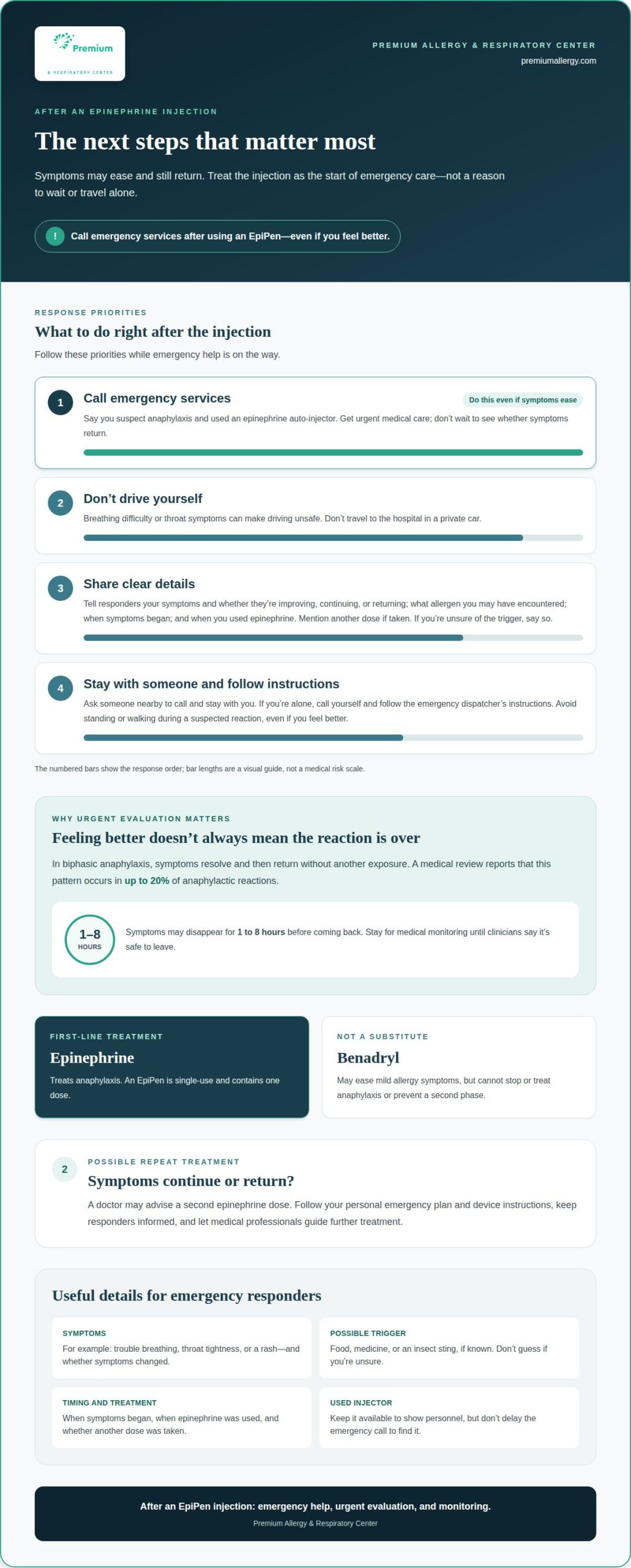
Call emergency services after an EpiPen injection, even if symptoms begin to ease. Anaphylaxis may require further treatment, and emergency clinicians can monitor changes. Don’t drive yourself: breathing difficulty or throat symptoms can make driving unsafe. Ask someone nearby to call and stay with you. If you’re alone, call yourself and clearly say you used an epinephrine auto-injector for a suspected allergic reaction. Knowing what to do after using an EpiPen starts with getting emergency help, not waiting to see if symptoms return.
What should you tell emergency responders after using an EpiPen? Say you suspect anaphylaxis and used an EpiPen. Describe your symptoms, such as trouble breathing, throat tightness, or a rash, and say whether they’re improving, continuing, or returning.
Share practical details responders can use right away. Tell them your location, what allergen you may have encountered, and when the reaction began. Mention when you used the device and whether you took another dose. If you’re unsure about the allergen, say so rather than guessing. For example, explain that symptoms started after eating a particular food, if that’s what happened. Keep the used device available to show emergency personnel, but don’t delay the call to find it.
While help is on the way, follow the emergency dispatcher’s instructions. Stay with another person if possible, and report any changes, such as worsening breathing or returning symptoms. Avoid standing or walking during a suspected anaphylactic reaction, even if you feel better. If the affected person can’t speak easily, a companion can give responders the location, symptoms, suspected trigger, and injection details. These clear facts explain the emergency and the care already given. If you’re unsure what to do after using an EpiPen, focus on sharing this information and following the dispatcher’s instructions. When responders arrive, describe any changes since the call, including symptoms that eased and returned. Don’t travel to the hospital in a private car; emergency care is the next step.
After using an epinephrine auto-injector, call emergency services and report suspected anaphylaxis. Don’t drive yourself, even if you start to feel better. The reaction may still need urgent medical assessment. If someone is with you, ask them to call and stay nearby. If you’re alone, call yourself and follow the dispatcher’s instructions. Keep the conversation focused on your location, the reaction, and the injection.
Lie down and don’t stand or walk during a suspected anaphylactic reaction, even if symptoms improve. If lying flat makes breathing harder, tell the dispatcher and follow their directions. Don’t get up to fetch belongings or travel to care. A companion can help you stay settled and watch for changes while emergency services are on the way.
Explain that you used an epinephrine auto-injector for a suspected allergic reaction. Describe the symptoms, when they began, and whether they’ve changed since the injection. Mention any suspected trigger, such as food or an insect sting, without guessing if you’re unsure. Tell the dispatcher if breathing worsens, your throat feels tight, or symptoms return after easing. This gives responders a clearer picture before they arrive.
Keep the used device available for emergency personnel if it’s within reach, but don’t delay the call to find it. When responders arrive, share any new symptoms and describe how the reaction has changed. Follow their instructions about moving or travelling for care. After emergency treatment, an allergy specialist can help you explore possible triggers and ongoing care. For food-related concerns, learn about food allergy testing as a follow-up step after the emergency has been addressed.
Premium Allergy & Respiratory Center helps you understand and manage allergic conditions after an emergency has been addressed. If anaphylaxis raises questions about a possible food or medication trigger, specialist evaluation can help clarify next steps. Food Allergy Testing and Penicillin Allergy Testing can support evaluation of those specific concerns. The center also provides care for allergic rhinitis and asthma, which may be relevant to your broader allergy and respiratory health. This follow-up care is distinct from emergency treatment: use emergency services for anaphylaxis, then seek ongoing allergy care to discuss triggers and management. For guidance on your allergy concerns, contact Premium Allergy & Respiratory Center.
Questions about a severe allergic reaction can continue after emergency care ends. Knowing what to do after using an EpiPen is one part of feeling prepared; understanding your allergy concerns can also help guide conversations about ongoing care. If you’re unsure what may have triggered a reaction or want to discuss how allergies affect daily life, an allergy specialist can help you explore appropriate next steps.
Premium Allergy & Respiratory Center provides care for allergic rhinitis and asthma, as well as Food Allergy Testing. These services address different concerns, so follow-up can focus on what matters to you rather than trying to manage every issue at once. Emergency symptoms still require emergency services; follow-up allergy care is for evaluation and ongoing management.
Take the next step when you’re ready: contact Premium Allergy & Respiratory Center to discuss your allergy care. With clear guidance, you can move forward with greater understanding and confidence.
No. Don’t drive yourself after using an EpiPen. Anaphylaxis can change quickly, and symptoms such as breathing difficulty can make driving unsafe. Call emergency services and ask someone nearby to stay with you. If another person is there, have them tell responders where you are and what symptoms they can see while you wait for medical help.
A second dose may be needed if symptoms continue or return, but follow your emergency plan and emergency professionals’ instructions. Each EpiPen is single-use and contains one dose. Tell responders when you used the first injector and which symptoms remain. For example, report ongoing throat tightness or breathing problems, rather than relying only on whether a rash has faded.
Hospital staff assess the allergic reaction, monitor you, and determine whether further care is needed. Tell them what may have triggered the reaction, when symptoms began, and when you used epinephrine. Mention any changes during the trip, such as breathing difficulty or returning symptoms. This timeline gives the medical team useful context to assess your condition and decide on care.
There isn’t one stay length for everyone. A medical review recommends observing patients for 4 to 6 hours after anaphylaxis, with longer observation potentially needed after severe reactions. The course of your symptoms and the severity of the reaction affect monitoring. Ask the treating team to explain what they’re watching for and what needs to be stable before you leave.
Still get emergency medical care. Feeling completely well doesn’t prove the reaction is over, and a clinician needs to assess you after anaphylaxis. Tell responders which symptoms improved and when. If anything changes while you wait, report it promptly. Don’t cancel emergency help or leave care just because you feel better after the injection.
Fading hives don’t show whether other symptoms have resolved. Throat tightness after a suspected allergic reaction needs urgent attention, especially if breathing or swallowing is affected. Call emergency services and report the throat symptom, even if the rash has disappeared. Tell responders when the tightness began and whether it changed after the epinephrine injection.
A penicillin allergy label isn’t always lifelong. A medication allergy evaluation in Clovis starts with a review of the medicine, when the reaction... Continue reading
READ MORE
After using an EpiPen, don’t drive yourself to the hospital. If you’re wondering what to do after using an EpiPen, call emergency services and get... Continue reading
READ MORE
A latex reaction can become apparent after repeated exposure, and reactions may worsen with continued exposure. Latex allergy testing in Selma... Continue reading
READ MORE
A symptom list alone can’t establish mast cell activation syndrome (MCAS). For MCAS diagnosis and treatment in Clovis, clinicians assess whether... Continue reading
READ MORE