
A latex reaction can become apparent after repeated exposure, and reactions may worsen with continued exposure. Latex allergy testing in Selma... Continue reading
READ MORE

A symptom list alone can’t establish mast cell activation syndrome (MCAS). For MCAS diagnosis and treatment in Clovis, clinicians assess whether episodes involve at least two organ systems, look for elevated mast cell mediators during symptoms, and consider whether appropriate treatment improves them. They also weigh other possible explanations.
When symptoms come and go or affect different parts of your body, it can be hard to understand how they fit together. A structured evaluation considers the pattern, your medical history, and test results rather than relying on one symptom or test.
This guide explains how clinicians review episode frequency and severity, assess inflammatory mediators such as tryptase, and use your history to guide testing. It also explains how idiopathic MCAS is considered when evaluation does not identify a clear trigger or underlying cause, and how treatment planning may focus on recurrent symptoms and daily well-being.
For MCAS diagnosis and treatment in Clovis, clinicians assess symptom patterns, mediator evidence, and response to treatment. They also consider other possible explanations before reaching a diagnosis.
Clinicians look for symptoms affecting at least two organ systems. Skin signs may include hives or flushing, while gastrointestinal symptoms may include discomfort. Episodes can also involve cardiovascular or neurological symptoms, such as changes affecting circulation or brain fog. Because symptoms may fluctuate, their timing and combination help guide the assessment.
Histamine and other chemicals released by mast cells can contribute to these reactions. The overall pattern matters more than any single symptom.
Clinicians assess whether episodes involve systemic, anaphylaxis-like symptoms and check for mediator elevation during a flare. Serum tryptase is most useful when collected 30 minutes to two hours after symptoms begin. The 20% + 2 formula helps interpret the result against baseline.
Diagnosis considers symptoms, biochemical evidence, and treatment response together. Response to treatment alone is not enough to establish MCAS. Severe acute symptoms require care guided by anaphylaxis recommendations, including epinephrine when symptom severity indicates it.
During a consultation, clinicians review episode frequency, severity, timing, and possible triggers, such as foods, medications, stress, or environmental changes. This history helps guide testing and assess response to a structured treatment plan.
Allergists and immunologists are relevant specialists to look for near Clovis and Fresno. For MCAS diagnosis and treatment in Clovis, a health plan directory can help identify in-network allergy and immunology specialists in the area.
Other systemic conditions can cause symptoms that resemble MCAS. For example, people with fibromyalgia may also experience symptoms suggestive of MCAS. Clinicians assess the full history rather than relying on symptom overlap.
The workup considers documented systemic symptoms, mediator evidence during episodes, and alternative explanations. Testing at baseline and during a flare can help distinguish MCAS from other disorders. One negative mediator test alone does not rule it out.
In mast cell activation syndrome, mast cells can release inflammatory mediators inappropriately. Testing looks for biochemical evidence that supports the diagnostic criteria, alongside symptoms and clinical assessment.
Tryptase is the preferred biochemical marker in Consensus-1, while other mast-cell mediators may also inform assessment. Tryptase testing is most useful when collected during a flare, because levels can change as an episode resolves. A clinician may also consider urine mediator testing, including a 24-hour collection started immediately. The choice of test depends on the episode and clinical question.
Test results add to the evidence, but no single test explains every symptom pattern.
Clinicians compare mediator results from a flare with baseline levels to assess whether an increase supports mast cell activation. For tryptase, the 20% + 2 formula helps interpret the change from baseline. A well-timed sample provides useful context, but a negative result from one mediator test is not enough to rule out MCAS.
Clinicians interpret laboratory findings alongside symptoms and other diagnostic criteria, rather than treating an isolated result as a diagnosis.
Treatment may target specific mediators or help stabilize mast cells. Examples include H1 antihistamines such as loratadine, cetirizine, and fexofenadine, and the H2 antihistamine famotidine. Other options listed for MCAS include leukotriene-modifying montelukast and mast-cell stabilizers such as cromolyn sodium or ketotifen.
Some regimens combine H1 and H2 blockade with other therapies. Medication choices and combinations are part of a clinician-guided plan, not a substitute for diagnostic testing. Tracking symptom changes during a structured plan can help assess response, while mediator results and the overall clinical picture remain important.
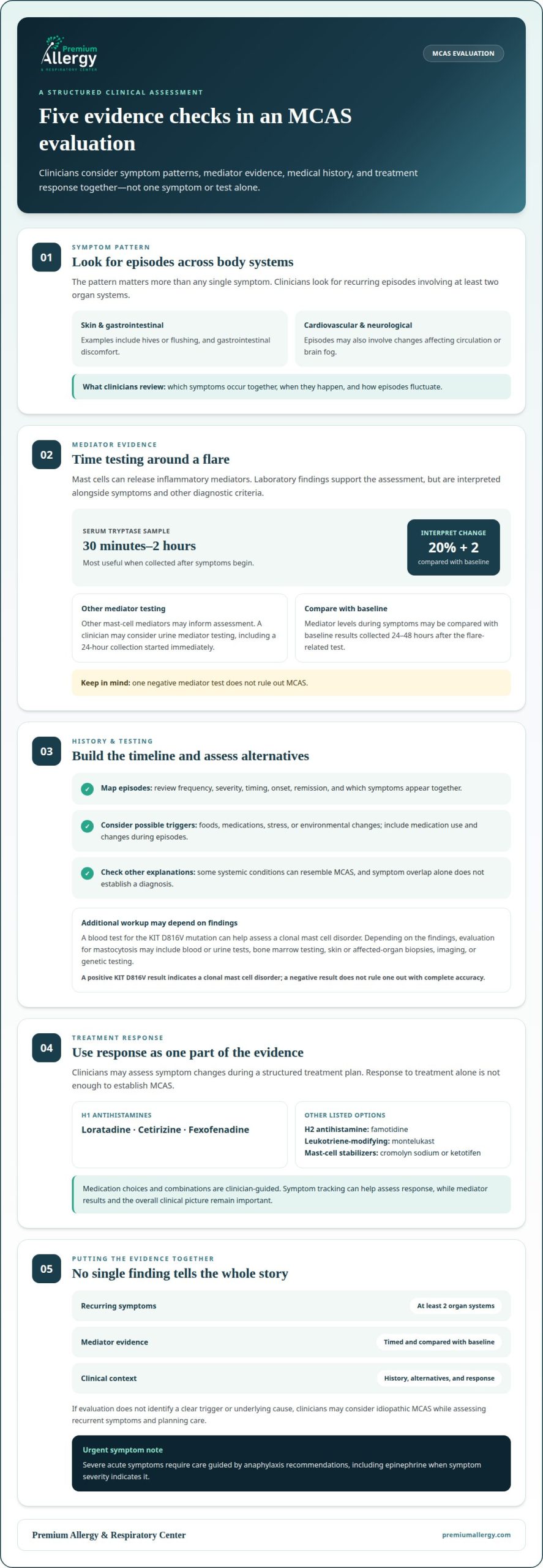
A detailed history helps clinicians connect symptom patterns with test results and assess possible alternatives. They review when episodes began, how often they occur, how severe they become, and whether symptoms such as flushing, nausea, or gastrointestinal discomfort appear together. Periods of remission followed by flares can also help establish a timeline. Describing medication use, suspected triggers, and changes during episodes can support this review.
Testing may compare mediator levels during symptoms with baseline results collected 24-48 hours after the flare-related test. A blood test for the KIT D816V mutation can help assess a clonal mast cell disorder; a positive result indicates one, while a negative result does not rule one out with complete accuracy. Depending on the findings, evaluation for mastocytosis may include blood or urine tests, bone marrow testing, skin or affected-organ biopsies, imaging, or genetic testing.
Medication planning is guided by symptoms, test findings, and response to appropriate treatment. Common options include H1 antihistamines such as cetirizine or fexofenadine, the H2 antihistamine famotidine, and mast-cell stabilizers such as cromolyn sodium or ketotifen. Montelukast may target leukotriene pathways. These medicines act in different ways, so clinicians consider the symptom pattern when building a plan. Patients should not change prescribed medicines without clinical guidance.
In Clovis, California, allergists and immunologists are relevant specialists for evaluating suspected MCAS and related allergic conditions. The workup may also consider whether symptoms point to another systemic disorder. A positive response to treatment can contribute evidence, but does not establish MCAS on its own. Long-term planning may include tracking symptoms and triggers alongside clinical protocols designed to control recurrent symptoms.
Idiopathic MCAS describes mast cell activation syndrome for which clinical evaluation has not identified an underlying cause or consistent trigger. “Idiopathic” describes what the workup has not found; it does not mean symptoms such as flushing, gastrointestinal discomfort, or brain fog are imagined.
The diagnosis still depends on evidence of recurrent systemic symptoms, mediator changes during episodes, and an appropriate response to treatment. A label alone does not establish MCAS. Clinicians assess whether the symptom pattern and test results fit diagnostic criteria, while considering other disorders that could explain the same symptoms.
Identifying no clear trigger can require careful review. Episodes may occur with different exposures or without an obvious connection to foods, medications, or environmental conditions. A symptom record can organize details such as what happened, when it began, which body systems were affected, and whether the pattern changed. For example, recurring hives and brain fog without a consistent food association may prompt further clinical assessment, not an automatic idiopathic diagnosis.
Management of idiopathic MCAS focuses on controlling symptoms and supporting daily function, even when the cause remains unclear. Clinicians may review responses to medication and adjust a structured plan according to symptoms and clinical findings. Tracking changes over time can help show whether episodes are becoming less frequent or severe, or whether new patterns need assessment. Treatment aims to stabilize mast cell activity; it does not identify a cause by itself.
If a food-related reaction remains a possible explanation, consider food allergy testing as part of evaluating that concern. The results can inform whether a specific food allergy is present, while the broader assessment determines whether MCAS criteria are met. Distinguishing a specific allergic condition from idiopathic MCAS helps keep the care plan focused on the evidence and the symptoms that affect you.
Premium Allergy & Respiratory Center provides care for allergic and respiratory concerns that may arise during an evaluation of recurring symptoms. If your history raises concerns about a possible food or medication allergy, the clinic offers Food Allergy Testing and Penicillin Allergy Testing to assess those specific concerns. Asthma Management and Allergic Rhinitis Treatment address related respiratory or nasal symptoms. These services focus on specific allergic conditions and do not replace assessment of MCAS criteria, mediator findings, and other possible explanations.
Bring your symptom timeline and questions to guide a focused discussion about which allergy-related concerns need attention. For care related to allergy or respiratory symptoms, contact Premium Allergy & Respiratory Center.
Unexplained reactions can make everyday decisions feel uncertain. A useful next step is to bring your symptom timeline and questions to a focused conversation about what your experiences may indicate. This keeps attention on your individual needs and the concerns affecting daily life.
For MCAS diagnosis and treatment in Clovis, a careful evaluation can guide conversations about symptoms and related allergy or respiratory concerns. Premium Allergy & Respiratory Center offers care for allergic and respiratory conditions, including food allergy testing. The goal is to help you understand your care options and take an informed next step.
When you’re ready to discuss your allergy or respiratory concerns, contact Premium Allergy & Respiratory Center. Taking that step can help turn unanswered questions into a more focused path forward.
MCAS symptoms can overlap with symptoms associated with other chronic conditions, but overlap alone does not prove a connection. For example, people with fibromyalgia may also experience symptoms that suggest MCAS. Clinicians consider each condition separately, comparing a person’s history and evaluation findings rather than assuming one diagnosis explains everything. This distinction can keep follow-up focused on the specific symptoms affecting daily life.
Mast cells are immune cells found throughout the body, including in every organ and most tissues. They release chemical mediators that help shape immune responses. In MCAS, mast cells may become hyper-reactive and release inflammatory mediators inappropriately. Because mast cells are widely distributed, their activation can affect more than one body area rather than causing symptoms in just one location.
Commonly associated symptoms include hives, flushing, digestive discomfort, and brain fog. Some people also experience symptoms involving the respiratory, cardiovascular, or general body systems. Symptoms may occur in episodes, ease, and then return or change over time. Noticing whether different types of symptoms occur together can provide useful context for a clinical discussion, though symptoms alone do not establish MCAS.
Long-term management may involve recognizing personal triggers and following a treatment plan to control recurring symptoms. Potential triggers vary and may include physical pressure, emotional stress, environmental changes, or detergent chemicals. Treatment may combine different therapies to address symptoms and support mast cell stability. There is no single cure, so ongoing management focuses on the individual pattern and how symptoms respond to the plan.
Mast cell activation syndrome is an immunological condition in which mast cells release inflammatory mediators inappropriately. These chemicals can affect different systems, so symptoms may extend beyond the skin. For example, a person might have digestive discomfort alongside flushing, or experience brain fog during episodes. The effects and timing vary, which is why the overall pattern matters.
MCAS is assessed by looking for a consistent clinical pattern, not by relying on a single symptom or test. An evaluation considers systemic symptoms, biochemical evidence of mediator elevation during an episode, response to appropriate treatment, and alternative explanations. Clinicians interpret these findings together to determine whether the evidence supports MCAS or points toward another condition.
A latex reaction can become apparent after repeated exposure, and reactions may worsen with continued exposure. Latex allergy testing in Selma... Continue reading
READ MORE
A symptom list alone can’t establish mast cell activation syndrome (MCAS). For MCAS diagnosis and treatment in Clovis, clinicians assess whether... Continue reading
READ MORE
Allergy care is about more than naming a trigger. If you’re looking for an allergist that takes Medi-Cal in Fresno, you want to understand what... Continue reading
READ MORE
A body-wide reaction can look like several unrelated problems at once. Mast cell activation syndrome (MCAS) occurs when mast cells release mediators... Continue reading
READ MORE