
Allergy care is about more than naming a trigger. If you’re looking for an allergist that takes Medi-Cal in Fresno, you want to understand what... Continue reading
READ MORE

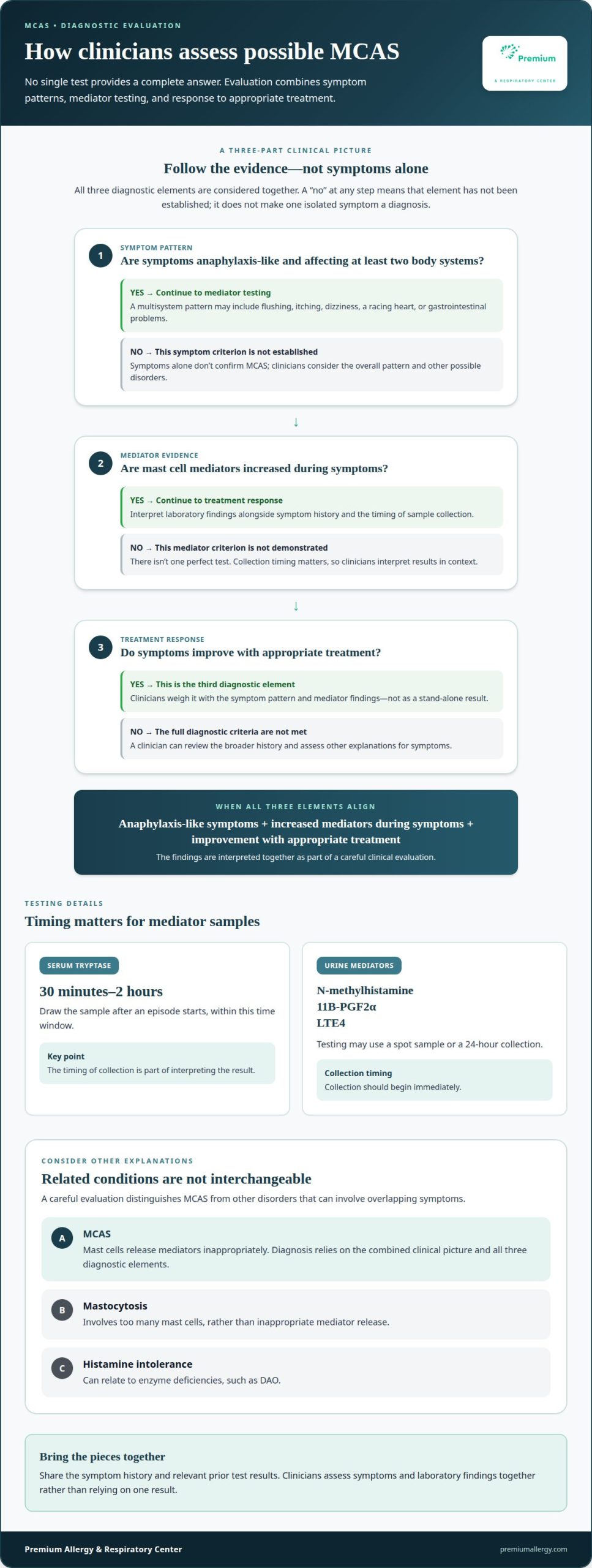
A body-wide reaction can look like several unrelated problems at once. Mast cell activation syndrome (MCAS) occurs when mast cells release mediators inappropriately, affecting different body systems. If you’re searching for a mast cell activation syndrome specialist in Fresno, understanding how MCAS is assessed is a useful starting point: diagnosis involves symptoms consistent with anaphylaxis, increased mast cell mediators during symptoms, and improvement with appropriate treatment. Flushing, itching, dizziness, a racing heart, digestive problems, fatigue, and brain fog may occur, but symptoms alone don’t establish MCAS.
No single test provides a complete answer. Evaluation brings laboratory findings together with a careful discussion of symptoms. If you’re trying to understand recurring or varied reactions, this guide explains what MCAS is, how it differs from mastocytosis, and what diagnostic evaluation may involve. You’ll also learn how treatment options, trigger avoidance, and practical lifestyle adjustments may help manage symptoms, and where allergy-focused care can fit when symptoms overlap with allergic conditions.
Mast cell activation syndrome (MCAS) involves mast cells releasing chemicals inappropriately. These mediators can affect different tissues, so symptoms may involve several body systems. Evaluation considers whether symptoms affect at least two systems. Diagnosis requires anaphylaxis-like symptoms, increased mast cell mediators during symptoms, and improvement with appropriate treatment. Flushing, itching, dizziness, a racing heart, and gastrointestinal problems can occur, but symptoms alone don’t confirm MCAS.
Testing can be challenging because there isn’t one perfect test. Clinicians combine symptom history with laboratory results and consider when samples are collected. For suspected MCAS, serum tryptase should be drawn 30 minutes to two hours after an episode starts. Urine testing may measure N-methylhistamine, 11B-PGF2α, and LTE4. Collection may use a spot sample or a 24-hour collection, and should begin immediately.
A careful evaluation also considers other disorders. Mastocytosis involves too many mast cells, while MCAS involves inappropriate mediator release. Clinicians may also assess allergic disorders and distinguish histamine intolerance, which can relate to enzyme deficiencies such as DAO. A mast cell activation syndrome specialist in Fresno can interpret symptoms and tests together rather than relying on one result.
New-patient acceptance and wait times vary by clinic, so there isn’t one schedule across Fresno, Clovis, Selma, and North Clovis. Referral rules and booking steps also depend on clinic policy. Be prepared to describe your symptoms and share relevant prior test results.
When considering experience with MCAS, look for an allergist or immunologist who evaluates multisystem symptoms and mediator testing. Board certification and patient reviews can inform your assessment, but reviews describe patient experiences rather than establish diagnostic expertise.
If local specialists aren’t accepting patients, an allergist or immunologist who evaluates related allergic disorders may still help assess overlapping symptoms. Evaluation for food or medication allergies can address those possibilities, while MCAS itself requires its own clinical assessment.
Trigger patterns can help explain why symptoms appear in different situations. A clinician looks for repeated links between a possible exposure and a flare while considering other causes. Potential triggers include high-histamine foods, temperature extremes, stress, infections, certain medications, chemicals, fragrances, and hormonal shifts. One exposure may affect one person but not another, so the pattern matters more than a broad list of suspected triggers.
Examples can make the discussion more precise. A clinician may consider:
Some triggers are immunologic, including chronic infections, serum sickness, and certain autoimmune conditions. Others are non-immunologic. Connective tissue disorders such as Ehlers-Danlos syndrome, thyroid disease, and tumors may also be associated with mast cell activation disease. This distinction helps a clinician consider the wider health picture instead of attributing every symptom to a food or fragrance.
A familiar product or routine can still be relevant if symptoms repeatedly follow its use. Some people with MCAS are sensitive to scents, lotions, and other chemicals. Clinicians can use the timing, type, and recurrence of symptoms to identify plausible patterns. The aim is targeted avoidance of substances linked to a person’s reactions, not unnecessary restrictions on everyday activities or foods.
For suspected food-related reactions, professional food allergy testing can help assess whether a specific allergy may be involved. Allergy assessment and MCAS trigger evaluation address related but distinct questions. A tailored plan can prioritize the exposures most clearly associated with symptoms and reduce avoidable disruptions to daily life.
An initial treatment focus for MCAS is identifying and avoiding substances that trigger a patient’s mast cell activation. This keeps early steps centered on exposures linked to that person’s reactions.
MCAS has no cure, but symptoms may be managed through individualized care. Lifestyle adjustments can reduce environmental and physical triggers without making daily life revolve around avoidance. A clinician can help prioritize changes based on your reactions, health history, and other conditions. For example, temperature changes or strong fragrances may matter more than dietary triggers for some people.
Diet is one area to consider. Anti-inflammatory and low-histamine diets are among the approaches used in MCAS management. A clinician can help assess whether food patterns fit your symptoms and support a balanced plan. Broad food restrictions can make meals harder to manage, so targeted changes are more practical than removing foods without a clear reason.
Environmental adjustments may focus on exposures that repeatedly precede symptoms. Examples include reducing contact with a fragrance that causes reactions or limiting exposure to temperature extremes. Stress and infections can also coincide with flares. A care plan can consider these physical and environmental factors alongside medications and other health needs.
Management should account for the full condition, not just one symptom. Asthma symptoms, for example, require attention as part of respiratory health, while suspected food reactions may need separate assessment. Tracking symptom patterns and relevant exposures can help a clinician refine the plan. The goal is to reduce avoidable triggers while preserving routines that remain comfortable.
Medication choices and lifestyle changes work best as coordinated parts of care. Treatment options for MCAS may include receptor-blocking medications, mast cell stabilizers, or biologics, selected according to symptoms and clinical findings. A clinician can also review whether a proposed diet or environmental adjustment fits your needs. This measured approach supports symptom management without assuming every exposure causes a reaction.
Anti-inflammatory and low-histamine diets are listed as MCAS treatment options. If you’re considering either, discuss how it fits your symptoms and overall plan with a clinician rather than making broad changes based on the diet’s label alone. Focus on whether the approach is relevant to your care and can be incorporated thoughtfully alongside other parts of an individualized plan.
In Fresno, start with an allergist or immunologist whose evaluation includes possible mast cell activation syndrome (MCAS). Relevant expertise involves more than recognizing hives or seasonal allergies. It includes reviewing recurring symptoms across body systems, interpreting mediator test results, and considering other explanations for those symptoms.
A focused evaluation connects your clinical history with laboratory findings. The specialist considers what symptoms occurred, when they began, which body systems were involved, and whether test results align with episodes. Blood and urine testing may contribute information, including serum tryptase and urinary mediators. Timing matters: results should be interpreted in context, not treated as a stand-alone diagnosis.
MCAS can overlap with allergic disorders, but the conditions are not interchangeable. A food allergy evaluation, for example, addresses whether a specific food causes an allergic reaction. It doesn’t, by itself, establish MCAS. A careful assessment also considers mastocytosis and other possible causes rather than assuming every episode has the same explanation.
Before an appointment, organize relevant records for the specialist to review. Useful information includes previous blood or urine test results, notes about symptom timing, and a list of medications or exposures connected with episodes. Include examples, such as flushing after a particular exposure or digestive symptoms occurring alongside skin symptoms. These details help clarify patterns and guide discussion of appropriate testing.
MCAS diagnostic criteria lack global consensus, so clear communication about the reasoning behind an evaluation matters. A specialist can explain how symptoms, laboratory evidence, and response to treatment fit together, and what other disorders may need consideration. This gives you a practical basis for understanding the next steps without reducing a complex condition to one test.
For allergy-related concerns that may overlap with these symptoms, arrange an allergy evaluation to discuss testing and care options.
Ask the specialist how they assess symptoms across body systems, interpret mediator results in context, and consider mastocytosis or other possible causes. Their explanation of how your clinical history, laboratory evidence, and response to treatment fit together can clarify their approach to MCAS.
Premium Allergy & Respiratory Center provides allergy-focused care for conditions that may overlap with symptoms discussed in an MCAS evaluation. Its services may be relevant if you’re experiencing suspected food or penicillin reactions, allergic rhinitis, or asthma symptoms. These concerns need their own assessment; evaluating an allergy doesn’t by itself diagnose MCAS.
Care options include food allergy testing, penicillin allergy testing, allergic rhinitis treatment, and asthma management. Discussing your symptoms and previous test results can help clarify which allergy-related concerns need attention and what evaluation may fit. This can be a useful next step when reactions suggest a specific allergy alongside broader symptoms.
For care focused on allergic conditions, contact Premium Allergy & Respiratory Center to discuss your concerns.
Your next conversation can focus on the symptoms that most affect daily life and the care questions you want answered. A mast cell activation syndrome specialist in Fresno can assess MCAS concerns, while allergy-focused care may address specific overlapping conditions. Keeping those goals distinct helps make the next step clearer.
Premium Allergy & Respiratory Center offers allergic rhinitis treatment, asthma management, and food allergy testing. These services may help when nasal, breathing, or food-related symptoms need attention alongside broader concerns. They address allergic and respiratory conditions, not MCAS diagnosis itself.
Share the concerns you’d like to discuss and take the next step at a pace that feels manageable. Contact Premium Allergy & Respiratory Center to discuss care for allergy-related symptoms. A more focused conversation can help you move forward with greater clarity.
In Fresno, an allergist or immunologist is the relevant specialist to consult about suspected MCAS. Look for a clinician who evaluates multisystem reactions and interprets mediator testing alongside your history. Before booking, ask whether the clinician assesses possible MCAS or focuses on related allergic conditions. Bring a concise timeline of episodes and prior evaluations to help focus the appointment discussion.
MCAS evaluation may include blood testing for serum tryptase and urine testing for mediators such as N-methylhistamine, 11B-PGF2α, and LTE4. Diagnostic criteria include anaphylactic symptoms, increased mast cell mediators during symptoms, and improvement with appropriate treatment. Since criteria lack global consensus, clinicians interpret results with the clinical picture. Ask how sample timing and results will be considered in your evaluation.
Look for an allergist or immunologist who evaluates multisystem symptoms and mediator testing. Board certification and patient reviews can inform your assessment, but reviews reflect patient experiences rather than establish diagnostic expertise.
Allergy care is about more than naming a trigger. If you’re looking for an allergist that takes Medi-Cal in Fresno, you want to understand what... Continue reading
READ MORE
A body-wide reaction can look like several unrelated problems at once. Mast cell activation syndrome (MCAS) occurs when mast cells release mediators... Continue reading
READ MORE
Symptoms alone can’t confirm EoE. For adults seeking EoE treatment in Clovis, diagnosis requires an upper endoscopy with esophageal biopsies, which... Continue reading
READ MORE
The test itself is only part of the picture; what you do afterward matters, too. Knowing how to prepare for an allergy test starts with reviewing... Continue reading
READ MORE