
If an asthma reliever isn’t easing very hard breathing, treat the situation as an emergency, not a wait-and-see moment. Knowing what to do during a... Continue reading
READ MORE

If an asthma reliever isn’t easing very hard breathing, treat the situation as an emergency, not a wait-and-see moment. Knowing what to do during a severe asthma attack starts with following the person’s asthma action plan and calling 9-1-1 if medicine isn’t relieving symptoms or breathing remains very difficult, according to the National Heart, Lung, and Blood Institute.
A severe asthma attack can feel frightening, especially when it’s hard to tell whether symptoms are getting worse. Knowing what to do during a severe asthma attack can help you act promptly and focus on getting the right help.
This article explains what happens during an asthma attack, how to use an action plan, and what practical care can help while you seek support. You’ll also learn which signs mean emergency help is needed, so you can respond with greater confidence and focus on breathing safely.
Asthma is a chronic condition in which triggers inflame and narrow the airways, making breathing difficult. An attack can build gradually or start suddenly after exposure to a trigger.
An asthma attack is a worsening of breathing symptoms as narrowed airways make it harder to move air. Signs can include wheezing or coughing, rapid, shallow breathing, chest tightness, and shortness of breath. A person may also struggle to walk or talk normally. Notice changes from their usual symptoms and respond promptly.
Severe symptoms include worsening trouble breathing, difficulty breathing while lying down, sweating, a fast heart rate, and confusion or irritability. Trouble speaking is especially concerning: being able to say only one or two words per breath can signal a life-threatening attack. Blue lips or nail beds, shortness of breath at rest, or reliever medicine that isn’t helping are also emergency warning signs.
Triggers are exposures or circumstances that can set off airway inflammation and worsening symptoms. Examples include respiratory infections, allergies, exercise, air pollution, strong odors, temperature extremes, and stress. An attack may develop after a trigger or build over hours, days, or weeks. Notice whether symptoms worsen around a particular exposure, during exercise, or after an infection. These patterns can help you spot an early flare-up.
An asthma action plan’s yellow zone signals moderate symptoms or worsening control. A peak-flow reading from 50 to 79% of your personal best falls in this zone; below 80% can indicate worsening asthma. Compare readings with your own personal best, not someone else’s. Follow the plan’s instructions for yellow-zone symptoms, even if you can still manage usual activities. A reading below 50% is a red-zone warning to get emergency care.
An asthma action plan turns personalized instructions into clear steps when symptoms change. Keep the plan’s medicine directions and emergency thresholds easy to find at home.
An asthma action plan is a written guide for managing symptoms and deciding when to seek medical attention. Follow its instructions for which inhaler to use, how many puffs to take, and how often to repeat a dose. The plan may also say when an oral steroid is appropriate. Follow the person’s plan rather than guessing or using someone else’s dosing instructions.
Develop the plan with a healthcare provider and share it with family or close friends who may help during an attack. Keep the reliever inhaler within reach and check how much medicine remains. After an attack, continue taking prescribed asthma medicine and contact a healthcare provider urgently, even if symptoms improve. Follow-up can help review what happened and whether the plan needs attention.
Traffic-light zones organize an asthma action plan around symptom changes and, sometimes, peak-flow readings. The green zone represents the person’s usual control and routine plan; yellow signals worsening symptoms that need the plan’s next treatment steps. A peak flow of 50 to 79% of personal best falls in the yellow zone, while a reading below 80% can signal worsening asthma.
The red zone is a warning to get emergency care. An action plan identifies a peak-flow reading below 50% of personal best as a red-zone threshold. It may also say to seek emergency care if symptoms remain in the yellow zone after 24 hours. Follow the written thresholds, since a person’s usual lung function and symptoms provide context for readings.
Some plans allow a person to use one inhaler for both maintenance and relief, while others give separate instructions. Check which approach the plan describes before an attack; don’t assume every inhaler has the same role. If symptoms aren’t improving as the plan directs, follow its instructions for medical attention. For ongoing support with asthma control and an individualized plan, consider asthma management.
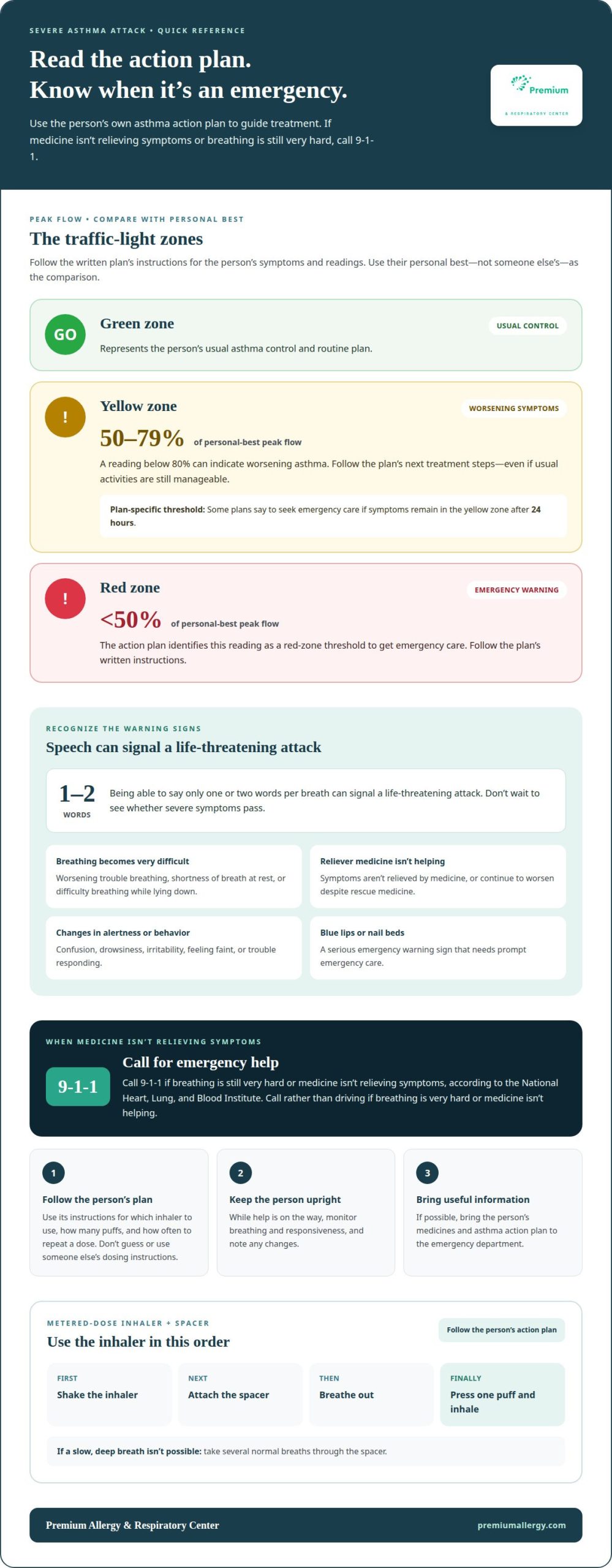
Call 9-1-1 if your medicines are not relieving your symptoms during an asthma attack or if breathing is still very hard, according to the National Heart, Lung, and Blood Institute. To use a metered-dose inhaler with a spacer, shake the inhaler, attach the spacer, breathe out, then press one puff and inhale; if a slow, deep breath isn’t possible, take several normal breaths through the spacer.
Emergency care is needed when an attack causes severe breathing difficulty or symptoms worsen despite rescue medicine. Act promptly if the person cannot speak normally, becomes confused or drowsy, feels faint, or develops blue lips or nail beds. These signs can indicate a life-threatening problem, so don’t wait to see whether symptoms pass.
Call 9-1-1 rather than driving if breathing is very hard or medicine isn’t helping. Follow the person’s asthma action plan while emergency help is on the way, and keep watching their breathing and responsiveness. If possible, bring their medicines and action plan to the emergency department. This information can help the care team understand their usual treatment.
Paramedics and emergency departments assess breathing difficulty and how well the person responds. Treatment may include rescue albuterol or levalbuterol, delivered through an inhaler or nebulizer to open the airways. Teams may provide oxygen when there are signs of low blood oxygen. Emergency staff monitor the person’s condition and decide whether further support is needed.
Severe attacks may require corticosteroids, given as a pill or shot, to reduce airway inflammation. If breathing support is needed, hospital treatment may include BiPAP or, in some cases, intubation with mechanical ventilation. A pulse oximeter can measure oxygen levels during evaluation. Care depends on symptoms and response to treatment, including for children.
Simple supportive care can help someone manage an asthma attack while following their action plan or awaiting medical help. Sit the person upright, keep them comfortable, and watch for changes in breathing or alertness.
During a severe attack, avoid lying flat, known triggers, and delaying emergency help to try additional home measures. Cold air, cigarette smoke, pollen, dust mites, and pet dander can worsen symptoms for some people. Move away from these triggers when possible.
Stay with the person and keep checking their breathing and responsiveness. Note when their inhaler was given and whether symptoms improve or worsen. For example, record a change from wheezing to difficulty speaking, or increasing confusion. These observations can help emergency responders understand how the attack is progressing.
Keep the person from becoming cold or overheated, and follow their asthma action plan for prescribed medicine. If helping with a reliever inhaler, verify the medicine with the person and shake it first. Use a spacer if available. Follow the device and plan instructions rather than improvising doses.
Asthma is a chronic disease, and an allergy, infection, exercise, or inhaled irritant can contribute to worsening symptoms. During the attack, focus on the immediate surroundings and reduce exposure to a likely trigger, such as smoke or a strong odor. Afterward, contact a doctor urgently, even if symptoms improve. An asthma management appointment can help review triggers, medicines, and the action plan. Explore asthma management support.
Premium Allergy & Respiratory Center provides Asthma Management for people seeking help with ongoing asthma control, symptoms, and treatment planning. Once an attack has been addressed, asthma-focused care can help you discuss how symptoms affect daily life and plan for managing the condition.
Consider asthma management if flare-ups recur, symptoms interfere with regular activities, or you need help understanding your treatment plan. This care supports ongoing management, not emergency treatment. If a severe attack is happening now, follow your action plan and call 9-1-1 when emergency signs occur.
For care focused on managing asthma beyond an emergency, contact Premium Allergy & Respiratory Center.
Knowing what to do during a severe asthma attack is one part of living with asthma. Planning for ongoing care can help you feel more prepared between episodes. At your next asthma appointment, discuss how symptoms affect work, sleep, exercise, or other routines. These details can make your conversation about care more focused and personal.
Premium Allergy & Respiratory Center offers Asthma Management, Allergic Rhinitis Treatment, and Food Allergy Testing. These services may be relevant when asthma concerns overlap with nasal allergy symptoms or food allergy questions. The next step depends on your current needs, whether you’re seeking asthma support or help with related allergy concerns.
Take a steady step toward care that fits your health priorities. Contact Premium Allergy & Respiratory Center to discuss your needs and move forward with greater confidence.
An asthma attack is a period when symptoms worsen as the airways become inflamed and narrowed. The intensity and pace can differ: one person may notice a gradual increase in coughing, while another experiences sudden breathing difficulty after a trigger. Tracking changes from a person’s usual pattern can help identify a flare early and guide the response.
Contact a healthcare provider after an asthma attack, even if symptoms have eased. Arrange urgent follow-up if you used a reliever but didn’t get medical attention; after hospitalization or rescue steroid medication, seek an appointment within two working days. A review can assess recovery and treatment, and whether the action plan needs updating. Keep taking asthma medicines as prescribed while arranging follow-up.
Seek emergency care when breathing remains very difficult, symptoms worsen, or rescue medicine isn’t helping. Call 9-1-1 rather than waiting for a routine appointment if the person is faint, confused, unusually drowsy, or unable to speak normally. If emergency care is needed, bring the asthma action plan and medicines if possible, so responders can see the person’s current treatment.
Signs can include worsening shortness of breath, rapid breathing, chest tightness, and difficulty speaking or walking. Treat the situation as an emergency if the person can say only one or two words per breath, has blue lips or nail beds, becomes confused, or gets little relief from their reliever. Don’t wait for every warning sign before seeking help.
Knowing what to do during a severe asthma attack starts with helping the person sit upright and following their written action plan. Use reliever medicine as directed, stay nearby, and watch their breathing and responsiveness. Note when medicine was taken and any change in symptoms. If breathing remains very hard or medicine isn’t helping, call 9-1-1 and move away from triggers such as smoke.
Part of knowing what to do during a severe asthma attack is following the dose and repeat schedule in the person’s action plan. For a moderate to severe attack, guidance describes 4 to 6 puffs of albuterol with a spacer, repeated 20 to 30 minutes apart, up to 3 times if needed. Life-threatening symptoms require immediate emergency care; don’t delay calling 9-1-1.
If an asthma reliever isn’t easing very hard breathing, treat the situation as an emergency, not a wait-and-see moment. Knowing what to do during a... Continue reading
READ MORE
An itchy, raised bump can be an expected response after an allergy skin test. With a skin prick test, reactions usually appear within 15 to 20... Continue reading
READ MORE
A reaction’s timing can be a useful clue, but it can’t confirm an ibuprofen allergy on its own. In study findings, the median time to onset was 60... Continue reading
READ MORE
A penicillin allergy label isn’t always lifelong. A medication allergy evaluation in Clovis starts with a review of the medicine, when the reaction... Continue reading
READ MORE