
Cat allergies can be treated, and cat allergy shots in Fresno may be an option when allergy testing and your medical history support cat-triggered... Continue reading
READ MORE

Hives, swelling beyond the sting site, dizziness, nausea, throat or tongue swelling, and difficulty breathing can signal a serious wasp sting allergy. Anaphylaxis usually begins within minutes; call 911 for serious symptoms. A wasp sting allergy specialist in Selma can assess your reaction and explain whether allergy testing or venom immunotherapy may be appropriate.
It’s understandable to wonder whether swelling and redness are ordinary sting symptoms or signs of an allergy. The pattern matters: symptoms affecting more than one part of the body need urgent attention, while a reaction limited to the sting area can follow a different course.
Learn how insect-sting allergy symptoms differ, what skin and blood tests involve, and how venom immunotherapy may reduce the risk of future systemic reactions. This guide can help you recognize when to seek immediate care and understand what to discuss with an allergy specialist.
Venom immunotherapy gradually increases your tolerance to the insect venom that triggered an allergic reaction. It matters after a serious sting reaction because treatment can lower the risk of future systemic reactions.
A venom allergy evaluation connects your sting history and symptoms with targeted testing. Seek a specialist after a reaction beyond local redness, itching, or swelling, or when swelling lasts over 24 hours. An allergist evaluates insect venom allergies; an ENT focuses on ear, nose, and throat conditions and isn’t the usual specialist for venom diagnosis and treatment.
Diagnosis may include a skin-prick test, followed by intradermal testing if the first test is negative. The skin-prick site is assessed within 20 minutes; an intradermal site is checked about 15 minutes after venom extract is injected under the skin. Blood testing can also help assess venom sensitivity.
Yes, Selma residents can seek an allergist or immunologist who evaluates insect sting allergies. A Selma-area allergy clinic offering this evaluation is the relevant setting; look for a board-certified allergist or immunologist with a focus on venom allergy. A wasp sting allergy specialist in Selma can assess symptoms and test results together.
A virtual consultation can be a way to discuss your sting history, symptoms, and possible next steps. Skin testing and venom injections require in-person care, so a remote visit cannot replace those procedures.
Treatment options include avoiding known triggers, carrying prescribed epinephrine after a serious allergy diagnosis, and venom immunotherapy. Medicare pays for allergy shots that can reduce the risk of anaphylactic reactions to stings. Coverage for venom testing and immunotherapy depends on the insurance plan’s benefits, so review those terms before treatment.
Immunotherapy uses gradually increasing venom doses during a build-up phase, with injections given weekly or bi-weekly for several months. Maintenance injections are administered monthly for three to five years. After adequate treatment, venom immunotherapy can reduce the risk of systemic allergic reactions by approximately 97%; it may not prevent every symptom after a sting.
A sting reaction may stay near the skin or affect several body systems. Localized pain, redness, and swelling differ from systemic symptoms such as widespread hives, dizziness, or difficulty breathing. Recognizing this difference helps you decide when urgent care is needed.
After a typical sting, pain and swelling generally ease within hours, though they may last one to two days. A large local reaction can cause swelling over three inches across, peak two to three days later, and last a week or more. Swelling limited to the sting area differs from anaphylaxis.
Watch for symptoms beyond the sting site, especially when they begin within minutes. Anaphylaxis may involve hives or itching across the body, throat or tongue swelling, chest tightness, trouble breathing, nausea, dizziness, or a sudden blood-pressure drop. Serious symptoms need emergency care: call 911. If you have prescribed epinephrine, use your epinephrine auto-injector as directed, then seek emergency help.
Multiple stings need careful attention, even without a known allergy. A toxic reaction to insect venom typically occurs after hundreds of stings, while an allergic reaction can follow a single sting from a wasp, hornet, or yellow jacket. The number of stings alone does not establish an allergy. Note the insect, timing, and symptoms for your medical evaluation.
Some reactions appear later. Serum sickness after a sting can cause symptoms seven to ten days afterward. A red line extending from the sting site toward the heart is another reason to contact a doctor. If you have asthma, include it in your sting history, along with any breathing symptoms.
For a reaction that extends beyond the sting site, arrange an allergy evaluation after urgent symptoms receive care. Learn about insect sting allergy treatment and how assessment can guide next steps.
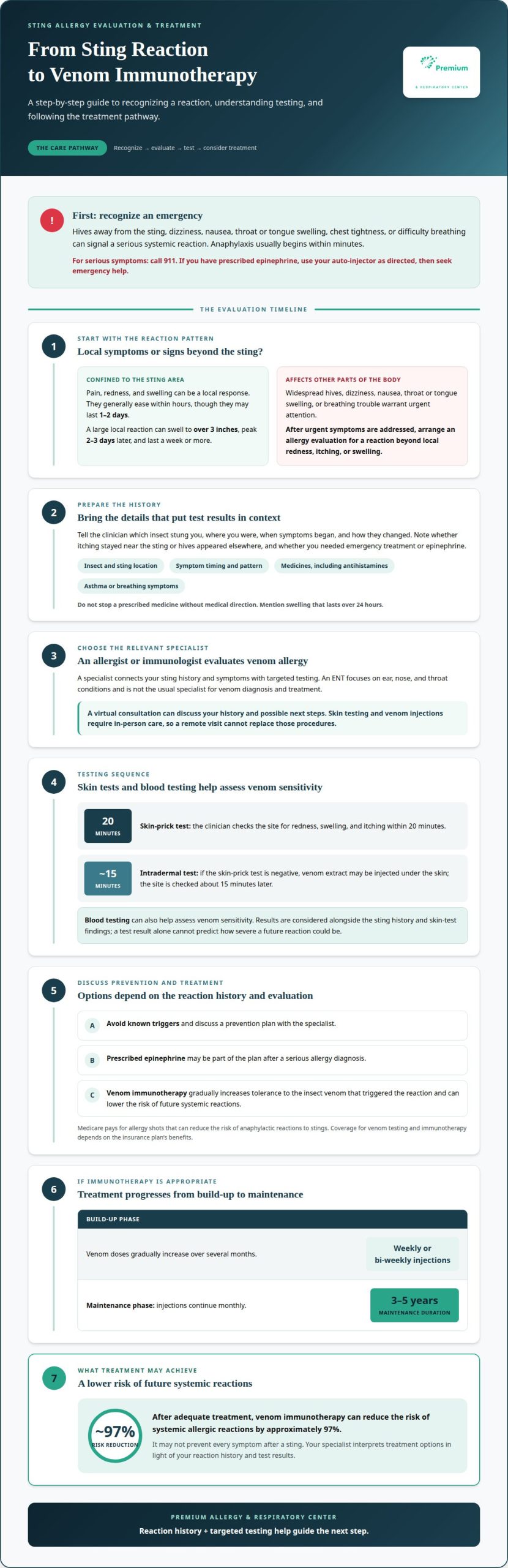
Diagnosing venom allergy involves your sting history and test results. Tell the clinician which insect stung you, where you were, and what symptoms followed. For example, note whether itching stayed near the sting or hives appeared elsewhere. This context helps interpret a positive test alongside a real reaction, rather than in isolation.
A skin-prick test checks the skin’s response to suspected insect venom. The clinician assesses the site for redness, swelling, and itching within 20 minutes. If that test is negative, intradermal testing may follow: venom extract is injected under the skin, and the site is examined about 15 minutes later. These steps help evaluate sensitivity to specific venom.
Blood testing is another way to evaluate suspected venom allergy. The clinician considers the result alongside your reaction history and skin-test findings. A test result alone cannot predict how severe a future sting reaction could be. Share details such as the insect’s appearance, sting location, and whether symptoms began immediately or later.
Before testing, give the clinician a list of medicines, including any antihistamine, and describe prior emergency treatment. Don’t stop a prescribed medicine without medical direction. Skin tests can produce local itching or swelling, so ask how the testing visit is monitored. If a sting causes breathing difficulty or other serious symptoms, testing can wait; call 911 for emergency care.
Results help guide the next discussion, not just determine whether an allergy is present. A history of a potentially serious systemic reaction, such as widespread hives with dizziness, differs from redness limited to one sting site. Share whether you needed epinephrine, how symptoms changed, and whether other stings caused similar reactions.
Keep the details together: insect type, where the sting happened, symptom timeline, and treatment used. This record helps an allergist interpret skin-prick, intradermal, and blood tests and plan next steps. If a stinger remains, remove it promptly, but do not delay emergency care for a severe reaction.
Venom immunotherapy is a treatment for people with an insect venom allergy. It uses injections containing gradually increasing amounts of the responsible venom to help the body develop greater tolerance. Allergy shots can reduce the risk of a systemic reaction after another sting, though they may not prevent every symptom at the sting site.
After a severe reaction to a bee, wasp, or hornet sting, discuss venom immunotherapy with an allergy specialist. A severe reaction can signal risk with another sting: people who have had one face a 25-65% chance of anaphylaxis the next time they’re stung. The insect matters because honeybees usually sting once, while wasps and hornets can sting multiple times.
How long does wasp venom immunotherapy take, and how often are shots given? The build-up phase uses weekly or bi-weekly injections for several months. During maintenance, injections are given monthly for three to five years.
After a severe wasp sting reaction, call 911 immediately for serious symptoms. If you’ve been diagnosed with a stinging insect allergy, use prescribed epinephrine immediately if stung, then seek emergency medical attention. Keep the auto-injector accessible outdoors, and tell companions where you carry it.
Immunotherapy has distinct phases. Ask your allergy specialist to explain how a plan moves from build-up to maintenance and how your reaction history and the venom involved inform treatment. A medical alert bracelet can help communicate a known allergy in an emergency. Keep your epinephrine instructions with it.
For a diagnosed venom allergy, explore insect sting allergy treatment as a way to discuss testing, prevention, and whether venom shots fit your care plan.
Premium Allergy offers Insect Sting Allergy Treatment, as well as care for allergic rhinitis and other allergy concerns. Venom-specific evaluation and treatment address a different concern from allergic rhinitis treatment. The clinic offers in-person appointments at its Fresno location and virtual consultations.
If you’re also managing nasal allergy symptoms, asthma, or questions about food or penicillin allergies, Premium Allergy offers Allergy treatment, Asthma Management, Food Allergy Testing, and Penicillin Allergy Testing. Matching your visit to your concern helps keep care focused, whether you’re addressing seasonal symptoms or seeking testing for a suspected food allergy.
For severe sting symptoms, seek emergency help rather than waiting for a routine appointment. For ongoing allergy-care questions, contact Premium Allergy & Respiratory Center.
A previous sting reaction can leave you second-guessing outdoor plans. Make a practical record of what happened, the insect if known, and how your symptoms changed. Bring those details to a wasp sting allergy specialist serving Selma to support a focused discussion about evaluation and future care.
For ongoing concerns about insect venom reactions, Premium Allergy offers Insect Sting Allergy Treatment. A consultation can help you understand what to ask and how allergy care may fit your needs. If you’re also managing other allergy concerns, discuss them as part of your overall care.
Contact Premium Allergy & Respiratory Center to take the next step toward a more informed care plan. You deserve guidance that helps you move forward with greater confidence.
A stinging insect allergy can cause symptoms beyond the sting site, such as widespread hives, throat swelling, dizziness, nausea, or trouble breathing. These symptoms may involve more than one body system and can signal anaphylaxis. A reaction can begin within minutes, so treat serious symptoms as an emergency and call 911. A small, localized welt alone doesn’t establish a venom allergy.
If you’ve been diagnosed with a stinging insect allergy, your clinician may prescribe an epinephrine auto-injector for emergency use after a sting. People with a true insect venom allergy usually receive one to carry. Discuss your reaction history, including whether symptoms affected your breathing or caused dizziness, so your care plan reflects your personal risk. Know where the device is and how to use it.
A venom allergy is an immune reaction to venom from a stinging insect, rather than ordinary pain and irritation at the sting site. A person may react to honeybee, wasp, hornet, or yellow jacket venom; identifying the insect can help guide evaluation. Wasps and hornets can sting multiple times, unlike honeybees, which usually sting once. Venom allergy can cause systemic symptoms, including anaphylaxis.
Diagnosis combines your sting and symptom history with venom-specific testing. A clinician may perform a skin-prick test, followed by intradermal testing if the first result is negative. Blood testing can also help assess sensitivity. Share the insect’s appearance, when symptoms began, and any treatment you needed. These details help interpret test results in context.
Yes. An allergist can evaluate your reaction history and prescribe an epinephrine auto-injector when it’s appropriate for your care plan. Describe any widespread hives, breathing problems, throat symptoms, or faintness after a sting, and mention whether emergency treatment was needed. If you already have a prescribed device, follow its instructions during a serious reaction and call 911 for emergency care.
A Selma-area allergy clinic that evaluates insect sting allergies is the relevant setting. Look for a board-certified allergist or immunologist who focuses on venom allergy.
Cat allergies can be treated, and cat allergy shots in Fresno may be an option when allergy testing and your medical history support cat-triggered... Continue reading
READ MORE
Hives, swelling beyond the sting site, dizziness, nausea, throat or tongue swelling, and difficulty breathing can signal a serious wasp sting... Continue reading
READ MORE
About 2% of fire ant stings lead to severe reactions, so a sting that looks like a skin irritation can sometimes become an emergency. An allergic... Continue reading
READ MORE
One food challenge doesn’t fit every allergy: an oral food challenge with an allergist in Selma is tailored to the suspected allergy, your medical... Continue reading
READ MORE