
Hives, swelling beyond the sting site, dizziness, nausea, throat or tongue swelling, and difficulty breathing can signal a serious wasp sting... Continue reading
READ MORE

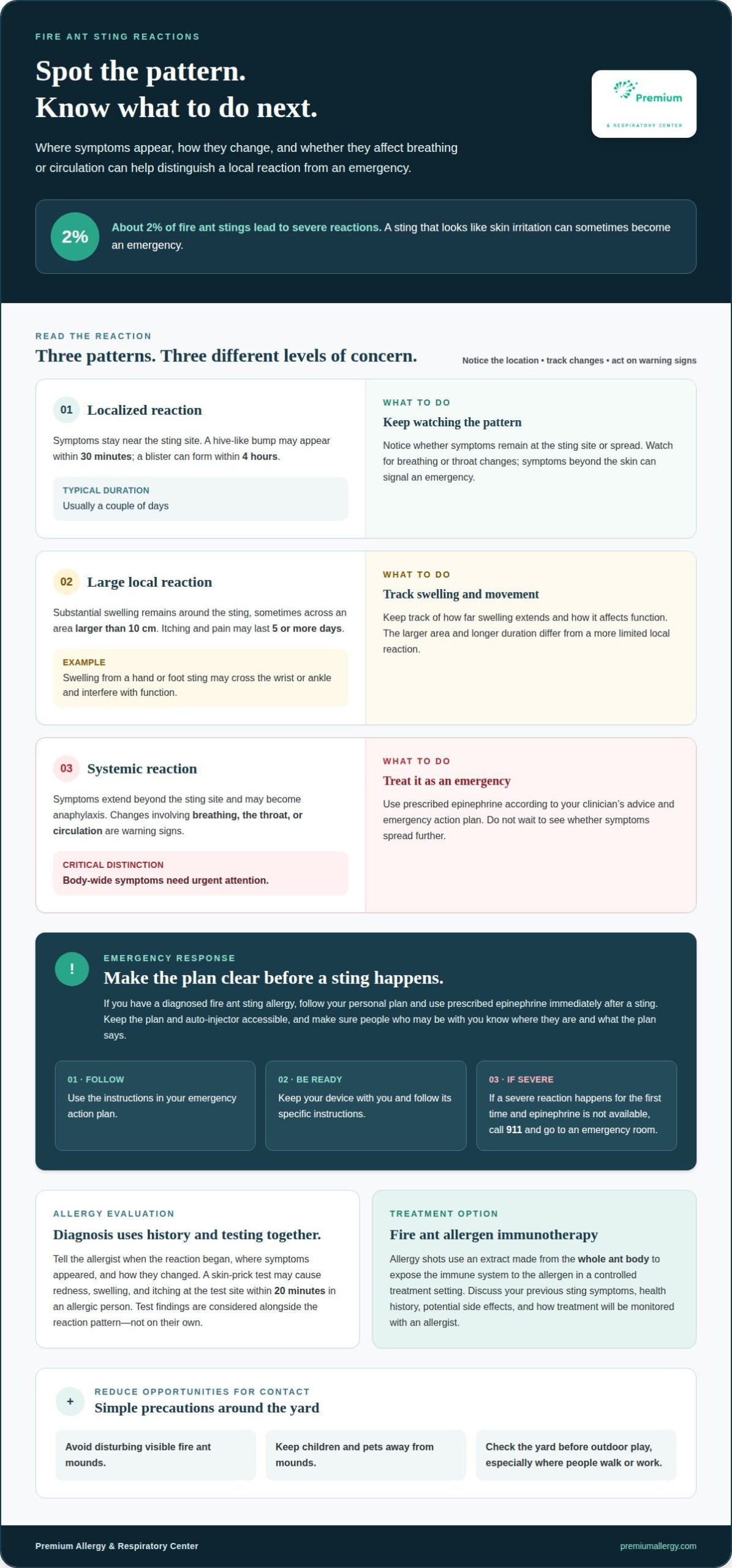
About 2% of fire ant stings lead to severe reactions, so a sting that looks like a skin irritation can sometimes become an emergency. An allergic reaction is the body’s response to the sting; a hive-like bump may appear within 30 minutes, and a blister can form within 4 hours. Understanding fire ant allergy treatment in Clovis starts with recognizing which symptoms stay near the sting and which need urgent attention.
A sore, itchy sting site can be unsettling, and symptoms that spread beyond the skin need prompt attention. This guide explains how localized and systemic reactions differ, what to do in an emergency, and how an emergency action plan and epinephrine fit into care. You’ll also learn how allergen immunotherapy works and when an allergy evaluation can help you plan for future stings with greater confidence.
Fire ant stings can cause symptoms at the sting site or reactions that affect the whole body. The timing, spread, and severity help distinguish them and guide what to do next.
A localized reaction stays near the sting, while a systemic reaction affects areas beyond it. A hive-like bump can appear within 30 minutes, and a blister may form within 4 hours. Notice whether symptoms remain at the sting site or spread, and watch for breathing or throat changes. This distinction matters because symptoms beyond the skin can signal an emergency.
A large local reaction causes substantial swelling around the sting, sometimes over an area larger than 10 centimeters. Itching and pain can last 5 or more days, unlike localized reactions that usually last a couple of days. For example, swelling from a hand or foot sting can cross the wrist or ankle and interfere with function. Track the swelling and how it affects movement.
A systemic reaction extends beyond the sting site and may become anaphylaxis. Symptoms involving breathing, the throat, or circulation require immediate medical attention. About 2% of fire ant stings lead to severe reactions. Don’t wait to see whether symptoms spread further; recognize body-wide changes as a reason to act urgently.
Epinephrine is an emergency medicine used for severe allergic reactions. If you have a fire ant allergy, follow your clinician’s advice about using prescribed epinephrine after a sting. If a severe reaction occurs for the first time and epinephrine isn’t available, call 911 and go to an emergency room. Keep your action plan accessible so you and those nearby know what to do.
If you have a diagnosed fire ant sting allergy, use epinephrine immediately after a sting. An emergency action plan outlines what to do, including when to use epinephrine for a severe reaction.
Follow your personal plan as soon as a sting occurs. A familiar sequence can help you act promptly instead of having to decide what to do in a stressful moment. Keep the plan accessible, and make sure people who may be with you understand the steps it describes.
An epinephrine auto-injector delivers epinephrine during a severe allergic reaction. If you have a diagnosed fire ant sting allergy, your action plan should clearly explain when to use it. Keep the device with you and know where it is to avoid delays. Follow the instructions for your specific device rather than relying on memory alone.
Plans can also help people around you respond with less uncertainty. For example, a family member or companion can locate the auto-injector while you follow your plan. Review the written instructions together so everyone knows the intended steps. If a severe reaction happens for the first time and epinephrine isn’t available, call 911 and go to an emergency room.
An allergy evaluation can help you discuss sting-related risk and prepare a personal response plan. Insect sting allergy treatment can be a relevant next step for people seeking specialized care after a sting reaction.
Fire ant allergen immunotherapy uses an extract made from the whole ant body. For Clovis residents, understanding how diagnosis and treatment decisions fit together can help make an allergy evaluation more focused.
Diagnosis combines your account of the sting and symptoms with allergy testing. Sharing when the reaction began, where symptoms appeared, and how they changed gives the allergist useful context. A skin prick test may cause redness, swelling, and itching at the test site within 20 minutes in an allergic person. These findings help guide an assessment alongside your history.
Bring details about the sting and any symptoms that followed to an evaluation. A hive-like bump appearing within 30 minutes, for example, is useful timing information. Testing results need to be considered with the reaction pattern, not viewed alone. Fire ant allergy treatment Clovis residents consider should start with understanding this full clinical picture.
Fire ant allergy shots use whole-ant-body extract to expose the immune system to the allergen in a controlled treatment setting. Because potential reactions are an important safety consideration, discuss your previous sting symptoms and health history before treatment begins. Ask the allergist about possible side effects and how treatment will be monitored. The decision should reflect your reaction history and assessment.
Redness, swelling, and itching at a skin-prick test site are different from side effects of allergy shots. Keep the procedures distinct when reviewing treatment options. Ask which symptoms to report and what guidance applies after a dose.
In Clovis, an allergy specialist can evaluate insect-sting reactions and discuss testing or immunotherapy. Bring a timeline of your symptoms and your emergency action plan, if you have one, to help guide the visit. Fire ant allergy treatment in Clovis can begin with a review of your sting history and whether a specialist evaluation is appropriate.
At home, avoid disturbing visible fire ant mounds and keep children and pets away. Check the yard before outdoor play, especially in areas where people walk or work. These precautions reduce opportunities for contact, while an allergy evaluation can help connect a past reaction with possible care.
Anaphylaxis is a severe, systemic allergic reaction that requires immediate medical attention. After a fire ant sting, symptoms extending beyond the sting site call for urgent action, not watchful waiting. A skin reaction alone cannot predict how symptoms will progress, so watch for changes affecting the body more broadly and follow your emergency plan.
Watch for symptoms that spread or worsen after a sting, especially if they affect more than the surrounding skin. The key distinction is whether the reaction stays localized or becomes systemic. A hive-like bump near the sting is different from symptoms affecting other parts of the body. If the reaction seems systemic, treat it as urgent.
Act promptly if you recognize signs of a systemic or anaphylactic reaction. If you have a diagnosed fire ant sting allergy, use epinephrine immediately after being stung, as directed in your emergency action plan. If a severe reaction occurs for the first time and epinephrine isn’t available, call 911 and go to an emergency room. Don’t wait for symptoms to become more severe before seeking immediate medical attention.
A written plan clarifies what to do for you and anyone nearby. Keep it accessible, and explain the steps to family members or companions before outdoor activities. For example, someone with you can help locate your auto-injector and follow the plan if you have a severe reaction. The plan should distinguish a sting-site reaction from a body-wide emergency.
After an emergency, share the sting and symptom timeline during a professional allergy evaluation. Note where symptoms began, how they changed, and whether epinephrine was used. These details can help an allergy specialist assess the reaction and discuss future planning. Discuss your sting reaction with an allergy specialist to understand what care may fit your needs.
Premium Allergy & Respiratory Center provides Allergic Rhinitis Treatment for people managing ongoing nasal allergy symptoms. This care addresses allergic rhinitis, which is separate from fire ant sting reactions and should not be confused with emergency sting care.
If you also have nasal allergy symptoms, discuss them during an appointment. Clear details about your symptoms can focus the conversation on the care you’re seeking and how it relates to your other allergy concerns. For a fire ant sting emergency, follow your action plan and seek immediate medical attention if symptoms become systemic.
Contact Premium Allergy & Respiratory Center to discuss Allergic Rhinitis Treatment or visit premiumallergy.com.
Planning for future stings can also be an opportunity to address other allergy concerns that affect daily life. A focused conversation can help separate urgent sting-related needs from ongoing care and identify the right questions for your situation. If you’re considering fire ant allergy treatment in Clovis, bring your concerns and goals to an allergy-care discussion.
Premium Allergy & Respiratory Center offers Insect Sting Allergy Treatment, along with Allergic Rhinitis Treatment, Asthma Management, and Food Allergy Testing. These services address different allergy and respiratory needs, helping you focus on the concerns that matter without confusing routine care with an emergency response.
For personalized guidance on your allergy care, contact Premium Allergy & Respiratory Center. Taking a thoughtful next step can help you feel more prepared and supported.
A fire ant allergy is an allergic response triggered by a fire ant sting. Symptoms can range from a reaction at the sting site to one affecting the body more broadly. A bump near the sting, for example, differs from symptoms appearing elsewhere. The reaction pattern matters: a body-wide response needs urgent attention, while a localized response should be monitored for changes.
A sting can cause a hive-like bump within 30 minutes, followed by a blister within 4 hours. Anaphylaxis is a severe systemic reaction, meaning it extends beyond the sting area. If symptoms affect more than the local skin or suggest a systemic reaction, seek immediate medical attention. Keep track of where symptoms appear and how they change.
If you have a diagnosed fire ant sting allergy, use your prescribed epinephrine immediately after a sting, following your emergency plan. Don’t wait for symptoms to worsen before acting. If a severe reaction happens for the first time and epinephrine isn’t available, call 911 and go to an emergency room. Tell someone nearby that you’ve been stung.
Care depends on the reaction. For an itchy local rash, hydrocortisone cream can be applied to the affected skin two times a day. Don’t squeeze or pop a fire ant blister, as this can lead to infection and scarring. Severe allergic reactions require emergency action. An allergist can assess whether testing or immunotherapy is appropriate for your history.
Fire ant immunotherapy uses an extract of the whole ant body. This specialist-directed treatment addresses the allergic response; it does not relieve an active emergency. An allergist should assess whether it is suitable based on your sting history and allergy evaluation. It is not a substitute for your emergency plan.
Hives, swelling beyond the sting site, dizziness, nausea, throat or tongue swelling, and difficulty breathing can signal a serious wasp sting... Continue reading
READ MORE
About 2% of fire ant stings lead to severe reactions, so a sting that looks like a skin irritation can sometimes become an emergency. An allergic... Continue reading
READ MORE
One food challenge doesn’t fit every allergy: an oral food challenge with an allergist in Selma is tailored to the suspected allergy, your medical... Continue reading
READ MORE
A methacholine challenge test in Fresno measures how your airways respond to methacholine, rather than relying only on how you feel. You inhale a... Continue reading
READ MORE