
What if the pollen, dust mites, or mold you suspect aren’t the whole story behind your symptoms? Environmental allergy testing can help identify... Continue reading
READ MORE

Could a past sting reaction put you at risk the next time you’re outdoors? It’s understandable to feel uneasy about another sting, especially if you’re unsure how serious your reaction was. If you’re searching for venom immunotherapy Fresno care, an allergist can review what happened and help you understand your next steps.
Venom immunotherapy uses carefully selected injections to help reduce the risk of a severe allergic reaction to future stings. It isn’t a guarantee, and it doesn’t replace emergency care or a prescribed epinephrine action plan. For people whose evaluation supports treatment, it may be part of a broader plan for managing sting allergy.
This article explains who may benefit, how an allergist considers your reaction history and test results, and what to expect from treatment visits. Premium Allergy & Respiratory Center provides outpatient insect sting allergy evaluation and treatment in Fresno, serving Clovis, Selma, and North Clovis. A specialist can review your situation and discuss appropriate options.
A frightening sting reaction can make time outdoors feel uncertain. If you’re considering venom immunotherapy Fresno care, an allergist can review what happened and explain the evaluation process. Venom immunotherapy is specialist-directed treatment that uses controlled exposure to a specific insect venom to help reduce the immune system’s overreaction.
An allergist considers your reaction history alongside appropriate test results. Symptoms alone can’t confirm which insect caused a reaction or determine whether immunotherapy is right for you. The evaluation connects the details of the sting, what you experienced, and any evidence of venom sensitivity before treatment is discussed.
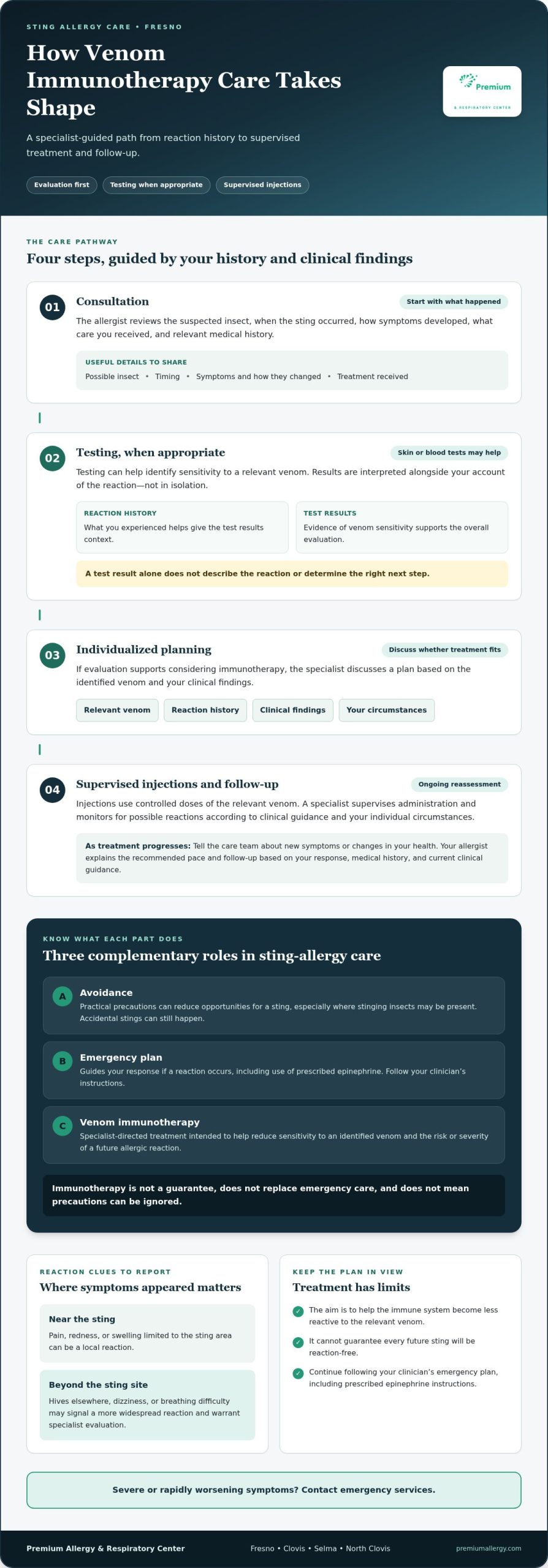
Pain, redness, or swelling limited to the area around a sting can be a local reaction. Symptoms elsewhere, such as hives away from the sting site, dizziness, or breathing difficulty, may signal a more widespread reaction and warrant specialist evaluation. These examples don’t establish a diagnosis by themselves, but sharing them with an allergist can help guide assessment. If symptoms are severe or rapidly worsening, contact emergency services.
After evaluation identifies a relevant venom, treatment may involve gradually increasing exposure under specialist care. The aim is to help the immune system become less reactive to that venom and reduce the risk or severity of a future allergic reaction. It can’t guarantee that every future sting will be reaction-free, so follow your clinician’s emergency plan, including any prescribed epinephrine instructions.
For a general explanation of the treatment approach, see How Venom Immunotherapy Works. Whether treatment is appropriate depends on your clinical findings, not simply on how alarming a past sting felt. A specialist can explain how evaluation and treatment fit together with prevention guidance. You can also explore the insect sting allergy overview for background on diagnosis and ways to reduce exposure.
Knowing what each step involves can make treatment feel more manageable. With venom immunotherapy Fresno care, the process starts with an allergist’s assessment. Testing may follow when appropriate, then the specialist discusses an individualized plan, supervised injections, and follow-up. Your history helps shape each decision; testing supports the evaluation rather than replacing it.
Your allergist will ask about the suspected insect, when the sting occurred, how symptoms developed, what treatment you received, and relevant medical history. Skin or blood tests may help identify the venom involved. Results need to be interpreted alongside your account of the reaction. A test result alone doesn’t describe what happened or determine the right next step. The Venom Immunotherapy Practice Parameters offer professional guidance on evaluating and managing sting allergy.
If evaluation supports considering immunotherapy, your specialist will discuss a plan based on the identified venom and your clinical findings. The care pathway generally includes:
Injections contain controlled doses of the relevant venom. The specialist supervises administration and monitors for possible reactions according to clinical guidance and your individual circumstances. Tell the care team about new symptoms or changes in your health so they can consider them as treatment progresses. Monitoring is a planned part of care, not a reason to assume a reaction will occur.
There isn’t one schedule or treatment duration that applies to everyone. Your allergist will explain the recommended pace and follow-up based on your response, medical history, and current clinical guidance. Ask what to expect between visits and how to follow any existing emergency plan, including prescribed epinephrine instructions. Premium Allergy & Respiratory Center provides insect sting allergy care in Fresno and nearby Clovis, Selma, and North Clovis. Learn about insect sting allergy care.
Sting-allergy care has several parts. Avoidance can lower the chance of an encounter, an emergency plan prepares you to respond to a reaction, and immunotherapy is planned treatment intended to reduce sensitivity to an identified venom. These approaches complement one another. Starting immunotherapy doesn’t mean you can ignore precautions or assume every future sting will be harmless.
| Approach | Purpose | When it applies | Limit |
|---|---|---|---|
| Avoidance | Reduce opportunities for a sting through practical precautions. | Ongoing, especially in situations where stinging insects may be present. | Accidental stings can still happen. |
| Emergency plan | Guide your response if a reaction occurs, including use of prescribed epinephrine. | During a suspected allergic emergency. | Responds to a reaction; it doesn’t reduce sensitivity to venom over time. |
| Venom immunotherapy | Gradually reduce the immune system’s sensitivity to a specific venom. | As planned treatment under specialist care. | Requires ongoing visits and doesn’t guarantee protection from every reaction. |
No. Immunotherapy is preventive treatment, not emergency care. Your allergist can advise whether to carry prescribed epinephrine and how to follow your individualized action plan. If a reaction is severe or rapidly worsening, use prescribed emergency medication as directed and contact emergency services. The specialist-guided venom immunotherapy information from the American College of Allergy, Asthma & Immunology also describes immunotherapy as a planned approach, separate from responding to an acute reaction.
Repeated appointments and monitoring take time, so consider how treatment could fit your routine. Discuss that commitment alongside the details of your past reaction, your concerns about future stings, and the specialist’s assessment. A personalized conversation can clarify potential benefits and practical demands without promising a particular outcome.
With venom immunotherapy Fresno care, think of treatment as one part of a broader safety strategy. Continue sensible avoidance measures and follow your emergency plan unless your allergist advises otherwise. The goal is an informed plan that supports safety and greater confidence, not a reason to take new risks.
You don’t need to remember every detail perfectly. A few notes about the sting and what followed can help make an allergy appointment more focused. For people seeking venom immunotherapy Fresno care, a specialist uses your history and appropriate testing to discuss whether treatment may fit your situation.
Before your visit, write down what you remember and bring relevant medical information, including a current medication list. Helpful details include:
If you have asthma, include it in your health history and bring relevant care information. This helps the specialist understand your overall health as part of the discussion.
Use the visit to understand how your reaction history fits with any test results. You might ask which findings support the recommended next step, what monitoring involves, what to expect during visits, and how your emergency guidance applies while care is underway. It’s reasonable to raise concerns about injections or fitting visits into your routine. Those practical details are part of an informed treatment discussion.
Testing doesn’t determine the plan by itself. The specialist interprets results in the context of your symptoms, suspected insect, and medical history, then discusses whether venom immunotherapy is appropriate. If treatment is considered, review the proposed approach and follow-up together, including any questions about your existing emergency action plan.
Premium Allergy & Respiratory Center provides outpatient insect sting allergy evaluation and treatment in Fresno, serving patients from Clovis, Selma, and North Clovis. Bringing your notes and questions can make the conversation more focused and help you understand the options.
Learn about insect sting allergy evaluation and treatment.
Deciding what to do after a sting reaction can feel daunting, especially if you’re worried about another sting but unsure what your symptoms mean. A specialist-guided evaluation offers a clear starting point. Your reaction history, clinical assessment, and appropriate testing help shape a discussion about whether venom immunotherapy may suit your clinical findings.
The first conversation focuses on your experience and health history, not on assuming a particular treatment in advance. Your allergist may review the insect you suspect, when symptoms began, what happened next, and what care you received. If appropriate, testing can add information about possible venom sensitivity. The specialist considers those findings alongside your history to recommend relevant next steps.
The discussion may help clarify:
Candidacy isn’t determined by one symptom or test result alone. Your medical history and evaluation guide the conversation, and the plan is tailored to what the findings show. If immunotherapy is considered, your allergist can explain its purpose and limits. It aims to reduce the risk of a serious reaction to the identified venom, but can’t guarantee that a future sting won’t cause a reaction. Continue following your personalized emergency plan.
Prepare by bringing notes about the sting, your symptoms, and any treatment you received. Share your questions and concerns, whether you’re unsure about testing, injections, or how treatment could fit your routine. A focused appointment can turn uncertainty into a practical conversation about your options.
For a severe or rapidly worsening reaction, contact emergency services rather than waiting for a routine appointment. For non-emergency concerns, schedule an appointment with Premium Allergy & Respiratory Center to discuss specialist-guided venom immunotherapy Fresno care and possible next steps.
A serious sting reaction can leave you questioning what’s safe and what to do next. A specialist can help clarify the path by reviewing your reaction history, considering appropriate test results, and discussing whether venom immunotherapy may suit your clinical findings.
Immunotherapy is planned treatment intended to reduce risk, not a guarantee against every future reaction. Avoidance and any prescribed emergency action plan remain important parts of care. If you’re exploring venom immunotherapy Fresno, Premium Allergy & Respiratory Center provides specialized outpatient allergy and respiratory care, including insect sting allergy testing and treatment.
You don’t have to make sense of the reaction alone. Schedule a Fresno allergy appointment to discuss your concerns and possible next steps with a specialist.
Venom immunotherapy is specialist-directed treatment that uses controlled injections of a specific insect venom to reduce the immune system’s sensitivity to it. An allergist first reviews your sting reaction and may recommend testing to help identify the relevant venom. If treatment is appropriate, doses are given under specialist supervision as part of an individualized plan. The goal is to lower the risk of a serious reaction, not guarantee that one can’t occur.
People with a suspected systemic allergic reaction to an insect sting may benefit from specialist evaluation to see whether venom immunotherapy is appropriate. Symptoms beyond the sting site, such as widespread hives, dizziness, or breathing difficulty, are important to discuss. An allergist considers your reaction history alongside appropriate test results and medical context. Symptoms or a positive test alone don’t establish candidacy; the decision depends on your individual clinical findings.
Venom immunotherapy often involves a build-up phase followed by maintenance treatment, and the full course commonly lasts several years. The exact schedule and duration depend on your clinical situation and the specialist’s treatment plan. Expect repeated visits and follow-up rather than a single injection. Your allergist can explain the proposed timeline, monitoring, and what may affect the plan, so you can consider the practical commitment before starting.
Venom immunotherapy can reduce the risk of serious reactions to the specific bee or wasp venom identified during evaluation. Treatment selection depends on your reaction history and specialist assessment, since different venoms may be involved. It isn’t a guarantee against every future reaction, and it doesn’t make sting precautions unnecessary. Ask your allergist which venom the evaluation points to and what protection treatment may realistically provide in your case.
No. Venom immunotherapy is planned preventive treatment, while prescribed epinephrine is used to respond to an emergency allergic reaction. Your allergist can advise whether to carry an auto-injector and how to follow your personalized action plan during treatment. Don’t stop or change prescribed emergency medication without clinical guidance. If a sting causes severe or rapidly worsening symptoms, use prescribed emergency medication as directed and contact emergency services.
Venom immunotherapy is administered under specialist supervision, with monitoring for possible reactions. As with allergy shots, reactions can occur, so your allergist will explain the safety steps and how to report symptoms during treatment. Your medical history and clinical findings help inform the plan. Discuss concerns about injections, previous reactions, or changes in your health before or during treatment. Follow the care team’s instructions for each visit.
To explore venom immunotherapy Fresno care, arrange an insect sting allergy evaluation with Premium Allergy & Respiratory Center. Bring notes about when the sting occurred, your symptoms and their timing, the suspected insect, and any treatment you received. The specialist can review your history and consider appropriate testing before discussing next steps. The practice provides outpatient allergy specialty care in Fresno and serves Clovis, Selma, and North Clovis.
What if the pollen, dust mites, or mold you suspect aren’t the whole story behind your symptoms? Environmental allergy testing can help identify... Continue reading
READ MORE
A positive allergy blood test doesn’t automatically mean a substance is causing your symptoms. The test measures specific immunoglobulin E (IgE)... Continue reading
READ MORE
Could a past sting reaction put you at risk the next time you’re outdoors? It’s understandable to feel uneasy about another sting, especially if... Continue reading
READ MORE
A penicillin allergy label deserves a careful evaluation, not a guess. If you’re searching for penicillin allergy testing near me, you may be unsure... Continue reading
READ MORE