
A fall allergy specialist in Selma can assess recurring seasonal symptoms and use allergy testing to investigate possible triggers. Itchy eyes and... Continue reading
READ MORE

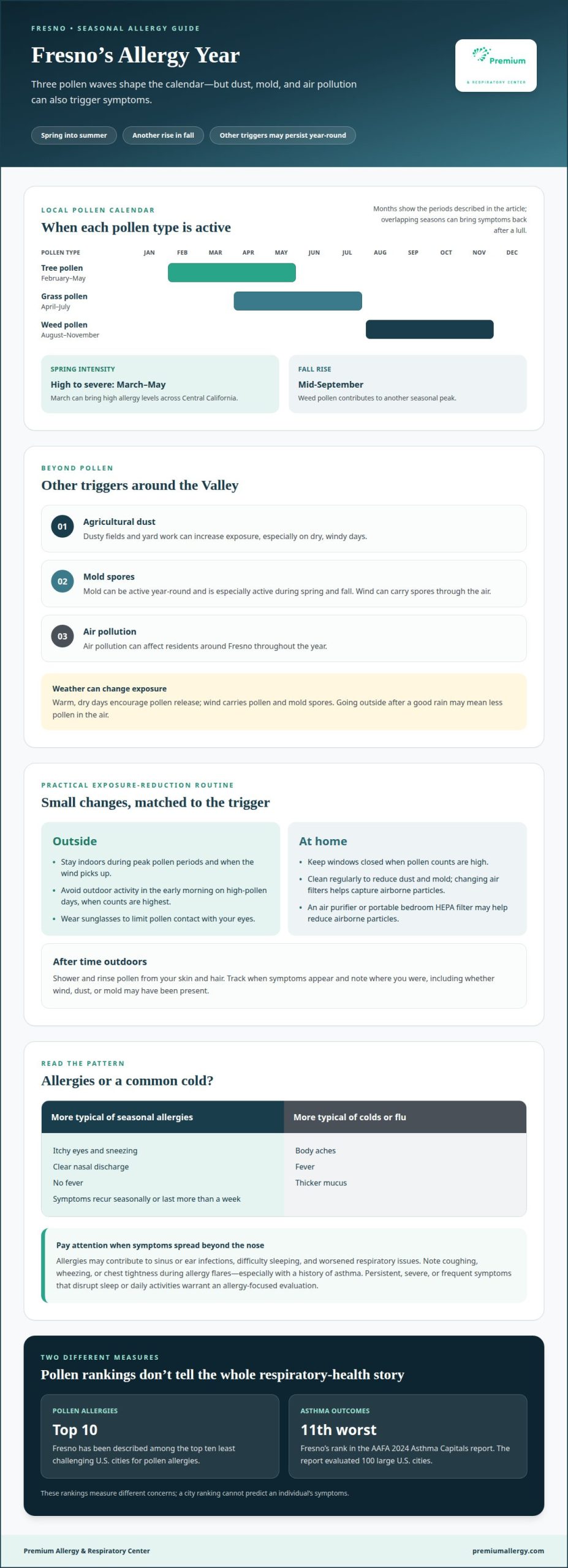
Fresno’s allergy season typically lasts through spring and into summer, with another peak around mid-September in fall. Tree pollen is most prevalent from February through May, grass pollen from April through July, and weed pollen from August through November. For seasonal allergy relief in Fresno, timing matters, but it isn’t the whole picture.
If symptoms linger, it’s worth looking beyond spring pollen. Dust, mold, and air pollution can also affect people in the Valley, and allergy symptoms may overlap with or aggravate sinus and respiratory problems.
This guide explains how long seasonal triggers tend to last, what can set symptoms off around Fresno, and how allergies may relate to sinus infections and asthma flare-ups. You’ll also find practical ways to limit exposure and learn when persistent symptoms that disrupt daily life may call for specialized allergy care.
Fresno’s allergy season typically runs through spring and into summer, with another rise in pollen in fall. The calendar varies by plant: tree pollen usually peaks from February through May, grass pollen from April through July, and weed pollen from August through November. These overlapping seasons can bring symptoms back well beyond spring’s first warm days.
Spring is often the strongest stretch. Allergy severity is described as high to severe from March through May, while March can bring high allergy levels across Central California. Grass pollen may continue through early summer, then ease as the season shifts. In fall, weed pollen contributes to a mid-September peak. Seasonal triggers are especially active in spring, summer, and fall, so symptom-free weeks may be followed by another flare.
Typical pollen allergy symptoms include sneezing, nasal congestion, a runny nose, itchy or watery eyes, sinus pressure, headaches, a scratchy throat, and cough. If symptoms return around the same time each year, note when they occur alongside the pollen types active locally. This pattern can help distinguish recurring allergy symptoms from a brief cold and clarify when seasonal allergy relief in Fresno may help.
Local rankings tell different stories for pollen allergies and asthma. The Asthma and Allergy Foundation of America evaluated 100 large U.S. cities, and Fresno has been described among the top ten least challenging cities for pollen allergies. Separately, the AAFA’s 2024 Asthma Capitals report ranked Fresno 11th worst nationally for asthma outcomes. These rankings measure different concerns, so pollen patterns do not tell the whole respiratory-health story.
On high-pollen days, avoid outdoor activity in the early morning, when counts are highest, and keep windows closed. Mayo Clinic advises starting allergy medication before symptoms begin when high pollen counts are forecast. A practical approach is to watch for your seasonal pattern, reduce exposure during peak periods, and prepare before symptoms disrupt sleep or daily routines.
Outdoor pollen isn’t the only trigger around Fresno, Clovis, Selma, and North Clovis. Agricultural dust, mold, and air pollution can affect residents year-round, while pollen levels vary with plants and weather. Warm, dry days encourage pollen release, and wind can carry pollen and mold spores through the air. Mold spores are especially active during spring and fall, so changing seasons may bring different allergy symptoms.
Exposure can increase during yard work, time near dusty fields, or outdoor activity on dry, windy days. Sneezing after a particular activity may help identify a possible trigger, especially when symptoms recur in the same setting. Keep windows closed when pollen counts are high, and use an air purifier to help reduce airborne particles indoors. Sunglasses can limit pollen contact with your eyes outdoors.
Small routine changes can help. Stay indoors during peak pollen periods and when the wind picks up; going outside after a good rain may mean less pollen in the air. After spending time outdoors, shower and rinse pollen from your skin and hair. Regular home cleaning can reduce dust and mold, and changing air filters helps capture airborne particles.
For at-home relief, focus on reducing exposure: close windows during high-pollen periods, clean dust regularly, and rinse pollen away with a shower after being outside. A portable bedroom HEPA filter may also help keep indoor air cleaner. There’s little evidence that honey prevents allergy symptoms, so it shouldn’t replace a practical exposure-reduction routine.
Track when symptoms appear, where you were, and whether wind, dust, or mold may have been present. That record can make an appointment more focused if symptoms persist or disrupt daily life. Allergic rhinitis treatment can help address recurring nasal allergy symptoms; guidance for recurring allergy symptoms can be a next step when home measures aren’t enough.
Seasonal allergies involve an immune response to environmental triggers such as pollen. In Fresno, nasal congestion and sinus pressure can accompany sneezing, itchy eyes, and clear nasal discharge. Allergies can also contribute to sinus or ear infections. The connection matters: symptoms that seem limited to the nose can affect sleep, comfort, and breathing.
Compare your symptoms with those of a common cold. Seasonal allergies typically cause itchy eyes, sneezing, and clear discharge without fever. Colds and flu are more likely to bring body aches, fever, and thicker mucus. A recurring spring pattern may point to pollen exposure, while fever or body aches suggest a different illness. Symptoms lasting more than a week or returning seasonally are more likely to be allergies than a common cold.
Uncontrolled allergy symptoms can extend beyond congestion. They may contribute to sinus infections, chronic ear infections, difficulty sleeping, and worsened respiratory issues. For example, persistent nighttime congestion can make restful sleep harder. A cough may accompany allergy symptoms, but worsening cough or breathing trouble deserves attention, especially if you have a history of asthma.
Allergies can also worsen asthma symptoms. Fresno’s 2024 asthma ranking highlights why respiratory health deserves attention alongside pollen exposure, though a city ranking cannot predict an individual’s symptoms. Notice whether coughing, wheezing, or chest tightness occurs during allergy flares, and record when it happens. This pattern gives a clearer picture of possible links between nasal allergy symptoms and asthma.
Over-the-counter medicine can ease some allergy symptoms, but persistent, severe, or frequent symptoms that don’t improve warrant an allergy-focused evaluation. Clinical assessment can help distinguish allergic rhinitis from a cold and identify whether asthma symptoms are worsening. Seek timely guidance when recurring sinus or respiratory problems affect sleep or daily activities. The key takeaway: don’t treat every seasonal cough as a simple pollen symptom.
Over-the-counter options include antihistamine tablets, nasal sprays, and eye drops. Claritin and Zyrtec are examples of allergy tablets. The right fit depends on which symptoms bother you most. Itchy, watery eyes may call for eye drops, while nasal symptoms may lead you to consider a nasal spray or tablet. Match the product type to the symptoms you want to address.
Read the package label before using any medicine. Check its active ingredient, directions, and warnings, and follow the listed instructions. If you take other medicines or have a health condition, ask a pharmacist or clinician about possible interactions. Avoid combining products with overlapping ingredients unless a healthcare professional advises you to do so.
Cromolyn sodium nasal spray is another over-the-counter option. It usually needs to be used 4 to 6 times daily, so consider whether that routine fits your day. Use the product as directed on its label. If symptoms continue despite following directions, reassess the approach rather than increasing use beyond the instructions.
There isn’t one cost for every allergy medicine. The amount varies with the active ingredient, brand or generic option, product form, package size, and retailer. Tablets, eye drops, and nasal sprays are different products, so compare the same form and package type when reviewing prices. No single product price applies to every choice.
For a practical selection, identify your main symptoms, choose a relevant product form, then review its label and cost. Track whether sneezing, congestion, or eye irritation improves after use. If symptoms remain frequent, severe, or disruptive despite over-the-counter treatment, specialized evaluation can help clarify the next step. Explore allergy treatment options for support with persistent seasonal symptoms.
Premium Allergy & Respiratory Center provides care for persistent allergy and breathing concerns in Fresno, Clovis, Selma, and North Clovis. If seasonal symptoms keep returning or affect daily life, the clinic offers allergic rhinitis treatment for nasal allergy symptoms and asthma management when allergies coincide with worsening asthma symptoms.
Food allergy testing addresses a different concern from seasonal pollen symptoms. If reactions seem connected to eating a particular food rather than changes in season or outdoor exposure, testing may help assess that concern. The clinic also provides penicillin allergy testing for people concerned about a penicillin allergy.
Persistent symptoms, recurring breathing concerns, or suspected food-related reactions are good reasons to seek specialized evaluation. Contact Premium Allergy & Respiratory Center to discuss your allergy care needs.
Use what you’ve noticed to make a simple plan for the next flare. Write down which symptoms affect your sleep, breathing, work, or time outdoors, then bring those concerns into a focused conversation about care. This can help shift seasonal allergy relief in Fresno from reacting in the moment to making informed decisions about recurring symptoms.
If your symptoms keep interrupting everyday activities, or you’re unsure whether breathing changes are connected with allergies, specialized support can help clarify the next step. Premium Allergy & Respiratory Center offers care for allergic rhinitis and asthma, as well as food allergy testing for a separate concern. Share what you’ve been experiencing and what you hope to improve.
Contact Premium Allergy & Respiratory Center to discuss your concerns and take a thoughtful next step toward feeling more comfortable.
Fresno’s outdoor allergy season can span spring into summer, with weed pollen bringing another active period in fall. Because tree, grass, and weed pollen seasons overlap, your symptoms may ease and return as different plants release pollen. To spot your pattern, record when symptoms begin and whether they recur in the same season.
Allergies can contribute to sinus or ear infections and may worsen asthma symptoms. Pay attention if recurring congestion is accompanied by persistent coughing, wheezing, or sleep disruption. These changes can affect more than comfort, especially if you already manage asthma. Note which symptoms occur together and when, so an allergy specialist can assess the pattern and discuss appropriate care.
Yes, specialized allergy care is available by appointment. Premium Allergy & Respiratory Center offers in-person appointments at its Fresno clinic and virtual consultations. An appointment gives you time to describe your symptoms, when they occur, and how they affect daily activities. This information helps guide an evaluation for concerns such as allergic rhinitis or asthma.
Start with a routine that targets your main triggers: reduce outdoor exposure during high-pollen periods, keep windows closed, and rinse pollen from your hair and skin after being outside. Over-the-counter options include antihistamine tablets, nasal sprays, and eye drops. For seasonal allergy relief in Fresno, track which symptoms persist so you can discuss treatment options if home steps aren’t enough.
Tree pollen typically peaks from February through May, grass pollen from April through July, and weed pollen from August through November. Fresno’s March-through-May allergy severity is described as high to severe, making spring an important time to prepare. Overlapping pollen seasons mean the most difficult months can vary depending on the trigger affecting you.
Common outdoor pollen triggers include trees, grasses, and weeds. Fresno also has year-round environmental irritants such as agricultural dust, mold, and air pollution. Outdoor mold spores are especially active in spring and fall. If symptoms occur outside the main pollen periods, consider whether indoor dust or mold, or outdoor air conditions, coincide with flare-ups.
A fall allergy specialist in Selma can assess recurring seasonal symptoms and use allergy testing to investigate possible triggers. Itchy eyes and... Continue reading
READ MORE
Fresno’s allergy season typically lasts through spring and into summer, with another peak around mid-September in fall. Tree pollen is most prevalent... Continue reading
READ MORE
An allergy to your dog doesn’t automatically mean you have to give up your pet. Dog allergy treatment in Clovis can help you manage your own symptoms... Continue reading
READ MORE
Cat allergies can be treated, and cat allergy shots in Fresno may be an option when allergy testing and your medical history support cat-triggered... Continue reading
READ MORE