
Fresno’s allergy season typically lasts through spring and into summer, with another peak around mid-September in fall. Tree pollen is most prevalent... Continue reading
READ MORE

An allergy to your dog doesn’t automatically mean you have to give up your pet. Dog allergy treatment in Clovis can help you manage your own symptoms while you explore ways to reduce exposure at home. Keeping animals out of the home is the most effective way to control animal allergens, but practical steps may help if you hope to keep your dog.
It’s understandable to feel torn when sneezing, itchy eyes, congestion, or skin irritation disrupts time with a much-loved companion. Dog fur itself isn’t the allergen; it can carry proteins from a dog’s dander, saliva, and urine. Identifying what triggers your symptoms can help you make a more informed care plan.
Here, you’ll learn how allergen testing may guide care, how immunotherapy injections work, and what options can ease itching and other symptoms. You’ll also find ways to reduce allergens in your home and understand when professional evaluation can help you decide what’s right for you and your dog.
For a dog with environmental allergies, allergen-specific immunotherapy targets triggers identified through allergy testing. A veterinarian uses the dog’s symptoms, medical history, and test results to shape a treatment plan. Common environmental triggers include pollen, mold, grass, and dust mites. The goal is to gradually desensitize the dog to a known allergen, rather than only easing symptoms as they appear.
The process starts with diagnosis. Blood testing or intradermal testing can help identify specific allergens. For intradermal testing, a veterinarian injects small amounts of allergens under the dog’s skin and observes the reaction. Testing isn’t always necessary; symptoms and medical history help determine whether it’s appropriate. If results identify relevant environmental triggers, the allergy panel can guide immunotherapy.
Allergy shots contain allergens selected from the dog’s specific panel. Repeated exposure over time can help the dog become less reactive to those triggers. Response varies: about 50% of dogs have an excellent response, about 25% have a moderate response, and about 25% show no response. Significant results can take up to a year, so owners should understand that this is a gradual approach, not immediate relief.
Many pet owners learn to administer allergy injections at home. The veterinarian explains how to use the dog’s prescribed treatment; the panel and schedule are specific to that animal. Track symptoms such as itchy skin, paw licking, or recurring ear problems. These observations help show how the plan is working over time.
Sublingual immunotherapy is another option for dogs with allergies. Instead of an injection, it’s given under the tongue. Both approaches target identified allergens, but the route and plan depend on the dog’s situation. Ask the veterinarian how the chosen method fits the diagnosis and daily care routine.
Immunotherapy works alongside practical exposure management. Regular cleaning, grooming, and reducing contact with known triggers can support the plan. The U.S. Environmental Protection Agency says keeping animals out of the home is the most effective way to control animal allergens. For a dog receiving treatment, discuss realistic ways to reduce specific triggers while monitoring symptoms and progress.
The allergy panel gives the injections their individual focus: allergens are selected for that pet, with the aim of gradually desensitizing it to a known trigger. This makes the approach specific to the pet’s identified allergy profile, rather than a general treatment for allergens that haven’t been identified. The intended change is gradual as the injections work to reduce the pet’s sensitivity to an allergen on its panel.
Living comfortably with a dog for years doesn’t rule out developing an allergy later. Dog allergies can begin in adulthood, although they’re more common in young children. A new pattern of sneezing, itchy eyes, or congestion after time with a dog can be a useful clue. Symptoms may appear even around a familiar household companion.
Dog fur itself isn’t the allergen. It can collect and spread proteins found in a dog’s dander, saliva, and urine. Reactions may occur around the dog, its bedding, or other surfaces where these proteins settle. Notice whether symptoms worsen after cuddling your dog, handling its toys, or cleaning its sleeping area.
Symptoms can affect more than your nose. Watch for itchy, red, or watery eyes; sneezing; a runny or blocked nose; and postnasal drip or throat irritation. Some people experience itchy skin, hives, or eczema flare-ups. Coughing, wheezing, or shortness of breath are also possible, so note what you experience and when it happens.
Use a simple symptom log to spot patterns. Note the activity, location, and symptoms, such as sneezing after brushing your dog or itchy eyes after vacuuming its favorite room. Record whether symptoms change when you’re away from home, too. This can help distinguish a consistent dog-related pattern from symptoms tied to another setting or activity.
Allergy testing can help clarify whether dog allergens are involved and inform a symptom-management plan. Bring your symptom notes and describe your exposure, including time spent with your dog and where symptoms occur. A clear diagnosis can guide care for nasal congestion, sneezing, and itchy eyes, rather than leaving you to rely on guesswork.
A diagnosis doesn’t automatically settle whether you can keep your dog. The U.S. Environmental Protection Agency says keeping animals out of the home is the most effective way to control animal allergens. If you’re trying to reduce exposure while keeping your pet, wash your hands after handling the dog, clean its bedding and toys, vacuum regularly, and keep it out of your bedroom.
If symptoms are affecting daily life, explore allergy evaluation and symptom care as a next step. A clearer understanding of your reactions can help you weigh practical changes and treatment options while making an informed decision about life with your dog.
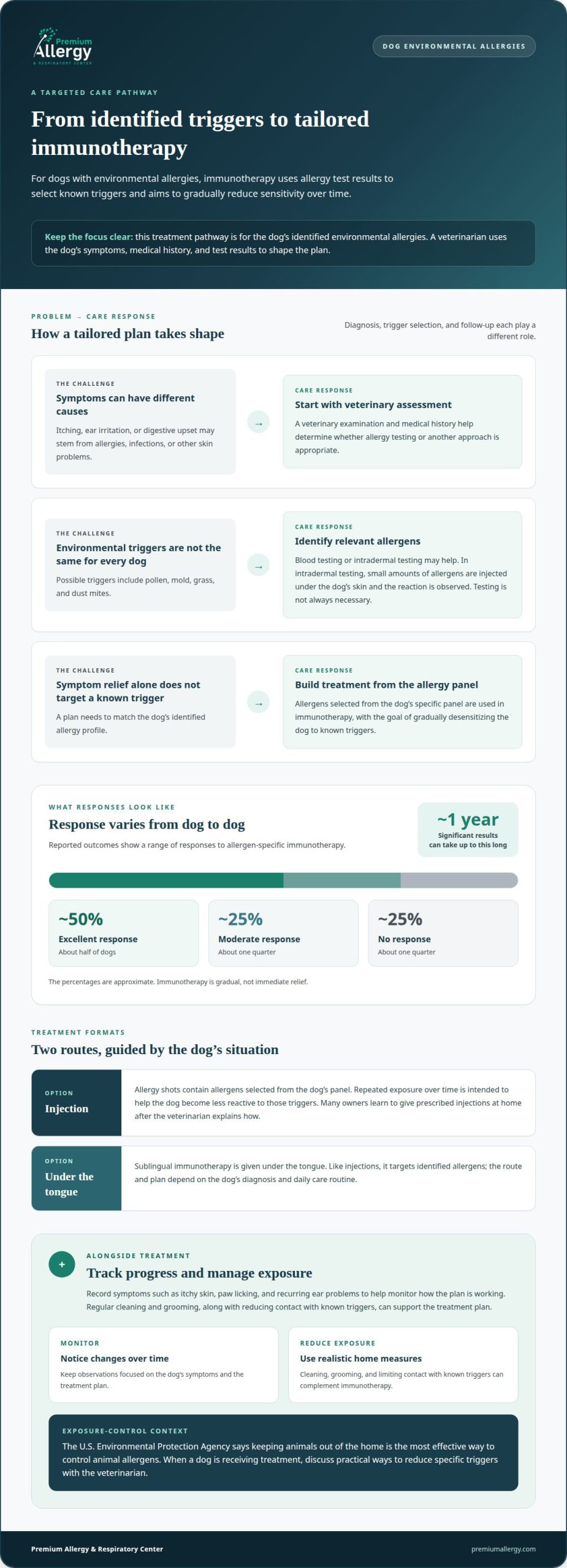
A dog’s treatment plan depends on the suspected trigger and symptoms. A veterinary examination and medical history can help distinguish allergies from infections or other skin problems. Itching, ear irritation, and digestive upset may have different causes. That’s why treatment usually starts with diagnosis, rather than trying several remedies at once.
For environmental allergies, a veterinarian may recommend medication to control itching and inflammation. Antihistamines, corticosteroids, and other medications can help manage symptoms. For allergic dermatitis, prednisone may be used as a short-term steroidal anti-inflammatory: for a limited duration, prednisone at 0.5-1.0 mg/kg every 24 to 48 hours may be used, according to U.S. Army Veterinary Services. Steroids aren’t a long-term solution, and owners shouldn’t give prescription or over-the-counter medication unless a veterinarian prescribes it.
Immunotherapy is another option when testing identifies environmental allergens. Allergy injections or sublingual immunotherapy are designed around known triggers and work gradually. They differ from medications used to ease active itching: immunotherapy aims to change the dog’s response over time. A veterinarian can consider the dog’s test results, symptoms, and care needs when selecting an approach.
Other treatments address specific causes or affected areas:
Track changes as the plan begins. Note scratching, paw licking, ear irritation, stool changes, and any connection to food or outdoor exposure. These observations give the veterinarian useful information when assessing whether treatment is helping or needs adjustment. Don’t change a prescribed diet or medication without veterinary guidance, since this can make progress harder to assess.
If your concern is your own sneezing, congestion, or itchy eyes around dogs, that’s a separate issue from treating a dog’s allergy. Explore allergic rhinitis treatment for care focused on your symptoms.
Dogs with seasonal allergies or severe allergies to household and yard contaminants may need regular allergy medication. For environmental allergies, management options include reducing exposure, using air purifiers, and giving veterinarian-prescribed allergy medication.
Premium Allergy & Respiratory Center offers Allergic Rhinitis Treatment for people whose symptoms, such as sneezing, nasal congestion, or itchy eyes, may be triggered by dog allergens. This care addresses your reactions, not your dog’s health. If you also have breathing symptoms, Asthma Management may be relevant.
Consider seeking care when symptoms persist, disrupt sleep, or make time with your pet difficult. An evaluation can help connect your symptoms with possible triggers and inform next steps. You can discuss whether Allergic Rhinitis Treatment fits your needs and how to manage symptoms while considering changes at home.
Contact Premium Allergy & Respiratory Center to discuss your allergy symptoms.
Deciding what to change starts with identifying whose symptoms need care. Veterinary evaluation addresses your dog’s health; care for your own sneezing, congestion, itchy eyes, or breathing symptoms focuses on your reactions. This distinction can help you choose a practical next step without assuming your pet’s treatment will resolve your allergy.
If you’re exploring dog allergy treatment in Clovis, keep track of how symptoms affect your daily life and what you’d like to make easier. Premium Allergy & Respiratory Center offers Allergic Rhinitis Treatment, Asthma Management, and Food Allergy Testing for people seeking support with allergy or respiratory concerns in Clovis, Fresno, Selma, and North Clovis.
For guidance focused on your symptoms, contact Premium Allergy & Respiratory Center. A thoughtful next step can help you move toward greater comfort while making decisions about life with your dog.
Whether to keep your dog is often a personal decision informed by how your symptoms affect you. Consider whether reactions are manageable in your daily routine and whether you experience breathing symptoms, which can affect how concerning they are. A clinician can assess your symptoms and discuss care options. You can weigh that guidance alongside your bond with your pet and your household’s needs.
Yes, dog allergies can develop in adulthood, even after years without symptoms around a pet. For example, new eye irritation at home may prompt you to notice whether symptoms also occur around dogs elsewhere. Track when symptoms begin and where they ease. That context can help distinguish a possible dog allergy from another trigger.
Hyposensitization and desensitization are terms for allergen immunotherapy, which aims to reduce reactions to identified allergens through repeated exposure. In veterinary care, a dog’s allergy test results help guide allergen-specific injections or under-the-tongue treatment. This differs from treating a person who reacts to a dog. Clarify whose allergy needs care before discussing testing or immunotherapy with a professional.
People reacting to dogs may experience sneezing, congestion, itchy or watery eyes, skin irritation, or breathing symptoms. Dog fur carries proteins from dander, saliva, and urine that can trigger reactions. Dogs can also have allergies, with signs such as itchy skin or digestive upset. Pollen, mold, grass, dust mites, and certain foods can trigger canine allergies.
Fresno’s allergy season typically lasts through spring and into summer, with another peak around mid-September in fall. Tree pollen is most prevalent... Continue reading
READ MORE
An allergy to your dog doesn’t automatically mean you have to give up your pet. Dog allergy treatment in Clovis can help you manage your own symptoms... Continue reading
READ MORE
Cat allergies can be treated, and cat allergy shots in Fresno may be an option when allergy testing and your medical history support cat-triggered... Continue reading
READ MORE
Hives, swelling beyond the sting site, dizziness, nausea, throat or tongue swelling, and difficulty breathing can signal a serious wasp sting... Continue reading
READ MORE