
A fall allergy specialist in Selma can assess recurring seasonal symptoms and use allergy testing to investigate possible triggers. Itchy eyes and... Continue reading
READ MORE

A fall allergy specialist in Selma can assess recurring seasonal symptoms and use allergy testing to investigate possible triggers. Itchy eyes and clear nasal discharge that persist with exposure may point to allergies rather than a cold. Noting when symptoms start and what seems to bring them on is a useful first step toward focused care.
It can be frustrating when symptoms disrupt sleep, time outdoors, or everyday routines, especially when nasal symptoms occur alongside eczema, a chronic cough, or hives. Allergy testing can help investigate possible triggers, while a clear symptom history helps guide care. This guide explains how fall allergies relate to allergic rhinitis and other concerns, and when a specialized evaluation may help you plan your next steps.
Allergy testing investigates whether a suspected trigger may be connected to symptoms. A diagnostic evaluation considers the pattern of reactions, possible exposures, and relevant health history. For example, fall nasal symptoms call for a different assessment than a reaction after eating a particular food. Eczema, asthma, and allergy symptoms can overlap, so describing when each symptom appears helps clarify the picture.
Preparation matters. People scheduled for allergy testing may need to stop antihistamines and certain other medications a few days before the appointment. Follow the testing team’s instructions before changing medication. Coverage for allergy testing varies by insurer and plan, so the benefits and required steps can differ. Testing, immunotherapy, and pulmonary function testing may each have separate coverage considerations.
Food allergy testing evaluates suspected reactions to foods. A food allergy involves the immune system and can cause severe reactions; food intolerance affects digestion and is generally not life-threatening. That distinction matters when reviewing symptoms and choosing next steps. Skin allergy testing is another diagnostic approach that may help assess a suspected trigger. The choice of test depends on the symptom pattern and clinical question, and results need to be considered alongside your history. Treatment planning follows that assessment, rather than a test result alone.
Do allergy specialists near Selma require a referral? Referral requirements vary by clinic and insurance plan, so there isn’t one rule for every Selma patient.
Where is Premium Allergy’s clinic? The clinic is in Fresno, and the practice also offers virtual allergy consultations. Patients in Selma can discuss allergy concerns through these care options.
Which nearby allergists accept new patients and how soon are appointments available? New-patient status and appointment timing depend on each practice’s current schedule, so they can change.
What are the office hours, services, and patient reviews of nearby allergy clinics? Hours, services, and reviews are specific to each clinic. Consider whether its listed services address your concern, such as food allergy testing or allergic rhinitis treatment.
Seasonal allergies can make familiar activities harder when symptoms return around particular exposures. Hay fever is a common term for seasonal allergy symptoms, while allergic rhinitis describes allergy-related symptoms affecting the nose. The timing and persistence of symptoms help build a useful picture. Itchy eyes and clear nasal discharge that persist with exposure may suggest allergies rather than a cold. Note when symptoms begin, where they occur, and whether they ease after you leave that setting.
That pattern gives an allergy specialist practical details to consider alongside your health history. Compare symptoms during outdoor activities with those indoors, or note whether they persist after a cold-like episode should have passed. These observations cannot diagnose the cause by themselves, but they can guide the discussion and help identify whether testing could answer a specific question. A clear account of symptoms and exposures is useful preparation for an appointment.
Nasal allergies can affect more than the nose. Persistent symptoms may interrupt sleep, concentration, or daily routines, so describe those effects during an assessment. Mention whether itchy eyes occur with nasal symptoms, whether symptoms persist with exposure, and whether the pattern changes in different settings. This gives the specialist a clearer basis for discussing relief and a treatment plan. Don’t assume every recurring symptom has the same trigger; timing and the combination of symptoms matter.
Care is more focused when it responds to the pattern rather than treating every flare as identical. If symptoms repeatedly return with seasonal exposure, discuss allergic rhinitis treatment as a possible next step. A specialist can use the symptom history and relevant diagnostic findings to shape care. For ongoing nasal symptoms in Selma, explore allergic rhinitis treatment as part of a plan tailored to the concern. Tracking changes over time can also help show whether the approach is addressing the symptoms that affect your day.
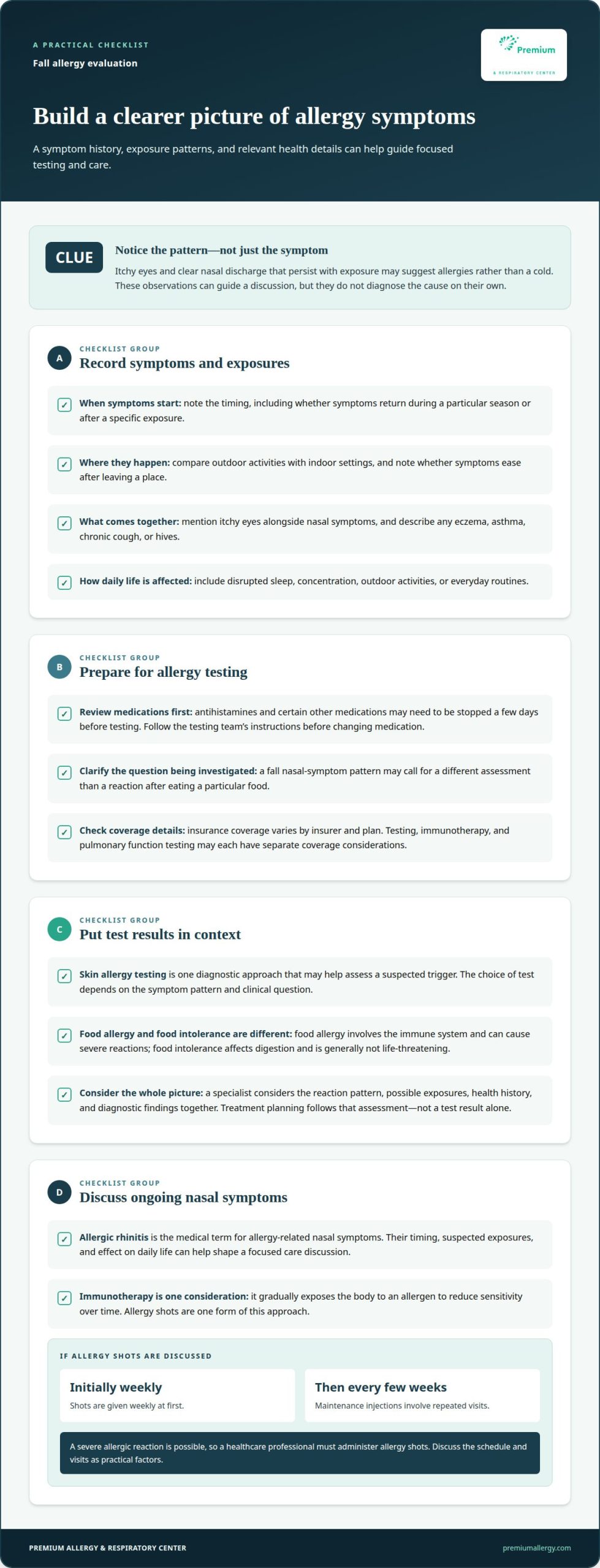
Allergic rhinitis is the medical term for allergy-related nasal symptoms. A treatment plan starts by connecting symptoms with possible exposures and their timing. Symptoms that return during a particular season may follow a different pattern from those linked to a specific indoor setting. Sharing how symptoms affect sleep, work, or outdoor activities makes the discussion more practical and focused.
The immune system’s response to an allergen can contribute to allergic symptoms. A specialist considers the pattern, health history, and diagnostic findings together, rather than treating one detail as the whole answer. Note which settings seem to trigger symptoms and whether they ease when you leave. Those observations can guide a conversation about treatment options and what a plan should address.
For some allergy-related conditions, immunotherapy gradually exposes the body to an allergen to reduce sensitivity over time. Allergy shots are one form of this approach. They’re initially given weekly, with maintenance injections given every few weeks. Because a severe allergic reaction is possible, a healthcare professional must administer allergy shots. The schedule and repeated visits are practical factors to discuss while weighing this treatment approach.
Care should also account for your experience as a patient. A supportive medical conversation makes room for questions about each step, how symptoms affect daily routines, and what progress might look like. Bring a clear account of symptom timing and suspected exposures. If symptoms persist despite your current approach, ask how further evaluation could help refine the plan. A specific example, such as symptoms disrupting sleep after outdoor exposure, gives the discussion a useful starting point.
Allergy shots aren’t the only consideration in allergic rhinitis care. The right approach depends on suspected triggers, symptom patterns, diagnostic findings, and your ability to follow the treatment plan. Connecting those factors supports informed decisions and keeps the focus on the symptoms that matter most to you.
Symptoms involving the skin, breathing, and nose can overlap, but they don’t automatically share one cause. For example, eczema may flare alongside seasonal nasal symptoms, while a chronic cough raises different questions. Record when each symptom appears, what was happening beforehand, and how long it lasts. This timeline helps a specialist distinguish a repeated pattern from symptoms that happen together by chance.
Include concrete details in a clinic discussion: where a rash appears, whether hives follow a particular exposure, and whether coughing occurs indoors or outdoors. Note any suspected connection to food or an insect sting, too. A severe or rapidly changing reaction needs prompt medical attention. A symptom record can organize your history, but it cannot diagnose an allergy or prove that a particular exposure caused it.
A personalized assessment considers each concern rather than treating eczema, hives, or cough as interchangeable. Allergy testing may help investigate suspected triggers when your history points to a useful question. For example, a recurring reaction after a specific food differs from a cough that occurs in several settings. The pattern guides which concern to explore and what findings might mean for a treatment plan.
For some allergies, immunotherapy uses gradual allergen exposure to reduce sensitivity over time. It can be given as allergy shots or sublingual therapy. Allergy shots must be administered by a healthcare professional because severe allergic reactions are possible. This approach is distinct from symptom care for eczema or chronic cough, so the goals and practical steps should be clear before treatment begins. Ask how each recommendation connects to your symptoms, what changes to observe, and how the plan addresses the concern affecting daily life. Clear answers make it easier to understand the next step without assuming one treatment covers every symptom.
Premium Allergy & Respiratory Center helps patients investigate allergy and respiratory concerns through specialized evaluation and care. If recurring fall symptoms disrupt daily life, allergic rhinitis treatment can address nasal allergy concerns, while asthma management supports care for asthma. Food allergy testing and penicillin allergy testing can help assess specific suspected reactions.
Bring a clear account of your symptoms, when they occur, and possible exposures. That context helps focus the diagnostic discussion and next steps. For persistent seasonal symptoms, suspected food reactions, or questions about asthma alongside allergies, a specialized consultation can help clarify the picture and shape a personalized plan.
Contact Premium Allergy & Respiratory Center to discuss your allergy concerns.
Recurring symptoms deserve attention when they interrupt rest or make everyday activities harder. A fall allergy specialist in Selma can help turn those concerns into a focused discussion about possible causes and care. Before your appointment, decide which issue you most want to address, such as persistent nasal symptoms, asthma, or a suspected food reaction. That priority can keep the conversation clear and useful.
If symptoms return each fall, speaking with a fall allergy specialist in Selma can help you consider a practical next step. Premium Allergy & Respiratory Center offers allergic rhinitis treatment, asthma management, and food allergy testing. Take the next step at a pace that feels right: contact Premium Allergy & Respiratory Center to discuss your symptoms and care needs. A clearer path forward can help you approach the season with confidence.
Insurance coverage depends on your plan and may differ between specialist consultations, allergy testing, and treatment. Review your benefits for specialist visits and allergy services, including any network requirements or referral rules that apply to you. This can help you understand your coverage before arranging an appointment.
Fall allergy triggers in Selma, California, depend on local exposures and your surroundings. Rather than assume one allergen is responsible, consider where and when symptoms tend to appear, such as after time outdoors or in a particular indoor setting. That context can guide an evaluation of suspected seasonal allergies and whether testing may help identify a relevant trigger.
Allergists consider symptom history, timing, and possible exposures before selecting diagnostic testing. For example, recurring symptoms associated with time outdoors can frame a discussion about suspected pollen allergy. Blood allergy testing is one diagnostic option. An allergist interprets findings alongside your symptoms and health history, so results contribute to an assessment rather than being considered in isolation.
Care may include treatment for allergic rhinitis, and immunotherapy may be considered for certain allergies. It uses gradual allergen exposure to reduce sensitivity over time and can involve allergy shots or sublingual therapy. The approach depends on the suspected trigger, symptoms, testing, and treatment goals. Premium Allergy & Respiratory Center offers allergic rhinitis treatment; the appropriate care plan is based on the concern being evaluated.
A fall allergy specialist in Selma can assess recurring seasonal symptoms and use allergy testing to investigate possible triggers. Itchy eyes and... Continue reading
READ MORE
Fresno’s allergy season typically lasts through spring and into summer, with another peak around mid-September in fall. Tree pollen is most prevalent... Continue reading
READ MORE
An allergy to your dog doesn’t automatically mean you have to give up your pet. Dog allergy treatment in Clovis can help you manage your own symptoms... Continue reading
READ MORE
Cat allergies can be treated, and cat allergy shots in Fresno may be an option when allergy testing and your medical history support cat-triggered... Continue reading
READ MORE