
Grass pollen symptoms don’t have to be a seasonal guessing game. A grass pollen allergy doctor in Fresno can assess your symptoms, their timing and... Continue reading
READ MORE

A runny nose alone can’t confirm hay fever. For hay fever treatment in North Clovis, an allergist may review your symptoms and medical history and use allergy testing to help identify triggers. A sinus CT scan may be considered when sinusitis is severe or chronic.
Sneezing, congestion, or itchy eyes can make it hard to tell whether you have allergies or a cold. This guide explains how hay fever is assessed, which symptoms to notice, and how its pattern differs from a cold. You’ll also find practical ways to reduce allergen exposure and relieve symptoms without medication, so you can understand your options and feel prepared to take the next step.
Hay fever, also called allergic rhinitis, often affects your nose and eyes together. Common symptoms include a runny nose, repeated sneezing, congestion, and nasal itching. Watery, itchy eyes may occur alongside throat irritation or an itchy palate. Postnasal drainage can leave your throat scratchy, while congestion may cause ear pressure. Even mild symptoms can disrupt sleep and concentration.
The timing of symptoms can point to different allergens. Tree pollen is common in early spring, grass pollen often rises in late spring and summer, and weed pollen commonly triggers symptoms in fall. Pet dander, dust mites, and cockroach waste can cause year-round reactions. Indoor-allergen symptoms may worsen in winter, when homes stay closed up. A recurring pattern in the same season can help identify a pollen trigger.
Hay fever symptoms may last days or weeks, but they can continue for months while exposure persists. Dry or windy weather can increase contact with airborne pollen or mold, making symptoms more noticeable outdoors. Indoor triggers such as dust mites can keep symptoms going between pollen seasons. Notice whether congestion, sneezing, or itchy eyes change with the weather, season, or time spent indoors. That pattern provides useful context when assessing allergy symptoms.
Not every cough or fever after outdoor exposure is hay fever. Valley fever is a fungal infection associated with soil in parts of California; symptoms may begin one to three weeks after contact. It can cause fever, chills, chest pain, dry cough, or rash, unlike the nose-and-eye pattern commonly associated with pollen allergies. People who are pregnant, have diabetes, HIV, or weakened immunity face a higher risk of severe or spreading illness. After dusty soil exposure, consider the timing and full symptom pattern rather than assuming pollen is responsible.
An allergist assesses hay fever by considering your symptoms and medical history. Family history can also help clarify whether allergies run in your family. Describe when sneezing, congestion, or itchy eyes appear, and whether symptoms follow pollen exposure or occur year-round. Mention where you were and what you were exposed to, such as outdoor pollen or household dust. These details can help connect symptoms with possible triggers instead of relying on one isolated episode.
Testing can add evidence when the pattern needs clarification. An allergist may use a nasal smear or skin testing as part of the assessment. Share your symptom timeline and any previous allergy results, so the findings can be considered alongside your experience. A test result matters in context: the allergist weighs it against your symptoms and exposure history. This helps distinguish a suspected allergen from other possible explanations, including an infection.
Sinus imaging has a more specific role. A sinus CT scan may be considered when sinusitis is severe or chronic. It can help assess persistent sinus concerns alongside your history and examination. A blocked nose, for example, may need a closer look if it continues with ongoing sinus problems. The allergist tailors the assessment to the symptoms being investigated rather than treating every case alike.
Before an appointment, write down when symptoms start, how long they last, and what seems to trigger them. Include whether you breathe comfortably, whether symptoms affect sleep, and whether asthma is part of your medical history. Note whether symptoms improve indoors or return after outdoor exposure. This practical record helps the allergist assess the pattern and decide whether nasal smears, skin testing, or further evaluation fits. A clear diagnosis can guide the next discussion about managing allergic rhinitis and reducing exposure to relevant triggers.
Small changes can reduce contact with pollen and indoor allergens. UCHealth advises staying indoors on dry or windy days, when pollen or mold may circulate, and avoiding outdoor activity in the early morning, when pollen counts are highest. Keep windows closed during high-pollen periods. After spending time outside, shower to remove allergens from your hair and face. Washing bedding frequently in hot water can also help reduce dust-mite exposure.
For nasal rinsing, UCHealth recommends distilled or sterile saline solution to help clear irritants without medication. If you have a dog, UCHealth suggests bathing it twice a week, if possible, to reduce pet-dander exposure. Antihistamines may ease some allergy symptoms, but UCHealth says they’re less effective for nasal congestion. According to UCHealth, decongestant nasal sprays should be limited to no more than two to three days at a time.
Side effects and risks depend on the specific antihistamine, decongestant, or nasal spray, so read its label and discuss concerns with a doctor. Don’t assume every spray has the same limits: the two-to-three-day advice applies to decongestant nasal sprays. Use products as directed or follow the plan provided by your healthcare professional.
Seek medical care when symptoms persist despite proper management, especially if they affect daily life for three months out of the year. Get medical advice if you can’t breathe well through your nose for more than a week. In parts of California, a persistent cough, fever, or fatigue that doesn’t improve may signal valley fever, a fungal disease rather than an allergic reaction. Tell a doctor about dusty soil exposure, since valley fever symptoms can begin one to three weeks after contact. Most people recover without treatment, but serious illness may require antifungal medicines. A doctor weighs the need for treatment and potential side effects; antifungal courses may last three to six months.
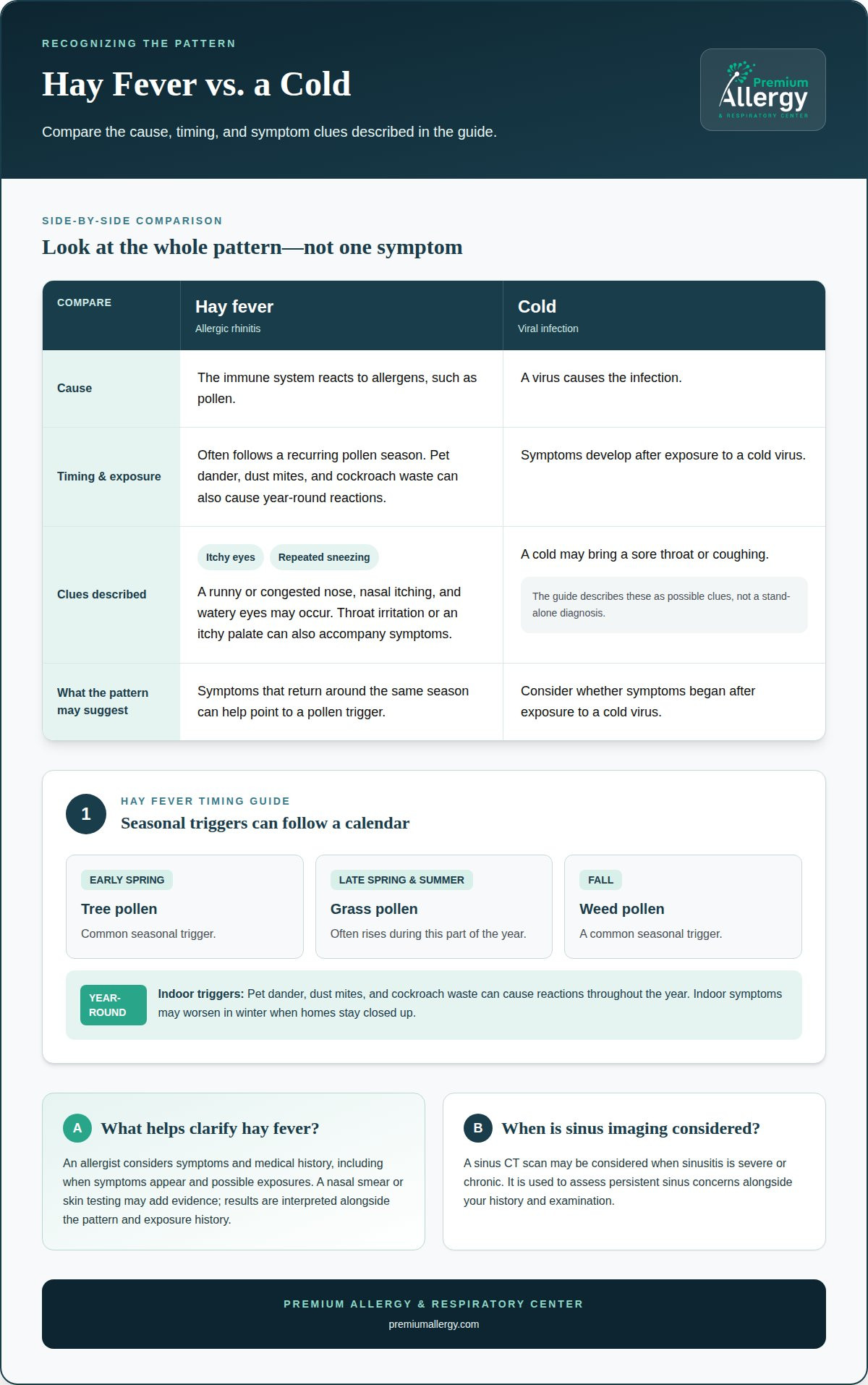
Hay fever, also called allergic rhinitis, occurs when the immune system reacts to allergens such as pollen. A cold is a viral infection, so its cause and pattern differ. Hay fever often follows a recurring pollen season, while cold symptoms develop after exposure to a cold virus. Hay fever isn’t contagious.
Itchy eyes and repeated sneezing can point to an allergic response, especially when they return around the same season. A cold may bring a sore throat, coughing, or other symptoms that change as the infection runs its course. According to UCHealth, cold symptoms usually appear three to five days after exposure and usually last three to seven days. Track symptom timing and patterns to help distinguish the two.
Over-the-counter options, including antihistamines and nasal sprays, can ease symptoms. Prescription treatment and allergen immunotherapy offer other approaches, selected according to the allergen and your symptoms. Immunotherapy gradually introduces increasing amounts of an allergen until a maintenance level is reached. Allergy shots are administered regularly over a three- to five-year period, according to UCHealth. Sublingual immunotherapy is another option to discuss with an allergy specialist.
Timing matters for seasonal symptoms. Starting intranasal corticosteroids four weeks before pollen season can produce better outcomes than waiting until symptoms appear. This may help you plan ahead when a predictable season triggers symptoms each year. Hay fever can continue while exposure persists, so a recurring pattern may call for a different management plan than a short-lived cold.
For guidance on treatment options and seasonal planning, discuss allergic rhinitis care with an allergy specialist.
Premium Allergy helps you take the next step when suspected hay fever keeps returning, disrupts daily life, or is difficult to distinguish from other symptoms. The clinic provides allergic rhinitis treatment through personalized treatment plans informed by your symptoms and allergy concerns. If breathing symptoms accompany your allergies, asthma management may also be relevant.
A focused assessment can help clarify possible symptom triggers and guide a management plan. Bring a clear account of when symptoms occur, what seems to worsen them, and how they affect your routine. This context can make your discussion more useful and targeted.
If ongoing allergy symptoms are affecting your comfort or routine, contact Premium Allergy & Respiratory Center to discuss your concerns.
Understanding your allergy pattern can help you make informed choices before symptoms take over your routine. If seasonal or persistent symptoms remain difficult to manage, a specialist can help connect your concerns with a suitable care plan. For hay fever treatment in North Clovis, Premium Allergy offers allergic rhinitis treatment and asthma management. The clinic also provides food allergy testing for separate food-related concerns.
Your next step can be a conversation focused on what you’re experiencing, what you want to change, and which care options fit your needs. You don’t have to wait for another difficult season to start exploring support. Contact Premium Allergy & Respiratory Center to discuss your allergy concerns and take a positive step toward feeling more prepared.
An allergist diagnoses hay fever by considering your symptoms, family history, and likely allergen exposures. Nasal smears or skin testing may help identify a trigger. For hay fever treatment in North Clovis, an allergist can assess recurring symptoms and likely triggers. A sinus CT scan may be considered when sinusitis is severe or chronic.
Hay fever can cause sneezing, nasal congestion, a runny nose, and itching in the nose or eyes. Some people also experience watery eyes, throat irritation, or ear pressure. Symptoms may occur together, such as itchy eyes and repeated sneezing after time outside. Keeping track of which symptoms appear together can help show whether they follow a particular exposure or season.
Hay fever occurs when the immune system reacts to an allergen, commonly pollen or indoor triggers such as dust mites and pet dander. The trigger varies from person to person. For instance, symptoms that continue indoors may relate to household allergens rather than a single outdoor pollen season. Recognizing likely exposures can make symptom patterns easier to discuss during an allergy assessment.
Hay fever may last a few days or weeks, or continue for months if exposure to the allergen persists. The duration depends partly on whether the trigger is seasonal pollen or an indoor allergen encountered throughout the year. For example, symptoms may ease when a pollen season ends but continue if an indoor trigger remains present.
No. Hay fever is an allergic reaction, not an infection that spreads between people. You can’t catch it from someone who is sneezing or has a runny nose. A cold, by contrast, is caused by a virus and can spread. If symptoms follow a familiar allergy pattern, sharing space with another person who has hay fever won’t transmit the allergy.
Seasonal hay fever often follows local pollen periods: tree pollen is common in early spring, grass pollen in late spring and summer, and weed pollen in fall. Indoor allergens can trigger symptoms year-round, sometimes worsening in winter when homes are closed up. For hay fever treatment in North Clovis, noting whether symptoms return in a season or persist indoors can help clarify the pattern.
Grass pollen symptoms don’t have to be a seasonal guessing game. A grass pollen allergy doctor in Fresno can assess your symptoms, their timing and... Continue reading
READ MORE
A runny nose alone can’t confirm hay fever. For hay fever treatment in North Clovis, an allergist may review your symptoms and medical history and... Continue reading
READ MORE
A fall allergy specialist in Selma can assess recurring seasonal symptoms and use allergy testing to investigate possible triggers. Itchy eyes and... Continue reading
READ MORE
Fresno’s allergy season typically lasts through spring and into summer, with another peak around mid-September in fall. Tree pollen is most prevalent... Continue reading
READ MORE