
For families exploring EoE diet management Selma, the safest first step may be replacing guesswork with a monitored plan, not cutting out more foods.... Continue reading
READ MORE

Are allergy symptoms disrupting your sleep, daily routine, or breathing while you wonder whether you can be seen today? A same day allergy appointment Clovis patients request is a way to seek prompt specialty care, but appointment timing depends on scheduling and clinical needs. Severe symptoms may require emergency care instead.
It’s understandable to want clear answers when sneezing, rashes, suspected food reactions, or asthma symptoms are affecting your life. A concise account of what’s happening can help the clinical team understand your concern. Premium Allergy & Respiratory Center provides outpatient allergy and respiratory specialty care for patients in Clovis, Fresno, Selma, and North Clovis, with evaluations shaped around individual symptoms and clinical needs.
This guide explains what information to include when requesting an appointment, what an allergy evaluation may involve, and how to distinguish an outpatient concern from an emergency. Severe trouble breathing, swelling of the throat or tongue, fainting, or a rapidly worsening reaction call for emergency help, not a wait for a specialty visit.
Recurring itching, congestion that disrupts sleep, unexpected hives, or respiratory symptoms can make everyday routines harder. If you’re searching for a same day allergy appointment Clovis, explain that you’re seeking prompt specialty care. The timing of a visit depends on scheduling and the clinical information you share. Premium Allergy & Respiratory Center provides outpatient allergy and respiratory care for patients in Clovis and nearby Fresno-area communities.
When requesting an appointment, describe what’s happening, when it began, and how it affects you. Note whether symptoms are ongoing, recurring, or getting worse, and mention any possible connection to food, medicine, a season, or another exposure. These details help the clinical team understand your concern and consider the appropriate next step.
Recurring or persistent symptoms may be worth discussing with an allergy specialist. These can include nasal congestion or sneezing, itchy or irritated skin, suspected food-related reactions, and ongoing respiratory concerns. The pattern matters: when symptoms appear, how long they last, and whether they follow a particular exposure can help inform an evaluation. General background on what an allergy is can provide context, but symptoms alone don’t confirm an allergy.
Not every sudden symptom is caused by an allergy. A clinician can consider your health history and the details of an episode before deciding what evaluation may be appropriate. When describing symptoms, separate what you experienced from what you suspect caused them.
“Same-day” describes the timing you’re requesting, not a confirmed appointment time. When you submit a request, say that you’re hoping for prompt care and summarize the symptoms affecting you. Include when they started, whether they’re ongoing or recurring, and any suspected connection to food, surroundings, or another exposure. Specific observations are more useful than trying to label the cause.
Scheduling and clinical needs shape the timing of an appointment. Sharing clear details gives the team context about your concern and helps them consider the next appropriate outpatient step. If your symptoms are severe or rapidly worsening, don’t wait for an appointment.
Choose emergency care for severe or rapidly worsening symptoms. Serious difficulty breathing, throat swelling, fainting, or a reaction that is worsening quickly may require immediate emergency services rather than an outpatient visit. Call 911 or seek emergency care. For symptoms that aren’t emergencies but need specialist attention, a focused request can help the clinical team understand what you’re experiencing.
An allergy appointment is a focused review of your symptoms, health history, and possible triggers, followed by an evaluation shaped around your needs. At Premium Allergy & Respiratory Center, outpatient allergy and respiratory care includes assessment and management for concerns such as allergic rhinitis, asthma, food allergies, and atopic dermatitis. The visit isn’t a preset sequence of tests. Your clinician uses the information you share to decide what questions, examination, or next steps are appropriate.
Before your visit, think through when symptoms began, how often they happen, how long they last, and what seems to make them better or worse. Patterns around meals, medications, home or outdoor surroundings, and particular seasons can offer useful context. Mention previous reactions and treatments you’ve tried, including whether they helped. These details help the clinician understand your experience without assuming a cause.
For example, note whether a concern appears after a particular meal, during a certain season, or in a recurring setting. If symptoms vary, describe how. A clinician may ask follow-up questions and examine you based on the reason for your visit. Together, your history and the evaluation provide a more complete picture than a symptom label alone.
Testing is one possible part of an allergy evaluation, not an automatic feature of every appointment. Whether testing is appropriate, which method may be considered, and when it should happen depend on clinical judgment, your history, and the question being investigated. A guide to allergy testing can help explain the general role testing may play. Your own evaluation determines what fits your situation.
Depending on the concern, an evaluation may include blood allergy testing or a specialized assessment related to food, penicillin, or insect-sting reactions. These options address different clinical questions, so the clinician considers your symptoms and history before recommending a path. A test result is one piece of information and is interpreted in the context of the full evaluation.
An evaluation may help inform a personalized care plan, but no single appointment or test can promise a particular diagnosis or outcome. Your clinician can explain what the findings suggest and discuss suitable next steps. To learn more about outpatient allergy and respiratory specialty care for Clovis and nearby communities, visit Premium Allergy & Respiratory Center.
Choosing the right level of care matters. An outpatient allergy appointment can help assess persistent or recurring concerns and support ongoing management. It isn’t a substitute for emergency services when symptoms are severe or worsening quickly. If you’re searching for a same day allergy appointment Clovis, first consider whether the situation calls for a scheduled specialty evaluation or immediate emergency attention.
| Outpatient allergy evaluation | Emergency care |
|---|---|
| Persistent or recurring nasal, skin, food-related, or respiratory concerns that need specialist assessment. | Severe difficulty breathing, throat swelling, fainting, or a reaction that is rapidly worsening. |
| A visit to review symptoms and history and consider evaluation or ongoing management based on your needs. | Immediate help for potentially life-threatening symptoms. Call 911 or seek emergency care. |
Recurring congestion, ongoing asthma concerns, repeated skin symptoms, or suspected food-related reactions may warrant a discussion with an allergy specialist, particularly when they interfere with daily life or keep returning. An appointment gives a clinician an opportunity to review your history, assess the concern, and consider appropriate next steps. Because these symptoms can have different causes, this guide can’t determine whether yours are allergy-related.
Premium Allergy & Respiratory Center provides outpatient allergy and respiratory specialty care for patients in Clovis, Fresno, Selma, and North Clovis. The purpose of an outpatient visit is assessment and condition management, not emergency stabilization. If symptoms are stable but persistent, describe what you’re experiencing and how it affects you when requesting an appointment. You don’t need to diagnose the cause yourself.
Severe breathing difficulty, swelling of the throat, fainting, or a rapidly worsening reaction can signal a medical emergency. Don’t wait for an outpatient appointment or for an appointment request to be answered. Call 911 or seek emergency care immediately. A specialty allergy clinic provides outpatient care; it isn’t an emergency department.
If you’re unsure whether symptoms are becoming severe, prioritize safety and seek emergency help for potentially life-threatening signs. The table offers a practical distinction, but it can’t replace medical judgment or determine what’s causing a particular reaction. Once an emergency has been addressed, an allergy specialist may help evaluate possible triggers and discuss ongoing management where appropriate.
For symptoms that aren’t severe or rapidly worsening, focus on arranging the right outpatient evaluation. Share the pattern and history of your concerns so the clinical team can understand what you need. The key distinction is straightforward: recurring concerns may fit specialty care, while severe breathing problems, throat swelling, fainting, or a quickly worsening reaction call for emergency help now.
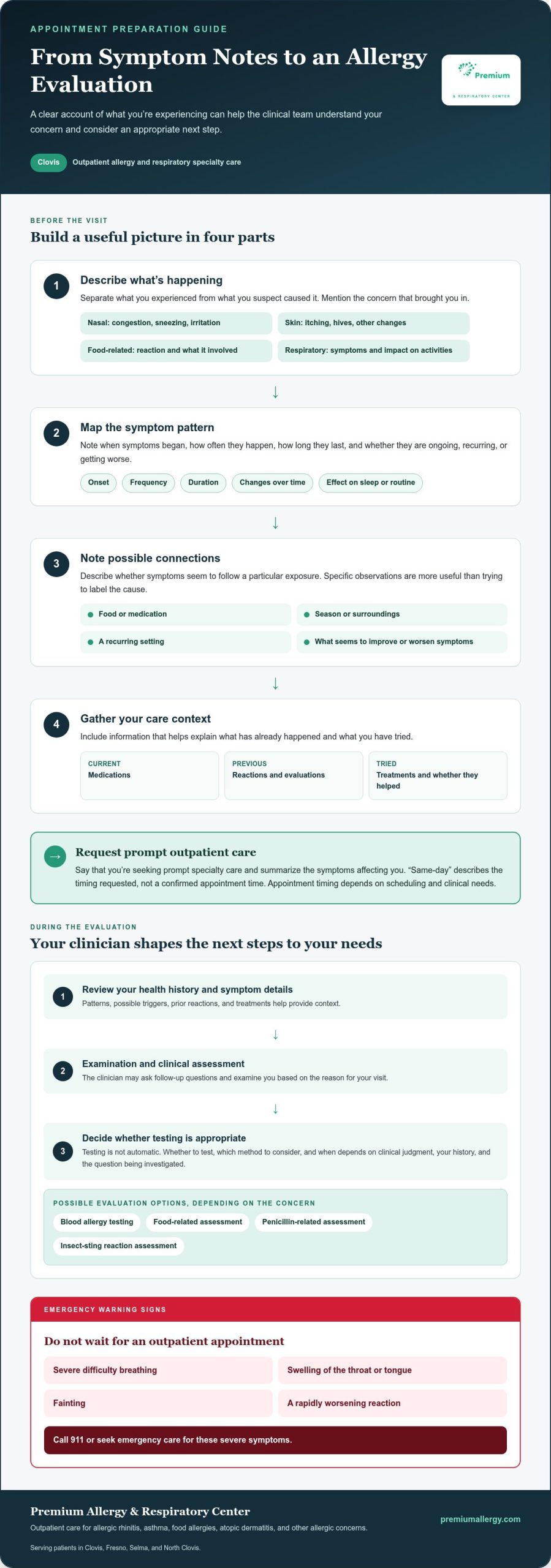
A little preparation can make your appointment request clearer and the conversation more productive. If you’re hoping for a same day allergy appointment Clovis, explain that you’re seeking prompt care, while keeping in mind that scheduling and clinical needs determine appointment timing. These four steps help you organize the details the clinical team needs to understand your concern.
Start with a simple timeline: when symptoms began, how often they occur, and how they affect sleep, work, school, or daily activities. Note possible connections to seasons, foods, medications, or other exposures, along with previous reactions and treatments you’ve tried. These observations offer context, not a diagnosis. A current medication list and records from previous allergy evaluations can also help the clinician understand your history.
A concise summary is easier to act on than a long account without a clear timeline. Explain that a symptom has returned, describe when it tends to happen, and mention any previous evaluation or treatment. If symptoms are severe or rapidly worsening, don’t wait for an outpatient appointment. Seek emergency care instead.
Once you’ve gathered the details, request an allergy appointment with Premium Allergy & Respiratory Center. The information you provide helps the clinical team understand your concern and consider the appropriate next step in outpatient specialty care.
Premium Allergy & Respiratory Center provides outpatient allergy and respiratory specialty care for people in Clovis, Fresno, Selma, and North Clovis. If recurring concerns are affecting your comfort or routine, a specialty evaluation can help clarify what to consider next. A request for a same day allergy appointment Clovis patients are seeking communicates a need for prompt care, while appointment timing depends on scheduling and clinical needs.
Different symptoms and histories may point toward different areas of specialty care. Sharing what you’ve experienced helps the clinical team understand your concern and consider a relevant evaluation. These examples can help you describe why you’re seeking care, but they aren’t a way to diagnose yourself.
Requesting an appointment is a constructive step toward understanding your concern, even if you’re unsure which specialty area best fits. Briefly describe your main symptoms, when they occur, how they affect you, and why you’re seeking care. That information helps the team understand the reason for your visit, though it can’t determine a particular appointment time or outcome.
For outpatient allergy and respiratory specialty care serving Clovis, Fresno, Selma, and North Clovis, request an appointment with Premium Allergy & Respiratory Center.
Searching for a same day allergy appointment Clovis can be the start of a focused conversation about symptoms that are shaping your routine. You don’t need to have every answer before reaching out. A few clear notes about your concern and what you hope to address are a useful place to start.
Think of an appointment request as the beginning of an evaluation, not a promise of a particular schedule or outcome. Your observations can help the clinical team understand what matters most to you and guide the next step in your care. Note the pattern, timing, and impact of your symptoms so you can explain them clearly.
Request an appointment with Premium Allergy and share what prompted you to seek care. The center provides outpatient specialty care for allergy and respiratory concerns in Clovis and nearby Fresno-area communities.
A search for a same day allergy appointment Clovis expresses a need for prompt care, but it can’t confirm a visit time. Scheduling and clinical needs determine appointment timing. In your request, explain why you’re seeking prompt care and briefly describe your symptoms, such as recurring hives or congestion. If symptoms are severe or rapidly worsening, don’t wait for an outpatient visit. Call 911 or seek emergency care.
Referral requirements may depend on your health plan and the care arrangement you use. Review your plan’s specialist-access rules and coverage instructions before your visit, since requirements can vary. If you already have referral information, bring it along with relevant plan details. You can prepare your symptom history while sorting out routine appointment requirements. For severe or rapidly worsening symptoms, seek emergency care rather than delaying help to arrange a specialist referral.
Yes. Allergy specialists may evaluate allergic conditions and provide asthma management as part of specialty care. During an appointment, the clinician can consider how your breathing concerns relate to your health history and any allergy symptoms before determining an appropriate evaluation or care plan. Note whether respiratory symptoms occur alongside other concerns or at particular times. Severe breathing difficulty or rapidly worsening symptoms call for emergency help, not a wait for a specialist visit.
It may, but testing isn’t automatic at a first visit. The clinician may first review your symptoms, medical history, and previous evaluations, then decide whether testing fits the clinical question. The method and timing depend on your individual assessment. Bring prior results if you have them, since they may provide useful context. Don’t stop or change prescribed medication to prepare for testing unless your clinician specifically directs you to do so.
Seasonal allergy symptoms and respiratory symptoms can occur together, and some people notice breathing changes during periods when seasonal allergy symptoms are also present. Keep track of when breathing changes happen, how they compare with your usual pattern, and whether they coincide with seasonal symptoms. This information can help a specialist consider your concerns in context. If breathing becomes severely difficult or symptoms worsen rapidly, seek emergency help instead of waiting for a routine appointment.
Include your main concern, when it began, how often it happens, and what prompted you to seek care now. For example, mention if a symptom has returned or is interfering with a usual activity. You can also note previous reactions, evaluations, treatments, and current medications. Frame suspected triggers as possibilities rather than confirmed causes. A concise, factual summary helps the clinical team understand what you’d like assessed.
For families exploring EoE diet management Selma, the safest first step may be replacing guesswork with a monitored plan, not cutting out more foods.... Continue reading
READ MORE
Are allergy symptoms disrupting your sleep, daily routine, or breathing while you wonder whether you can be seen today? A same day allergy... Continue reading
READ MORE
Could your baby’s dry, itchy rash be eczema, or is something else making their skin uncomfortable? When redness keeps returning or disrupts sleep,... Continue reading
READ MORE
If you’re searching for an “asthma doctor for kids Selma CA,” recurring cough, wheezing, or shortness of breath can leave you wondering whether your... Continue reading
READ MORE