
Could your baby’s dry, itchy rash be eczema, or is something else making their skin uncomfortable? When redness keeps returning or disrupts sleep,... Continue reading
READ MORE

If you’re searching for an “asthma doctor for kids Selma CA,” recurring cough, wheezing, or shortness of breath can leave you wondering whether your child needs more than routine follow-up. A specialist can assess ongoing breathing concerns, consider possible triggers, and help clarify next steps. Premium Allergy & Respiratory Center provides outpatient asthma management and specialty care for families in Selma, Fresno, Clovis, and North Clovis.
This guide explains when a focused asthma evaluation may be useful, what a visit may involve, and how to prepare with symptom notes and medication details. Specialty asthma care can complement your child’s regular care, giving you another place to discuss persistent symptoms or questions about management.
Recurring breathing symptoms can leave parents wondering whether they’re part of a passing illness, an allergy, or a concern that needs closer attention. Bring a recurring cough, wheezing during play, chest tightness, or breathlessness to a clinician’s attention, especially if it disrupts sleep or everyday activities. These symptoms can have different causes. A checklist alone can’t confirm asthma or identify what may be affecting a child’s breathing.
Keep track of what you notice and share it with your child’s clinician. Note how often symptoms occur, how long they last, and whether they seem connected to exercise, a cold, a particular setting, or another pattern. The clinician can consider this history alongside an examination and decide whether further evaluation is appropriate. For general background on the condition and possible triggers, see this overview of childhood asthma.
Seek prompt medical attention for new, worsening, or concerning breathing problems. If your child is struggling to breathe, treat the situation as urgent and seek emergency help rather than waiting for a routine appointment.
A specialty evaluation may be worth discussing if symptoms continue despite following the current care plan, interfere with everyday activities, or make day-to-day management difficult. It may also help when the cause of recurring symptoms is unclear or when asthma and allergies could be overlapping concerns. An allergy and respiratory specialist can provide focused assessment and management while your child’s regular clinician remains involved in their broader health needs.
These are reasons to start a conversation, not proof that a child has asthma. The clinician considers the child’s age, health history, symptom patterns, and assessment before recommending next steps.
Routine follow-up checks how a child is doing with ongoing care; specialist evaluation takes a closer look at persistent symptoms, possible triggers, or management questions. The two roles can complement each other. Your child’s regular clinician can stay involved while specialty asthma management adds focused assessment and guidance. Families searching for an asthma doctor for kids Selma CA can use this distinction to discuss whether an additional evaluation could help clarify next steps.
A clear plan can make symptoms feel less uncertain. Parents can learn what a written plan may cover in this asthma management plan guide, then bring questions about their child’s needs to a clinician.
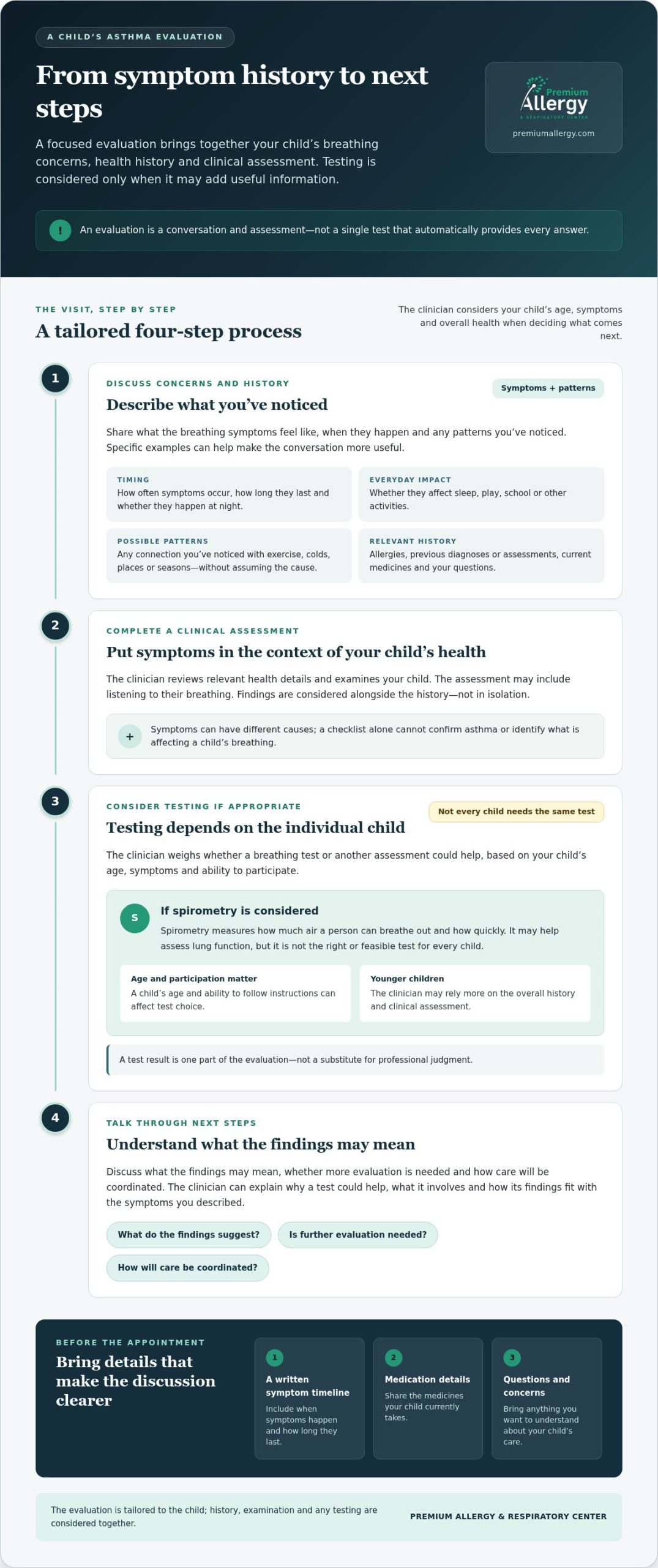
An asthma evaluation is a clinical conversation and assessment, not a single test that automatically provides every answer. The clinician considers your child’s symptoms, health history, and examination findings before deciding whether testing could add useful information. An asthma evaluation combines a child’s clinical history with an appropriate assessment, and any testing is guided by the individual child’s needs.
Each visit is tailored, but the process often follows this general sequence:
Specific examples help make the conversation more useful. Note how often symptoms happen, how long they last, whether they occur at night, and whether they affect play, school, or other activities. Share any possible connection you’ve noticed with exercise, colds, certain places, or seasons, without assuming it identifies the cause. Mention relevant allergies, previous diagnoses or assessments, and your child’s current medicines. Your questions and concerns belong in the conversation, too.
Sometimes. Spirometry measures how much air a person can breathe out and how quickly. It may help assess lung function when a clinician considers it appropriate, but it isn’t the right or feasible test for every child. Age and the ability to follow instructions can affect the choice. For younger children, clinicians may rely more on the overall history and clinical assessment. A test result is one part of the evaluation, not a substitute for professional judgment.
Testing choices depend on the full picture. A clinician may explain why a test could help, what it involves, and how its findings fit with the symptoms you’ve described. For family-focused information about children’s asthma triggers and care, the American Academy of Pediatrics on Asthma offers additional guidance.
Bring a written symptom timeline, medication details, and any questions that come to mind. This preparation can help you make the most of an appointment and leave with a clearer understanding of the next steps. Families looking for an asthma doctor for kids Selma CA can explore focused asthma management for the Selma area through Premium Allergy & Respiratory Center’s asthma care, alongside their child’s existing clinician.
Choosing between your child’s pediatrician and asthma specialty care doesn’t have to mean choosing one over the other. A child’s regular clinician remains an important partner for overall health and can assess breathing concerns. Specialty asthma care may add focused evaluation and management when symptoms persist, the care plan raises questions, or allergies may be part of the picture. Not every child with asthma needs a specialist; the right approach depends on the child’s needs and care history.
| Care role | What it may contribute | When it may be useful |
|---|---|---|
| Routine pediatric care | Ongoing oversight of a child’s health, discussion of new concerns, and continuity with a clinician who knows their health history. | For routine health needs and to raise breathing symptoms or questions about existing asthma care. |
| Asthma specialty care | Focused allergy and respiratory expertise for evaluating asthma concerns and supporting asthma management. | When symptoms or management questions call for a more focused assessment, or possible allergy overlap needs attention. |
| Coordinated care | The child’s regular clinician and specialist contribute their respective perspectives and share relevant care information. | When focused asthma support is helpful while the child continues routine care with their primary clinician. |
Routine pediatric care supports a child’s overall health; specialty asthma care focuses more closely on breathing concerns. Depending on the child’s needs, these roles can complement one another.
Your child’s pediatrician or other regular clinician can be the first person you tell about recurring symptoms, changes in activity, or questions about how well the current plan is working. They can consider those concerns in the context of your child’s broader health and help determine whether a focused evaluation could be useful. Seeking another area of expertise doesn’t mean routine care has fallen short. It’s a way to consider whether focused input could add helpful detail.
An allergy and respiratory specialist can bring a focused perspective to asthma evaluation and ongoing management. Allergy assessment may be relevant when your child’s history and symptoms suggest a possible connection, such as breathing concerns occurring alongside allergy symptoms. That connection needs clinical evaluation rather than assumption. Families exploring how allergy symptoms may fit into care can read this guide to finding an allergic rhinitis specialist.
For families searching for an asthma doctor for kids Selma CA, the practical question is what kind of support would address the child’s current needs. Premium Allergy & Respiratory Center provides specialty asthma management for families in Selma, which can complement a child’s existing primary care. Sharing relevant history between clinicians can help keep care coordinated without treating specialist care as a substitute for every pediatric need.
A little preparation can make it easier to explain what you’ve noticed and get answers to the questions on your mind. You don’t need to arrive with a diagnosis or a perfect record. A short set of notes, your child’s medication information, and a few questions give the clinician a useful starting point.
Build a simple picture of your child’s symptoms and care so far. Brief notes are enough. Jot things down as they happen rather than trying to remember every detail during the visit.
Specific observations can be more helpful than a general note that symptoms happen “often.” For example, write down whether coughing tends to wake your child at night or whether breathing concerns arise during activity. If you aren’t sure what a pattern means, simply record what you see. The clinician can help interpret it.
Help each clinician see the same overall picture. Note who provides your child’s routine care and who has assessed breathing or asthma concerns, then bring relevant information from those visits. If your child has a written care plan or previous test results, include them if available. This can support a more connected discussion while your child’s existing care team remains involved.
If practical, bring a second caregiver or ask someone to take notes. That can help you focus on the conversation and review the clinician’s recommendations afterward. Before leaving, make sure you understand the agreed next steps and whom to update if your child’s symptoms or care needs change.
For parents searching for an asthma doctor for kids Selma CA, Premium Allergy & Respiratory Center is a Fresno-based allergy and respiratory specialty practice serving families in Selma, Clovis, North Clovis, and Fresno. Its asthma management provides focused outpatient support that can complement a child’s regular care. Organized notes can help make the appointment discussion more productive.
Explore asthma care with Premium Allergy & Respiratory Center to learn about specialty management for families in the Selma area.
When a child’s breathing concerns keep raising questions, focused specialty care can help families discuss what may be contributing and consider practical next steps. Premium Allergy & Respiratory Center is a Fresno-based allergy and respiratory specialty practice serving families in Selma, Fresno, Clovis, and North Clovis. Its asthma management addresses breathing concerns within outpatient specialty care, while a child’s regular clinician can continue to support their broader health needs.
Asthma management is not a one-size-fits-all process. A clinician considers the child’s symptoms and relevant health history to guide an individualized discussion about care. Parents can raise concerns such as recurring symptoms, questions about day-to-day management, or possible overlap between respiratory and allergy issues. The goal is to understand the child’s needs and consider appropriate next steps, not to promise a particular diagnosis or outcome.
Specialty care can complement a child’s existing primary care relationship; it doesn’t replace routine pediatric care or serve as emergency treatment. Keep the child’s regular clinician informed so relevant recommendations can be part of coordinated ongoing care. If a child is having a severe or urgent breathing problem, seek emergency help rather than relying on a routine specialty appointment.
You don’t need to have every answer before seeking focused care. Notes about when symptoms occur, how they affect everyday activities, and what questions you’d like addressed can help make the conversation more productive. Bringing a current medication list and relevant records you already have may also give the clinician helpful context. If you’re unsure whether a detail matters, include it and let the clinician guide the discussion.
For families looking for an asthma doctor for kids Selma CA, Premium Allergy & Respiratory Center offers asthma management through its allergy and respiratory specialty practice serving Selma and nearby communities. This focused perspective can complement a child’s ongoing care, particularly when breathing concerns or management questions call for a closer assessment.
Explore Premium Allergy & Respiratory Center’s asthma management and appointment information. Bring your questions and observations so you can discuss an approach that fits your child’s clinical needs.
It’s natural to want certainty before taking the next step, but you don’t need to solve every breathing concern on your own. Start with what you’ve observed and what you most want clarified. A focused conversation can help turn lingering questions into a more manageable path forward for your family.
Before arranging care, choose one or two priorities for the discussion. You might want to understand recurring symptoms, explore whether allergies could be relevant, or learn how specialist input can fit alongside your child’s existing care. Keeping those priorities in mind can help you feel prepared and make the visit more purposeful.
If you’re searching for an asthma doctor for kids Selma CA, let your child’s needs guide the next conversation. Bring your notes, ask questions in your own words, and work with the clinicians involved in your child’s care to understand possible next steps. Progress begins with a clear question, not a perfect plan.
Explore asthma management for your child with Premium Allergy & Respiratory Center.
No, not every child needs specialty care. A child’s regular clinician may manage asthma, while specialist input may be worth discussing if symptoms continue, the diagnosis is uncertain, or day-to-day management feels difficult. For example, you might raise the question if breathing concerns keep interrupting school or play despite following the current plan. The best arrangement depends on your child’s history and needs, and a specialist can work alongside the existing care team.
Yes, families can seek clinical advice about recurring breathing symptoms or questions about a possible diagnosis. Coughing or wheezing alone doesn’t establish that a child has asthma. A clinician needs to consider the broader history and decide what assessment is appropriate. Before the visit, note when symptoms happen and whether they appear during sleep, activity, or illness. Bringing records from previous evaluations can also help the clinician understand what’s already been considered.
Sudden, severe, or rapidly worsening breathing difficulty needs urgent medical attention, not a routine specialty appointment. Follow your child’s existing emergency instructions, if they have them, and contact emergency services when symptoms are severe or getting worse quickly. Premium Allergy & Respiratory Center provides outpatient specialty care, not emergency services. Before an urgent situation arises, ask your child’s clinician to help you understand the emergency response instructions that apply to your child.
Start by discussing your concerns with your child’s regular clinician, who can help consider whether focused asthma input may be useful. An allergy and respiratory specialist may add a closer look at asthma management or possible allergy overlap, while the child’s primary clinician remains involved in routine care. If you’re searching for an asthma doctor for kids Selma CA, focus on the type of expertise your child’s needs call for, rather than relying on directory ratings alone.
Yes, allergies and asthma can occur together, but that doesn’t mean every breathing symptom is allergy-related. A clinician may consider whether the child’s history suggests a connection, such as breathing concerns alongside recurring allergy symptoms or a pattern around a possible trigger. Share both kinds of concerns during an evaluation instead of trying to identify the cause yourself. The clinician can decide whether allergy assessment is relevant to understanding your child’s symptoms.
Bring a current medication list, relevant records or prior assessment results, and your questions. Use the names and instructions shown on current medication labels, and note any questions about how medicines fit into your child’s routine. You might also write down what you hope to clarify, such as what the evaluation may involve or how specialty recommendations will be shared with your child’s regular clinician.
Could your baby’s dry, itchy rash be eczema, or is something else making their skin uncomfortable? When redness keeps returning or disrupts sleep,... Continue reading
READ MORE
If you’re searching for an “asthma doctor for kids Selma CA,” recurring cough, wheezing, or shortness of breath can leave you wondering whether your... Continue reading
READ MORE
Could recurring congestion, itchy skin, coughing, or reactions to food point to an allergy, or could something else be causing your child’s symptoms?... Continue reading
READ MORE
What if your spring allergies aren’t just bad luck, but a sign that your current plan is missing important triggers? In Fresno, oak, mulberry, and... Continue reading
READ MORE