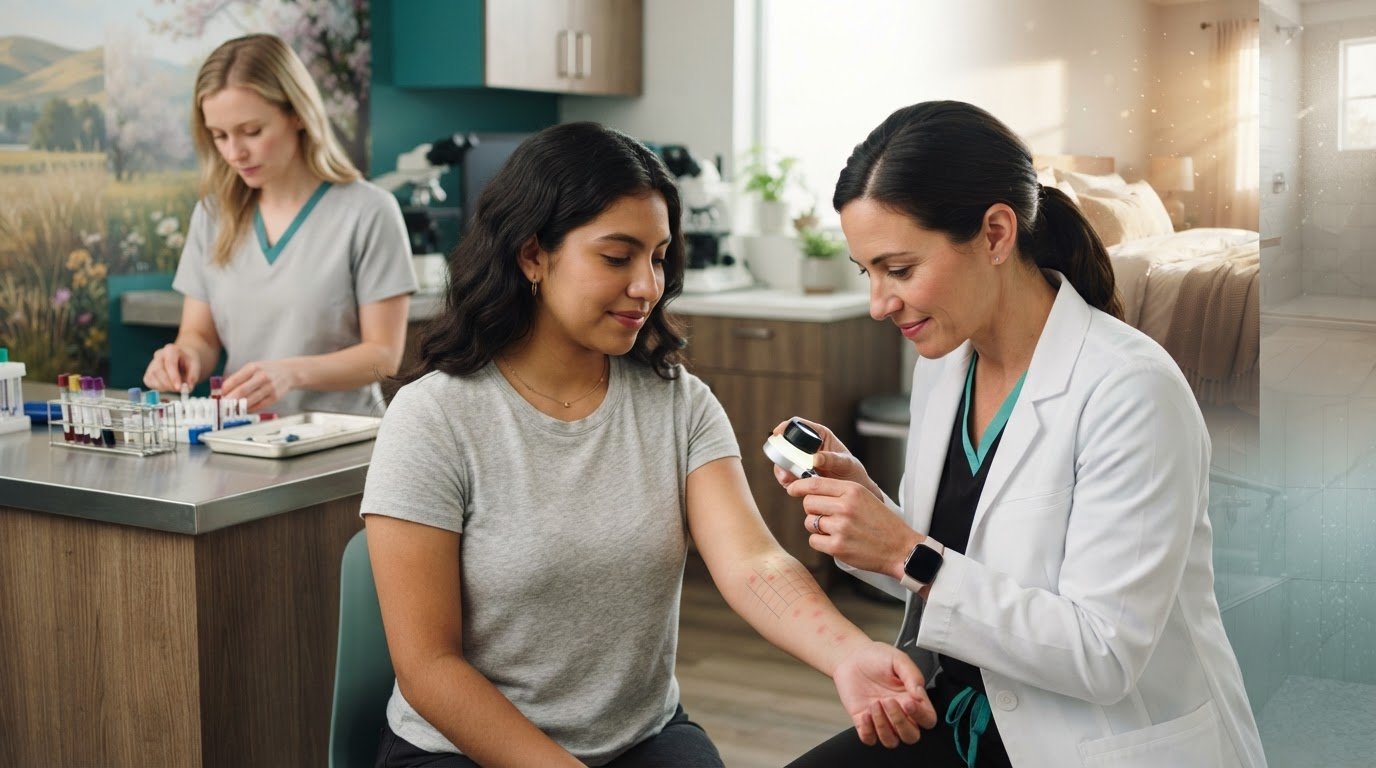
What if the pollen, dust mites, or mold you suspect aren’t the whole story behind your symptoms? Environmental allergy testing can help identify... Continue reading
READ MORE

A penicillin allergy label deserves a careful evaluation, not a guess. If you’re searching for penicillin allergy testing near me, you may be unsure whether a past rash, stomach upset, or another reaction means you’re truly allergic. It’s also natural to wonder what testing involves and whether you could react during the process.
A specialist can review what happened, when it occurred, and how it was treated before discussing whether an evaluation is appropriate. Your medical history helps guide the approach. Ask the care team which evaluation methods it currently offers and what safety measures apply to your situation. Bring any records you have, a medication list, and questions about the process.
This guide explains what to expect when discussing penicillin allergy testing, how to prepare for a specialist visit, and what to ask about next steps. Premium Allergy & Respiratory Center is a Fresno-based specialty clinic that offers penicillin allergy testing. For patients in Fresno, Clovis, Selma, and North Clovis, it’s a local option for discussing a possible evaluation with an allergy care team.
A childhood rash, a vague memory of feeling unwell, or an “allergy” entry in an old chart can leave you unsure what to tell a clinician today. If you’re searching for penicillin allergy testing near me, keep in mind that a recorded label is a reason to ask questions, but it doesn’t, by itself, confirm that you have a current allergy.
Penicillin allergy testing is a clinician-led evaluation of a suspected allergy. A specialist reviews your medical history and decides whether further assessment is appropriate. The details matter: the medication you took, when symptoms began, what they felt like, and whether you needed treatment can help guide that decision. Don’t take penicillin on your own to find out whether you’ll react.
A label may have been added after a reaction, but the chart might not explain what happened or how the conclusion was reached. Details can also be forgotten over time, especially if the event occurred in childhood. For example, nausea or diarrhea may occur as medication side effects, while hives or swelling can raise concern about an allergic reaction. Neither a brief description nor one symptom is enough to diagnose you. Share what you remember and let a clinician interpret it in context.
If you’re unsure which medicine was involved, bring a medication list or any available records. A general overview of Penicillin can provide background on the medication, but it can’t determine whether you personally have an allergy.
Uncertainty can complicate conversations about antibiotic choices if you need treatment in the future. An individualized review can help you and your care team understand what the label is based on and whether further assessment makes sense. An allergist can discuss possible next steps without assuming that every past reaction proves an allergy or that every old label can be removed.
A penicillin allergy evaluation is an individualized clinical assessment that uses your reaction history to guide whether further testing may be appropriate.
When you speak with a specialist, note the suspected drug, the reaction you recall, how soon it began, and any care or treatment you received. It’s fine if some details are missing. Your history is a starting point for a careful conversation, not a test you’re expected to pass.
A penicillin allergy evaluation starts with your story, not a one-size-fits-all test. The specialist reviews what happened and considers the details alongside your health history before deciding whether testing is appropriate. Some people may need further assessment; others may not. The sequence and approach depend on clinical judgment.
Before your visit, jot down what you remember. These details can help the specialist make sense of an old or uncertain reaction:
You don’t need a perfect timeline. If you’re unsure about a detail, say so rather than guessing or leaving it out. Even incomplete memories can help shape the conversation, especially when considered alongside records and later medication history.
After reviewing your history, the specialist may discuss whether skin testing, a supervised medication challenge, or another step fits your situation. These approaches serve different purposes, and neither is automatically right for everyone. The clinician will determine whether a method is appropriate based on your reaction history and individual circumstances. The American Academy of Allergy, Asthma & Immunology’s guidance on penicillin allergy evaluation offers additional background on why and how clinicians reassess a reported allergy.
Ask what a proposed test involves, how to prepare, and how the care team will respond if symptoms occur. The specialist should explain the plan before you proceed. Don’t take penicillin at home or try a small dose to see what happens. A self-test can’t replace a clinical assessment and may expose you to risk without appropriate guidance.
If you’re looking for penicillin allergy testing near me, use your first conversation with a local allergy specialist to ask which evaluation options the clinic offers and what information would help assess your history. You can contact the Premium Allergy & Respiratory Center care team to discuss penicillin allergy testing and ask which approach may be appropriate for you.
Skin testing and a supervised oral medication challenge are different ways a clinician may investigate a suspected penicillin allergy. Neither is a standard choice for everyone. Your specialist weighs the reaction you reported, relevant medical details, and the purpose of the evaluation before recommending a next step.
The recommended testing approach depends on the suspected reaction and your individual history, not on a patient-selected menu of options. If you’re researching penicillin allergy testing near me, use the appointment to ask which methods the clinic offers and why a particular option may or may not suit your circumstances.
Skin testing may be considered when a specialist wants to assess whether your history could point to an allergic response. It involves introducing a small amount of testing material to the skin and checking for a response. The details and interpretation belong to a qualified clinician. A result needs to be understood alongside your history; it isn’t something to interpret on your own or use as a stand-alone diagnosis.
Skin testing may not be necessary or appropriate in every case. Ask what a proposed test is meant to clarify, what the result could mean, and whether another approach should be considered. The specialist can explain how your reported reaction informs the recommendation.
A supervised oral challenge involves taking a medication by mouth under clinical guidance when the care team considers it an appropriate way to assess a suspected allergy. The clinician determines whether to recommend it and explains how the evaluation will be carried out. It is not a home test. Never take penicillin on your own to check for a reaction.
Feeling apprehensive is understandable. Before agreeing to an evaluation, tell the care team what worries you. Ask what precautions they’ll use for your situation, how they’ll monitor you, and what happens if symptoms develop. The plan should reflect your health history and the setting where the evaluation is provided. No particular method or outcome can be assumed in advance.
These options serve different roles, and testing recommendations require clinical judgment. A specialist can explain the reasoning rather than asking you to choose between procedures without context. If you’re considering an evaluation with Premium Allergy & Respiratory Center, ask the care team which approaches it currently offers and whether one may be appropriate for your history.
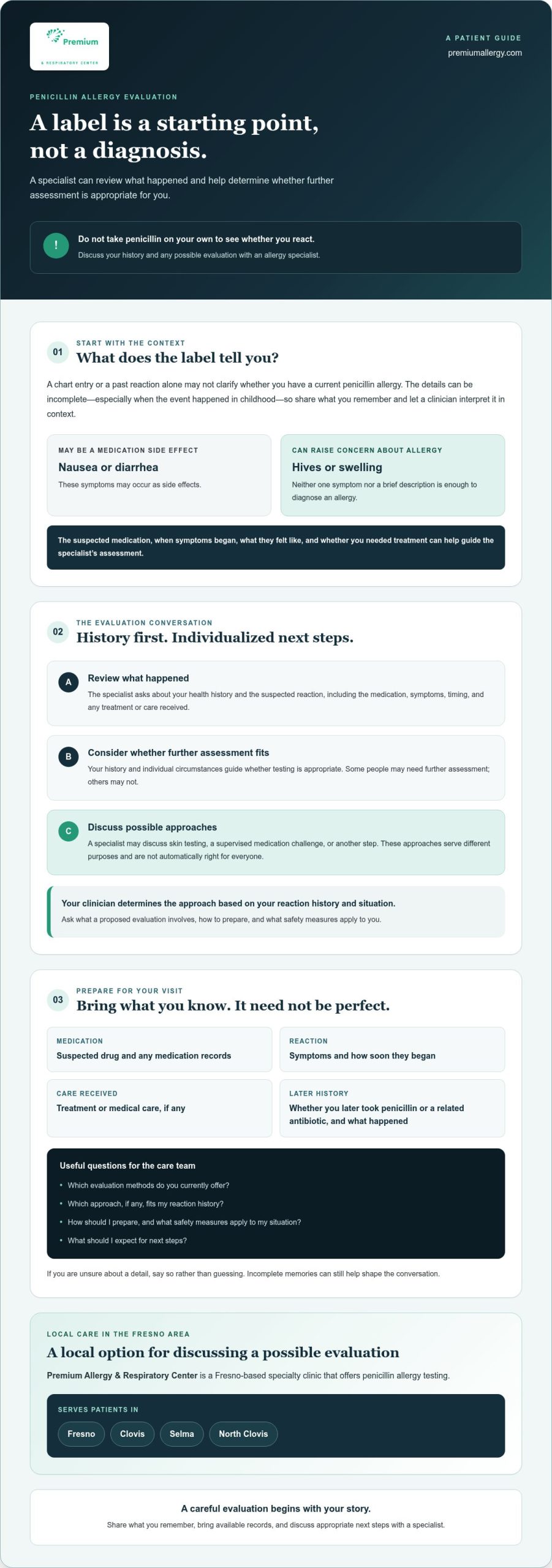
A little preparation can make your first conversation with a specialty clinic more useful. You don’t need a complete medical file or a perfect memory. Bring what you have, note what you’re unsure about, and ask the clinic what to expect before making plans.
Gather any details that may help the care team understand the suspected reaction. A written note on your phone is fine. Include:
Also write down what concerns you most, such as future antibiotic choices or the safety of an evaluation. If you take medication that you think could affect testing, don’t stop or change it on your own. Ask the clinic for preparation instructions, and discuss any medication changes with the clinician who prescribed it.
Before arranging a visit, confirm the practical details directly with the clinic. Consider asking:
Details can vary by practice and personal history, so direct answers help you plan without making assumptions. If you’re searching for penicillin allergy testing near me, Premium Allergy & Respiratory Center is a Fresno-based specialty clinic serving Fresno, Clovis, Selma, and North Clovis. Ask the care team what information to bring and which approach may be suitable for your history.
To discuss your questions with a local specialty clinic, contact Premium Allergy & Respiratory Center about penicillin allergy testing and the steps involved in arranging an evaluation.
If you’re looking for penicillin allergy testing near me, Premium Allergy & Respiratory Center is a Fresno-based specialty practice offering penicillin allergy testing. The clinic serves Fresno, Clovis, Selma, and North Clovis, providing a local outpatient option for discussing a suspected penicillin allergy with an allergy care team.
An evaluation begins with a conversation about your history and concerns. The care team can discuss the process and potential next steps, but the appropriate approach depends on your individual circumstances. Before arranging a visit, confirm directly with the clinic which evaluation methods are currently offered, how to request an appointment, and whether preparation requirements or eligibility guidelines apply to you.
Be ready to share what you know about the suspected reaction, including the medication involved, symptoms, and approximate timing. Explain why you’re seeking an evaluation, such as wanting to understand an old allergy label before future treatment decisions. If details are missing, say so. You can also ask what records or medication information may be useful to have available.
Premium Allergy & Respiratory Center focuses on outpatient allergy and respiratory specialty care. It is not an emergency service. If you’re experiencing a serious or urgent reaction, seek emergency care rather than waiting for an outpatient appointment.
You don’t need to arrive with all the answers. Bring your questions, describe your experience as clearly as you can, and ask the care team what options may be appropriate for your history. An initial conversation can help you understand the evaluation process without promising that a particular test, result, or change to your allergy record will follow.
For a starting point, contact the clinic about penicillin allergy evaluation. The care team can answer questions about the service and explain how to discuss next steps for your individual situation.
A penicillin allergy label in your chart doesn’t automatically confirm a current allergy. A specialist can review your reaction history and determine whether further evaluation may be appropriate. If testing is considered, the approach depends on your individual circumstances, and it should never be attempted at home.
Before speaking with a care team, gather any medication records or notes about the reaction. Prepare questions about available evaluation methods, safety precautions, and appointment requirements. These steps can help you have a more informed conversation.
If you’re searching for penicillin allergy testing near me, Premium Allergy & Respiratory Center is a Fresno-based specialty practice offering penicillin allergy testing for people in Fresno, Clovis, Selma, and North Clovis. Contact the clinic to discuss your history and ask about appropriate next steps. Contact Premium Allergy & Respiratory Center about penicillin allergy testing.
A thoughtful conversation with a local allergy care team can help you understand the evaluation process and consider your next steps.
Ask an allergy specialist if your record lists a penicillin allergy, you remember a past reaction, or you’re unsure what happened. The specialist will review the suspected medication, symptoms, timing, and any treatment before discussing next steps. A past rash or stomach upset alone can’t tell you whether you’re allergic. Don’t use a symptom checklist to diagnose yourself; whether testing is appropriate depends on your individual history and a clinician’s assessment.
Penicillin allergy testing should be planned and supervised by qualified clinicians who first review your history. The appropriate approach and precautions can differ based on the suspected reaction and your health circumstances. Never take penicillin at home to see whether you react. Before scheduling, ask the clinic how it assesses risk, what supervision is provided, and what preparation you’ll need. Share your concerns openly so the care team can address them.
The process commonly begins with a review of your reaction history and medication records. If further evaluation is appropriate, a specialist may discuss skin testing or a supervised oral challenge. The steps vary by patient and clinic, so don’t assume every evaluation follows the same protocol. Ask the care team which methods it currently offers, what it recommends for your history, and what instructions you should follow before an appointment.
A past penicillin allergy label may not reflect your current status, but only a clinician can assess whether it should be reconsidered. The decision depends on details such as the original reaction, when it happened, and your medical history. Don’t remove the label yourself or try taking the medication. Discuss a formal evaluation with an allergy specialist, then share any updated guidance with your other clinicians.
Write down the suspected medication, the symptoms you recall, when they began, and any treatment you received. Bring available medical records and a current medication list, even if some details are uncertain. Prepare questions about testing methods, supervision, and how findings may inform future conversations about antibiotics. Contact the clinic for preparation instructions, and don’t change or stop prescribed medicines unless you’ve discussed it with the prescribing clinician.
Premium Allergy & Respiratory Center is a Fresno-based specialty practice offering penicillin allergy testing and serving Fresno, Clovis, Selma, and North Clovis. Contact the clinic to confirm appointment details, eligibility, and which evaluation methods are currently available. The practice provides outpatient specialty care, not emergency services. If you’re experiencing a severe or rapidly worsening reaction, seek emergency care rather than waiting for an outpatient allergy appointment.
What if the pollen, dust mites, or mold you suspect aren’t the whole story behind your symptoms? Environmental allergy testing can help identify... Continue reading
READ MORE
A positive allergy blood test doesn’t automatically mean a substance is causing your symptoms. The test measures specific immunoglobulin E (IgE)... Continue reading
READ MORE
Could a past sting reaction put you at risk the next time you’re outdoors? It’s understandable to feel uneasy about another sting, especially if... Continue reading
READ MORE
A penicillin allergy label deserves a careful evaluation, not a guess. If you’re searching for penicillin allergy testing near me, you may be unsure... Continue reading
READ MORE