
What if the pollen, dust mites, or mold you suspect aren’t the whole story behind your symptoms? Environmental allergy testing can help identify... Continue reading
READ MORE

Could a rash, stomach upset, or sudden breathing trouble all point to the same trigger? Allergic reactions can affect different parts of the body, and symptoms may overlap with other conditions, so it isn’t always easy to tell what’s happening or how serious it is. Some signs need immediate action: trouble breathing, swelling of the tongue or throat, or fainting can signal a life-threatening emergency. Call emergency services and use prescribed epinephrine if available.
If you’re unsure what caused a reaction, that uncertainty is understandable. This guide explains common symptom patterns, warning signs that need urgent care, and what details to record, including when symptoms began, what you ate or encountered, and how symptoms changed. You’ll also learn how clinicians investigate suspected triggers and when specialist evaluation may help. Recognizing the pattern is a practical first step toward clearer answers and a safer plan.
An allergic reaction is an immune response to a substance the body treats as a threat. That substance, called an allergen, may be harmless to most people but trigger symptoms in someone whose immune system reacts to it. The overview of allergy explains how these responses can involve different body systems. Recognizing a possible pattern can help you describe what happened, but symptoms alone can’t confirm an allergy.
Reactions vary with the suspected trigger, the person, the amount and route of exposure, and the body systems involved. One person may develop itchy skin after contact with a substance, while another may have nasal or digestive symptoms after a different exposure. A reaction can also affect more than one area of the body.
Look at the overall pattern, not just one symptom. Possible signs include:
The timing and combination of symptoms can give a clinician useful context. Record when symptoms began, how long they lasted, what you were doing or exposed to beforehand, and whether symptoms appeared in one area or several. This information may guide an assessment, but it doesn’t establish the cause on its own.
No. A rash may result from skin irritation, eczema, an infection, or another condition. Sneezing and congestion can occur with infections or other nasal problems, while digestive symptoms may have several non-allergic causes, including intolerance. Some symptoms can resemble an allergy even when the immune system isn’t responsible.
Symptoms suggest possibilities, not a diagnosis. Don’t conclude that a particular food, medication, or environmental exposure caused an allergy based on one symptom alone. A clinician can consider the full history, including timing, repeat exposures, and health background, before deciding whether allergy evaluation may help. If symptoms recur or the likely trigger is unclear, keeping a record can make that conversation more productive.
An allergic response can begin with sensitization. After encountering a substance, the immune system may mistakenly treat it as a threat and become prepared to respond. If the person encounters it again, that response may cause symptoms. Sensitization doesn’t mean every later exposure will produce noticeable symptoms, and reactions can vary from person to person.
A substance that triggers an immune response in a sensitized person is called an allergen. As MedlinePlus explains, common allergens include foods, medicines, insect venom, pollen, and dust mites. An irritant is different: it can bother or inflame the skin or airways through direct contact, without necessarily involving an allergy-driven immune response. The distinction is useful, but it doesn’t identify the cause of an individual’s symptoms.
Potential triggers depend on a person’s history and clinical assessment. Examples include a particular food, a medicine such as penicillin, venom from an insect sting, or environmental substances such as pollen and dust mites. These are examples, not a checklist for diagnosing yourself. People don’t all react to the same substances, and a suspected trigger needs to be considered in context.
To help establish that context, note what you encountered, how and when exposure occurred, when symptoms began, and whether a similar pattern followed another exposure. Even a repeated association is information for a clinician to assess, not proof on its own. Don’t deliberately re-expose yourself to a suspected trigger to test your reaction.
An allergy involves the immune system. An intolerance may cause symptoms through a different mechanism, such as difficulty digesting or processing a substance. Symptoms after eating a food don’t automatically show whether the cause is an allergy, an intolerance, or something else. The symptoms, timing, exposure history, and clinical assessment all matter.
Symptoms alone can’t reliably distinguish food allergy from intolerance. If a food seems linked to recurring symptoms, record what you ate and when symptoms began, then discuss the pattern with a clinician rather than removing multiple foods or drawing a conclusion on your own. For a suspected food trigger, specialist evaluation may help determine whether food allergy testing is appropriate.
A small, localized patch of itching or a few hives may be less concerning than symptoms that spread or worsen quickly. But severity isn’t always obvious at first, and reactions can change rapidly. A reaction involving breathing, circulation, or more than one body system may be anaphylaxis, a medical emergency. Review Mayo Clinic’s information on allergy symptoms and causes for more on warning signs.
Seek emergency help for symptoms such as:
A severe reaction may occur with or without skin symptoms. Don’t wait for every warning sign to appear or assume the reaction is mild because it began with itching or a rash.
If anaphylaxis is suspected, use prescribed epinephrine according to the person’s emergency action plan and call 911 immediately. Follow the plan’s instructions and seek emergency care even if symptoms begin to improve. An outpatient allergy appointment is not a substitute for emergency response.
No. Antihistamines may help with some mild symptoms, but they don’t replace epinephrine for suspected anaphylaxis and shouldn’t delay emergency services. Current guidance identifies epinephrine as the first-line treatment for a severe allergic reaction. If epinephrine has been prescribed, use it as directed in the emergency action plan rather than waiting to see whether an antihistamine works.
When symptoms are limited and not progressing, contact a clinician for advice on appropriate follow-up. If you’re uncertain whether symptoms are severe, get emergency help when breathing difficulty, throat or tongue swelling, faintness, or rapid worsening is present. A clinician can help you create or review a personalized plan for future reactions, but urgent symptoms need immediate emergency care.
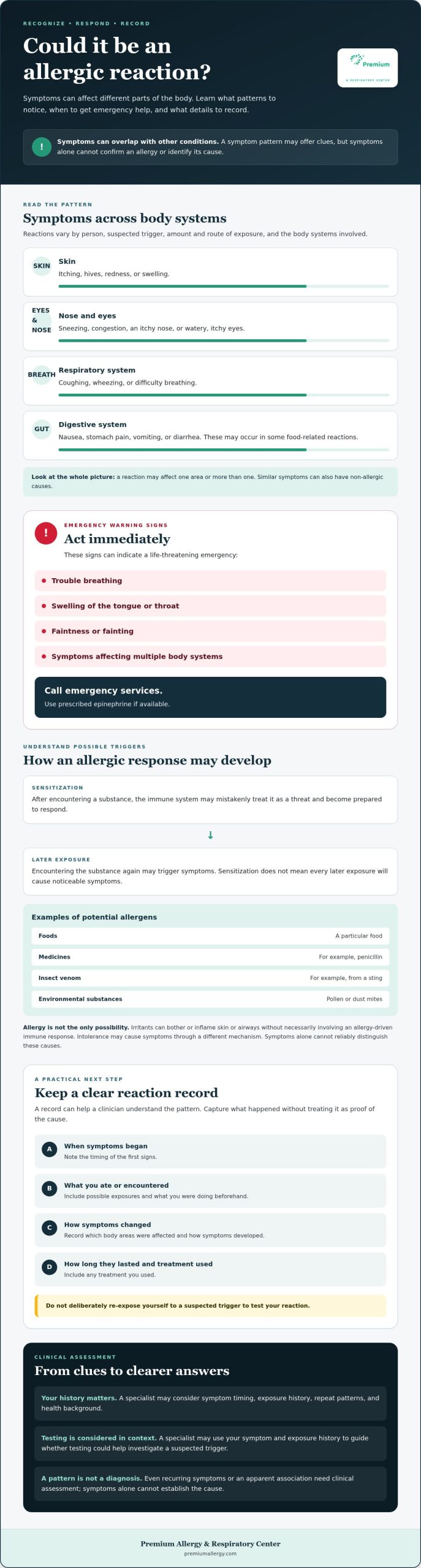
First, separate urgent symptoms from follow-up questions. If a reaction includes trouble breathing, swelling of the throat or tongue, faintness, collapse, or rapid worsening, call 911 and follow the person’s emergency action plan. Don’t delay urgent care to take notes, photograph a rash, or arrange an outpatient appointment. For symptoms that have settled and aren’t urgent, a clear record can help a clinician assess what happened.
Write down the sequence while it’s fresh. Include what happened before symptoms began, when each symptom appeared, how long it lasted, and whether it improved, returned, or progressed. Note possible exposures such as foods, medicines, insect stings, or environmental conditions. Record any treatment used and how the person responded.
These details don’t prove that a substance caused an allergy. They give the clinician a useful timeline and help distinguish a suspected allergic response from other possible causes. Be specific, even if you’re unsure whether a detail matters.
Consider specialist evaluation if symptoms recur, have no clear explanation, or seem linked to a particular exposure. A clinician will review the symptom pattern, exposure history, and relevant health background before deciding whether allergy testing is appropriate. The suspected trigger and clinical assessment guide the choice of testing, and results need to be interpreted alongside your history.
For a suspected food-related reaction, an allergy specialist can help assess whether food allergy testing may be useful. Avoid testing or eliminating foods on your own based solely on a symptom, since that can complicate the picture without confirming the cause.
If a food seems to trigger recurring symptoms, ask about food allergy testing as a possible step toward clarifying the pattern. Premium Allergy & Respiratory Center provides outpatient allergy specialty care, not emergency services.
Recurring symptoms can be difficult to connect to one cause, especially when exposures and timing vary. An allergy specialist can help organize the pattern by reviewing what you experienced, when it happened, possible exposures, and relevant health history. That assessment may clarify whether an allergic trigger is plausible or whether another explanation should be considered.
An evaluation usually begins with a conversation about the symptoms and circumstances around them. Bring your notes, photos, and details about suspected foods, medicines, insect stings, or other exposures. The specialist may then decide whether testing is appropriate and which type fits the concern. Depending on your history and clinical assessment, evaluation may involve a suspected food, blood allergy testing, penicillin allergy evaluation, or insect-sting allergy evaluation.
Testing isn’t a stand-alone answer. Results need to be interpreted alongside symptoms and exposure history, and no specific test or outcome can be assumed in advance. Share what you’ve already tried or avoided, too. That information can help the specialist build a more complete picture and discuss reasonable next steps.
Premium Allergy & Respiratory Center provides outpatient allergy and respiratory specialty care in Fresno, Clovis, Selma, and North Clovis. Services include food and blood allergy testing, penicillin allergy evaluations, insect-sting allergy treatment, and care for allergic rhinitis, asthma, and atopic dermatitis. The center provides outpatient specialty care, not emergency services. If symptoms suggest an emergency, seek emergency help rather than waiting for a specialist appointment.
Recurring hive-like symptoms can have different causes. A chronic hives guide may help you understand what details to track and discuss, but it can’t determine the cause of your symptoms. Keep noting the pattern and bring those observations to a clinician.
If you live in Fresno, Clovis, Selma, or North Clovis and recurring symptoms have you concerned, explore outpatient allergy specialty care as a possible next step. A specialist can review your history and help determine whether evaluation or testing is appropriate.
Allergic reactions can affect different parts of the body, and symptoms alone don’t confirm what caused them. Pay attention to timing, possible exposures, and how symptoms change. If breathing difficulty, throat or tongue swelling, faintness, or rapidly worsening symptoms occur, call 911 and follow the person’s emergency action plan.
For recurring or concerning symptoms, a specialist can review your history and help determine whether evaluation or testing may be appropriate. Premium Allergy & Respiratory Center provides outpatient allergy and respiratory specialty care, including evaluation and care for food, penicillin, and insect-sting allergy concerns. It isn’t an emergency service, so seek emergency help for urgent symptoms.
If you’re ready to explore a possible next step, explore allergy and respiratory specialty care. With careful observations and clinical guidance, you can make better-informed decisions about your health.
Common symptoms include itchy skin, hives, swelling, sneezing, nasal congestion, watery eyes, coughing, wheezing, and digestive upset such as nausea or stomach pain. Symptoms can affect one area or several, and they don’t look the same for everyone. A rash or stomach symptom alone doesn’t prove an allergy. Breathing difficulty, throat or tongue swelling, faintness, or rapidly worsening symptoms need emergency attention.
An allergy involves the immune system, while an intolerance may cause symptoms through another process, such as difficulty digesting a food. Symptoms can overlap, so you can’t reliably tell the difference from one episode alone. Record what you ate or encountered, when symptoms began, and what happened next. A clinician can assess that history and determine whether allergy evaluation may be appropriate.
Yes, symptoms can sometimes begin hours after exposure, though timing varies with the trigger and the individual. A delay can make it harder to identify what caused the reaction, especially if you encountered several possible triggers. Note the time of exposure and when each symptom appeared, along with any foods, medicines, insect stings, or environmental exposures. Share this timeline with a clinician rather than relying on timing alone to diagnose an allergy.
If you have trouble breathing, throat or tongue swelling, faintness, collapse, or rapidly worsening symptoms, call 911 immediately. If epinephrine has been prescribed, use it according to the person’s emergency action plan, then seek emergency care. Don’t wait to see whether symptoms improve or delay help to gather information. For symptoms that are mild and not progressing, contact a clinician for advice and record possible exposures and symptom timing.
Some mild symptoms may settle, but you can’t safely assume a reaction will resolve without worsening. Symptoms may change or progress, so monitor them closely and follow any personalized medical advice you’ve received. Get emergency help for breathing problems, swelling of the throat or tongue, faintness, collapse, or rapid worsening. After a suspected reaction, a clinician can help assess the cause and discuss what to do if it happens again.
Consider an allergist if symptoms recur, seem connected to a particular exposure, or remain unexplained. A specialist can review your symptom timeline, exposure history, and health background to decide whether evaluation or testing may help. Premium Allergy & Respiratory Center provides outpatient allergy and respiratory specialty care in Fresno, Clovis, Selma, and North Clovis. It isn’t an emergency service, so seek emergency care for urgent symptoms.
A blood allergy test can help investigate a suspected trigger, but it doesn’t always confirm that the trigger caused your symptoms. Results need professional interpretation alongside your history, symptom pattern, and possible exposures. Testing is selected based on clinical assessment, and it may not be the right choice for every concern. An allergy specialist can explain whether blood testing or another evaluation fits your situation and what the results may mean.
What if the pollen, dust mites, or mold you suspect aren’t the whole story behind your symptoms? Environmental allergy testing can help identify... Continue reading
READ MORE
A positive allergy blood test doesn’t automatically mean a substance is causing your symptoms. The test measures specific immunoglobulin E (IgE)... Continue reading
READ MORE
Could a past sting reaction put you at risk the next time you’re outdoors? It’s understandable to feel uneasy about another sting, especially if... Continue reading
READ MORE
A penicillin allergy label deserves a careful evaluation, not a guess. If you’re searching for penicillin allergy testing near me, you may be unsure... Continue reading
READ MORE