
A gastroenterologist typically leads the diagnosis of eosinophilic esophagitis (EoE). An upper endoscopy with esophageal biopsies is needed to... Continue reading
READ MORE

The right specialist for angioedema depends on what’s causing the swelling. An angioedema specialist in Selma, often an allergist-immunologist, can help assess recurring episodes and distinguish allergic swelling from hereditary forms. If swelling affects your throat or makes breathing difficult, seek urgent medical care.
Recurring or unexplained swelling can be unsettling, especially when the cause is unclear. The pattern of episodes, possible triggers, family history, and medications can all help guide an evaluation; blood tests may also help identify the type of angioedema. This guide explains which specialists may be involved, when symptoms call for urgent attention or a planned assessment, and how allergy-focused care in the Selma and Fresno area may fit into your next step.
An allergist-immunologist is often the lead specialist for evaluating hereditary angioedema (HAE). This physician can assess whether swelling is linked to an inherited disease involving bradykinin or to histamine-driven allergy. The distinction matters: HAE attacks do not respond to medicines commonly used for other angioedema, including antihistamines, corticosteroids, and epinephrine.
Evaluation starts with a detailed picture of the episodes. The specialist may ask about swelling locations, timing, suspected triggers, family history, and medications. Blood tests measuring C4 and C1-inhibitor levels and function can help confirm an HAE diagnosis. HAE usually involves missing or malfunctioning C1-inhibitor, while genetic changes can also arise spontaneously without a family history.
Medication and allergy triggers need separate attention. ACE inhibitors used for high blood pressure can cause drug-induced angioedema. Food or other suspected allergic triggers may prompt allergy testing or a specialist assessment. A personalized evaluation connects symptoms with exposure history instead of assuming every episode has the same cause. The Hereditary Angioedema Association can also connect people with an HAE specialist through its physician referral tool.
In Selma and the surrounding Fresno area, an allergist-immunologist can assess suspected allergic reactions and help distinguish them from HAE. The clinical distinction matters wherever you receive care: an allergist-immunologist can evaluate possible allergic reactions, while HAE assessment focuses on its distinct mechanism and testing. For suspected allergic reactions, allergy testing or an allergy specialist’s assessment may be appropriate. Throat swelling or difficulty breathing requires urgent professional care.
For people seeking an angioedema specialist in Selma, the key step is clarifying whether symptoms suggest allergy, medication effects, or HAE. That assessment guides appropriate treatment and follow-up, including trigger awareness and a plan tailored to the diagnosed cause.
Swelling beneath the skin can appear around the eyes, lips, hands, feet, tongue, or throat. Throat swelling that causes difficulty breathing requires emergency care. Angioedema may occur alone or alongside anaphylaxis, so breathing changes should never be treated as a routine episode.
Acute attacks are often mild and may resolve within twenty-four hours without treatment, but symptoms can last 1 to 3 days. Duration varies with the cause and severity. A doctor evaluating an episode may ask when it began, how long it lasted, which areas swelled, and whether a medication, food, or other exposure preceded it.
Recurrent angioedema has a specific pattern: at least three episodes more than six weeks apart within one year when no trigger is known. Episodes that keep returning deserve evaluation, even if each one subsides. Tracking timing, affected areas, suspected exposures, and medicines can help a physician identify a pattern and guide testing.
Hereditary angioedema is a genetic condition often linked to missing or malfunctioning C1-inhibitor protein. Its attacks can affect the face, hands, feet, genitals, abdomen, or airways. Abdominal episodes may resemble appendicitis or bowel obstruction, making the history of repeated symptoms especially useful during assessment. Blood tests can help clarify the type of angioedema and rule out conditions with similar symptoms.
Medication history matters, too. ACE inhibitors prescribed for high blood pressure can cause drug-induced swelling. Don’t stop a prescribed medicine on your own; share its name and the timing of symptoms with your doctor. If a food exposure seems linked to swelling, food allergy testing may help assess an allergic cause. Identifying the cause helps shape appropriate care, while breathing difficulty remains an emergency regardless of suspected trigger.
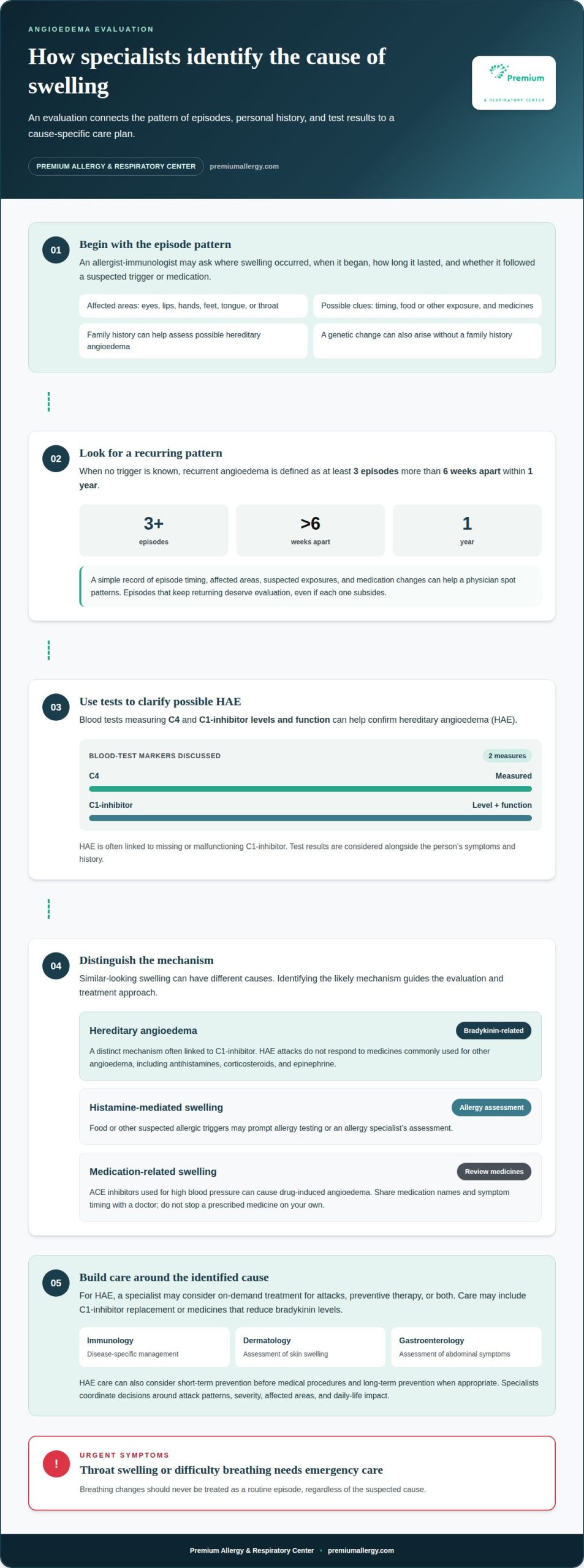
Angioedema care starts by identifying the mechanism behind a person’s swelling. An allergy and immunology specialist considers whether symptoms point to hereditary angioedema, histamine activity, or a medication effect. That distinction shapes diagnosis and treatment, because a plan for allergic swelling may not control attacks caused by hereditary disease. Evaluation can include testing, symptom history, medication review, and family history. The goal is a treatment plan based on the cause, not a one-size-fits-all response.
For hereditary angioedema, a specialist may recommend on-demand therapy for attacks, preventive therapy, or both. Available treatments include C1-inhibitor replacement and medicines that reduce bradykinin levels. A comprehensive plan also considers short-term prevention before medical procedures and long-term prevention when appropriate. The specialist weighs attack patterns, severity, affected areas, and how symptoms affect daily life. Throat involvement, for example, makes a clear response plan especially important.
Care for hereditary angioedema can involve immunology, dermatology, and gastroenterology. Each field offers a different perspective: immunology guides disease-specific management, dermatology evaluates skin swelling, and gastroenterology can help assess abdominal symptoms. Specialists coordinate decisions so testing, preventive measures, and treatment choices support the same plan. An ongoing relationship with a specialist also helps patients share changes in attacks and discuss treatment decisions openly.
Triggers are another part of care. If evaluation points to histamine-mediated angioedema, avoiding the food or drug causing the reaction may be part of management. If hereditary angioedema is diagnosed, its treatment approach differs, and standard allergy medicines may not control those attacks. Keep a record of episode timing, symptoms, suspected exposures, and medication changes; these details help a specialist review the plan. For any type of angioedema, breathing difficulty from throat swelling needs emergency care rather than a routine appointment.
For hereditary angioedema evaluation near Selma, look for care led by an allergist-immunologist familiar with the condition. An evaluation may assess the symptom pattern, arrange relevant diagnostic testing, and shape follow-up around the findings. HAE can be uncommon in general practice, so experience with its distinct mechanisms and treatments matters.
The US Hereditary Angioedema Association offers a physician referral tool to help people find an HAE specialist in their area. This can be useful when local care needs to connect with a clinician experienced in HAE. The US HAEA Angioedema Center at UC San Diego was established as the first comprehensive angioedema center in the United States.
At an initial appointment, organize details that help explain the episodes: when they began, which areas swelled, how long symptoms lasted, and any suspected triggers. Include medication history and relevant family history. Blood tests measuring C4 and C1-inhibitor levels and function are used to confirm an HAE diagnosis. A genetic counselor can discuss whether family members should be tested and explain inherited risk, including the possibility of a spontaneous genetic change without known family history.
Good HAE care can involve more than one specialty. Immunology may guide disease-specific management, while gastroenterology can help assess abdominal attacks. Before procedures such as colonoscopy, an immunologist may coordinate precautions with a gastroenterologist and anesthesiologist. Family screening and a regularly reviewed management plan can also help address future care needs.
If symptoms instead suggest an allergic trigger, an allergy evaluation may help clarify that possibility. You can explore blood allergy testing for suspected allergic causes; this is distinct from the evaluation used to confirm HAE.
Clinicians may consider whether swelling is bradykinin-mediated, since this can result from hereditary angioedema or a medication side effect such as ACE inhibitors. Laboratory testing may help clarify the type of angioedema, alongside questions about prior episodes, their duration, suspected triggers, family history, and medication history.
Stress can trigger or worsen swelling attacks in some people with hereditary angioedema. The condition is autosomal inherited, and one abnormal gene copy is enough to cause it. More than 90% of patients with hereditary angioedema experience abdominal pain.
Premium Allergy & Respiratory Center can help when swelling raises questions about an allergic trigger or overlaps with other allergy concerns. Its care includes allergic rhinitis treatment, asthma management, food allergy testing, and penicillin allergy testing. These services may be relevant when symptoms or suspected exposures point toward those conditions.
For recurring swelling that may involve hereditary angioedema, seek evaluation from a specialist experienced in that condition. This is especially important when episodes are unexplained or follow a pattern. Trouble breathing or throat swelling requires emergency care, not a routine appointment.
If allergy symptoms or suspected food or penicillin reactions are part of your concerns, contact Premium Allergy & Respiratory Center to discuss allergy testing and treatment.
Use your next appointment to move from uncertainty toward a practical plan. Bring a concise record of what you have experienced and explain what you hope to understand. If hereditary angioedema is a concern, seek an angioedema specialist in Selma with experience evaluating that condition. If symptoms point toward an allergic cause, an allergy-focused assessment can help address that part of your care.
Premium Allergy & Respiratory Center offers allergy testing and allergy treatment for concerns including allergic rhinitis, asthma, and food allergy. These services may be relevant when those allergy or respiratory concerns accompany questions about swelling. They are not a substitute for emergency care when breathing is difficult or throat swelling occurs.
Take the next step at your own pace. Contact Premium Allergy & Respiratory Center to discuss its allergy-related care and move forward with greater clarity.
A gastroenterologist typically leads the diagnosis of eosinophilic esophagitis (EoE). An upper endoscopy with esophageal biopsies is needed to... Continue reading
READ MORE
The right specialist for angioedema depends on what’s causing the swelling. An angioedema specialist in Selma, often an allergist-immunologist, can... Continue reading
READ MORE
Chronic hives don’t have to dictate your day. For chronic urticaria treatment in Clovis, start by tracking how often symptoms appear, what they feel... Continue reading
READ MORE
A weed doesn’t have to be growing nearby to trigger symptoms: ragweed pollen can travel hundreds of miles through the air. For weed pollen allergy... Continue reading
READ MORE