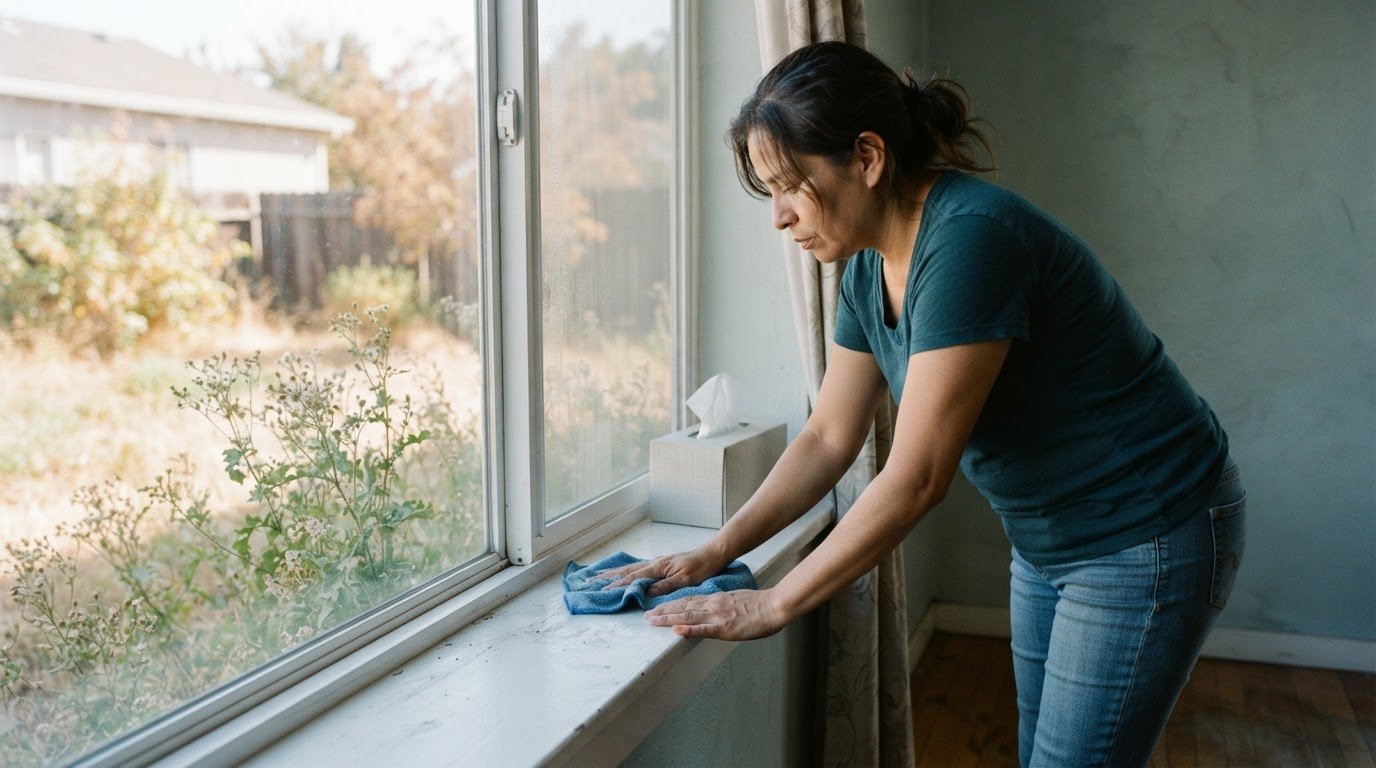
A weed doesn’t have to be growing nearby to trigger symptoms: ragweed pollen can travel hundreds of miles through the air. For weed pollen allergy... Continue reading
READ MORE

A weed doesn’t have to be growing nearby to trigger symptoms: ragweed pollen can travel hundreds of miles through the air. For weed pollen allergy relief in Selma, reducing exposure and beginning appropriate allergy medicine about 1-2 weeks before local pollen season starts may help you manage symptoms. Weed pollen is most common in late summer and fall, though the timing can vary.
If sneezing, congestion, itchy eyes, or a runny nose return with the season, pollen may be the cause. Because different plants release pollen at overlapping times, symptoms alone may not reveal the exact trigger. Understanding weed pollen allergy can help you spot seasonal patterns and take practical steps to limit exposure.
This article covers common weed pollen triggers, ways to reduce exposure, and why medication timing matters. You’ll also learn when personalized allergic rhinitis care may help clarify your symptoms and shape a management plan.
A pollen allergy occurs when the immune system reacts to pollen released by trees, grasses, or weeds. In Selma, symptoms that recur with seasonal pollen patterns may point to an outdoor trigger. To find weed pollen allergy relief in Selma, note when symptoms begin and how they change through the season.
Pollen allergy symptoms are reactions that can flare when pollen-producing plants release particles into the air. The timing matters because tree pollen is usually most common from March through May, while grass pollen can affect people in late spring and summer. Weed pollen levels are highest in late summer and fall. Symptoms that recur during a particular season may help identify a pattern, although overlapping pollen seasons can make one plant difficult to distinguish from another.
Pollen exposure can cause symptoms in the nose, airways, and eyes. These may include sneezing, a runny or itchy nose, and itchy, watery eyes. Pollen can also trigger asthma symptoms, such as wheezing or shortness of breath, and interfere with sleep or outdoor activities. Note which symptoms occur together and whether they return during the same season.
Symptoms that return in late summer or fall may fit weed pollen exposure, but a runny nose or sneezing alone cannot identify the cause. Tree or grass pollen may overlap, too. Timing and recurring symptoms offer useful clues, not a definite diagnosis.
The right medication depends on which symptoms affect you. Options may include nasal corticosteroid sprays, which can take several days to become fully effective. Starting only after symptoms peak may delay relief. Saline sinus rinses can help wash pollen from the nose. For weed pollen allergy relief in Selma, a healthcare professional can help match care to your symptoms and seasonal pattern.
A few routine changes can reduce how much pollen you bring indoors. During weed allergy season, combine outdoor precautions with practical steps at home to limit exposure.
Cannabis allergens have been reported to cross-react with tomato, peach, and hazelnut. This does not mean every weed pollen allergy causes food reactions. Seek medical advice about symptoms after eating these foods, especially if a reaction affects breathing.
Outdoor pollen levels tend to be highest early in the day and into early afternoon. When counts are high, shorten outdoor activities if practical, wear a hat and sunglasses, and consider a dust mask. Keep car and home windows closed to limit pollen and mold entering indoor spaces. If tree or grass pollen affects you in spring, similar precautions may help then.
After spending time outdoors, shower and wash your hair before bed to remove pollen that could transfer to your bedding. A HEPA filter can help capture airborne particles at home, and changing clothes after yardwork keeps pollen off furniture. These steps reduce exposure without requiring you to avoid every outdoor activity.
Pollen counts indicate whether levels are high, moderate, or low, but they do not identify the pollen responsible. Levels can vary between cities and nearby areas, depending on local plants and conditions. Use counts as a general cue and compare them with your symptoms. If asthma symptoms become severe, seek urgent medical attention rather than relying on exposure changes or nasal sprays alone.
If symptoms persist despite these adjustments, allergic rhinitis treatment can help address pollen-related symptoms and support a more tailored plan.
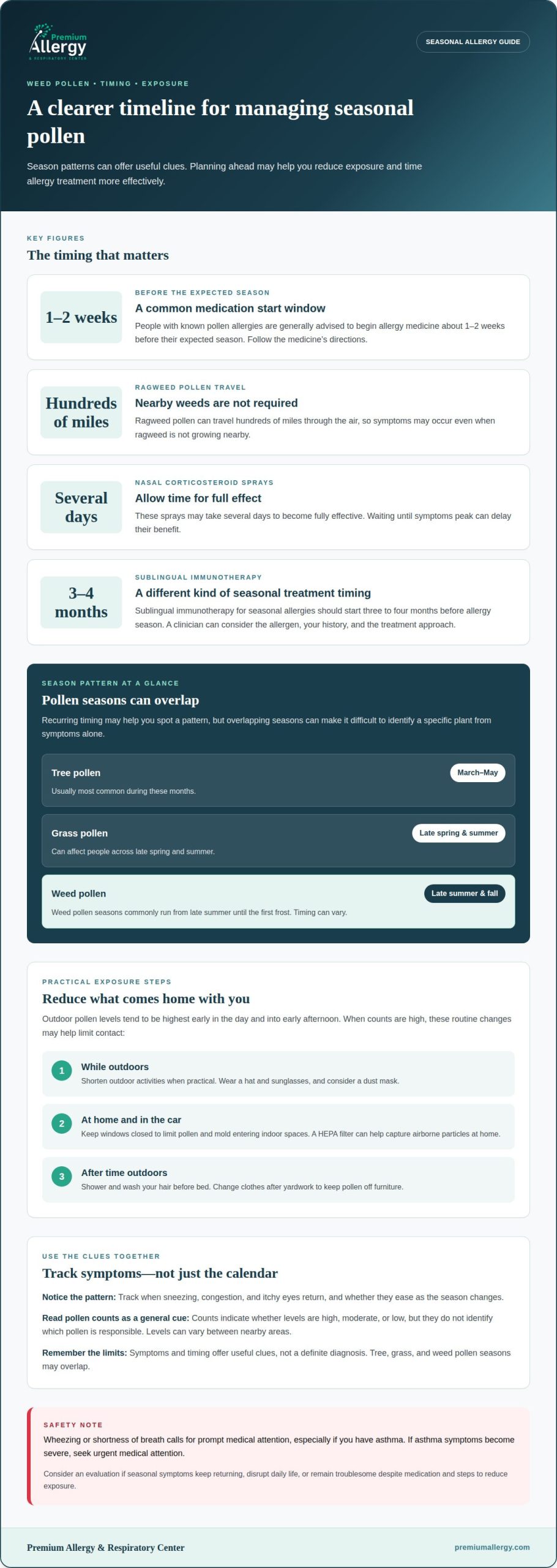
Weed pollen seasons commonly run from late summer until the first frost. Ragweed is a major trigger, and its pollen can travel hundreds of miles, so exposure does not require nearby weeds. Other plants can cause seasonal symptoms, too, making timing and recurring patterns useful clues.
A common myth is that allergy medication works best only after sneezing and congestion begin. People with known pollen allergies are generally advised to start medication about 1-2 weeks before their expected season. Daily use, following the medicine’s directions, can help maintain symptom control while pollen exposure continues. Nasal corticosteroid sprays may take several days to become fully effective, so waiting until symptoms peak can delay their benefit. Antihistamines may be another option, depending on the symptoms and the person.
In Selma, your own symptom pattern is more useful than a calendar borrowed from another region. Track when sneezing, congestion, and itchy eyes recur, and whether they ease as the season changes. Pollen counts indicate general levels, but not the specific pollen causing a reaction. Counts may also reflect pollen collected earlier, so consider them alongside your symptoms.
Arrange an evaluation if seasonal symptoms keep returning, disrupt daily life, or remain troublesome despite medication and steps to reduce exposure. Wheezing or shortness of breath calls for prompt medical attention, especially if you have asthma.
For longer-term seasonal symptoms, treatment planning can begin before pollen levels rise. Allergy immunotherapy is different from medication for quick symptom relief. Sublingual immunotherapy for seasonal allergies should start three to four months before allergy season. A clinician can consider the allergen, your history, and the treatment approach before expected exposure.
Weed pollen allergy begins when the immune system mistakenly treats airborne plant pollen as a threat. After pollen is inhaled, immune responses can release histamine, a chemical involved in symptoms such as sneezing, nasal itching, and congestion. The pollen may come from plants growing far from home, not just weeds in your yard.
Ragweed is a major weed pollen trigger, but it is not the only one. Chenopods include tumbleweeds, pigweeds, and goosefoot plants. Plantain, docks, and sorrels also produce pollen. Because different plants release pollen during overlapping parts of allergy season, symptoms alone may not identify the cause. A recurring seasonal pattern can narrow the possibilities, while allergy testing can help identify relevant triggers.
Grass pollen can make the picture more complicated. Its season may overlap with weed pollen, and exposure to multiple pollen types can cause similar symptoms. Pollen counts show general levels but not which pollen caused a reaction. An allergist can use your symptom history, timing, and exposure as context when assessing likely triggers.
Over-the-counter medication can manage symptoms, but it does not remove the underlying sensitivity. Immunotherapy works differently, aiming to change the immune response to a specific allergen over time. Allergy shots are one form; sublingual immunotherapy, taken under the tongue, is another. These approaches involve a longer treatment commitment than symptom-relief medicines, and suitability depends on the allergen identified and your clinical picture.
Knowing the trigger can make prevention and treatment more precise. If seasonal symptoms keep returning or your likely pollen triggers remain unclear, schedule an allergic rhinitis evaluation to discuss testing and treatment options.
Premium Allergy & Respiratory Center provides personalized care for allergic rhinitis and asthma. If weed pollen symptoms return each season, persist despite steps to reduce exposure, or affect your breathing, an evaluation can help clarify your symptoms and guide treatment discussions.
Care may include allergic rhinitis treatment for nasal and eye symptoms, or asthma management when pollen is associated with wheezing or shortness of breath. Your symptoms and seasonal pattern help shape an appropriate approach, rather than relying on guesswork or one-size-fits-all advice.
Make the next allergy season easier to plan for by turning recurring symptoms into useful information. Note when they begin, how they affect your day, and whether they coincide with outdoor exposure. This gives you a clearer starting point for discussing weed pollen allergy relief in Selma and care options that may fit your needs.
Premium Allergy & Respiratory Center offers allergic rhinitis treatment and asthma management for pollen-related concerns, as well as food allergy testing when food reactions also need attention. A focused discussion can connect your symptoms with an appropriate care plan, rather than leaving you to manage each season through guesswork.
Contact Premium Allergy & Respiratory Center to discuss your allergy concerns and possible next steps. A clearer plan can help you move into the season feeling more prepared and in control.
Reduce hay fever symptoms by limiting pollen that reaches your eyes and nose, then following medicine directions consistently. After outdoor errands, rinse your face and clean your glasses before settling indoors. If itchy eyes are a problem, avoid rubbing them, which can increase irritation. Keep a note of which activities worsen symptoms, such as gardening or walking near flowering weeds.
Seasonal allergies caused by pollen affect about 20 million people in the United States. That figure includes allergies to tree, grass, and weed pollen, rather than weed pollen alone. The number of people affected by a particular weed allergen varies with exposure and location. A recurring pattern in your own symptoms is more useful for planning care than a national estimate.
Pollen counts describe local levels as low, moderate, or high, giving you a general sense of outdoor exposure. They often reflect collections made 24-48 hours earlier, so conditions can change before the report updates. Counts also don’t identify the exact plant responsible for your symptoms. Pair the count with your own reactions and the plants flowering nearby.
Follow the directions for any allergy medicine you use and note how your symptoms respond. Record whether sneezing, congestion, or eye irritation follows activities such as mowing or spending time in a park, and share the record during a medical appointment. If breathing symptoms develop or worsen, seek prompt medical help rather than relying only on home measures.
Diagnosis starts with a clinician reviewing your symptoms, their timing, and possible pollen exposures. For pollen allergy skin testing, an allergist waits 15 minutes to see whether a raised, itchy, red bump appears. Your history helps interpret the result, especially when several plants release pollen during overlapping seasons. The evaluation connects test findings with your symptoms instead of relying on a test alone.
A weed allergy is an immune reaction to allergens from weed plants, including pollen from ragweed or chenopods. It is not automatically the same as cannabis allergy: cannabis can cause reactions through separate exposures, including inhaling, touching, or eating it. Identifying the plant and exposure route can help explain symptoms and guide an appropriate evaluation.
A weed doesn’t have to be growing nearby to trigger symptoms: ragweed pollen can travel hundreds of miles through the air. For weed pollen allergy... Continue reading
READ MORE
A skin prick test can identify reactions to selected tree pollen allergens, but the result is only one part of understanding seasonal symptoms. For... Continue reading
READ MORE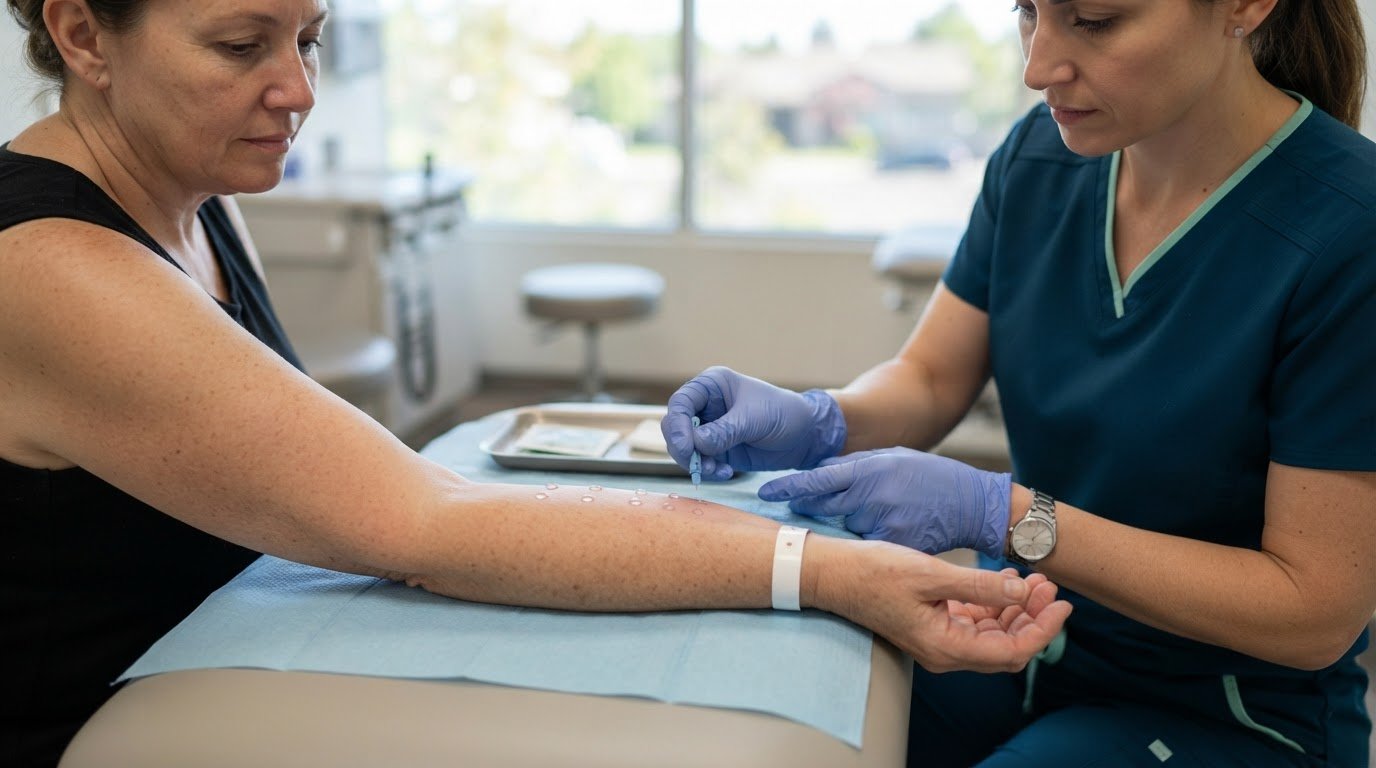
Grass pollen symptoms don’t have to be a seasonal guessing game. A grass pollen allergy doctor in Fresno can assess your symptoms, their timing and... Continue reading
READ MORE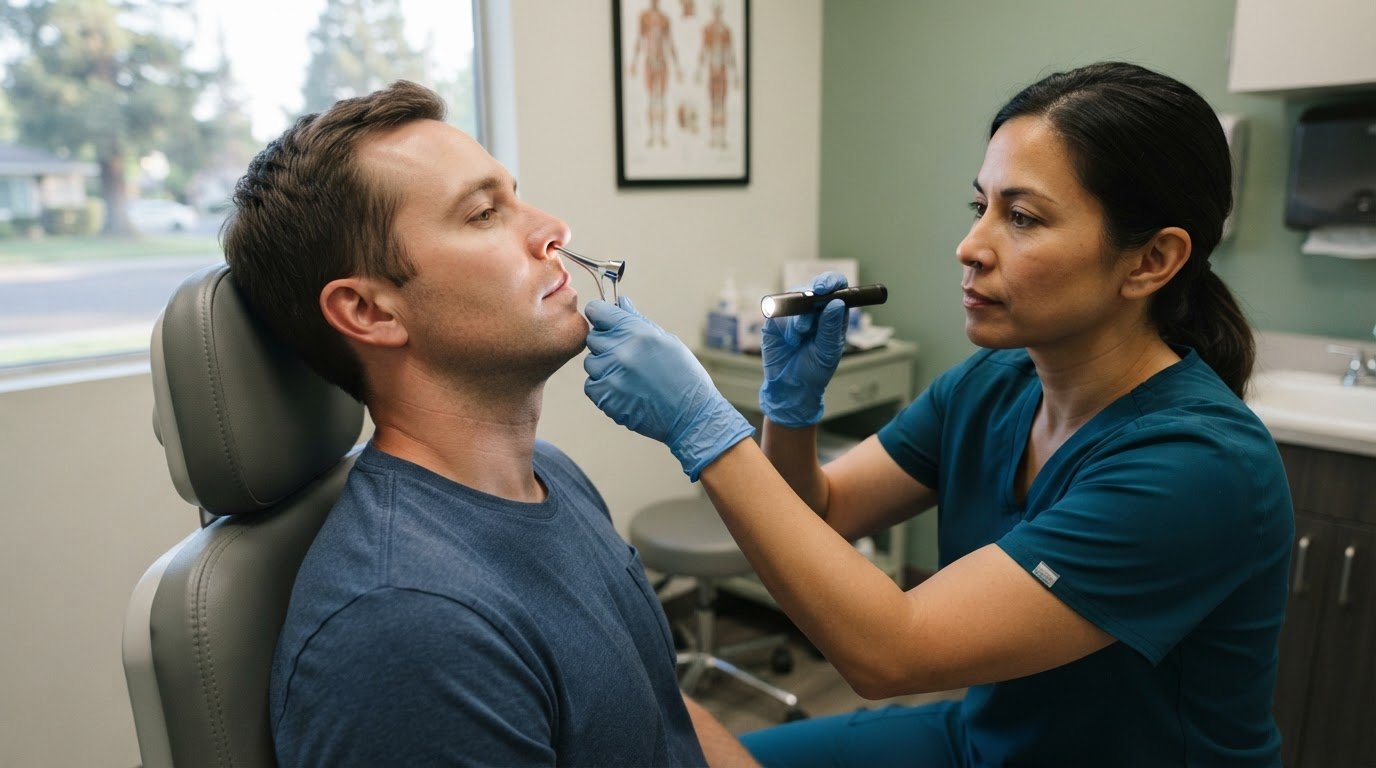
A runny nose alone can’t confirm hay fever. For hay fever treatment in North Clovis, an allergist may review your symptoms and medical history and... Continue reading
READ MORE