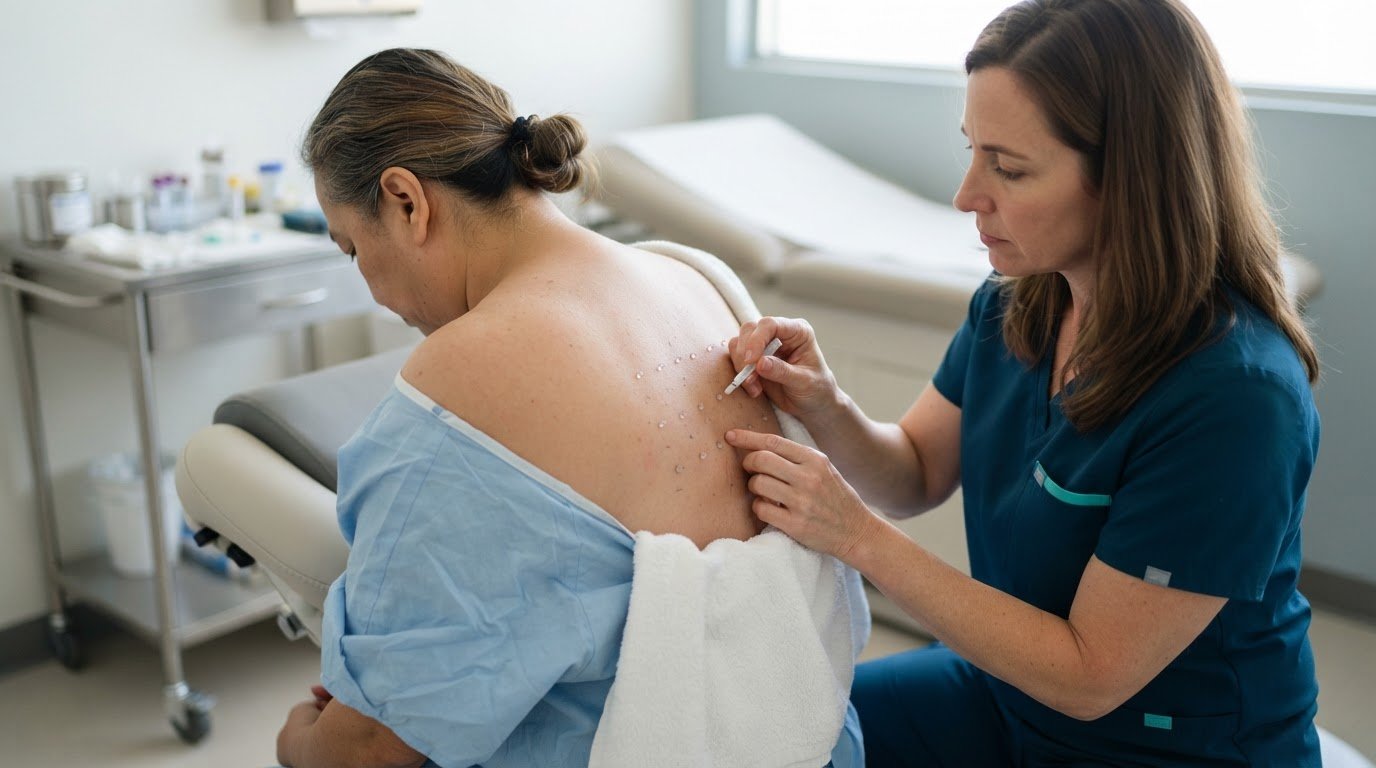
The test itself is only part of the picture; what you do afterward matters, too. Knowing how to prepare for an allergy test starts with reviewing... Continue reading
READ MORE
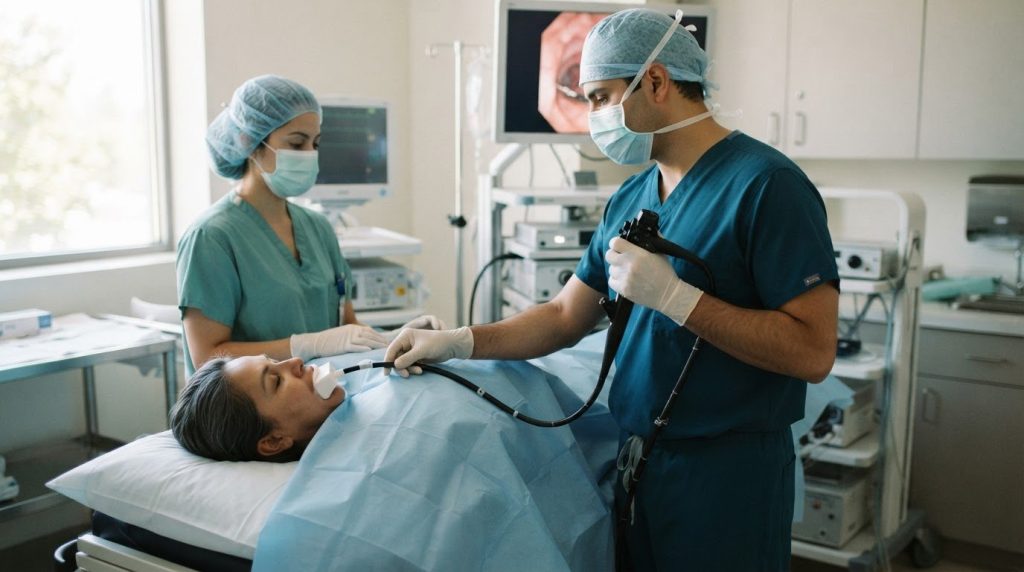
A gastroenterologist typically leads the diagnosis of eosinophilic esophagitis (EoE). An upper endoscopy with esophageal biopsies is needed to identify it. If you’re looking for an eosinophilic esophagitis doctor in Fresno, a gastroenterologist can order the tests used to determine whether EoE is causing your symptoms.
It can be unsettling when trouble swallowing or other symptoms could fit more than one condition. EoE symptoms can overlap with other health problems, so finding the right explanation takes more than guessing from symptoms alone.
This guide explains who diagnoses EoE, how the diagnostic process works, and why an allergist or immunologist may also help with allergy-related questions. You’ll learn which Fresno-area specialists treat EoE and how to understand their different roles, so you can take a clearer next step toward care.
A gastroenterologist usually coordinates EoE assessment and care. In Fresno, clinicians have different backgrounds, from digestive disease training to nursing experience. Understanding those distinctions can help you identify who may guide diagnosis and follow-up. An upper endoscopy, also called an EGD, can collect esophageal tissue for biopsy examination, according to the National Library of Medicine.
Amreet Aujla, M.D., has a special interest in esophageal diseases, particularly EoE. She joined Digestive Disease Consultants on October 1, 2023. Aujla is board certified in internal medicine, gastroenterology, and hepatology. She completed internal medicine residency at the University of Connecticut. Her gastroenterology fellowship was at Scripps Clinic in San Diego, California. Her stated esophageal focus is especially relevant to readers seeking condition-specific expertise.
Sandeep Sekhon is board certified in gastroenterology and returned to Fresno in 2010. He completed an advanced endoscopy gastroenterology fellowship at Beth Israel Deaconess Medical Center, Harvard Medical School, in Boston. Pradnya Mitroo moved to Fresno in 2007. These details identify local practice history and specialized training, but do not establish that every clinician has the same EoE focus.
Taylor Ash earned a biology degree from Fresno State and graduated summa cum laude. She completed her Physician Assistant degree at CSU Monterey Bay in 2022. Priya Kathpalia earned her medical degree from Loyola University Chicago Stritch School of Medicine in 2010. She completed internal medicine residency in 2013 and served as chief resident in 2014 at Loyola University Medical Center.
How do Fresno EoE specialists compare by credentials, hospital affiliation, and patient reviews? Aujla’s stated EoE interest and Digestive Disease Consultants role offer a clear specialty distinction. Sekhon’s advanced endoscopy fellowship adds a different training emphasis. The available ratings point to a 4.0-star national average for EoE doctors, not individual Fresno review scores. When comparing profiles, distinguish a clinician’s current practice from the institutions where they trained. Look for gastroenterology credentials and an explicit esophageal focus, then consider how each background fits your care needs.
An allergist or immunologist can assess allergic reactions and help identify substances to avoid. That expertise can complement gastroenterology when EoE raises questions about possible triggers. EoE is not a typical food allergy. Reactions may appear days after exposure, making a suspected ingredient difficult to pinpoint.
This delayed timing can make food-related symptoms harder to interpret. A reaction that occurs days later may not clearly point to one meal or ingredient. An allergist can evaluate suspected allergic reactions and help determine whether avoiding a substance is appropriate. That assessment addresses allergy questions, but it doesn’t replace the endoscopy and biopsy used to diagnose EoE.
For example, someone with swallowing difficulty and a separate suspected food reaction may need both perspectives. A gastroenterologist evaluates esophageal symptoms and coordinates EoE testing. An allergist assesses the possible allergic response and helps identify substances to avoid. Sharing symptom timing and food history across visits can help clarify which concern each evaluation addresses.
In Fresno, Dr. Am Aminian is an allergy and immunology doctor with a 4.6-star rating from 100 ratings. That profile offers one local example, but a patient rating doesn’t establish EoE expertise or replace clinical credentials. Consider the specialist’s role: allergy evaluation can support trigger assessment, while EoE diagnosis requires the appropriate gastrointestinal workup.
If food seems connected to symptoms, note what happened and when. Include the food, the reaction, and the time between eating and symptoms. This record can give an allergist useful context without treating a suspected trigger as a confirmed cause. For a separate concern about food allergy, food allergy testing can help assess allergic reactions. Keep the distinction clear: allergy testing addresses food allergy, not EoE itself.
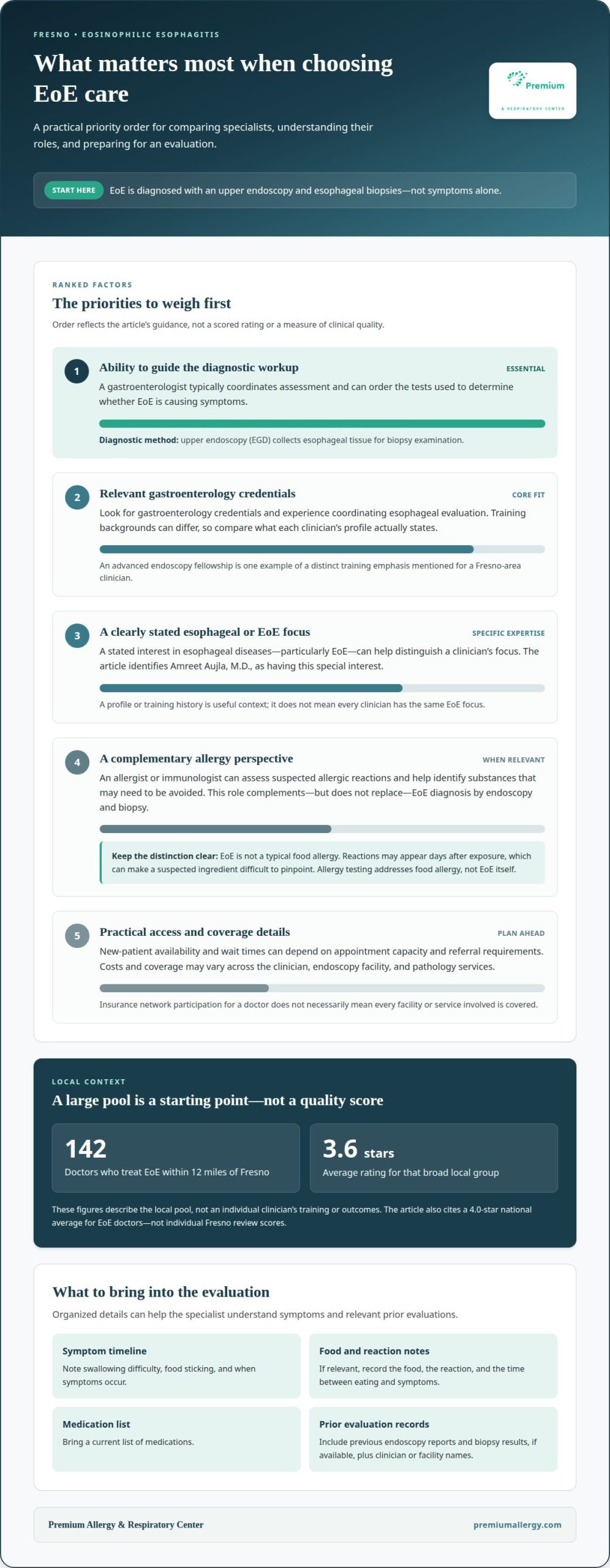
Fresno has 142 doctors who treat EoE within 12 miles of the city. The average rating for these doctors is 3.6 stars. Those figures describe a broad local pool, not an individual clinician’s training or outcomes. If you’re looking for an eosinophilic esophagitis doctor in Fresno, focus on gastroenterology credentials and a stated interest in esophageal conditions. Diagnosis involves endoscopy and esophageal biopsies, so experience coordinating that evaluation is relevant.
The cost of a consultation, endoscopy, and biopsy depends on the case. Factors may include the clinician, facility, insurance benefits, and planned procedures. Ask for an estimate that separates the office visit, endoscopy, facility charges, and pathology services. That breakdown can clarify which parts of the evaluation contribute to the total.
Insurance acceptance depends on your specific plan and benefits. Network participation may differ for the gastroenterologist, endoscopy facility, and pathology services. Review each part of the planned evaluation against your plan’s network and referral rules. A doctor’s network participation doesn’t necessarily mean every facility or service involved is covered.
To pursue a referral, describe your swallowing symptoms and ask for an appointment with a gastroenterologist who evaluates esophageal conditions. A gastroenterologist can order tests to determine whether you have EoE. Bring a symptom timeline, current medication list, previous endoscopy reports, and biopsy results, if available. Note examples such as food sticking or difficulty swallowing, along with when they occur. These details can help the specialist understand your concerns and relevant prior evaluations. Keep records together, including dates and the names of clinicians or facilities involved. When choosing an eosinophilic esophagitis doctor in Fresno, organized records give the specialist a clearer starting point for discussing diagnostic next steps.
New-patient openings and wait times vary by Fresno practice, clinician schedule, and appointment type. Referral requirements and insurance networks may also affect scheduling. There is no single wait time for local specialists. If you’re looking for an eosinophilic esophagitis doctor in Fresno, ask whether the practice is accepting new patients for EoE evaluation and whether endoscopy requires a separate appointment.
Make your first scheduling call specific. Explain that you’re seeking evaluation for possible EoE, describe your main symptom, and ask about the next available consultation. Then clarify whether you need a referral, which records the office needs, and whether the gastroenterologist evaluates esophageal conditions. These questions can help you understand whether the appointment fits your concern and what to prepare.
Ask about the steps after the consultation, too. EoE evaluation may include an upper endoscopy with esophageal biopsies, so the specialist visit and procedure may be scheduled separately. Ask whether the office coordinates both appointments and how it handles records from previous endoscopies. When choosing an eosinophilic esophagitis doctor in Fresno, these questions can clarify the sequence of care without assuming both appointments happen together.
Insurance can affect which appointment options work for you. Confirm whether the gastroenterologist and endoscopy facility participate in your plan, and ask whether a referral or authorization is needed. Keep your plan details nearby and note the office’s instructions. Coverage for a physician visit may differ from coverage for a procedure or facility. If allergy concerns are also part of your care planning, get help with allergy-related concerns. Keep the EoE evaluation focused on gastroenterology and any recommended diagnostic procedures.
Premium Allergy & Respiratory Center can support allergy-related concerns alongside your EoE evaluation. A gastroenterologist assesses and diagnoses EoE. Allergy care can address separate symptoms or suspected allergic reactions that may occur alongside it.
If you’re also experiencing nasal allergy symptoms, asthma concerns, or suspected food or penicillin allergies, Premium Allergy provides care for those needs. Food allergy testing can help assess a suspected food allergy, but it does not diagnose EoE or identify its cause. Keeping these roles clear helps you pursue the appropriate evaluation for each concern.
Consider allergy care when your questions involve allergic rhinitis, asthma, or a possible food or penicillin allergy. For EoE diagnosis and treatment, continue working with a gastroenterologist. For help with allergy-related concerns, contact Premium Allergy & Respiratory Center.
Choosing an eosinophilic esophagitis doctor in Fresno is a step toward understanding what’s happening, not simply naming symptoms. As you move forward, define what you want help with: eating with less worry, understanding recurring swallowing difficulty, or separating digestive symptoms from possible allergic reactions. Clear priorities can make conversations more focused and help you explain what matters in daily life.
Keep your care plan centered on your needs. If allergy concerns are part of the picture, Premium Allergy & Respiratory Center can support that aspect of your health, while EoE evaluation remains a distinct question. You deserve care conversations that make room for both concerns without confusing their roles. Write down any questions you still have so each appointment can address the right part of your health picture.
For support with allergy-related concerns, contact Premium Allergy & Respiratory Center. Take the next step at a pace that feels manageable, with a clearer sense of what you want answered and the care that may help.
A gastroenterologist diagnoses EoE through an evaluation that includes an upper endoscopy and esophageal biopsies. Examining the biopsy samples helps distinguish EoE from other possible causes of symptoms. For example, persistent swallowing difficulty can prompt a conversation about whether this diagnostic evaluation is appropriate. An allergist can address separate allergy concerns, but allergy assessment alone doesn’t establish an EoE diagnosis.
EoE management can combine dietary changes and medication, depending on inflammation and symptoms. Treatment may include acid reflux medicines or certain steroids for esophageal inflammation. Biologic medicines given by injection may be an option for appropriate patients, while dilation may be considered in certain severe cases. When dietary changes are part of care, a registered dietitian can help plan meals, choose substitutes, and identify ingredients.
Allergists and immunologists can evaluate allergic reactions and help identify substances to avoid, but their role differs from diagnosing EoE. Dr. Am Aminian is identified as an allergy and immunology doctor in Fresno. The available details do not establish that he treats EoE specifically. If allergy concerns accompany swallowing symptoms, keep the allergy evaluation distinct from the gastrointestinal assessment.
EoE care is coordinated through gastroenterology, with the appropriate clinician depending partly on the patient’s age. Fresno provider information identifies Amreet Aujla, M.D., with Digestive Disease Consultants, but doesn’t establish whether the practice treats adults, children, or both. For a child, clarify that the appointment is for a minor and ask about age eligibility before scheduling. Adult patients can ask about adult EoE evaluation.
EoE treatment options may include dietary changes, medication, and, in selected severe cases, esophageal dilation. Medication approaches can include acid reflux medicines or certain steroids; biologic injections may suit some patients. A registered dietitian can support dietary changes by helping identify ingredients and food substitutes. These are possible treatment approaches, and options may vary by specialist.
The test itself is only part of the picture; what you do afterward matters, too. Knowing how to prepare for an allergy test starts with reviewing... Continue reading
READ MORE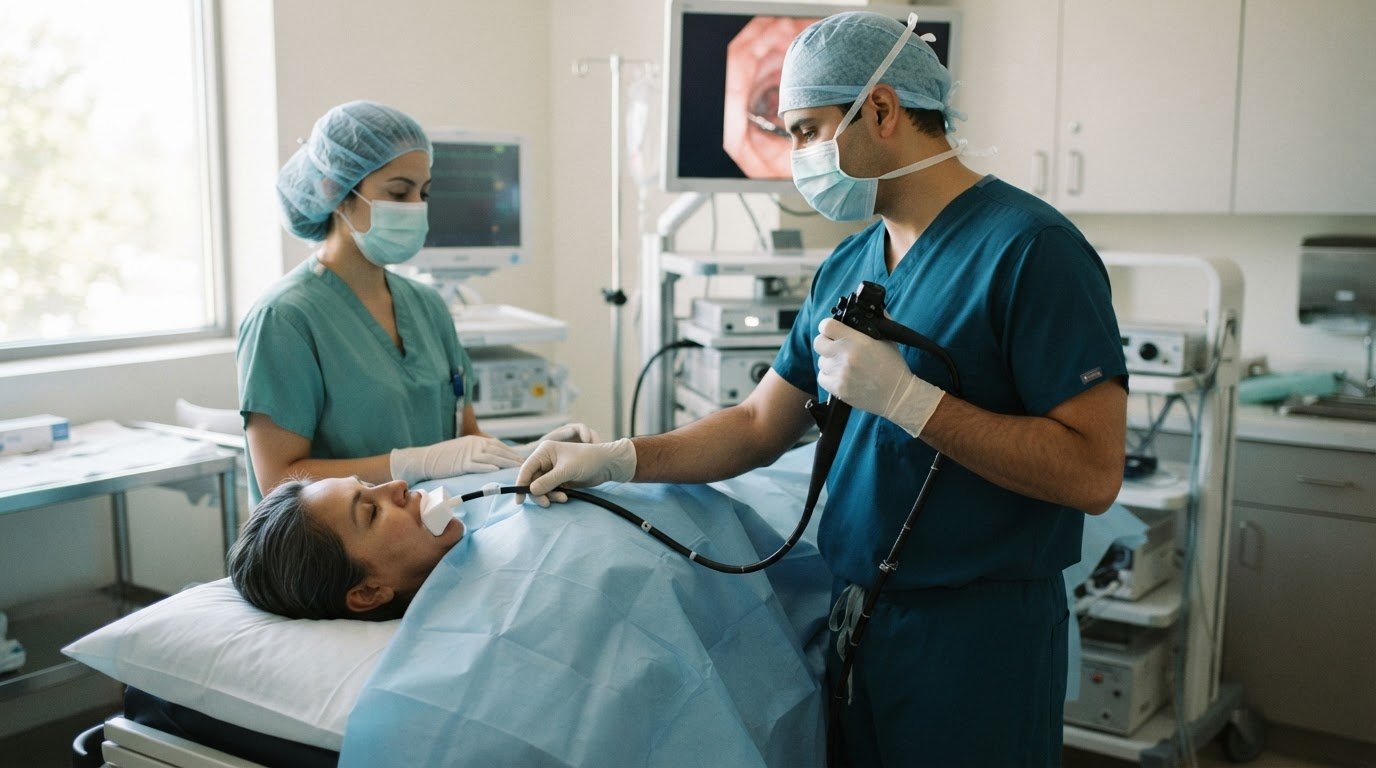
A gastroenterologist typically leads the diagnosis of eosinophilic esophagitis (EoE). An upper endoscopy with esophageal biopsies is needed to... Continue reading
READ MORE
The right specialist for angioedema depends on what’s causing the swelling. An angioedema specialist in Selma, often an allergist-immunologist, can... Continue reading
READ MORE
Chronic hives don’t have to dictate your day. For chronic urticaria treatment in Clovis, start by tracking how often symptoms appear, what they feel... Continue reading
READ MORE