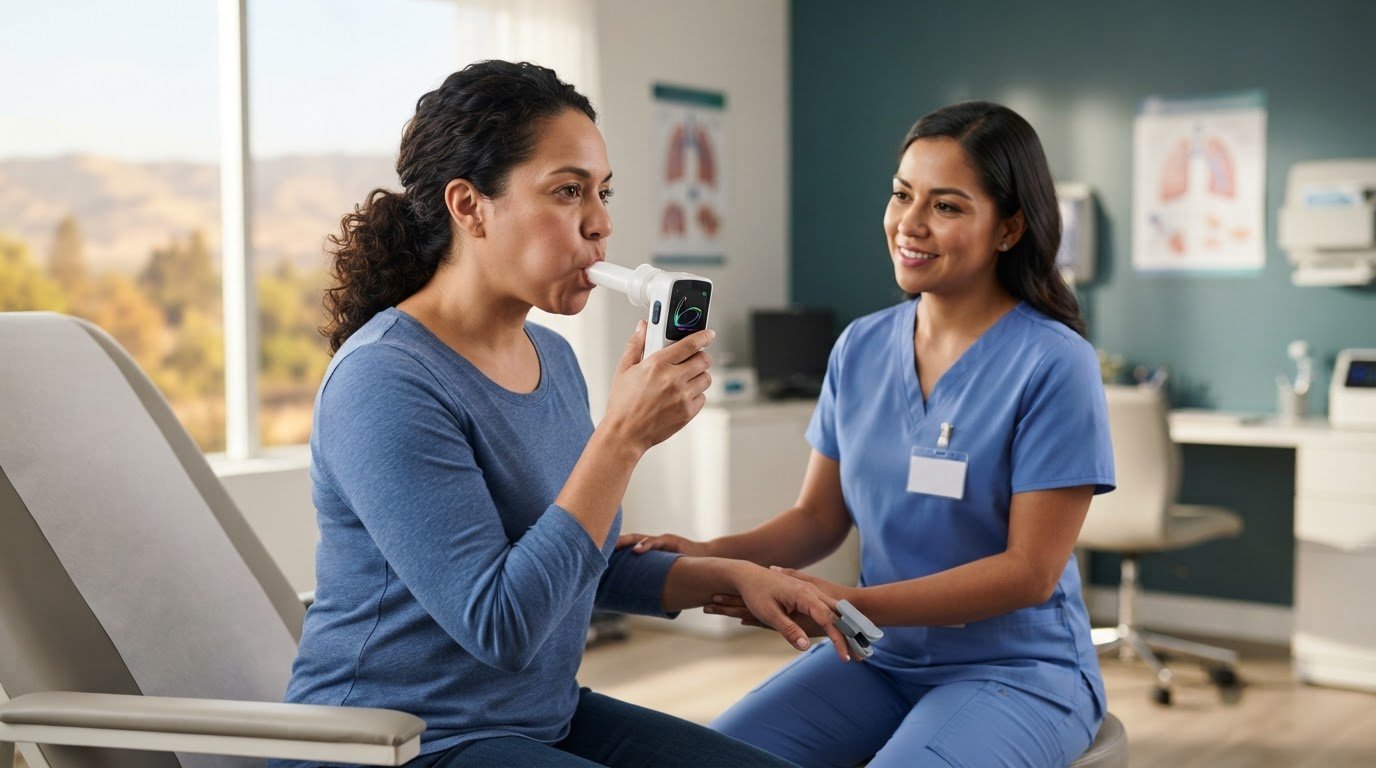
Breathing symptoms tell part of the story; measured airflow adds another. A spirometry test for asthma in Clovis measures how much air you can force... Continue reading
READ MORE
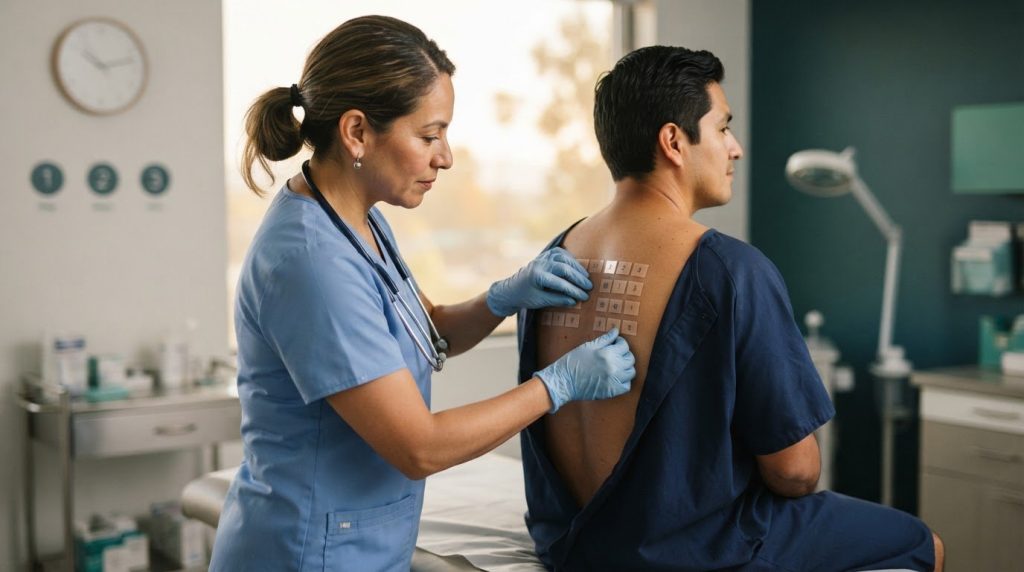
A skin allergy patch test in Fresno is a multi-visit process, not a single appointment. Allergens are placed on the skin on Day 1; the panels are removed after 48 hours, with a first reading on Day 3 and a final reading on Day 4. Those later readings help identify delayed reactions that may not appear right away.
It’s understandable to want clear answers before arranging a skin allergy patch test in Fresno, especially when you’re managing a persistent rash. Knowing the schedule can help you plan around keeping the test area dry and attending each reading.
This guide explains how patch testing works, what positive and negative reactions can mean, and why the results need to be considered alongside your symptoms and exposure history. You’ll also learn what to clarify about insurance coverage before an appointment, what happens at each visit, and when clinicians may use a different type of allergy test. With a practical timeline in hand, you can approach the process feeling prepared and ready to discuss the next steps in understanding your skin symptoms.
Patch testing checks for delayed contact allergy by placing selected substances against your skin. The process includes application and later readings, so plan for several visits.
On Day 1, a clinician applies allergen panels, usually to your back, and secures them with adhesive. Testing can cover 30 to over a hundred allergens; a standard panel contains 36 common contact allergens. Each strip usually holds between 10 and 12 allergens. The right selection depends on your symptoms and possible exposure, such as fragrance or workplace chemicals.
Patch testing differs from skin prick testing and blood allergy tests: it evaluates delayed skin reactions to contact substances, not immediate food or environmental allergies. Skin prick testing can be read within about 20 minutes; patch test readings take longer.
Avoid potent topical steroids at the application site for three days before testing. Some medicines can affect skin allergy testing, but antihistamines can usually be continued during patch testing. Don’t stop prescribed medicine on your own; follow the clinic’s instructions for your situation.
Keep the test area dry and avoid strenuous exercise, which can loosen the tapes. Patch testing is ideally done when dermatitis is inactive. Bring a list of products or chemicals you suspect, with notes about exposure and when symptoms appear. These details help identify which allergens may be relevant.
Panels are removed after 48 hours, and the skin is inspected 48 hours later. Reactions often take 48-96 hours to develop, so results generally require readings beyond application day. Patch test accuracy depends partly on whether the panel includes relevant exposures; a baseline series detects about 70% of contact dermatitis.
The main concern is a skin response where an allergen is applied. Irritant contact dermatitis is different because it doesn’t involve the immune system. Keep the marked area intact so the readings remain interpretable. If you develop a delayed rash after contact, record the trigger, location, and timing to help connect findings with everyday exposures.
In Fresno, an allergist or dermatologist can evaluate suspected contact dermatitis with patch testing. The right test depends on your symptoms: patch testing investigates delayed skin responses to substances that touch the body, rather than immediate food or environmental reactions. If you searched “skin allergy patch test Fresno,” use that as a starting point for understanding the test and appointment process.
Before booking, contact your health plan and the clinic. Ask whether your plan covers patch testing, whether you need a referral or prior authorization, and whether the clinic is in-network. Clarify how the application visit and follow-up readings are handled for billing. Because testing involves multiple appointments, ask whether each visit is submitted separately.
Have your insurance card ready, then gather the details your plan may request:
Ask the clinic what information it needs to discuss coverage and whether your plan requires a referral. Keep the insurer’s response and appointment details together. If your plan gives you a reference number, record it with the representative’s name and the call date. People searching “skin allergy patch test Fresno” can prepare these details before contacting a clinic.
Bring a concise record of suspected exposures, when symptoms begin, and where the rash appears. For example, note whether redness follows contact with a watchband, cleanser, or workplace product. These details help the clinician assess whether contact dermatitis fits your symptoms and which allergens may be relevant. A positive test needs to be interpreted alongside real-world exposure, not in isolation.
Use the same preparation for any coverage conversation: insurance card, referral information, and the clinic’s testing description. If you’re also seeking help with allergic symptoms beyond a contact rash, explore allergy care options that address those concerns.
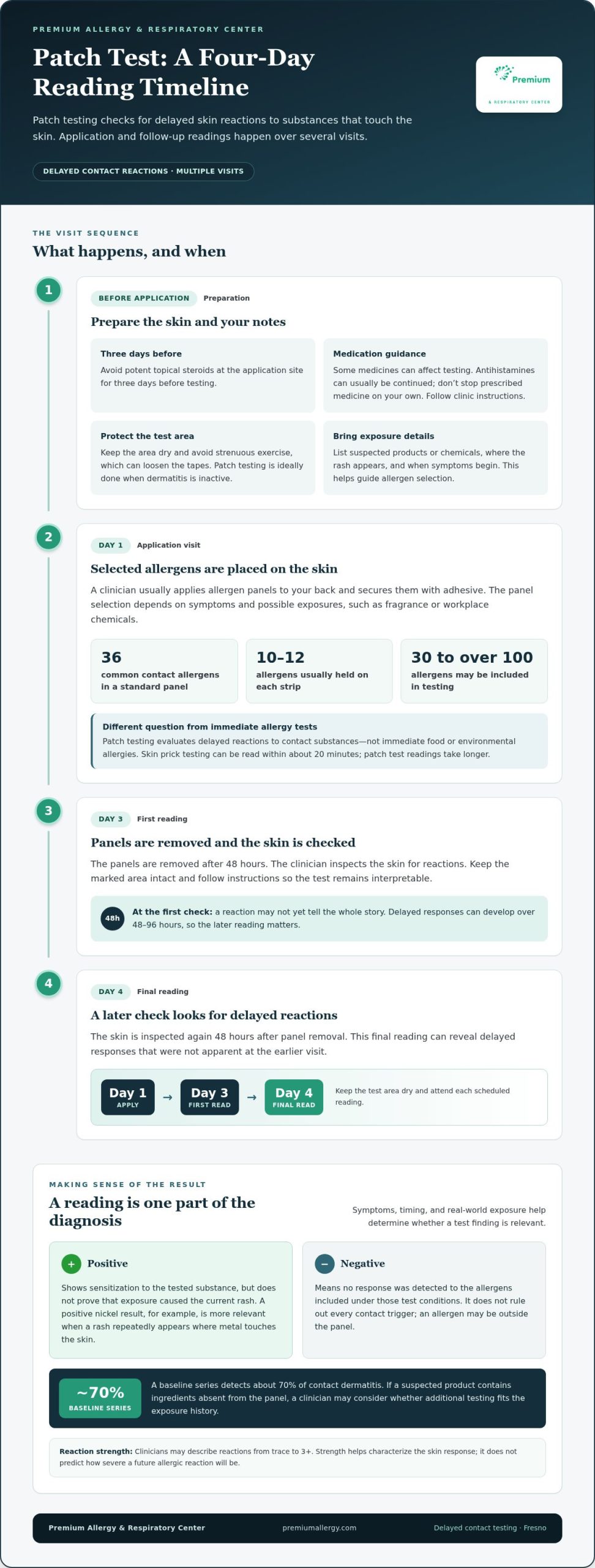
A patch-test result is one part of a contact dermatitis diagnosis, not a stand-alone verdict. Reactions usually develop over 48-96 hours, which is why a reading at 96 hours can reveal delayed responses. A positive result shows sensitization to the tested substance, but doesn’t prove that exposure caused your current rash. The location, timing, and pattern of symptoms help determine whether the finding matters in daily life.
Clinicians may describe reaction strength on a scale from trace to 3+. A stronger response can help characterize the skin’s reaction, but it doesn’t predict how severe a future allergic reaction will be. For example, a positive nickel result is more relevant when a patient’s rash repeatedly appears where metal touches the skin. Share product names, work exposures, and symptom timing to connect test findings with possible triggers.
A negative reading means the test didn’t detect a response to the allergens included under those test conditions. It doesn’t rule out every contact trigger. A baseline series detects about 70% of contact dermatitis, so an allergen outside the tested panel may still matter. If a suspected product contains ingredients absent from the panel, the clinician may consider whether additional testing fits the exposure history.
Keep the test’s purpose clear. Patch testing evaluates delayed contact sensitivity; a skin prick test looks for immediate-type reactions, such as a raised, itchy wheal. Neither result alone predicts the severity of a future reaction. Patch testing also doesn’t diagnose asthma or explain every respiratory symptom. If you have both a skin rash and asthma symptoms, each concern should be assessed with a test suited to its clinical question.
After a positive result, identify and avoid relevant exposures when possible, then track whether the rash changes. Some contact reactions appear a day or two after contact, and symptoms can take several days or weeks to settle after exposure ends. If symptoms persist, your timeline and product list can guide follow-up and help refine the diagnosis.
Plan for several appointments because patch testing tracks delayed skin responses over time. The sequence matters: an early check may miss a reaction that appears later, while the final reading helps complete the assessment. People searching “skin allergy patch test Fresno” often need this schedule to plan work, travel, and other commitments.
Day 1: The clinician applies allergen panels, usually to the back, and marks their positions. Keep the panels dry and avoid activities that could loosen the adhesive. Unlike a skin prick test, this visit doesn’t assess an immediate reaction. Prick testing looks for immediate responses; patch testing assesses delayed responses involving the immune system.
After 48 hours: The panels are removed. The skin is inspected 48 hours later, placing the first reading on Day 3. Avoid wetting or scrubbing the marked area, since missing markings can make it harder to identify tested substances. A reaction can continue developing after panel removal.
Day 4: A final reading records later changes and helps the clinician interpret the full pattern. Reactions often take 48-96 hours to develop, so this visit can reveal responses that weren’t clear earlier. Attend each scheduled reading, even if your skin appears unchanged. The timing is a key part of arranging a skin allergy patch test Fresno patients can complete accurately.
Photopatch testing follows a distinct schedule. It uses two identical allergen panels; after 48 hours, one panel is exposed to ultraviolet light. Readings take place at 96 hours after application. Your exposure history helps determine whether this method fits the suspected trigger.
Before the first appointment, arrange your calendar around the application and later readings. If a skin prick test or blood test is being considered instead, the symptoms help distinguish immediate allergy concerns from delayed contact dermatitis. For food-related concerns, explore food allergy testing as a different diagnostic pathway.
Premium Allergy & Respiratory Center provides focused diagnosis and management for allergic rhinitis and asthma. Patch testing evaluates delayed skin reactions to contact substances, while nasal symptoms such as sneezing or congestion may call for a different allergy evaluation.
If your concerns include food-related reactions or a suspected medication allergy, Premium Allergy also offers Food Allergy Testing and Penicillin Allergy Testing. Bring a clear account of your symptoms, possible triggers, and when reactions occur to help guide a conversation about appropriate next steps. For ongoing nasal symptoms, ask about Allergic Rhinitis Treatment, which addresses a different concern from contact dermatitis.
To learn more or discuss your allergy care, visit Premium Allergy & Respiratory Center.
Use your symptom and exposure notes to turn test findings into a practical plan. If a rash continues to disrupt daily life, discussing a skin allergy patch test in Fresno with an allergy specialist can help clarify whether contact triggers may be involved and what to consider next.
Allergy concerns can overlap, but each deserves an evaluation suited to its symptoms. Premium Allergy provides care for allergic rhinitis and asthma, as well as Food Allergy Testing. This may help when nasal, breathing, or food-related concerns accompany questions about a skin reaction.
You can take the next step at your own pace. Contact Premium Allergy & Respiratory Center to discuss your allergy care and the concerns you’d like to address. A clearer understanding can help you move forward with greater confidence.
Start with a clinician’s evaluation of your symptoms and suspected triggers, then choose testing suited to the concern. Skin prick tests assess immediate reactions; patch tests investigate delayed skin responses, while blood tests can help evaluate specific allergies. For example, if you live in Fresno or Clovis and have symptoms after eating a particular food, describe the reaction and its timing rather than relying on broad screening alone.
Contact dermatitis is an inflamed, irritated skin response after direct contact with a substance. Allergic contact dermatitis involves an immune response, while irritant contact dermatitis does not. A rash under a watchband, for example, could relate to metal exposure, friction, or another product touching the area. Track where the rash appears and what contacts that skin to help guide an evaluation.
Allergens are selected by matching your symptom pattern and likely exposures with substances relevant to your daily life. Tell the clinician about skin products, jewelry, adhesives, cosmetics, and workplace materials. If you handle chemicals, bring their names or product ingredient information. A rash around the ears after wearing earrings, for instance, makes jewelry exposure useful context, though the pattern alone doesn’t establish a diagnosis.
The timing depends on the method and the reaction being investigated. A skin prick test is generally read within about 20 minutes, while patch testing requires later readings because delayed responses develop over time. Blood testing follows a different process, with results interpreted alongside symptoms and exposure history. In Fresno, allow enough time for the specific test and any scheduled follow-up visits.
A clinician places small allergen samples against the skin, secures them, and records their positions for later assessment. During the test period, avoid actions that could shift the samples or blur their markings. At each reading, the clinician checks the skin at every marked site and documents the response. You can help interpret the findings by noting any new symptoms and relevant product exposures.
Patch tests assess delayed allergic contact reactions to substances that touch the skin. They differ from skin prick testing, which looks for immediate reactions, and they don’t diagnose food or environmental allergies. A clinician may select substances such as fragrance components, preservatives, or metals based on your history. The result is most useful when it matches a real exposure and your symptoms.
Breathing symptoms tell part of the story; measured airflow adds another. A spirometry test for asthma in Clovis measures how much air you can force... Continue reading
READ MORE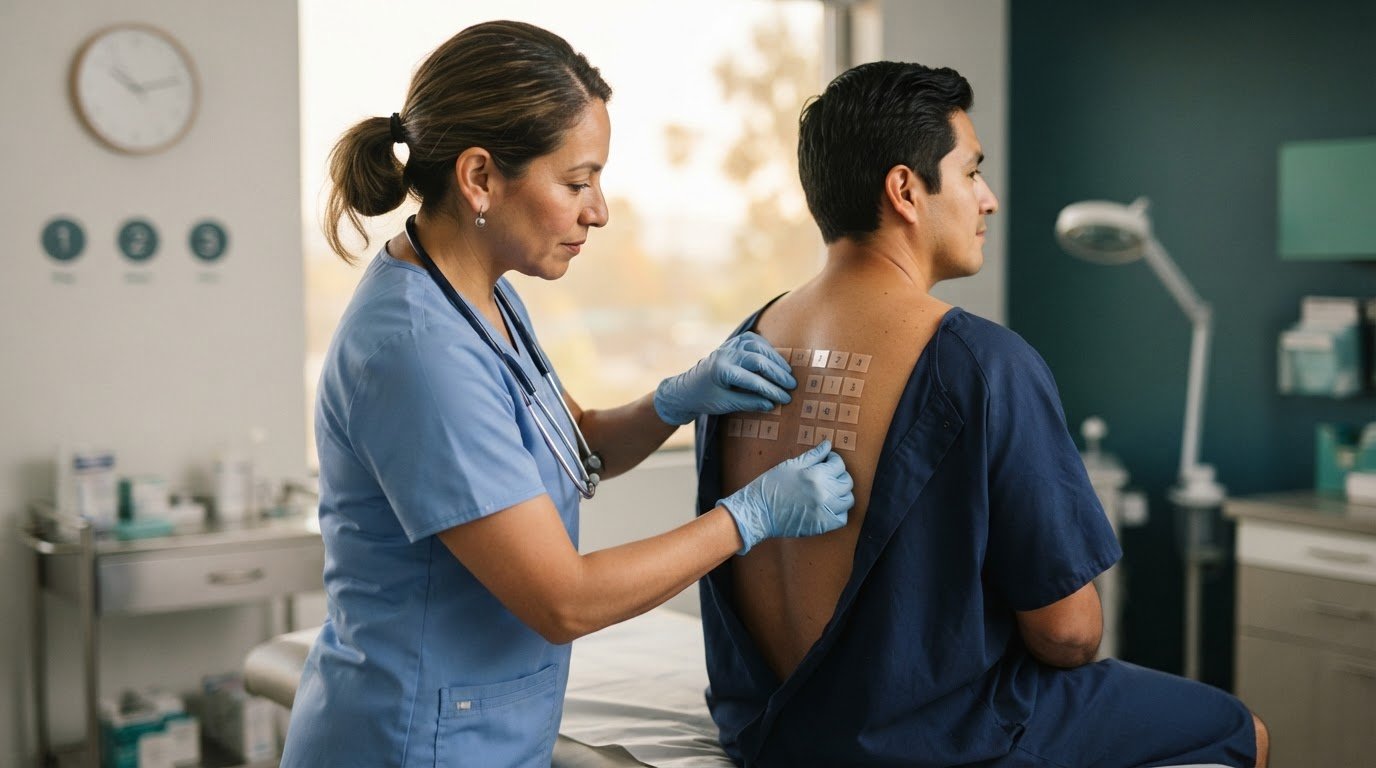
A skin allergy patch test in Fresno is a multi-visit process, not a single appointment. Allergens are placed on the skin on Day 1; the panels are... Continue reading
READ MORE
Breathing symptoms that keep returning deserve timely attention, particularly when they disrupt sleep, activity, or everyday routines. If you’re... Continue reading
READ MORE
A negative allergy blood test doesn’t always close the case. The test measures allergen-specific IgE antibodies in your blood, and getting allergy... Continue reading
READ MORE