
Could symptoms that flare around your pet have more than one explanation? Sneezing, itchy eyes, or congestion after time with an animal can raise a... Continue reading
READ MORE
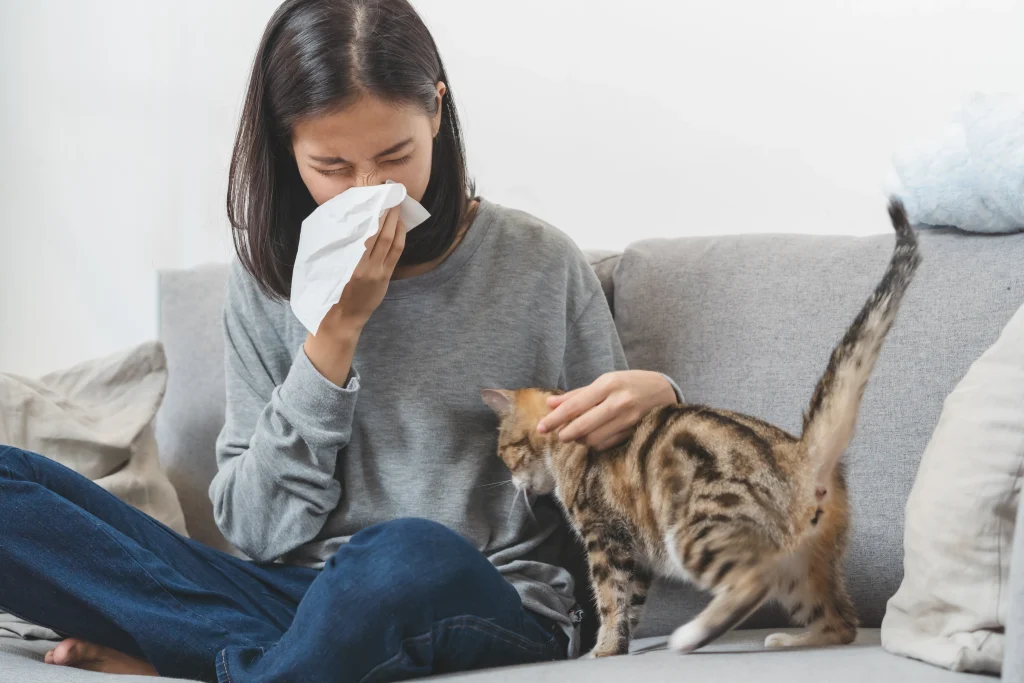
Can you suddenly develop pet allergies in your adult years? Yes, you can, even after years of living with cats, dogs, or other animals.
It’s more common than people realize. Between 10% and 20% of the world’s population deals with pet allergies. One study found that owning cats as an adult almost doubles the chances of adult-onset pet allergies.
I have had cats my entire life. My first cat was a gift to my mom from a litter of Siamese kittens born on the same day as me. Despite this long history with cats, I now experience allergy symptoms with my new kittens. Since adopting them from a feral cat rescue a year ago, I have noticed increased sneezing, a runny nose, and itchy, watery eyes.
This shift in my health brings up the question: what exactly causes these allergies to appear, even after years without symptoms?
The purpose of your immune system is to continuously scan for and identify “invaders,” such as bacteria and other germs. Once identified, certain cells get to work targeting and eliminating those invaders.
In an allergic reaction, your immune system recognizes the allergen as a threat. B cells are activated and produce an antibody called IgE. IgE attaches to mast cells and waits for the intruder. When you’re exposed to that allergen, the IgE grabs it and alerts the mast cell to release the inflammatory response to kill it. That histamine response allows immune cells to flood the area and get to work with the healing process.
This also means that blood flows rapidly, leading to congestion and swelling. Your nerve activity heightens, triggering itching. Nasal and airway tissue is told to flush it all out, which increases mucus production.
Most pet allergies are linked to cats and dogs, but any animal can trigger allergies. Despite the popular belief that it’s the fur you’re allergic to, it’s actually a protein that’s found in an animal’s urine, saliva, or dead skin cells. Most commonly, the lipocalin proteins that pose problems are:
Those proteins are shed through flakes of dead skin, saliva, and urine. While any of those three sources is problematic, some are worse for your allergies than others.
You may not even have these animals in your home. If you live on the outskirts of Fresno near a farm, cattle dander may impact you when it goes airborne on windy days. Your neighbor could have dogs playing in the fenced backyard, and it’s close enough that the dander gets into your home.
Pet allergies often resemble seasonal allergies, only they don’t go away when spring, summer, and autumn’s peak pollen seasons end.
If you have asthma, there is a chance that pet allergies will lead to asthma-related symptoms. Discuss your symptoms and treatments with your doctor. No one wants to give up a pet, but you might need to adjust your medications to prevent severe asthma symptoms after bringing a pet into your home.
Certain viruses and health issues share similar symptoms to allergies. How do you know if it’s seasonal allergies, pet allergies, a cold, or something else?
Allergy tests are the only definitive way to determine if you have allergies. A skin-prick test introduces a small amount of lipocalin protein into the skin. If there’s a reaction, you have a positive test result. Once you know, you can work on finding the best treatment for your allergies.
Once a doctor diagnoses you with pet allergies, giving up your pet doesn’t have to be the only answer. Ask to work with an allergy specialist. Immunotherapy is an excellent solution to resolving allergy symptoms, but it takes time. While you undergo sublingual treatments or allergy shots, the following can help ease your symptoms.
The best advice we have is to get a professional diagnosis to confirm that your pets are causing your allergies. It could be dust mites or mold spores associated with composting leaf litter, a damp basement, or a soggy crawlspace.
When working with a Fresno allergy specialist for the first time, you should stop taking allergy medications a few days before your appointment. You don’t want medications impacting your allergy test. Make sure you bring a list of the medications you take.
Ask if new patient paperwork is available online. Fill it out before your appointment to save time.
Know the health history of your own, going back to your childhood, and your parents’ and siblings’ health histories, particularly with allergies.
Allow time for allergy tests, which can take more than 90 minutes. It might be too long for your lunch break, so plan to take half the day off.
Don’t let pet allergies force you to rehome your pet. Make an appointment with Premium Allergy & Respiratory Center today.
Could symptoms that flare around your pet have more than one explanation? Sneezing, itchy eyes, or congestion after time with an animal can raise a... Continue reading
READ MORE
Could a swollen, painful sting site mean something different from a dangerous allergic reaction? If you’re unsure what your symptoms meant or worried... Continue reading
READ MORE
What if the pollen, dust mites, or mold you suspect aren’t the whole story behind your symptoms? Environmental allergy testing can help identify... Continue reading
READ MORE
A positive allergy blood test doesn’t automatically mean a substance is causing your symptoms. The test measures specific immunoglobulin E (IgE)... Continue reading
READ MORE